



What is Consensus?
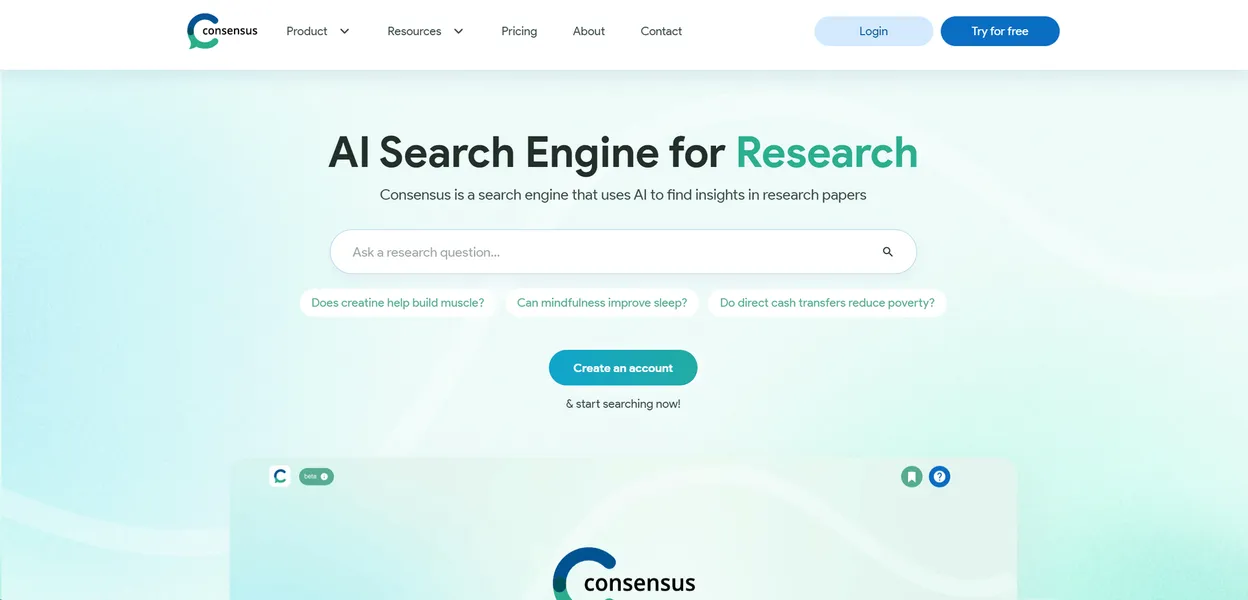
Consensus operates as a specialized academic search engine that bypasses standard web results to query 200 million peer-reviewed papers. It reads abstracts and full texts to answer specific scientific questions with cited evidence. The platform targets users who need verified data rather than generic internet answers.
Consensus NLP, Inc. built this tool to solve the literature review bottleneck for students and medical professionals. It extracts sample sizes and methodologies in seconds. Users type natural language questions into the search bar. The engine returns a synthesized summary backed by academic citations.
- Primary Use Case: Drafting literature reviews and verifying scientific claims.
- Ideal For: Academic researchers and medical students.
- Pricing: Starts at $10 (freemium) – A restrictive free tier pushes serious users toward paid plans.
Key Features and How Consensus Works
Search and Synthesis
The core engine relies on specific academic databases to generate answers.
- Semantic Scholar Database: Accesses 200 million papers, limited to indexed academic journals.
- AI Synthesis: Uses GPT-4o to write a one-paragraph summary from the top 20 papers.
- Deep Search: Analyzes 20 papers for complex queries, capped at 3 uses per month on the free tier.
- Copilot: Answers follow-up questions about search results, limited by the context window of the retrieved papers.
Data Extraction and Visualization
Visual tools help users understand broad academic trends at a glance.
- Consensus Meter: Shows the percentage of papers supporting or refuting a query, limited to yes or no questions.
- Study Snapshots: Displays sample size and study design, restricted to papers with available metadata.
- Advanced Filters: Sorts results by study type and publication year, limited to available database tags.
Organization and Export
Researchers need ways to move data from the search engine into their own documents.
- Citation Export: Generates APA, MLA, Chicago, and BibTeX formats for up to 100 saved papers per list.
- Zotero Integration: Saves papers straight to reference managers, requiring an active Zotero account connection.
- Bookmarking: Saves papers to custom lists, limited to registered user accounts.
Consensus Pros and Cons
Pros
- Every generated answer links straight to a peer-reviewed study, reducing AI hallucination risks.
- The Synthesis feature drafts literature reviews in seconds (a task that took me hours during grad school).
- The Semantic Scholar database ensures results exclude unverified blogs and general web content.
- The Consensus Meter visualizes scientific agreement for rapid decision making.
Cons
- Users hit publisher paywalls when trying to read the actual full text (you still need your university login).
- The free tier limit of 3 Deep Searches per month restricts active research.
- AI summaries sometimes miss nuanced data in technical medical fields.
Who Should Use Consensus?
- Medical Students: Verify clinical outcomes and extract sample sizes for assignments. The tool saves hours of manual reading.
- Academic Researchers: Draft initial literature reviews and organize citations into Zotero. The synthesis feature provides a strong starting point for papers.
- Science Writers: Fact-check claims before publishing articles. The direct links to peer-reviewed sources provide immediate credibility.
- Casual Web Searchers: This tool is not a good fit for general queries. Users looking for recipes or news will find no value here.
Consensus Pricing and Plans
The Free Tier costs $0 per month. It includes 3 Deep Searches, 15 Pro Analyses, and 10 Study Snapshots. This acts more like a trial than a permanent workspace. Active users will exhaust these limits in a single afternoon.
The Pro Subscription costs $10 per month billed annually. It provides unlimited Pro Searches, 15 Deep Searches per month, and unlimited Study Snapshots. This tier offers the best value for individual students.
The Deep Plan costs $45 per month billed annually. It increases the limit to 200 Deep Searches per month. Power users running extensive meta-analyses need this capacity.
The Teams Plan uses custom pricing. It adds shared seats and centralized billing for universities. Administrators gain control over user access and billing cycles.
How Consensus Compares to Alternatives
Similar to Elicit, Consensus extracts specific study details like sample sizes and methodologies. Elicit focuses on tabular data extraction across hundreds of papers. Consensus prioritizes natural language summaries and visual agreement meters. Users who prefer reading paragraphs over spreadsheets will favor Consensus.
Unlike Perplexity AI, Consensus restricts its search index to academic papers. Perplexity searches the entire live web and mixes news articles with academic sources. Researchers needing strict peer-reviewed boundaries prefer Consensus. Perplexity works better for broad industry research.
Scite.ai offers another alternative for academic research. Scite.ai specializes in tracking citation context to see if papers support or contrast each other. Consensus focuses on answering direct questions rather than mapping citation networks.
The Verdict for Academic Researchers
Graduate students and medical professionals extract massive value from the GPT-4o synthesis engine. The $10 monthly Pro plan pays for itself during a single literature review. The tool eliminates hours of manual abstract reading.
Casual users should look elsewhere.
Perplexity AI handles general knowledge queries for free.
The restrictive free tier forces a quick upgrade decision.
Consensus will integrate institutional login portals within the next 12 months to bypass publisher paywalls.