



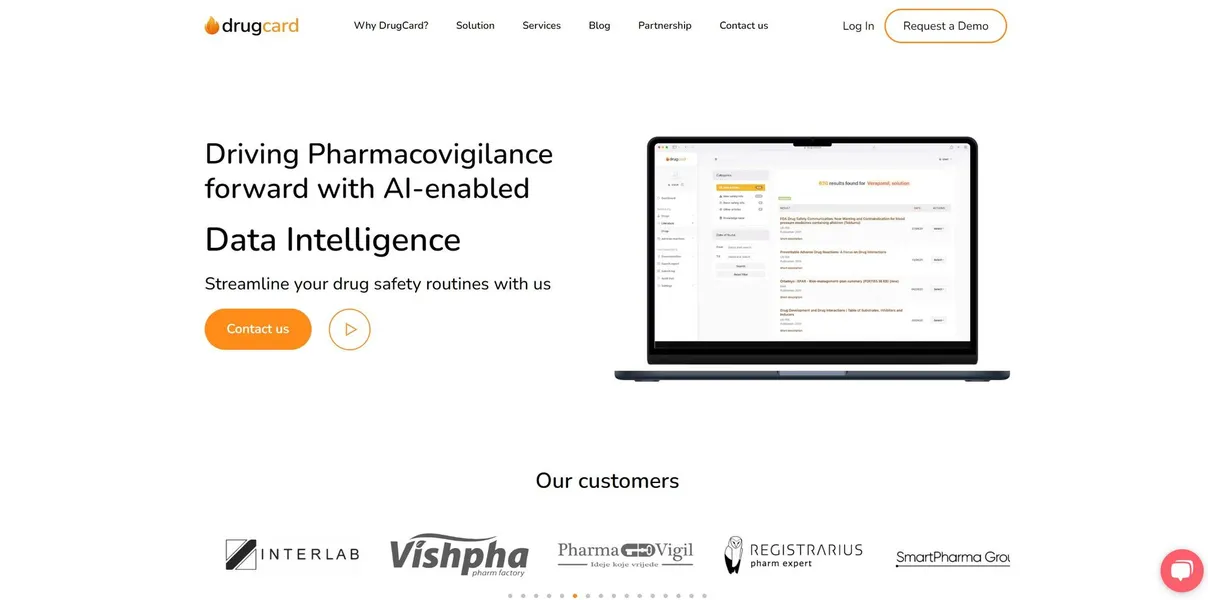
What is DrugCard?
Pharmacovigilance teams expect AI to completely replace manual literature screening. DrugCard delivers a massive reduction in reading time, but it still requires human experts to validate the final safety signals. Users get an automated pipeline that scans global databases, translates text, and flags potential adverse events.
Developed by DrugCard OU, this platform targets pharmaceutical companies and clinical research organizations. It solves the specific problem of regulatory compliance in medical literature monitoring. The software scans sources like PubMed and Embase to ensure teams meet EMA and FDA reporting standards.
- Primary Use Case: Automating medical literature screening for adverse event detection.
- Ideal For: Pharmacovigilance teams at mid-to-large pharmaceutical companies.
- Pricing: Starts at Custom Pricing (Enterprise model) with a 2-week free trial.
Key Features and How DrugCard Works
Automated Literature Monitoring
- Global Database Scanning: The system monitors sources like PubMed 24/7. It only covers indexed databases, so highly obscure local print journals require manual entry.
- Custom Search Queries: Users build filters using Boolean logic and MeSH terms. Complex queries can sometimes return high volumes of false positives.
Multilingual Processing
- 100+ Language Translation: The NLP engine translates foreign medical texts into English. The translation accuracy drops slightly for regional medical slang (which often varies by country).
- Local Journal Tracking: It monitors regional regulatory websites. You must configure specific target URLs during onboarding.
Adverse Event Detection
- AI Signal Extraction: The platform identifies individual case safety reports from unstructured text. Human reviewers must still approve every flagged event.
- Duplicate Detection: It flags redundant reports across different sources. The system occasionally struggles if authors use vastly different phrasing for the same case.
Regulatory Compliance Tools
- Audit Trails: The software logs every screening activity with a timestamp. You cannot edit these logs once the system creates them.
- Standardized Exports: Users generate reports in PDF, Excel, and XML formats. XML exports require strict mapping to match your specific safety database version.
DrugCard Pros and Cons
Pros
- Reduces manual literature screening time by up to 90 percent for pharmacovigilance teams.
- Processes medical text in over 100 languages, cutting external translation costs.
- Aligns directly with GVP Module VI and E2B(R3) standards for EMA and FDA compliance.
- Maintains a strict, unalterable audit trail for regulatory inspections.
- Cloud architecture allows teams to complete onboarding and setup in just a few days.
Cons
- Enterprise pricing creates a high barrier to entry for small biotech startups.
- Human oversight remains mandatory to confirm AI-detected signals before reporting.
- The platform focuses entirely on pharmacovigilance, making it useless for general academic research.
Who Should Use DrugCard?
- Mid-to-Large Pharma Companies: Teams managing high volumes of global literature need this automation to stay compliant.
- Clinical Research Organizations: CROs handling safety monitoring for multiple sponsors benefit from the collaborative workspace.
- Global Safety Officers: Professionals who need to monitor local medical journals across different languages without hiring translators.
- Not for Academic Researchers: University researchers looking for general literature review tools will find this software too expensive and narrowly focused.
DrugCard Pricing and Plans
DrugCard operates strictly on a custom enterprise pricing model.
The company does not publish standard rates on its website.
The platform offers a 2-week free trial. This is a genuine trial that provides full access to the automated monitoring and NLP features. Teams can test the system against their own search queries.
The Custom Enterprise Plan includes all core features. Users get AI literature screening, adverse event management, and multilingual translation. Pricing scales based on the volume of literature monitored and the number of user seats required.
How DrugCard Compares to Alternatives
PubHive offers a broader suite of scientific literature tools. Similar to DrugCard, it automates pharmacovigilance screening. Unlike DrugCard, PubHive includes modules for systematic literature reviews and real-world evidence tracking. PubHive appeals more to teams needing a single platform for multiple research departments.
Dialog Solutions provides extensive access to premium scientific databases. DrugCard focuses heavily on AI extraction and translation. Dialog Solutions excels in raw content access and complex search building. Teams that prioritize access to paywalled journals often prefer Dialog Solutions.
Verdict: Best for Global Pharmacovigilance Teams
DrugCard delivers massive value to global safety teams drowning in manual literature reviews. The ability to scan and translate 100 languages automatically removes a major compliance bottleneck. Mid-sized and large pharmaceutical companies will easily justify the custom pricing through time saved.
Small biotech startups with limited budgets should look elsewhere. The enterprise pricing model makes it difficult for early-stage companies to adopt. If you need a more generalized research tool, PubHive is a better alternative. DrugCard remains a highly specialized, highly effective tool for strict regulatory safety monitoring.