


What is B12?
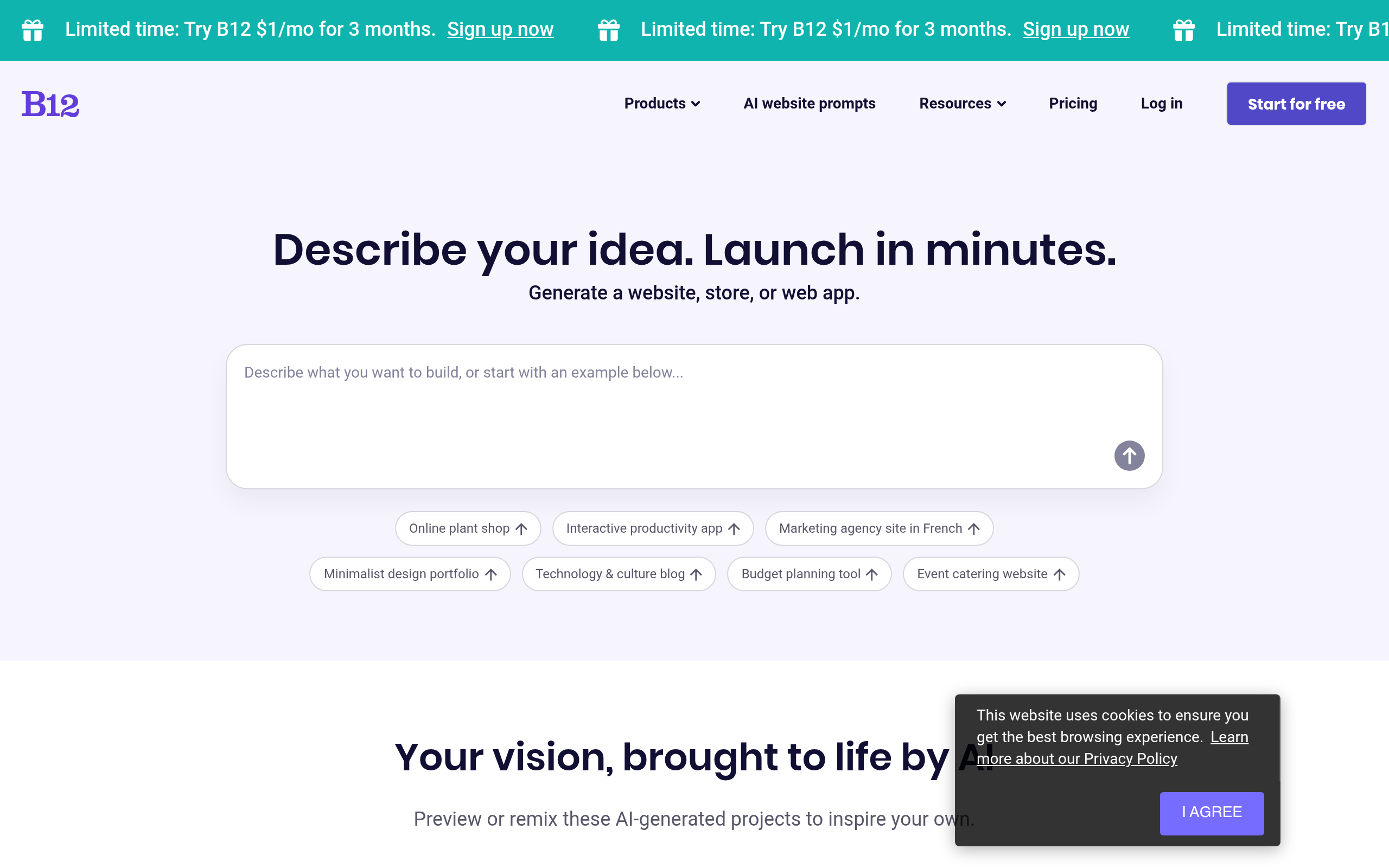
The most impressive part of testing B12 is watching the AI generate a complete, functional website draft with industry-specific copy in exactly 60 seconds.
Developed by B12, Inc., this AI website builder and business management platform targets professional service providers. It replaces fragmented software stacks by combining website creation, client intake forms, and online payments into one dashboard.
- Primary Use Case: Automating website creation and client intake for service businesses.
- Ideal For: Solo consultants and small professional service firms.
- Pricing: Starts at $49 ($1 for first 3 months) – Replaces separate hosting, scheduling, and invoicing subscriptions.
Key Features and How B12 Works
AI Website Generation and Editing
- AI Website Generator: Creates a layout, copy, and images based on your business type in under 60 seconds. Customization is limited compared to traditional drag-and-drop builders.
- AI Assist: Generates blog posts, emails, and website updates. Users get 100 monthly credits on the basic paid plan.
- SEO Tools: Automates sitemap generation and meta tag editing. Mobile optimization happens automatically without manual configuration.
Client Intake and Scheduling
- Online Scheduling: Syncs directly with Google Calendar and Outlook. It sends automated appointment reminders to reduce no-shows.
- Client Management (CRM): Provides a centralized dashboard to track leads and project status. The interface tracks interactions but lacks advanced sales pipeline features.
Billing and Document Management
- Invoicing and Payments: Integrates natively with Stripe and PayPal. You can process credit card and ACH payments directly through the website.
- eSignatures: Sends contracts for legally binding digital signatures. This eliminates the need for third-party software like DocuSign.
- Email Marketing: Offers 15 pre-designed templates for automated newsletters. AI-assisted copywriting consumes your monthly AI credits.
B12 Pros and Cons
Pros
- Rapid deployment generates a functional website draft in about 60 seconds with minimal user input.
- The all-in-one suite combines hosting, CRM, invoicing, and marketing, reducing software bloat.
- Higher-tier plans offer access to professional designers for manual refinements (a rare human-in-the-loop approach).
- Websites automatically adjust to all screen sizes without requiring manual mobile configuration.
- Native Stripe integration simplifies the setup of online billing for service-based businesses.
Cons
- The AI-generated layouts feel restrictive compared to drag-and-drop builders like Wix.
- At $49 per month, the entry-level paid plan costs significantly more than basic competitors.
- AI content generation relies on a strict monthly credit system, restricting content-heavy users.
- The free tier forces a .b12sites.com subdomain, which lacks professional branding.
Who Should Use B12?
- Solo Consultants: Independent professionals benefit from the integrated scheduling and invoicing tools. It removes the need to connect separate apps.
- Small Law Firms and Accountants: The built-in eSignature tool and secure client portals fit professional service workflows perfectly.
- Budget-Conscious Beginners (Not a Fit): Users seeking a cheap portfolio site should avoid B12. The $49 monthly starting price is too high for basic brochure websites.
How much does this integrated approach cost?
B12 Pricing and Plans
The free tier is essentially a trial in disguise.
It costs $0 per month but limits you to a .b12sites.com subdomain and provides only 5 daily AI credits (maximum 30 per month). The Website plan costs $49 per month ($1 per month for the first 3 months). It adds a custom domain, removes ads, includes traffic analytics, and provides 100 AI credits per month.
The Website + Client Engagement plan costs $78 per month. It increases AI credits to 300 per month and unlocks online payments, invoicing, email marketing, and eSignatures. The Professional plan costs $199 per month. It includes expert setup options, advanced tools, and dedicated support.
The Advanced plan requires a $1,999 one-time setup fee plus a subscription. It provides full-service website creation and management.
How B12 Compares to Alternatives
Similar to Durable, B12 uses AI to generate a website in seconds. However, Durable targets local service businesses like landscapers with a $15 monthly starting price. B12 targets professional services like consultants and charges $49 per month for its entry-level plan.
Unlike Wix, B12 restricts design freedom to maintain professional layouts. Wix offers a true drag-and-drop editor with thousands of templates for $16 per month. B12 sacrifices this customization to provide built-in invoicing and eSignatures out of the box.
The Best AI Builder for Professional Service Providers
B12 delivers exceptional value for consultants and accountants who need integrated scheduling and billing tools.
Budget-conscious users building simple portfolios should look elsewhere. Wix remains a better alternative for users who prioritize design customization over built-in business management features.