

What is Google Imagen 3?
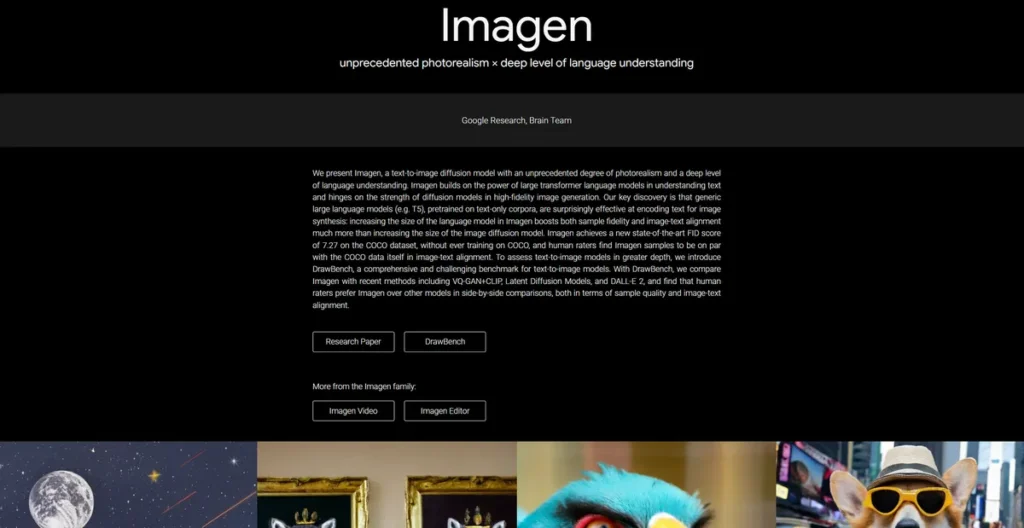
For a small business owner, the constant need for high-quality, original imagery can be a significant drain on resources. Google Imagen 3 is an advanced artificial intelligence model developed by Google Research designed to address this challenge. It functions as a text-to-image generator, meaning it can create detailed, photorealistic pictures from simple written descriptions. Unlike basic image tools, Imagen 3 leverages a deep understanding of language to produce visuals that precisely match complex prompts. This technology represents a potential future where customized marketing materials, product mockups, and social media content can be generated on-demand, without the need for a photo shoot or graphic designer. However, it’s important to note that Imagen 3 is currently positioned as a research project, not a commercially available product for immediate business use.
Key Features and How It Works
Understanding Imagen 3’s functionality from a business perspective is key to evaluating its potential return on investment. The process is straightforward in theory: you provide a text prompt, and the AI generates an image. The technology behind this is what sets it apart.
- Advanced Text Comprehension: Imagen 3 uses powerful language models, similar to those that power advanced chatbots, to interpret the nuances of your request. This means it can understand complex sentences with multiple subjects and specific details, reducing the trial-and-error often associated with AI image generation.
- Photorealistic Output: The model is engineered to create images with an extremely high degree of realism. For a business, this translates to producing professional-grade visuals that look like they were captured by a photographer, rather than generated by a machine.
- High-Resolution Generation: It can create images up to 1024×1024 pixels. This resolution is sufficient for most digital marketing needs, including website banners, social media posts, and email newsletters, ensuring the final output is crisp and professional.
- Text-to-Image Alignment: A key performance indicator for this technology is how well the final image matches the input text. Google’s internal benchmarks show Imagen 3 excels at this, meaning what you ask for is more likely what you get, saving valuable time on revisions.
Pros and Cons
Evaluating any new technology requires a balanced look at its potential benefits and drawbacks from a practical business standpoint.
Pros
- Cost Reduction: If made available, it could dramatically lower expenses related to stock photography subscriptions and hiring graphic designers or photographers for custom work.
- Speed and Efficiency: Generate campaign-specific visuals in minutes instead of days. This allows for more agile marketing and faster content production cycles.
- Creative Control: Gain precise control over your brand’s visual identity by creating images that perfectly match your specifications, a feat not always possible with stock imagery.
- Unmatched Quality: The photorealism achieved by Imagen 3 can elevate a brand’s perceived quality and professionalism in a crowded digital marketplace.
Cons
- Limited Availability: Its primary and most significant drawback is that it is not currently available for public or commercial use. It remains a demonstration of Google’s research capabilities.
- Potential Learning Curve: Advanced tools often require specific skills. Crafting effective text prompts (prompt engineering) to achieve desired results may require training and practice, representing a time investment.
- Risk of Inaccuracy and Bias: Like all AI trained on vast internet data, the model can reproduce societal biases or generate bizarre artifacts. All outputs would require careful human review to avoid brand-damaging mistakes.
Who Should Consider Google Imagen 3?
While no one can actively use Imagen 3 in a commercial capacity today, certain businesses and professionals should be monitoring its development closely. Marketing agencies and in-house marketing departments could leverage it to create bespoke ad creatives at scale. E-commerce businesses could potentially use it to generate diverse lifestyle photos for their products without expensive photoshoots. Content creators, from bloggers to social media managers, could produce an endless stream of unique, relevant images to accompany their work. For now, however, consideration is limited to keeping an eye on Google’s announcements to see if and when this technology is integrated into a publicly accessible tool like those in Google Cloud or Workspace.
Pricing and Plans
As Google Imagen 3 is not currently offered as a commercial product, there is no public information on pricing, subscriptions, or usage plans. The tool is part of Google’s ongoing research and is not available for public use. For the most accurate and up-to-date pricing, please visit the official Google Imagen 3 website.
What makes Google Imagen 3 great?
Tired of generic stock photos that don’t match your brand’s specific vision? What makes Google Imagen 3 a noteworthy development is its direct solution to this problem: its profound ability to render nuance. While other tools can generate an image of ‘a dog,’ Imagen 3 is designed to accurately create ‘a photorealistic image of a Corgi wearing a tiny yellow raincoat, splashing in a puddle on a city street during a light rain.’ This granular level of prompt adherence and commitment to photorealism is its core strength. For a business, this means the potential to create visuals that are not just generic representations but specific, brand-aligned storytelling assets, all from a simple text command.
Frequently Asked Questions
- How is Google Imagen 3 different from tools like Midjourney or DALL-E 3?
- The primary differentiators claimed by Google are in the areas of photorealism and prompt fidelity. Imagen 3’s architecture, which deeply integrates large language models for text understanding before the image generation phase, is designed to interpret and execute complex, descriptive prompts more accurately than many competitors.
- Can I use Google Imagen 3 for my business right now?
- No. As of now, Google Imagen 3 is a research project and has not been released as a public-facing product. Businesses cannot currently access or license it for commercial use.
- What skills would be needed to use a tool like Imagen 3 effectively?
- To maximize the ROI of such a tool, a user would need strong ‘prompt engineering’ skills—the ability to write clear, descriptive, and detailed text to guide the AI. Additionally, a good eye for composition, branding, and detail is necessary to select the best outputs and identify any flaws.
- Are there legal risks to using AI-generated images for business?
- Yes, the legal landscape for AI-generated content is still evolving. Issues surrounding copyright ownership of AI outputs and the potential for models to reproduce copyrighted elements from their training data are significant considerations. Businesses should always consult with legal counsel before using AI-generated images in commercial projects.