

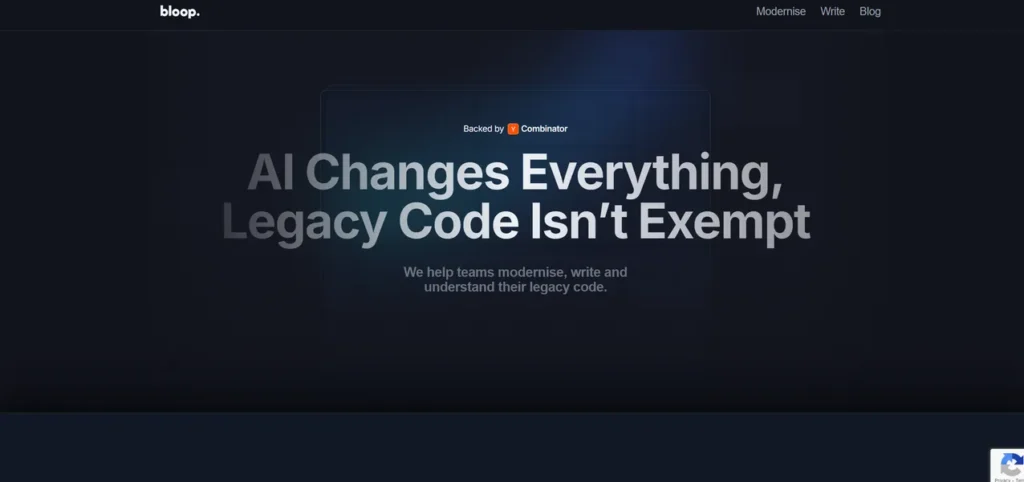
What is Bloop?
Bloop is an AI-powered code modernization tool designed to convert legacy COBOL code into modern, high-performance Java. For marketing managers, this isn’t just a backend update; it’s a strategic enabler. By overhauling antiquated systems that often act as a bottleneck, Bloop empowers organizations to become more agile. This modernization can directly impact a marketing team’s ability to rapidly deploy new campaign features, integrate with modern analytics platforms, and improve the overall customer experience through faster system performance.
Key Features and How It Works
Bloop streamlines the complex process of code refactoring through a suite of intelligent features. For marketing operations, these capabilities translate into tangible benefits for campaign execution and data management.
- AI-Powered Conversion: Bloop’s core function is its AI engine, which automatically translates dense COBOL into readable and maintainable Java. This accelerates the development lifecycle, allowing new marketing-driven features to move from concept to launch much faster than a manual rewrite would permit.
- Safety Guaranteed: The platform includes a robust AI test suite that verifies the converted Java code behaves identically to the original COBOL. This ensures that critical business logic—such as customer data processing or transaction handling—remains intact, preventing disruptions to live campaigns or lead-generation funnels.
- License-Free Architecture: By building upon Open Source libraries and cloud primitives, Bloop helps reduce the total cost of ownership. This allows budget to be reallocated from infrastructure maintenance to strategic marketing initiatives.
- Continuous Delivery: One of Bloop’s standout features is its support for ongoing modifications during the conversion process. This means there are no code freezes, allowing development and marketing teams to continue pushing updates and launching initiatives without waiting for the modernization project to be completed.
Pros and Cons
Understanding Bloop’s strengths and limitations is key to assessing its fit for your organization’s growth strategy.
Pros
- Increased Marketing Agility: By converting legacy code, Bloop removes technical barriers, enabling marketing teams to launch new campaigns and user-facing features more quickly.
- Improved Data Integration: Modern Java code integrates seamlessly with contemporary CRMs, analytics tools, and marketing automation platforms, unlocking richer data insights for lead scoring and personalization.
- No Operational Downtime: The tool is designed to facilitate a smooth transition without disrupting existing business operations, ensuring that revenue-generating activities and live campaigns continue uninterrupted.
- Scalable Modernization: Bloop supports large-scale conversion efforts, making it a viable solution for enterprises looking to overhaul extensive legacy systems that hinder marketing performance.
Cons
- Niche Focus: The tool is specialized for COBOL to Java conversions. Marketing teams in organizations running on other legacy languages may need to look for different solutions.
- Technical Implementation: While the goal is simplification, the initial setup may require dedicated IT resources to configure the tool and integrate it into existing development workflows.
- Reliance on AI Precision: The success of the conversion is dependent on the AI’s accuracy. Any misinterpretations in code behavior could require manual intervention, potentially delaying project timelines.
Who Should Consider Bloop?
Bloop is an ideal solution for marketing leaders and managers within established organizations, particularly in sectors like finance, government, and insurance, where COBOL systems are still prevalent. If your marketing team’s progress is constantly hampered by a slow, inflexible backend system, Bloop is a compelling tool. It’s designed for forward-thinking leaders who understand that modernizing core infrastructure is essential for building a responsive, data-driven marketing engine capable of competing in today’s fast-paced digital landscape.
Pricing and Plans
During our review, detailed pricing information for Bloop was not publicly available. The platform appears to be tailored to specific enterprise needs, which may influence the overall cost. For the most accurate and up-to-date pricing, please visit the official Bloop website.
What makes Bloop great?
Are outdated legacy systems preventing your marketing team from launching new features and campaigns at the speed your customers expect? Bloop directly addresses this critical pain point. Its greatness lies in its ability to bridge the gap between legacy infrastructure and modern marketing demands. By providing a reliable and efficient pathway to modernize a COBOL codebase, it unlocks new potential for speed, integration, and innovation. This allows marketing departments to stop working around technological limitations and start building the seamless, data-rich customer experiences that drive lead generation and revenue growth.
Frequently Asked Questions
How does modernizing our codebase impact marketing agility?
Modernizing a codebase from COBOL to Java makes it easier and faster for developers to build and deploy new features, such as personalized content modules, API integrations with new marketing tools, or updated checkout flows. This directly translates to increased agility for the marketing team, shortening the time from campaign conception to execution.
Is the conversion process disruptive to live campaigns?
No, Bloop is designed for a non-disruptive transition. Its continuous delivery model allows your existing COBOL system to run in parallel while the conversion takes place, meaning there are no code freezes or downtime that could affect live marketing campaigns or website performance.
Can Bloop help us integrate with modern marketing platforms?
Yes. A primary benefit of converting to Java is the ease of integration. Modern Java applications can readily connect with marketing automation platforms, CRMs (like Salesforce or HubSpot), and advanced analytics tools via APIs, enabling more sophisticated lead tracking, personalization, and campaign reporting.
What kind of support is available during the process?
Bloop offers support and a range of resources, including tutorials on its website and YouTube channel, to guide users through the setup and conversion process. This ensures that technical teams have the assistance they need to manage the implementation effectively.