



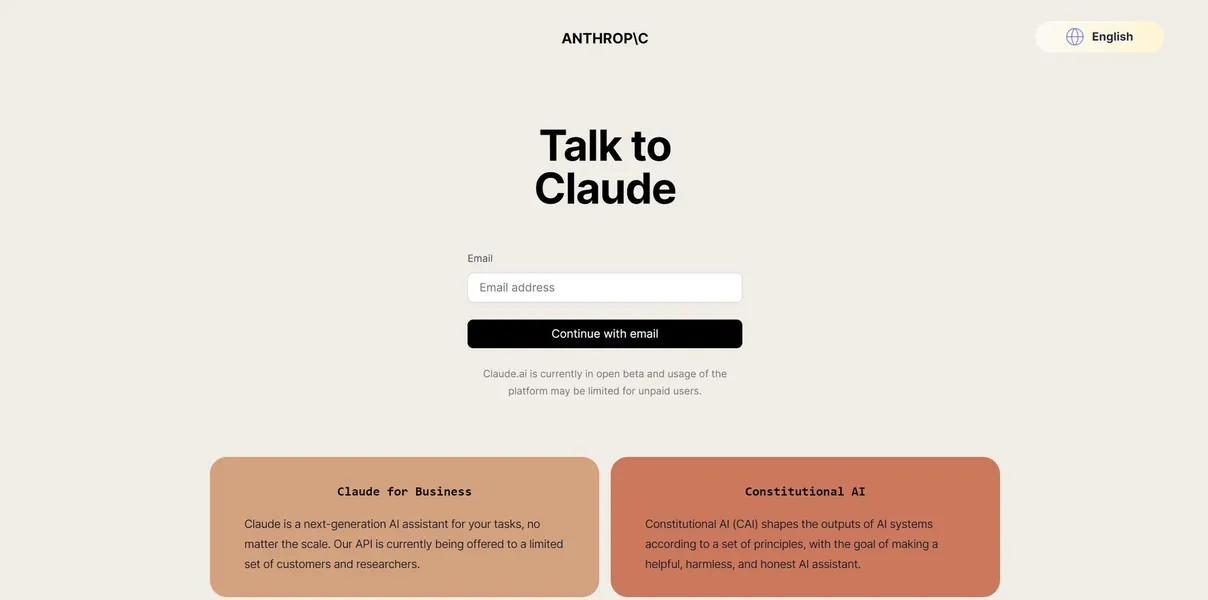
What is Claude 4?
Users expected another chat interface that writes basic emails. They got a terminal-based coding assistant that edits local files directly.
Developed by Anthropic PBC, Claude 4 is a large language model designed for complex reasoning and software engineering. It targets technical professionals who need to analyze massive datasets or build interactive web prototypes. The system processes up to one million tokens at once. This allows users to upload entire codebases or dozens of long PDF documents in a single prompt.
- Primary Use Case: Autonomous debugging and refactoring via Claude Code CLI.
- Ideal For: Software engineers and data researchers.
- Pricing: Starts at $17/mo (Pro annual) – High-tier options scale up to $200 monthly for heavy users.
Key Features and How Claude 4 Works
Advanced Reasoning and Memory
- Extended Thinking: Solves multi-step math problems, but processing takes up to two minutes per query.
- Persistent Memory: Stores user style guides across sessions, but struggles to forget outdated instructions without manual deletion.
Developer Tools and Execution
- Claude Code CLI: Edits local git repositories directly, but requires strict permission management to prevent accidental overwrites.
- Artifacts 2.0: Renders React and Tailwind CSS code in a side panel, but complex applications often crash the preview window.
- Computer Use API: Controls desktop interfaces automatically, but fails frequently on highly custom UI elements.
Document Analysis
- 1M Token Context: Reads multiple 500-page PDFs at once, but retrieval accuracy drops slightly near the middle of the document.
- Citations: Links directly to source text in uploaded files, but occasionally highlights the wrong paragraph.
Claude 4 Pros and Cons
Pros
- Superior coding accuracy in Python and Rust compared to direct competitors.
- Artifacts interface removes the need to copy and paste code into external editors.
- Extended Thinking mode shows a transparent chain-of-thought for easy logic verification.
- Anthropic guarantees they do not train models on Enterprise or Team tier data.
Cons
- The $200 monthly Max High Tier costs ten times the industry average.
- Strict safety filters frequently refuse to answer harmless creative writing prompts.
- Free tier message limits trigger quickly during peak global usage hours.
- Lacks a built-in real-time web search engine for current events.
Who Should Use Claude 4?
- Software Engineers: You can automate debugging and refactoring tasks using the CLI tool.
- Data Researchers: You need to analyze thousands of pages of documentation simultaneously.
- Enterprise Teams: You require strict data privacy and custom API compliance.
- Casual Writers: This is not a good fit. The safety guardrails will block your fictional scenarios.
Claude 4 Pricing and Plans
The free tier acts mostly as a trial, with strict daily usage limits. Pro costs $20 monthly (or $17 billed annually) and offers five times more usage. Teams pay $30 per user monthly with a five-seat minimum.
The Max tier costs $100 monthly for Extended Thinking and Memory features. Heavy users can buy the Max High Tier for $200 monthly to get twenty times the Pro message limit.
Team Premium costs $150 per user monthly and includes the CLI tool.
Enterprise pricing requires a custom quote.
How Claude 4 Compares to Alternatives
Similar to ChatGPT, this tool writes code and analyzes text. Unlike ChatGPT, Claude 4 lacks a built-in real-time web search engine. You must upload your own data instead of relying on live internet access. ChatGPT also offers a much cheaper entry point for heavy usage.
Google Gemini offers deep integration with Google Workspace apps. Claude 4 ignores office suites entirely to focus on terminal-based developer tools and local file system access. Gemini excels at drafting emails in Docs, while Claude excels at writing Python scripts.
The Verdict for Technical Teams
Software engineers get the most value here. The CLI tool changes how developers interact with local codebases (assuming you trust an AI with write access). Budget-conscious users should look elsewhere.
If you need live web research, use Perplexity AI instead.
The honest limit remains the pricing structure. We still do not know if independent developers will pay $200 monthly for increased message caps.