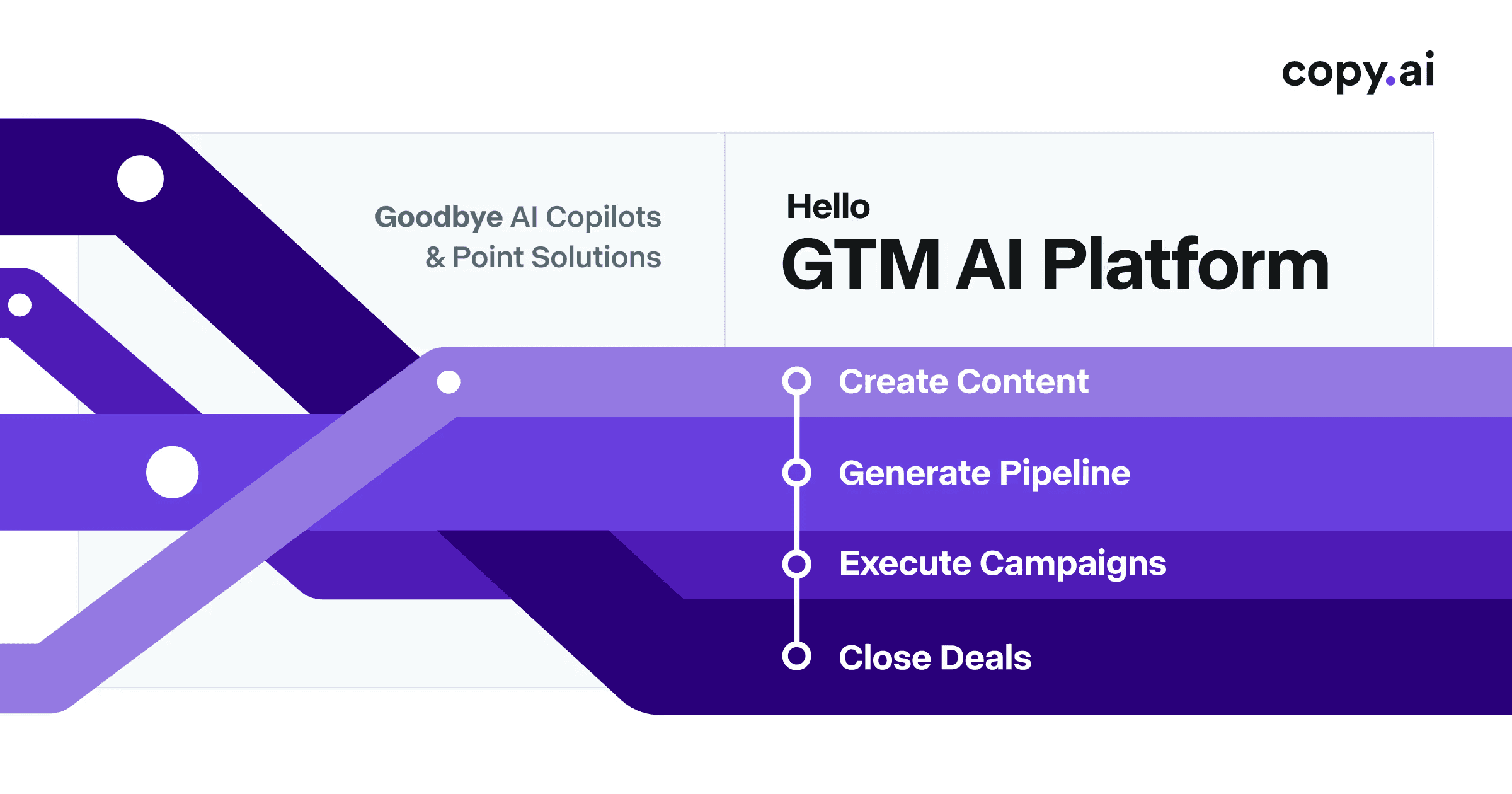
Copy.ai built a loyal following as an affordable AI copywriter, then pivoted hard to enterprise GTM automation. The tool works for sales teams running outbound workflows. For solo writers, the product they signed up for no longer exists at any reasonable price.
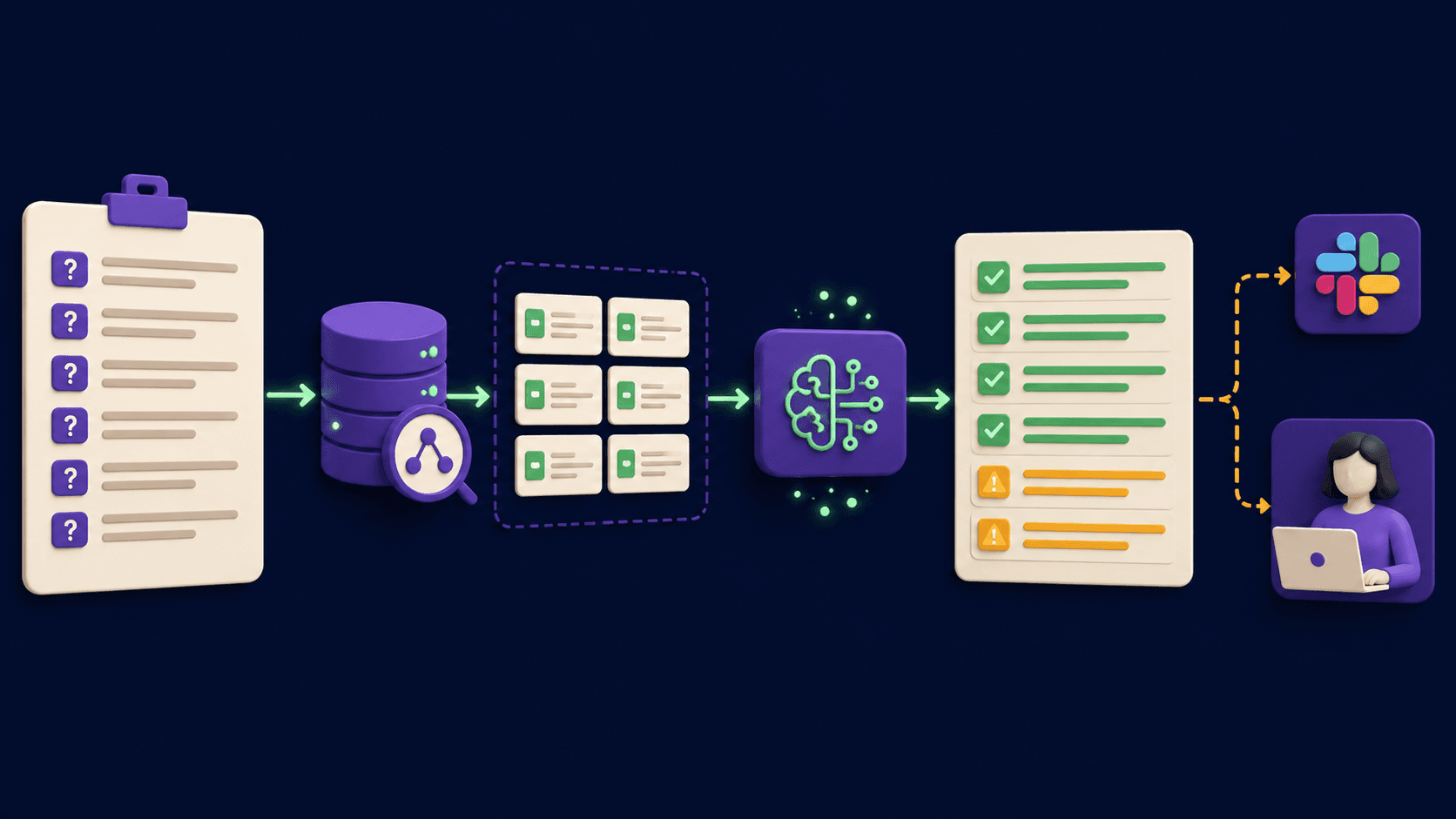
We built an outbound email sequence for 25 leads with Copy.ai's Workflows using the Prospecting Cockpit template on the Advanced plan. Setup took 45 minutes: connecting the HubSpot integration, uploading ICP definitions to the Infobase, and mapping the workflow steps. The result, personalized first-touch LinkedIn messages and a three-step follow-up sequence for each lead, was genuinely useful. Twenty of the 25 leads returned usable data; five had restricted profiles that returned nothing. Every message followed an identical structure: compliment a recent post, name a pain point, request a meeting. A trained SDR would need 15–20 minutes of editing across the batch to break the template pattern. For a 100-lead list, that's a real productivity gain. For a list of 10, the 45-minute setup time swallowed the saving.
That test captures Copy.ai in April 2026 almost exactly. It is a capable automation layer for sales and marketing teams running high-volume outbound operations. It is not, in any meaningful sense, the tool that 17 million users originally registered for, the affordable AI copywriter at $36 a month. That product is gone. What replaced it is technically more powerful and fundamentally less accessible to the audience that built Copy.ai's reputation.
What Copy.ai catches (and what it misses) in April 2026
Copy.ai's core strength today is multi-step workflow automation, not copywriting assistance. The platform runs five interconnected modules: Workflows (automated pipelines for lead enrichment, outreach sequencing, and content generation), Agents (autonomous task runners that can process actions without manual triggers), Infobase (a brand knowledge base where you store style guides, ICP definitions, and product documentation), Chat (a standard AI chat interface drawing on OpenAI, Anthropic Claude, and Gemini models), and Tables (CRM-like data tables that can trigger workflows automatically).
Pre-built workflow templates cover the most common GTM use cases: Inbound Lead Processing, the Prospecting Cockpit for outbound SDR teams, Account Based Marketing campaigns, and 15+ marketing and sales templates. Native integrations include Salesforce (via a managed package installed in mid-2025, replacing the previous manual field configuration), HubSpot, Outreach, SalesLoft, ZoomInfo, Clearbit, Google Docs, and Microsoft OneDrive. For teams already operating in those tools, the connection is one-click.
The Chat interface remains available for individual users and covers standard AI writing tasks, drafting, rewriting, brainstorming, using whichever underlying model you select. Short-form sales copy and ad variation generation remain a genuine strength. One tester generated 50 Facebook ad variations for a SaaS product launch in 22 minutes, with roughly 35 usable after minor edits, a 70% hit rate for performance marketers who need creative volume rather than editorial polish.
What Copy.ai consistently misses: brand voice fidelity, factual accuracy, and long-form coherence. The Brand Voice feature (Advanced plan only, $249/month) produces outputs that "didn't sound anything like my own writing style" in multiple independent tests, defaulting to what reviewers call "a strong North American software company foundation" regardless of uploaded voice guidelines. Long-form blog posts require 40–60% rewriting, with frequent factual fabrications, invented citations, statistics without sources. One G2 reviewer noted: "It's hard to get accurate sources and will manipulate information."
A real test: outbound workflow for 25 leads before and after
Using the Prospecting Cockpit workflow on the Advanced plan, we processed a list of 25 target B2B leads. The input was a spreadsheet with company name, LinkedIn URL, and job title. The workflow pulled LinkedIn profile data, researched recent activity, and generated a first-touch message plus three follow-up steps for each lead.
Before (manual SDR process): Researching 25 leads individually, drafting personalized first-touch messages, and building a follow-up sequence takes an experienced SDR 4–6 hours. The quality ceiling is limited by how much individual research time each lead gets.
After (Copy.ai Prospecting Cockpit): Processing time was 8 minutes after setup. Of 25 leads, 20 returned usable outputs. The messages were structurally identical, post compliment, pain point, meeting ask, and would be recognizable as AI-generated to any recipient familiar with outbound patterns. Editing all 20 to break the formula and add genuine personalization took approximately 25 minutes. Total time: 33 minutes including editing, versus 4–6 hours manually. The credits consumed: approximately 30–40 workflow credits for the run.
The math favors Copy.ai for volume. At 100 leads per week, the time saving is substantial even after editing. At 10–25 leads per week, the reality for many small teams, the $249/month cost is difficult to justify against simply using ChatGPT or Claude directly with a well-built prompt template.
"The extensibility of Copy.ai is my favorite part, as well as the integrations.". G2 verified reviewer, 2025
"I felt like I had to do more editing than actually using what it generated.". Allison C., founder, Capterra, 2025
The complaints that keep showing up
The gap between Copy.ai's G2 rating (4.4/5, skewing enterprise buyers who chose the platform deliberately) and its Trustpilot rating (1.9/5, dominated by legacy users and billing disputes) is the single most informative data point about this product.
Billing and cancellation failures are the most consistent complaint on Trustpilot. Multiple users report being charged annual renewal fees of $432 without advance notification, a 5-day refund window that routinely expires before users notice the charge, cancellation confirmations that did not process, and support response times of 72 hours to several weeks. One user: "I cancelled my paid plan months ago and they have continued to charge me every month." Another: "I paid $432 for a pro account. I now have 0 credits." If you sign up for Copy.ai, document your cancellation with screenshots and monitor your bank statement.
Workflow credit exhaustion is the second major frustration. The Advanced plan ($249/month) includes 2,000 workflow credits per month. A three-step lead enrichment workflow processing 50 leads burns 40–60 credits per run. Running this workflow weekly depletes the monthly allowance before the month ends. The next meaningful plan tier is $1,000/month, a $750 per month cliff with no intermediate option. There is no clear credit calculator, leaving teams unable to project costs before they hit the ceiling.
Data loss and platform reliability were reported by multiple users following the 2025 platform updates. One reviewer documented that "all my saved prompts, projects and infobase vanished" after a platform update. Separate reports described the tool stopping working "every other day." For teams who have built operational workflows into Copy.ai, these outages represent real business disruption.
The pivot abandonment is the structural complaint that underlies everything else. Solo copywriters, freelancers, and small business owners who built habits around the $36/month Pro plan discovered in 2024–2025 that their plan was discontinued, replaced by a Chat plan ($29/month) with no workflow access, and an Advanced plan ($249/month) that contains the features they want. "If you were a happy Copy.ai Pro user paying $36/mo for copywriting help, the product you signed up for no longer exists", this sentiment appears across review aggregators consistently throughout 2025 and into 2026.
Privacy, training data, and your drafts
Copy.ai is SOC 2 Type II certified. Enterprise plans include data processing agreements and an option to opt out of model training data use. The Infobase stores your uploaded brand materials, style guides, ICP definitions, product docs, on Copy.ai's servers; treat it accordingly if that content includes confidential competitive intelligence.
The October 2025 Fullcast acquisition adds uncertainty. Copy.ai is being integrated into the Fullcast Propel suite alongside Ebsta, Atrium, and Commissionly. Long-term data handling implications of that acquisition are not publicly documented. Users with strict data residency requirements should request a DPA before committing to an annual plan.
The Chat interface routes through OpenAI, Anthropic Claude, and Google Gemini. Each provider's data retention terms apply to those calls. Treat anything you paste into Copy.ai Chat the same way you'd treat pasting it directly into ChatGPT.
Copy.ai in your workflow, when it helps vs. when it hurts
Copy.ai earns its place when the use case is high-volume, repeatable GTM operations: outbound prospecting for 100+ leads, batch social content for a multi-platform calendar, inbound lead routing, or automated competitive research via the SEC filing analysis action (which uses Perplexity models to pull annual report data into outreach templates, a non-obvious use that goes well beyond copywriting).
It also clears writer's block fast. "Copy.ai is a bloody lifesaver. helping me smash through writer's block," noted one Capterra reviewer. For quickly generating ten angles on a hook or exploring product description variants, the Chat interface is sufficient. The discipline is treating it as a draft generator, not a publisher.
It hurts when you need brand-accurate long-form output, need support that responds in hours rather than weeks, or are a solo writer comparing per-dollar value against ChatGPT Plus. The Chat plan at $29/month has no access to workflows, the feature that separates Copy.ai from every cheaper alternative.
Free vs. paid: is Premium worth it?
The Free plan (2,000 words/month) is a demonstration, not a working tool. The Chat plan at $29/month is usable if you only need an AI writing interface, but ChatGPT Plus and Claude Pro offer comparable or better output quality at $20/month, with more context window and broader model access. Copy.ai's Chat plan makes sense mainly if you are a team member with Advanced or Growth access who also wants a personal Chat seat.
The Advanced plan at $249/month is where Copy.ai's value proposition actually lives: Workflow Builder, Brand Voice, 2,000 workflow credits, and 30+ pre-built templates. The ROI is defensible for sales teams running structured outbound programs, if 2,000 credits is enough. It typically is not. The next tier is $1,000/month with no intermediate option. For solo writers and freelancers, there is no current Copy.ai plan that represents better value than ChatGPT Plus, Claude Pro, or Jasper's individual tier.
Copy.ai vs. Jasper vs. ChatGPT direct
Copy.ai leads on workflow automation depth and CRM integration. The Salesforce and HubSpot managed packages, the Prospecting Cockpit, and Tables create a differentiated product for revenue operations teams. The weaknesses are pricing, support reliability, and long-form content quality.
Jasper ($49/month individual) took the same pivot. AI for marketing teams, but focused on brand voice consistency, long-form content, and SEO rather than workflow automation. Jasper consistently wins on coherent multi-thousand-word drafts and brand voice fidelity. For content marketing teams, it is the stronger choice. For sales teams running outbound pipelines, Copy.ai's integrations are more relevant. Jasper's individual plan starts 5x cheaper than Copy.ai's workflow-capable tier.
ChatGPT Plus or Claude Pro ($20–30/month) is the most frequently cited alternative among users who leave Copy.ai. Several Capterra reviewers documented switching and concluding that "editing Copy.ai's output took just as long and I was paying more." For solo writers the case is clear: direct chat tools are better value. For sales ops teams, they require significant custom prompting to replicate what Copy.ai's workflow templates deliver natively.
User Reviews
No reviews yet. Be the first to share your experience!
Sign in to write a review.
Related articles
Guides and articles related to Copy.ai.

Build and Sell AI Automations as a Service: The Operator Playbook (2026)

AI SDR vs Human SDR: The Real Cost, Performance, and What Nobody Tells You

Replace 6 SaaS Subscriptions With 4 n8n AI Agents (2026)
AI Agents for Business: What They Actually Are and 12 Things You Can Automate Today

15 AI Agent n8n Workflows You Can Build This Weekend (2026)