



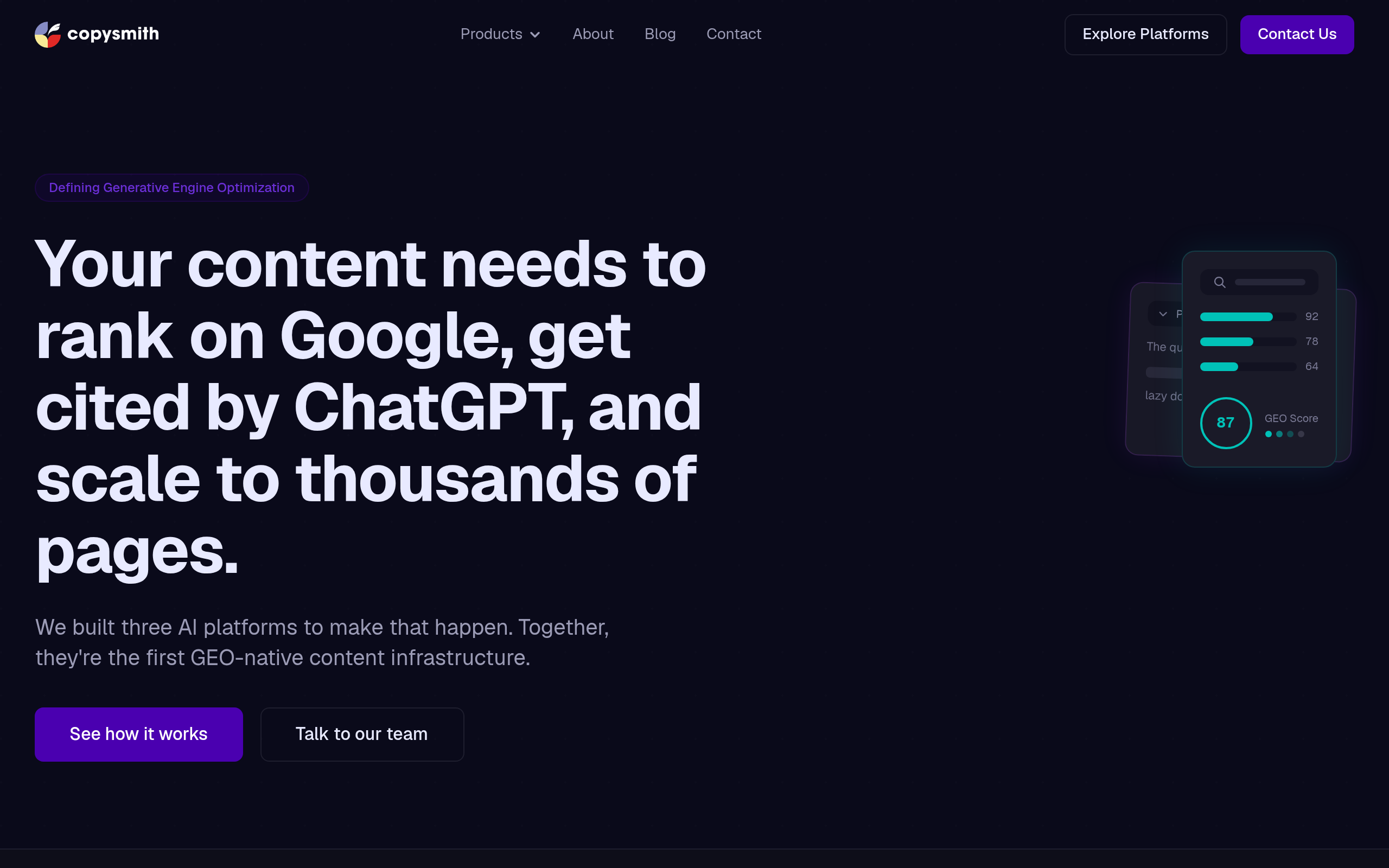
What is Copysmith?
You have 500 new SKUs arriving next week. Writing unique product descriptions for each item takes days of manual typing. Copysmith automates this process by turning a single CSV spreadsheet into hundreds of ready-to-publish Shopify listings.
Copysmith AI built this content generation platform for e-commerce teams and marketing agencies, focusing on high-volume production rather than creative storytelling. Users generate product descriptions, SEO meta tags, and ad copy at scale.
- Primary Use Case: Bulk generation of e-commerce product descriptions via CSV upload.
- Ideal For: E-commerce managers handling large catalogs.
- Pricing: Starts at $19 per month (Starter plan). This entry point restricts bulk generation features.
Key Features and How Copysmith Works
Bulk Catalog Generation
- CSV Upload: Users upload spreadsheets containing basic product specs to generate hundreds of descriptions at once. The system struggles to maintain unique phrasing across more than 50 similar items (we found the AI often repeats adjectives when processing large batches).
- Shopify Integration: The platform syncs with Shopify storefronts to push generated content live, though users must still manually review formatting before publishing.
Marketing Campaign Builder
- Cross-Channel Copy: The tool generates matching text for Facebook ads, Google ads, and landing pages at once. The generated ad variants often require manual tweaking to fit strict character limits.
- Template Library: Users select from over 30 specialized templates for specific platforms. The templates focus on standard e-commerce formats and lack options for long-form editorial content.
Enterprise Workflows
- API Access: Developers use the REST API to build custom content automation pipelines, a feature that requires an expensive Enterprise subscription.
- Team Collaboration: Managers assign tasks and share folders across workspaces, though the Professional plan caps this at 5 users.
Copysmith Pros and Cons
Pros
- Bulk generation via CSV upload cuts catalog update times from days to hours.
- Direct Shopify integration removes the need to copy and paste text between applications.
- The campaign builder creates matching copy for ads and landing pages in one click.
- A built-in plagiarism checker verifies originality without requiring a separate Copyscape subscription.
Cons
- Output becomes repetitive when generating descriptions for products with minor variations.
- The $19 Starter plan restricts access to the bulk generation tools that make the platform useful.
- The AI invents technical specifications for niche products, forcing manual fact-checking.
Who Should Use Copysmith?
- E-commerce Store Owners: Shopify users with large catalogs save hours by automating product description writing.
- Marketing Agencies: Teams managing multiple client accounts use the campaign builder to draft cross-channel ad copy quickly.
- Solo Bloggers: Independent writers looking for long-form article generation will find the e-commerce templates restrictive and unhelpful. This tool is a poor fit for editorial work.
Copysmith Pricing and Plans
Copysmith offers three paid tiers and a 7-day free trial. The trial provides full access to features but limits generation credits.
- Starter ($19/mo): Includes basic templates and a plagiarism checker. This tier limits users to 20,000 words per month and excludes bulk generation.
- Professional ($59/mo): Adds support for up to 5 team members and increases the word limit to 400,000 words. Users gain access to the Shopify integration.
- Enterprise (Custom Pricing): Supports 10 team members and provides unlimited bulk generation. This tier includes API access and custom workflow queues.
How Copysmith Compares to Alternatives
Similar to Jasper, Copysmith uses AI to draft marketing copy, but Jasper excels at long-form blog posts and creative storytelling. Copysmith focuses on high-volume e-commerce tasks. Users managing massive product catalogs will prefer Copysmith for its CSV upload capabilities.
Unlike Copy.ai, Copysmith includes direct integrations with e-commerce platforms like Shopify to speed up catalog management. Copy.ai offers a broader range of brainstorming tools and a generous free tier for casual users. Copysmith forces users into paid plans right away but provides better workflow tools for managing hundreds of SKUs.
The Verdict for High-Volume E-commerce Managers
Copysmith delivers massive time savings for e-commerce teams managing large product catalogs, and the bulk generation tools justify the monthly cost for store owners. Agencies running multi-channel ad campaigns also benefit from the campaign builder.
Solo writers and content marketers should look elsewhere because the platform lacks the long-form capabilities found in generalist AI writers. If you need to write long blog posts, Jasper remains a better choice.
The platform still struggles with repetitive phrasing on similar products.
Users must manually edit bulk outputs to ensure variety across their storefronts.