



What is Coris?
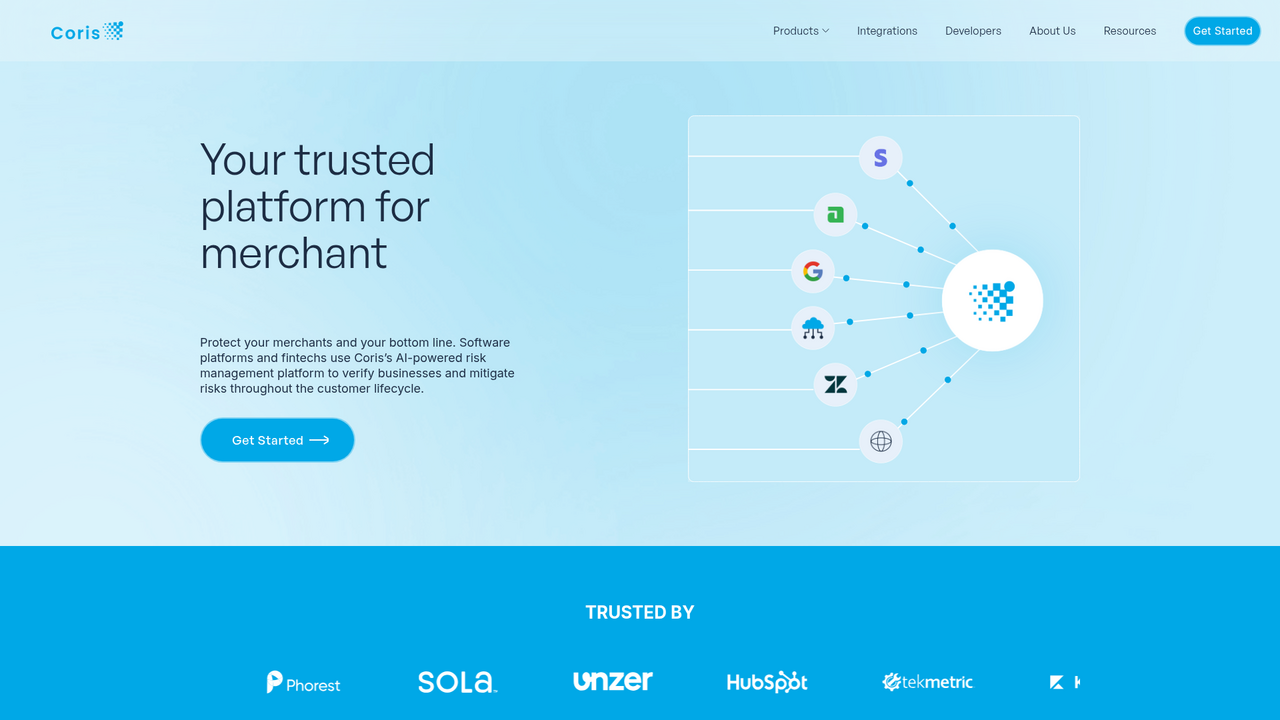
Your latest merchant acquisition campaign drives thousands of signups, but half abandon the funnel because manual risk checks take three days. Coris solves this exact conversion killer. Developed by Coris, Inc., this risk management and fintech platform automates SMB underwriting. It evaluates new applications in under 30 seconds. Growth teams rely on speed to hit acquisition targets. Coris gives them that speed by replacing manual reviews with instant decision engines. (Seeing a pending application switch to approved in real-time feels like watching a live theater production where every set change happens without error in the dark).
Risk managers use the platform to shift focus from routine data entry to complex fraud investigations. The software pulls data from multiple external databases to verify business legitimacy on the spot. It then continues to monitor the merchant portfolio to catch sudden changes in business health.
- Primary Use Case: Automating merchant onboarding and real-time SMB underwriting.
- Ideal For: Enterprise fintech risk and growth teams managing high application volumes.
- Pricing: Starts at $0 (Custom Enterprise Pricing) . Lacks transparent tiers and requires a custom sales contract.
Key Features and How Coris Works
Automated Decisioning and Underwriting
- 30-Second Approvals: The configurable decision engine processes standard applications in seconds. This keeps merchant acquisition campaigns moving without manual delays.
- Custom Risk Scoring: Teams define specific risk parameters to match their industry requirements. Practically speaking, this means you accept more safe merchants while rejecting obvious fraud.
Data Aggregation and Verification
- Merchant Profiler: This tool pulls from over 20 data sources to build a complete SMB profile. It prevents growth teams from flying blind during onboarding.
- Document Extraction: The system extracts text from tax IDs and licenses on its own. The tradeoff: dirty or low-resolution scans still kick the application back for manual review.
Lifecycle and Fraud Monitoring
- Continuous Monitoring: Real-time alerts flag bankruptcy filings or sudden website changes. The gap shows up when teams ignore these alerts, as the system generates a high volume of notifications.
- Synthetic Identity Detection: Machine learning identifies fake business applications before they access your platform. This protects your portfolio health long after the initial marketing push.
Coris Pros and Cons
Pros
- Cuts manual underwriting time by 70 percent for standard SMB applications.
- Builds high data accuracy by cross-referencing 20 different proprietary and public sources.
- Provides a custom rules engine to match specific corporate risk appetites.
- Connects directly with existing CRM and payment processors via well-documented REST APIs.
Cons
- Targets large enterprises, leaving small startups without a viable entry point.
- Hides exact costs behind custom quotes and a lengthy enterprise sales process.
- Requires several weeks of technical effort for initial setup and calibration.
Who Should Use Coris?
- Enterprise Growth Teams: You need to onboard thousands of merchants fast to prove campaign ROI. Coris clears the application backlog.
- Fintech Risk Managers: You want to transition from checking data fields to handling complex investigations. The case management workflow handles this shift.
- Solo Founders: Do not use this tool. The enterprise focus and multi-week integration timeline will drain your limited engineering resources.
Coris Pricing and Plans
Coris operates entirely on a custom enterprise pricing model. The company does not publish standard monthly fees or API request limits. What actually happens: you must contact their sales team, define your application volume, and sign a custom contract. There is no self-serve free tier or trial period. Startups looking for a quick month-to-month subscription will hit a wall immediately. You pay for tailored AI risk tools and dedicated enterprise support.
How Coris Compares to Alternatives
Middesk competes in the business verification space. Middesk offers transparent access for mid-market companies and focuses on secretary of state data. Coris handles continuous lifecycle monitoring better but costs more in initial setup time. Then again, Middesk lacks the same deep customizable decision engine for instant underwriting.
Alloy provides a massive identity orchestration platform. Alloy connects to hundreds of data vendors, making it the better choice for consumer KYC. So, if your marketing targets individual consumers, Alloy wins. Coris focuses on SMB merchant risk, making it a more specialized tool for B2B payment facilitators.
The Right Pick for High-Volume B2B Fintechs
Step back and look at your funnel. If your marketing efforts generate thousands of merchant leads that die in risk review, Coris offers a clear fix. It turns days of waiting into 30-second automated decisions. High-volume fintechs get the most value from this specialized automation. Solo developers and early-stage startups should look elsewhere. Middesk serves as a better alternative if you just need simple business verification without the enterprise price tag.