
DeepSeek offers frontier-level reasoning and coding performance at API costs 10–30x cheaper than GPT-4o. The tradeoff is real: political censorship on the hosted product, PRC data residency, and a documented database exposure. Open weights mean local deployment is possible, at a price.
We fed DeepSeek R1 a multi-step logic problem, an LSAT-style argument flaw buried across three paragraphs, and watched what happened before the answer appeared. In the <think> block, visible in full, the model caught its own wrong turn on the second step, flagged explicit uncertainty about a conditional clause, then corrected course before producing a clean final response. No other frontier model shows you that. GPT-o1 hides its chain-of-thought entirely. Claude summarizes its approach. DeepSeek R1 externalizes the whole internal monologue, wrong turns, self-corrections, confidence flags and all. That transparency is either DeepSeek's most underrated feature or its most revealing diagnostic, depending on what the reasoning contains. What it tells you about whether DeepSeek earns a place in your stack in 2026 depends heavily on what you're building and where your data lives.
DeepSeek R1 launched January 20, 2025, claiming training costs of roughly $5.5 million, approximately 20x less than comparable US models, and triggered a 16.9% single-day drop in NVIDIA's stock, erasing $589 billion in market capitalization. DeepSeek V4, released in early 2026 and reportedly trained on Huawei Ascend chips circumventing US export controls, has only deepened the questions that event raised. The model's capabilities are real. So are the complications.
DeepSeek at a glance. April 2026
The consumer product at deepseek.com is entirely free as of April 2026, there is no subscription tier. The model you access via the web app is DeepSeek V4, which introduced hybrid reasoning modes: a "thinking" mode that produces extended chain-of-thought visible in <think> tags, and a "non-thinking" mode for faster responses without the reasoning overhead. The same model handles both modes, making it more flexible than the earlier V3/R1 split.
The API runs on two active models. deepseek-v4-flash prices at $0.14 per million input tokens (cache miss) and $0.28 per million output tokens, with cache hits reducing input costs to $0.028, an 80% discount applied automatically with no code changes required. deepseek-v4-pro runs at $1.74 per million input tokens and $3.48 per million output tokens, with cache hits at $0.145. Context windows for both models reach 1 million tokens with maximum output of 384K tokens. The legacy model names deepseek-chat and deepseek-reasoner are deprecated.
On the open-weights side, DeepSeek R1 (671B parameters) and V3 are MIT-licensed on Hugging Face. Distilled variants, 8B, 14B, 32B, and 70B, run on consumer hardware via Ollama. The full 671B model requires $40,000–$80,000 in hardware. DeepSeek V3.1 is available on Amazon Bedrock, Azure AI Foundry, and Google Cloud Vertex AI with EU-region deployments, a partial data residency workaround for teams without the capital for on-premises infrastructure.
What DeepSeek is actually good at
The clearest evidence for DeepSeek's value is in math, reasoning, and code at low API cost. DeepSeek R1 achieves approximately 90% accuracy on AIME 2024 math benchmarks, versus GPT-4o at roughly 83%. On LeetCode-style coding tasks: a ProductHunt reviewer ran the R1 70B distill against eight Kotlin-to-TypeScript migration problems and found "superior correctness scores versus competing models." The distilled 70B runs locally via Ollama without API costs or data leaving your infrastructure.
The reasoning trace is useful beyond arriving at correct answers. As a developer wrote on mccormickml.com in February 2025: "You can learn a lot about the problem you're trying to solve from the reasoning tokens, not just the final model output." For debugging model behavior, building worked examples, or understanding where reasoning breaks down, the exposed <think> block is a qualitatively different tool than models that show only their conclusion.
The cost advantage for high-volume API users is not marginal. Teams running batch document processing, RAG pipelines, or high-frequency inference report costs dropping 50–95% switching from GPT-4o or GPT-5. At $0.14 per million input tokens, the arithmetic is straightforward. For privacy-sensitive applications, the MIT-licensed open weights provide an exit from hosted APIs entirely. A Hacker News commenter cited "security/IP protection as the primary advantage, avoiding remote APIs entirely." Legal teams and enterprises with data residency requirements running distilled variants on private infrastructure get near-frontier reasoning quality with zero telemetry.
Where DeepSeek breaks, the failure modes users keep hitting
The censorship problem is not a niche concern. DeepSeek refuses to engage with Tiananmen Square, Taiwan's political status, or criticism of the Chinese Communist Party. Tested directly in early 2025, the model responded to a question about Tiananmen Square 1989 with: "Sorry, that's beyond my current scope. Let's talk about something else." On Taiwan, it stated "Taiwan, as a part of China, is not a country" before deleting the response and repeating the out-of-scope message. These are not edge cases involving obscure topics, they affect China researchers, journalists, human rights workers, Taiwan-based businesses, and anyone building products that might reference modern geopolitical history. Ron Deibert, director of Citizen Lab at the University of Toronto, noted that what is unusual here is that "it is unusual for China-based applications to censor international users", the filtering extends beyond Chinese-language queries to English-speaking users globally.
The hosted product's privacy exposure is documented, not theoretical. On January 29, 2025, Wiz Research discovered a publicly accessible ClickHouse database on DeepSeek subdomains containing over one million log stream records, including user chat histories, plaintext API keys, backend infrastructure details, and operational metadata, with no authentication required. The exposure was responsibly disclosed and patched promptly, but it confirmed that the infrastructure securing user data had material gaps. Separately, NowSecure found the DeepSeek iOS app transmitting device data unencrypted to Volcengine, ByteDance's cloud platform. All user data processed through the API or consumer app is stored on PRC servers subject to China's 2017 National Intelligence Law.
On performance, the verbose reasoning mode creates a specific failure category for simple tasks. The thinking mode produces lengthy chain-of-thought for questions that don't warrant it, and the model can argue itself into wrong answers from correct starting points:
"Soooo wordy on regular questions, even after adjusting parameters for brevity. Effective for coding snippets only.". ProductHunt reviewer, 2025
"The model counts three R's in 'strawberry' correctly, then repeatedly argues with itself that the answer must be two, ultimately refusing to trust its own reasoning.". Hacker News commenter, thread id 42768072, 2025
The <think> block makes these collapses visible, which is useful for diagnosis but not useful when you need reliable answers on simple queries.
Server availability has been an ongoing issue since the January 2025 launch surge. The infrastructure absorbed a 230 million-hit DDoS attack over five days in early 2025, and "server busy" 429 errors were widespread throughout 2025. Developers testing integrations who need reliability cannot depend on the free consumer product under load.
DeepSeek vs. GPT-4o vs. Llama
ChatGPT (GPT-4o / GPT-5): DeepSeek's argument is cost. V4-flash is 10–30x cheaper per token, and the consumer product is free with no subscription. ChatGPT does not censor geopolitically sensitive topics, stores data under US jurisdiction, and offers meaningfully better infrastructure reliability. For teams building international products or anything touching geopolitical history, ChatGPT's absence of political censorship is a functional requirement. For high-volume, apolitical inference pipelines, DeepSeek's cost advantage is compounding.
Llama (Meta): The comparison is about local deployment. Meta's Llama 3.1 70B and DeepSeek R1 70B distill compete directly for self-hosted use. DeepSeek R1 distill benchmarks above Llama 3.1 70B on reasoning tasks, but Llama has no censorship concerns and a more mature fine-tuning ecosystem. Both models are free weights. Teams that need the most production-tested self-hosting ecosystem choose Llama; teams prioritizing reasoning benchmark performance and comfortable with the censorship tradeoff reach for DeepSeek R1 distill.
The use case that resolves cleanly in DeepSeek's favor is high-volume, apolitical inference via API, particularly for cost-sensitive SaaS products where OpenAI bills have become a significant line item.
Is the paid tier worth it?
DeepSeek's consumer product has no paid tier as of April 2026, the web and mobile apps are entirely free. The cost question lives at the API level, where the choice is between v4-flash and v4-pro.
V4-flash at $0.14/1M input tokens is the default for most use cases. For batch document processing, RAG retrieval, summarization pipelines, and general coding assistance, the flash model's quality-to-cost ratio is hard to match. The automatic cache hit discount, reducing input costs to $0.028/1M when prompts share prefixes, means applications with consistent system prompts or repeated context get an 80% input cost reduction with no implementation changes required.
V4-pro at $1.74/1M input tokens is the right call for teams that have benchmarked reasoning quality on their specific task type and need the premium tier's extended chain-of-thought depth. At that price, GPT-4o and Claude Sonnet are competing options, and their cleaner data residency story may tip the decision for professional workloads. For most developers, the starting point is v4-flash with cache optimization. The context window (1M tokens) and output limit (384K tokens) support long-document workflows without chunking.
Best use cases (and when to skip it)
DeepSeek performs well for: high-volume API inference where OpenAI or Anthropic costs are materially impacting margins; math-heavy applications including tutoring platforms, competitive programming tools, and scientific computing assistants; code review and debugging where the reasoning trace helps users understand why a fix works; and self-hosted deployments on private infrastructure where data never leaves the organization.
The unexpected use case surfacing repeatedly in developer communities is running distilled variants locally as an uncensored reasoning engine for legally or competitively sensitive research. The MIT-licensed weights can be modified and the post-training alignment layer stripped, meaning a locally-run model will answer questions the hosted version refuses. Teams have documented this workflow for competitive intelligence involving Chinese market dynamics, legal document review spanning cross-border regulatory analysis, and academic research on Chinese history. The practical setup: quantized 14B or 32B distill via Ollama for sensitive tasks, hosted API for commodity inference at $0.14/1M tokens for the rest.
Skip DeepSeek for workflows involving China, Taiwan, Tibet, or Hong Kong politics, the censorship is consistent and non-configurable. Skip it for enterprise applications where PRC data residency is a compliance barrier, for teams that need infrastructure reliability guarantees (the free tier is not production-grade under load), and for creative writing or open-ended conversation where the quality gap versus ChatGPT and Claude remains consistent.
Getting started with DeepSeek
The consumer app requires only an email registration. For the API, register at platform.deepseek.com, the API is OpenAI-compatible, so existing OpenAI SDK integrations switch by changing the base URL and model name only. Use deepseek-v4-flash or deepseek-v4-pro; the legacy names deepseek-chat and deepseek-reasoner are deprecated.
For local deployment, R1 distill variants are on Hugging Face at github.com/deepseek-ai/DeepSeek-R1 under MIT license. Ollama supports them natively: ollama pull deepseek-r1:70b. A quantized 32B fits on a single 24GB GPU. Last tested: April 2026.
User Reviews
No reviews yet. Be the first to share your experience!
Sign in to write a review.
Featured in collections
Curated lists that include DeepSeek.
Related articles
Guides and articles related to DeepSeek.
DeepSeek V4 Pro vs Claude Opus 4.7: 5-PR Refactor Test (2026)
Grok 4.3 API for Agents (May 2026): Pricing, Benchmarks, Migration
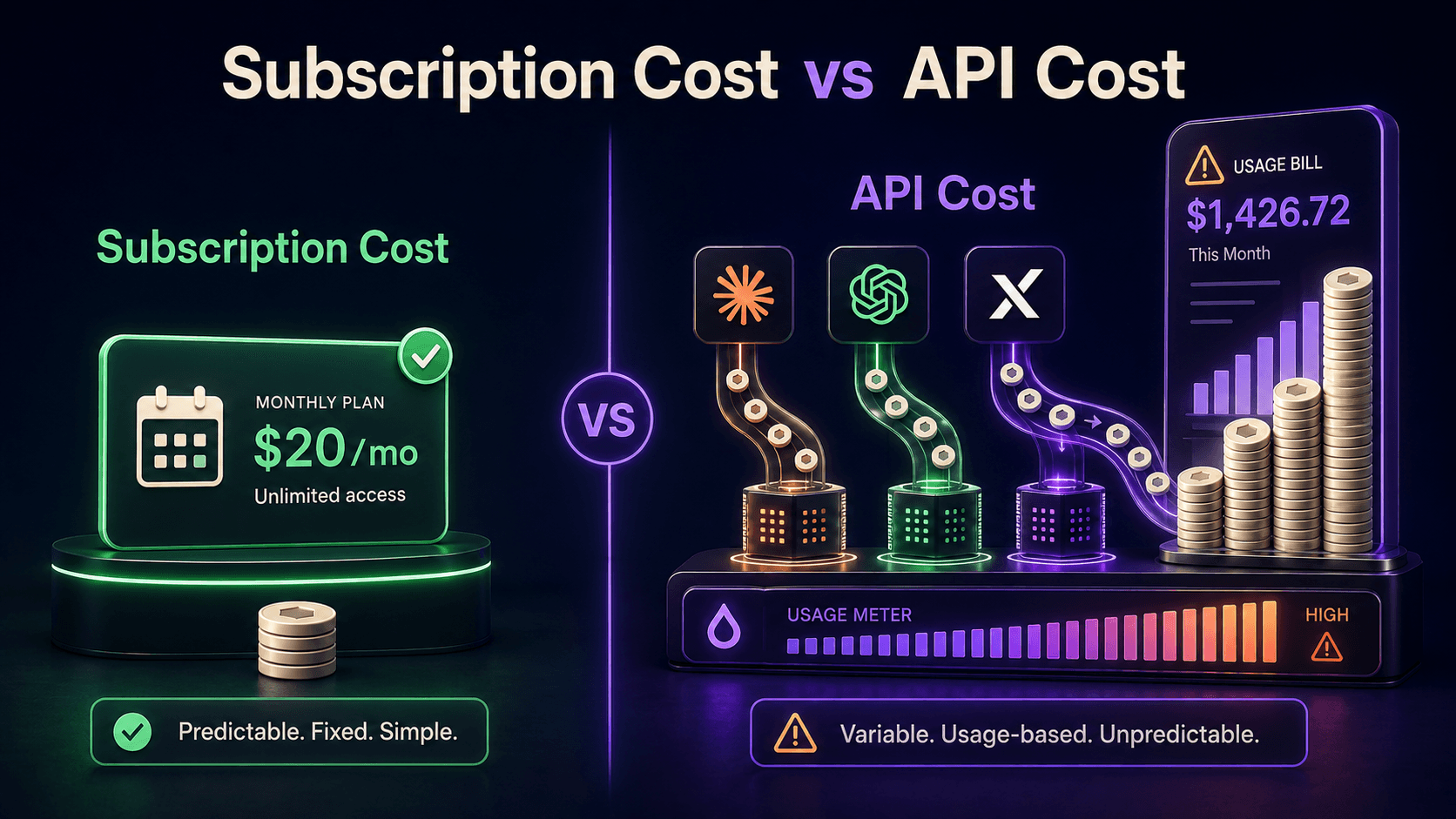
Does API Cost More Than a Subscription for Claude Opus 4.8, GPT-5.5, and Grok?
Coding Ate Enterprise AI (2026): The $4B Use Case, Anthropic’s Share, and Seat vs API Math
Google Vision AI Explained (2026): Pricing Per 1,000 Units, Free Tier, and Alternatives