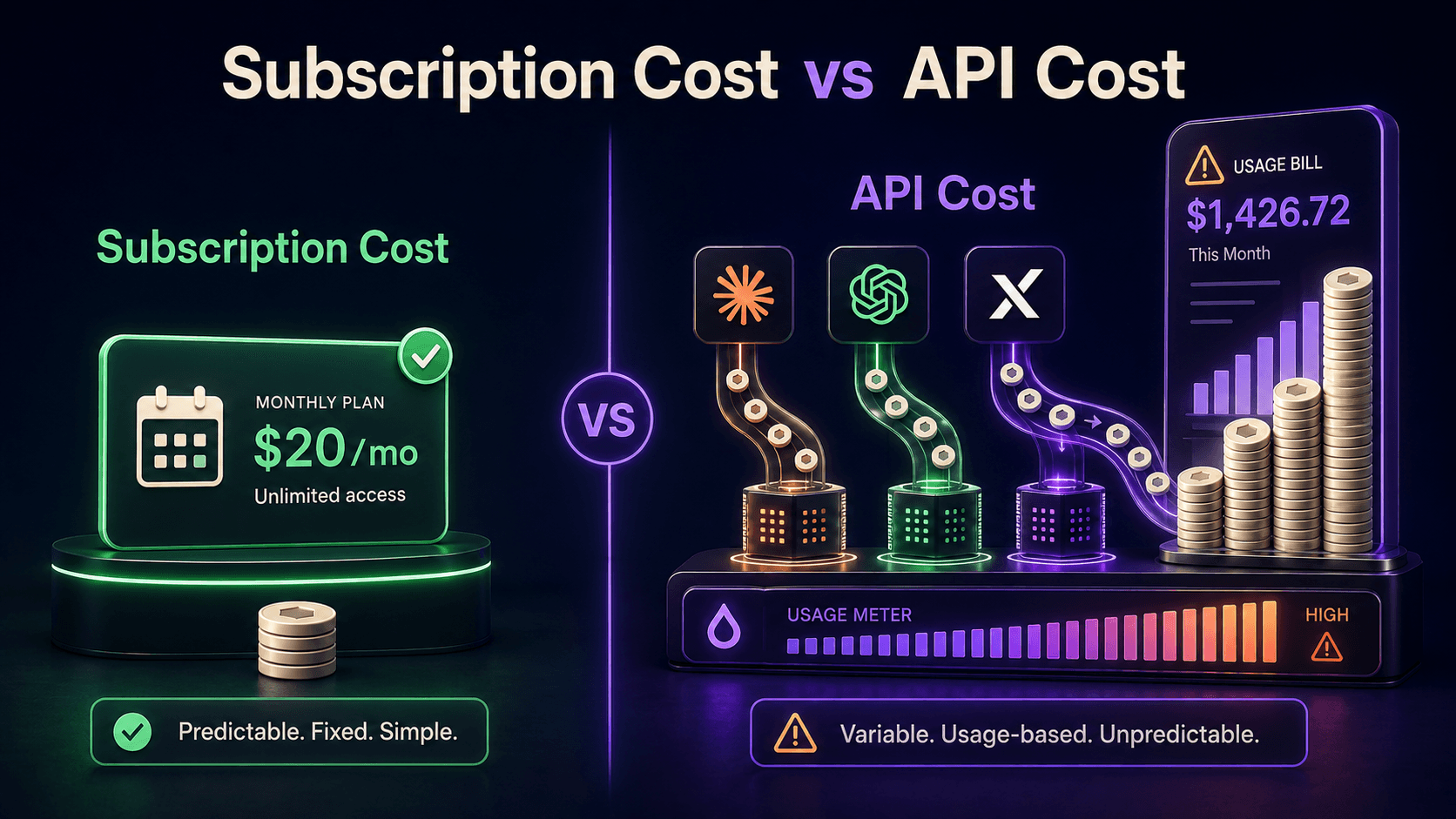

ElevenLabs leads the AI voice market in 2026 with its Eleven v3 model, Professional Voice Cloning, and a 5,000-voice library, but real production costs run 2–3x higher than plan pricing suggests, and voice drift on long-form content remains an unsolved problem.
We cloned a voice using a 90-second sample on ElevenLabs' Instant Voice Cloning tier and generated five continuous minutes of speech across three tonal registers, neutral narration, excited promotional copy, and a sombre reflective passage. The cloned voice held consistent identity across all three with no accent drift at that length. Breath sounds were present and appropriately placed in narration. The excited passage over-committed to upward inflection on roughly 15% of sentences, requiring manual [calmly] tag corrections. The sombre passage was the strongest. ElevenLabs' handling of slower cadence and lower register outperforms competitors at this tier. No clipping or artifacts appeared. What we didn't expect: actual credit consumption came to approximately 2.1x the raw character count, owing to three regenerated lines and two preview listens, a ratio that matches hundreds of user reports and is the single most important thing to understand before committing to a plan.
How ElevenLabs sounds in April 2026
ElevenLabs' voice quality in 2026 is, by a meaningful margin, the best available in a commercial TTS platform. The gap between ElevenLabs and second-tier competitors, the flat, cadence-locked delivery that defined early AI speech, is obvious within a few seconds of listening. Emotion registers as human rather than performed. Pauses fall where a speaker would actually pause. The technology has moved far enough that the "uncanny valley" problem that defined AI voice up through 2023 is largely resolved on standard content.
The flagship model is Eleven v3, launched June 2025. V3 supports 70+ languages with inline audio tag directives , [excited], [whispers], [sighs], [shouts], for precise delivery control. A Text-to-Dialogue endpoint generates multi-speaker conversation with natural overlaps and matched prosody. V3 reduced errors on technically complex text by 68% compared to its predecessor. The trade-off: v3 is unsuitable for real-time use and should only be applied to pre-rendered content.
For real-time applications, Flash v2.5 targets approximately 75ms latency, the correct model for conversational agents and IVR pipelines where sub-second turnaround is non-negotiable. The expressiveness gap between Flash and v3 is audible; Flash sounds natural but lacks v3's emotional range. There is no current ElevenLabs model that delivers both. Multilingual v2 (29 languages) remains in Dubbing Studio workflows for stability, though v3 supersedes it on quality.
"Most people cannot tell that the audio is AI-generated. I shared samples with my inner circle and no one identified it as AI.". ProductHunt reviewer via devopscube.com, 2025
The library, the models, and what they're really for
The Voice Library contains 5,000+ professional voices available to all paid subscribers. Quality varies widely, the highest-rated voices in narrow categories (rare accents, specialised registers, genre character voices) are genuinely exceptional, while the long tail is more variable. Creators can list their own cloned voice on the marketplace at $0.03–$0.20 per 1,000 characters. ElevenLabs has distributed over $11 million to voice creators, and high-adoption niche voices earn up to $10,000 per month passively.
Instant Voice Cloning (IVC) is available from Starter ($6/month) and requires as little as one minute of clean audio. Results are usable for short-form content; inconsistencies accumulate on longer runs. Professional Voice Cloning (PVC), available from Creator ($22/month), requires 30+ minutes of studio-quality audio. When training audio is properly prepared, controlled room acoustics, correct RMS levels, no background noise. PVC results are nearly indistinguishable from the original speaker. Users who record in untreated home environments typically find results fall well short regardless of training length.
Dubbing Studio translates and re-voices content across 29 languages while preserving the original speaker's tone and emotional inflections. Most jobs complete in under ten minutes. Lip-sync accuracy against original video is imperfect but workable for distribution. The critical caveat: Dubbing Studio consumes credits at a substantially higher rate than basic TTS, credit depletion after dubbing sessions is one of the most commonly reported billing surprises on the platform.
ElevenLabs Agents (February 2026) provides a conversational AI platform combining Eleven v3 Conversational TTS with a turn-taking engine that reads hesitation cues. It supports bring-your-own-LLM (GPT-4, Claude, Gemini, custom), RAG, and MCP tool connections for CRM and ticketing integrations.
Where ElevenLabs breaks, clipping, accents, emotion, consistency
Voice drift on long-form content is ElevenLabs' most persistent quality problem, and the company has acknowledged it in its own help documentation. In multilingual models especially, a ten-minute audio file can begin in one accent and arrive somewhere different. American English sliding toward British mid-generation, or occasional language switching on content that sits near a language boundary in the training corpus. Reviews consistently note that sudden tonal breaks, a few robotic words in an otherwise fluid passage, occur more frequently on longer input segments. ElevenLabs' recommended workaround is to break long scripts into shorter segments, which works but adds editorial overhead and increases the number of generation attempts (and therefore credits consumed).
"Real production usually costs more credits than the plan suggests. It is common to spend around 2 to 3 times the expected amount because you often regenerate lines.", reviewer at startwithsam.com, 2025
Credit burn on failed and iterative generations is the platform's most consistently documented user complaint. Previews, failed generation attempts, and regenerated lines all consume credits, not just approved final exports. One independent production test tracking 30 days found an effective cost of 2.8x the advertised per-character rate once regenerations were counted. Users debugging drift or accent issues pay the credit cost twice: once for the bad output and once for the replacement. This is structurally different from competitors like Play.HT where failed generation models are more forgiving on credit deduction.
Billing complaints form a distinct cluster. Users report losing unused credits on plan cancellation with no refund pathway, difficulty cancelling, and credits that expire rather than roll over. Legacy voices have been removed from the platform without compensation for users who had built workflows around them. Support response on billing disputes is widely reported as running into weeks.
On expressiveness: ElevenLabs v3 excels at neutral narration, calm authority, and sombre registers. It over-commits on excitement, upward inflection in promotional copy can tip into unconvincing territory. The [calmly] and [steadily] tags end up being used as corrections after initial generation rather than intentional stylistic choices.
Commercial licensing and ownership
Free tier output is watermarked and has no commercial license. All paid plans from Starter ($6/month) include a commercial license. Pro ($99/month) and above unlock 44.1kHz PCM audio and 192kbps distribution-quality files, required by Spotify, ACX, and Findaway Voices. PVC requires written consent attestation and a verification audio recording; ElevenLabs' moderation layer reviews submissions before activation, adding delays some users report as multi-day without a published SLA.
A Consumer Reports assessment in March 2025 found ElevenLabs relies on self-attestation checkboxes for cloning consent rather than verified identity confirmation, a gap researchers called inadequate. The Prohibited Use Policy bans political deepfakes and non-consensual cloning; enforcement combines technical blocks and law enforcement referrals. As of April 2026, the platform is under congressional scrutiny in the US regarding AI voice fraud and audio provenance chains.
A real workflow: multi-narrator fiction audiobook production
The workflow that surfaces most consistently in independent creator communities, thecreativepenn.com, reedsy.com, r/selfpublish, is using ElevenLabs Studio to produce multi-character fiction audiobooks. The platform parses an uploaded ePub or Word document chapter by chapter, automatically detects named characters via dialogue attribution, and generates a narrated file with distinct voices assigned to each character. This previously required multiple voice actors and a sound engineer; the AI does the attribution work automatically.
Author and publisher Joanna Penn's guest Simon Patrick detailed producing audiobooks for under $200 versus traditional narration at £7,000 or more, with full commercial file ownership across Spotify and YouTube. His recommended path: start on Creator at $22/month for exploration and voice development, then upgrade to Pro at $99/month when the 192kbps WAV files required for distribution are needed. A 6.5-hour novella required approximately 18 hours of editorial supervision, segment review, tag correction, regeneration of drift-affected passages, a sharp counterpoint to the "one-click audiobook" framing, but a viable cost structure for indie authors who previously had no path to the audiobook market.
Pricing per minute / per track, the honest math
ElevenLabs charges by credit: 1 credit = 1 character of input text on standard TTS models; Flash models consume 0.5 credits/character on qualifying plans. A spoken minute of audio requires roughly 700–800 characters, so 1 finished minute costs 700–800 credits from your monthly allocation. On Starter (30,000 credits/month), that is approximately 37–43 minutes of TTS, before regenerations. The 2–3x regeneration multiplier documented in production workflows drops effective Starter output to roughly 12–20 finished minutes per month.
Creator ($22/month, 121,000 credits) is the practical entry point for serious work: roughly 50–75 finished minutes monthly when accounting for iteration. Pro ($99/month, 600,000 credits) covers commercial audiobook production and high-volume voiceover. Previews, failed generations, and Dubbing Studio sessions all draw from the same pool, track credit spend per project type before committing to a tier.
ElevenLabs vs. Play.HT vs. OpenAI TTS
Play.HT is the nearest all-round rival. It supports 140+ languages (versus ElevenLabs' 70+) and offers ultra-low latency streaming optimised for dialogue-heavy agent applications. For real-time pipelines that hit ElevenLabs' v3 latency ceiling, Play.HT is the most cited alternative among developers. Voice quality is competitive but ElevenLabs retains the edge on emotional nuance in pre-rendered content. The significant structural difference: Play.HT's credit model does not charge for failed generation attempts, making it more forgiving for iterative production workflows where developers are tuning output quality over multiple attempts.
OpenAI TTS (available via the Realtime API) is the path of least resistance for teams already embedded in the OpenAI stack. It produces natural speech with six preset voices, achieves sub-300ms latency, and requires no additional vendor relationship. Quality is good but trails ElevenLabs on emotional range, and there is no voice cloning capability. The practical decision rule: OpenAI TTS for GPT-native developers who want one vendor and don't need cloning; ElevenLabs for anyone who needs voice matching, expressiveness control, or broad language coverage.
Murf AI targets enterprise L&D teams producing training content. Its curated studio library produces voices that sound professional and consistent, more trained presenter, less emotionally dynamic human. Murf lacks ElevenLabs' cloning quality but wins on collaboration UI, built-in music and soundtrack options, and a video editor designed for team workflows. Teams producing corporate training modules who need multi-author project management will find Murf's workflow better fitted; teams who need voice realism or cloning should stay with ElevenLabs.
User Reviews
No reviews yet. Be the first to share your experience!
Sign in to write a review.
Featured in collections
Curated lists that include ElevenLabs.
Related articles
Guides and articles related to ElevenLabs.
OpenAI GPT-Realtime-2 (May 2026): Pricing, Latency & 30-Min Voice Agent
Replit Pricing Explained (2026): Core vs Pro and Effort-Based Agent Billing
Google Vision AI Explained (2026): Pricing Per 1,000 Units, Free Tier, and Alternatives
Build a 70-Language Live Voice Agent With GPT-Realtime-Translate (2026)
Undetectable AI Review (2026): What It Does, What It Costs, and 7 Alternatives