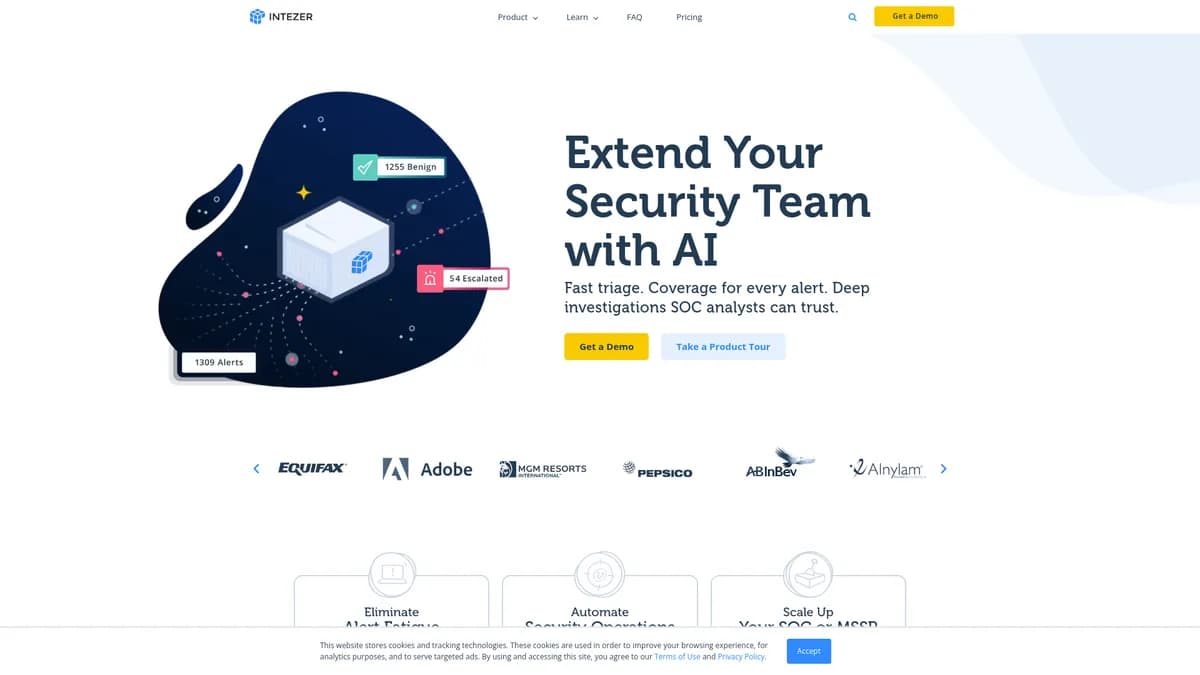

Intezer is an autonomous SOC platform that automates security alert triage and malware analysis for enterprise teams. It uses genetic code decomposition to identify threat origins instantly. But its opaque custom pricing and complex reports make it unsuitable for small businesses without dedicated security analysts.
What is Intezer?
Intezer acts as a virtual Tier-1 security analyst. It ingests thousands of daily alerts from endpoint detection systems and automatically resolves false positives.
Developed by Intezer Ltd., this autonomous SOC platform targets enterprise security teams drowning in alert fatigue. It uses genetic code decomposition to analyze malware at the assembly level. This approach identifies code reuse across known threat families.
- Primary Use Case: Automating SOC alert triage and malware analysis.
- Ideal For: Enterprise security teams and MSSPs.
- Pricing: Starts at $Custom (Annual Contract) – Opaque enterprise pricing requires a sales call to get a baseline quote.
Key Features and How Intezer Works
Genetic Code Analysis
- Code Similarity Engine: Compares uploaded files against billions of known code snippets. Limit: Requires internet connectivity to query the Intezer database.
- Memory Scanner: Detects fileless malware in running processes. Limit: Only supports Windows endpoints for live memory extraction.
Automated Alert Triage
- EDR Integration: Connects directly to CrowdStrike and SentinelOne. Limit: API rate limits on the EDR side can slow down bulk alert processing.
- Phishing Automation: Extracts and analyzes attachments from O365. Limit: Cannot process encrypted zip files without the password provided in the email body.
Threat Intelligence and Reporting
- MITRE ATT&CK Mapping: Tags behaviors to specific framework techniques. Limit: Only maps behaviors observed during the sandbox execution window.
- Automated Unpacking: Strips obfuscation layers from packed samples. Limit: Highly custom or novel packers still require manual reverse engineering.
Intezer Pros and Cons
Pros
- Automates triage for over 90% of incoming security alerts.
- Identifies malware origins even when the file hash is completely unique.
- Connects directly to major EDRs for one-click threat remediation.
- Distinguishes accurately between legitimate administrative tools and malicious backdoors.
Cons
- Pricing is completely opaque and targets large enterprise budgets.
- Analysis reports demand high technical expertise to interpret fully.
- Internal proprietary software often triggers false positives due to a lack of public code history.
Who Should Use Intezer?
- Enterprise SOC Teams: Analysts dealing with thousands of daily CrowdStrike or SentinelOne alerts save hours of manual triage.
- Incident Responders: Professionals investigating complex breaches use the genetic analysis to attribute malware to specific threat actors.
- Small Businesses: Teams without dedicated security engineers will find the platform too expensive and the reports too technical.
Intezer Pricing and Plans
Intezer hides its pricing behind a sales wall. The company offers no public pricing tiers and no free trial for the enterprise product.
The Starter plan includes 24/7 monitoring and automated triage for a single alert source. This usually means connecting either your EDR or your phishing inbox.
The Complete plan adds support for SIEM, cloud workloads, and identity alerts. It also includes custom response workflows and expert assistance from Intezer analysts.
The Enterprise plan targets MSSPs and massive organizations requiring custom integrations.
You must contact sales to get any actual numbers.
How Intezer Compares to Alternatives
Similar to Any.Run, Intezer provides deep malware analysis capabilities. But Any.Run focuses heavily on interactive sandboxing where analysts manually click through the execution. Intezer prioritizes automated genetic code decomposition to identify threat families without manual interaction. Any.Run offers a transparent $2,999 annual plan, while Intezer requires custom quotes.
Unlike Joe Sandbox, this tool integrates directly into the SOC alert pipeline to automate triage. Joe Sandbox excels at generating massive, detailed execution reports for individual files. Intezer focuses on resolving EDR alerts automatically and closing false positives. Both platforms target enterprise budgets, but Intezer acts more like an automated analyst than a standalone sandbox.
The Verdict: Best for Overwhelmed Enterprise SOCs
Intezer delivers massive value to large security operations centers. If your team spends hours closing false positives in SentinelOne, this platform pays for itself. The genetic code analysis catches threats that evade standard signature-based detection.
Still, the steep learning curve creates friction.
During initial setup, the system flagged several of our custom internal applications as suspicious (a common issue with proprietary code). You will spend the first month tuning the system. If you run a small team or need transparent pricing, look at Any.Run instead.
User Reviews
No reviews yet. Be the first to share your experience!
Sign in to write a review.
Related articles
Guides and articles related to Intezer.
AI Security Tools for Small Teams (2026): The Stack That Doesn't Need a SOC
AI Agents for Business: What They Actually Are and 12 Things You Can Automate Today

What Are AI Agents? Complete Beginner’s Guide (2025)
AI User Testing in 2026: The Tools That Test Your Product While You Sleep
Jitterbit Pricing and Review (2026): Real Contract Costs and 5 Alternatives