



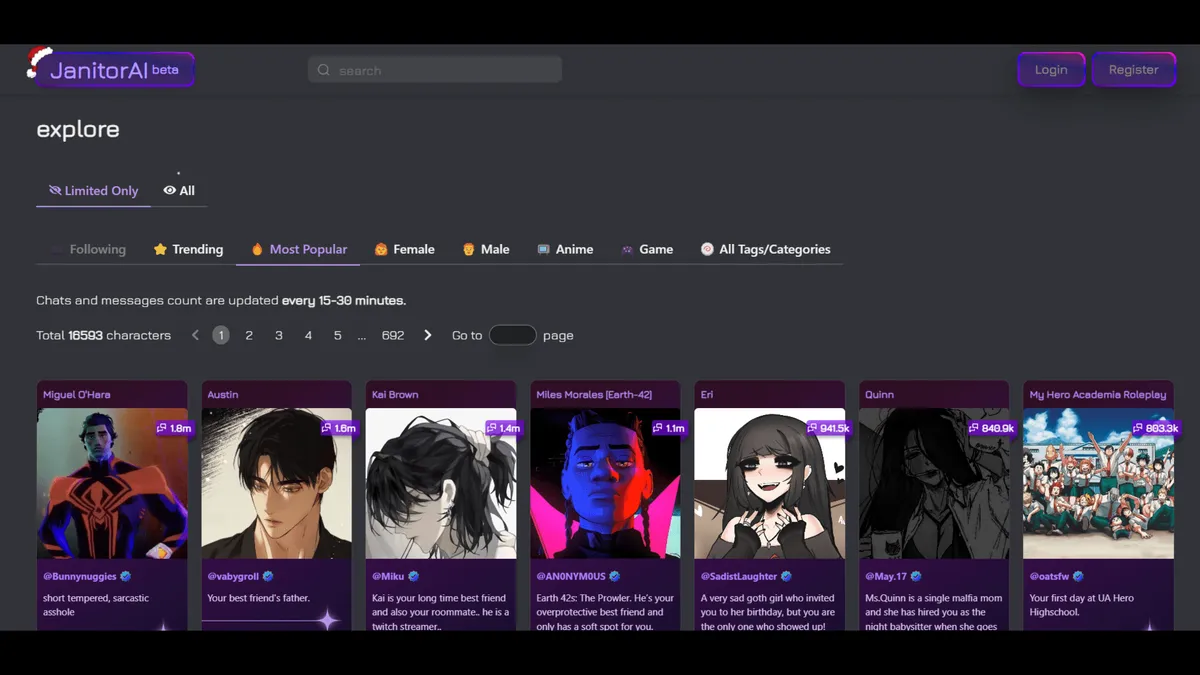
What is JanitorAI?
JanitorAI is an unfiltered text-based roleplay platform. It lets users chat with custom AI characters using either a proprietary beta model or external API keys. Users can build complex personas with detailed backstories.
Developer JanitorAI built this platform to bypass the strict content filtering found on mainstream AI chat sites. The primary audience includes creative writers and roleplay enthusiasts. These users want absolute control over character personalities and story direction. They need a tool that respects their creative freedom without imposing arbitrary moral guidelines.
- Primary Use Case: Unrestricted AI character roleplay.
- Ideal For: Advanced users comfortable managing API keys.
- Pricing: Starts at $9.99 (Pro) or usage-based via API.
Key Features and How JanitorAI Works
Character Creation and Management
- Character Creator: Define name, personality, and scenario limits up to specific token counts.
- Persona Management: Create multiple user profiles to interact with bots in different roles.
- Image Generation: Generate avatars using internal tools, limited by daily credits.
Model Selection and API Integration
- JanitorLLM: Proprietary beta model available for free users with daily message limits.
- BYOK Support: Connect OpenAI or Anthropic API keys, limited by your external budget.
- Context Settings: Adjust token limits and temperature to control response randomness.
Community and Discovery
- Advanced Search: Filter characters by tags like RPG or Horror, limited by user tagging accuracy.
- Multi-Chat: Maintain unlimited separate conversation threads per character.
- Chat Export: Download conversation logs in JSON format for external backup.
JanitorAI Pros and Cons
Pros
- Unrestricted content allows for NSFW roleplay without strict filters.
- Model variety lets users switch between JanitorLLM and GPT-4 via API.
- Active community adds thousands of new characters daily.
- Cost control works because users pay for exact token usage via external providers.
Cons
- Server downtime occurs during peak usage hours (the site crashes on weekends).
- Setting up external API keys confuses casual users.
- The lack of a native iOS or Android app hurts mobile usability.
Who Should Use JanitorAI?
- Advanced roleplayers: Users who want deep customization and understand token limits.
- Budget-conscious writers: People who prefer paying per API request rather than a flat monthly fee.
- Casual mobile users: Those looking for a simple app experience should avoid this browser-only tool.
JanitorAI Pricing and Plans
The Free Tier costs $0 per month. It grants access to JanitorLLM (Beta) and community characters. This tier imposes daily message limits. Free users experience slower response times during high traffic periods.
The Pro Subscription costs $9.99 per month. It provides higher message limits and priority server access during peak times. Pro users also get advanced customization options. This tier suits users who want a stable experience without managing external API keys.
The External API (BYOK) option uses a usage-based model. Users connect third-party models like OpenAI (GPT-4) or Anthropic Claude. Costs go directly to the API provider based on token usage. This method offers the highest quality responses but requires careful budget management.
This setup creates a steep learning curve for beginners.
How JanitorAI Compares to Alternatives
Similar to Character.ai, JanitorAI offers thousands of user-created bots. Unlike Character.ai, JanitorAI does not enforce strict NSFW filters. Character.ai provides a native mobile app and faster response times. JanitorAI requires users to tolerate server instability. Character.ai restricts creative freedom to maintain a family-friendly environment. JanitorAI prioritizes user autonomy over platform stability.
SillyTavern serves a similar audience of advanced roleplayers. SillyTavern runs locally on your machine, requiring technical setup. JanitorAI hosts the interface on the web, making it easier to access across different devices. SillyTavern offers more interface customization, while JanitorAI provides a larger built-in community gallery. SillyTavern demands a strong computer to run local models. JanitorAI offloads the processing power to cloud servers.
Users must decide between convenience and control.
The Ideal User for JanitorAI
Advanced writers who want absolute control over their AI roleplay get the most value here (I found the OpenAI integration process took about ten minutes to configure). These users appreciate the lack of content filters and the ability to dictate exact character behaviors. Casual users who want a quick chat should look elsewhere. Character.ai remains a better choice for users who need a stable mobile app and do not care about NSFW content.
JanitorAI will stabilize its proprietary LLM within the next 12 months to reduce reliance on external APIs.