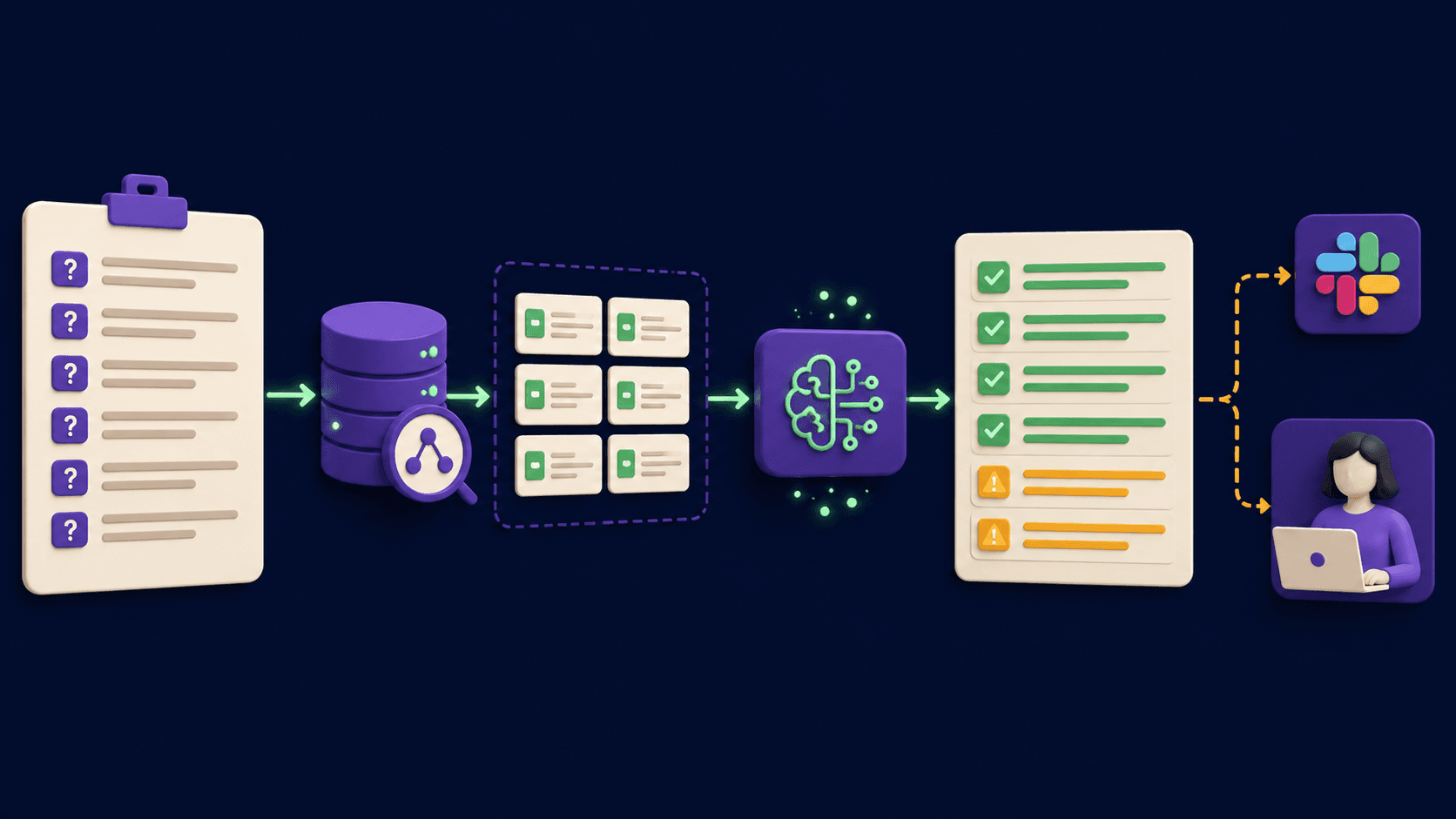

LlamaIndex is an open-source data framework for building RAG applications over private data, developed by LlamaIndex, Inc. It includes 300+ data connectors, built-in hierarchical chunking, and LlamaParse for enterprise-grade document parsing. Free OSS core; LlamaCloud starts at $50/mo.
LlamaIndex is an open-source data framework built by LlamaIndex, Inc. for developers connecting private data sources to large language models. Originally released in late 2022 as GPT Index by Jerry Liu and Simon Liu, the project has grown to nearly 49,000 GitHub stars and 25 million monthly package downloads as of April 2026. The core library is MIT-licensed and free to use commercially. The company's commercial layer, LlamaCloud, adds managed parsing, extraction, and indexing services on top of the OSS framework, with LlamaParse as its flagship paid product for document understanding.
The framework organizes around five abstractions: data connectors (300+ sources via LlamaHub), node parsers for chunking strategies, indices (vector, summary, keyword, knowledge graph), query engines for retrieval-to-response pipelines, and Workflows for async agent orchestration. Built-in capabilities include hierarchical chunking, hybrid search combining vector similarity with BM25 keyword matching, sub-question decomposition for multi-document queries, and a built-in RAG evaluator that measures faithfulness and relevancy without requiring a separate observability platform. LlamaParse handles complex document layouts, including nested tables, multi-column PDFs, charts, and handwritten notes, using VLM-powered agents that route content to specialized parsing models.
What LlamaIndex actually does in April 2026
The framework has expanded substantially beyond its RAG pipeline roots. The current release (v0.14.21, April 21, 2026) includes Workflows, a full async agent orchestration system built on event passing rather than directed graphs. LlamaAgents, launched in 2025, enables one-click deployment of document processing agents with ready-made templates for invoice processing, contract review, and claims handling, all built on the Workflows library.
LlamaParse v2, released December 18, 2025, reorganized parsing into four tiers: Fast (1 credit per page, text-centric documents), Cost-effective (3 credits per page, general purpose), Agentic (10 credits per page, complex layouts with mixed content), and Agentic Plus (45 credits per page, maximum precision). The v2 release reduced Agentic Plus costs by 50% and added version pinning so production pipelines lock to a specific parsing behavior and do not break on automatic updates. Additional tools released in 2025 include LlamaSheets (spreadsheet-to-AI-ready data), LlamaSplit (automatic document separation from bundled files), and LlamaExtract Table Row Mode for extracting repeating entities from structured documents.
LlamaCloud achieved SOC 2 Type 2 certification and GDPR/HIPAA compliance following the March 2025 Series A announcement. It deploys as SaaS or on-premise (VPC). Customers disclosed at General Availability include Rakuten, Carlyle, Salesforce, and KPMG. The company reports 1 billion documents processed and 300,000 LlamaParse users.
Where LlamaIndex sits versus LangChain and Haystack
LlamaIndex vs. LangChain: The architectures diverge at the fundamental unit of work. LlamaIndex treats retrieval as the primary abstraction: data connectors, chunking strategies, indices, and query engines are all first-class objects. LangChain treats agents as the primary abstraction, with retrieval as one component wired together manually with text splitters, vector stores, retrievers, and re-rankers. The practical result is that a basic RAG pipeline requires roughly 30-40% more code in LangChain than in LlamaIndex, and LangChain's equivalent of LlamaIndex's hierarchical chunking requires manual component assembly. LlamaIndex has around 6ms framework overhead and 1.6K token overhead per query; LangGraph sits at approximately 14ms and 2.4K tokens in production benchmarks. However, LangChain dominates in community size, tutorials, and job postings, and LangSmith provides first-party observability that LlamaIndex lacks natively (it relies on third-party tools like Langfuse or Phoenix). Many production teams end up using both: LlamaIndex as the retrieval layer, LangGraph as the orchestration layer.
LlamaIndex vs. Haystack: Haystack (by deepset) uses an explicit modular pipeline model where preprocessing is broken into named components: converters, cleaners, splitters, retrievers, and re-rankers, each a pipeline stage visible in code. This makes complex document processing workflows easier to audit and maintain in enterprise settings. Haystack also ships a visual pipeline builder (Haystack Studio) that LlamaIndex has no equivalent for. The tradeoff: LlamaParse is a proprietary VLM-powered document parsing service that handles complex layouts, tables, and charts better than Haystack's open-source component stack (Apache Tika, Unstructured.io). For straightforward document search pipelines, Haystack's explicit pipeline model wins on clarity; for applications where document parsing quality is the bottleneck, LlamaIndex's data-first approach and LlamaParse accuracy are the differentiators. Framework overhead for both is nearly identical in benchmarks (Haystack ~5.9ms/1.57K tokens; LlamaIndex ~6ms/1.6K tokens).
What the RAG pipeline reality looks like day-to-day
For a developer starting with LlamaIndex, the first 30 minutes are genuinely fast. Installing the core package, pointing a SimpleDirectoryReader at a folder of PDFs, creating a VectorStoreIndex, and running a query engine takes fewer than 20 lines of Python. The first demo works. The friction starts when moving from demo to production.
The v0.10 migration in February 2024 was the most disruptive moment in LlamaIndex's history. The team split the single llama-index package into llama-index-core plus hundreds of separately versioned integration packages, deprecated ServiceContext (a widely used configuration object), and rewrote chunking abstractions. Notebooks, tutorials, and community code broke at ImportError. GitHub issue #10747 ("Breaking changes makes it hard to work with llama_index") became a long thread of frustrated developers. The migration tools helped, but teams on tight schedules absorbed real debugging time.
"I will probably never use it again because it's unstable, the interface constantly changes, the documentation is regularly out of date, and the abstractions are overly complicated. The documents have changed entirely 3 times over. It's infuriating." -- Anonymous developer, GitHub Issues #10747, 2024
Since v0.10, stability has improved. The current v0.14 branch has not triggered equivalent complaints. But the documentation gap persists: the release cadence is fast, examples age quickly, and beginners following a three-month-old tutorial regularly hit errors that require cross-referencing the changelog or Discord. Once a developer understands the core abstractions well enough to read the source code when something breaks, LlamaIndex becomes much more comfortable.
LlamaParse is where the commercial product earns its place. For clean, well-formatted PDFs including legal contracts, financial filings, and technical documentation, accuracy is strong. Community reception at the February 2025 Hacker News thread was positive:
"Where quality is more important than quantity, I doubt there are many tools that can come close to Llamaparse." -- BenGosub, Hacker News, February 7, 2025
The caveat noted in the same thread: demos on the LlamaParse landing page use clean digital renders. Real-world performance on low-quality scans, photos of receipts, and handwritten documents is more variable, and the company has acknowledged that handling "a long tail of issues beyond just tables" including fonts, headers, charts, and form fields is an ongoing challenge.
Who LlamaIndex is built for
LlamaIndex fits best for Python or TypeScript developers building applications where the core problem is structured retrieval from private data: enterprise knowledge bases, document Q&A, multi-source data agents, and contract or report processing pipelines. Teams processing document-heavy workflows in finance, legal, healthcare, or research will get the most out of LlamaParse and LlamaExtract without having to build custom parsing logic. Developers who want an opinionated, data-first framework that handles chunking, indexing, and hybrid retrieval out of the box will cover the same ground as LangChain with less boilerplate for RAG-centric use cases.
The OSS framework is also well-suited for local LLM setups. The Ollama and llama.cpp integrations let developers run the full pipeline with locally hosted models, keeping all data on-premises without LlamaCloud at all. This makes LlamaIndex viable for sensitive data environments even at the free tier.
What LlamaIndex is not
LlamaIndex is not a no-code product. There is no visual interface, no drag-and-drop pipeline builder, and no chat interface users can open without developer setup. Non-technical users cannot use it directly.
It is not the best choice for teams whose primary need is complex agent orchestration rather than data retrieval. If the application is fundamentally about multi-step reasoning, tool use, memory, and agent loops over web APIs rather than document-heavy private data, LangChain/LangGraph's broader ecosystem and first-party observability (LangSmith) is a better starting point. Similarly, if the team needs a visual enterprise pipeline builder for IT-managed workflows, Haystack Studio addresses that need more directly.
LlamaParse at scale gets expensive quickly. At the Agentic tier (10 credits per page, $0.0125 per page), processing 100,000 pages monthly costs $1,250 in parsing credits before the $500 Pro plan subscription. High-volume batch processing over noisy documents should run a cost calculation before committing.
Finally, for teams still on v0.9 or earlier, migrating to the current v0.14 branch requires deliberate effort. The architecture changes in v0.10 are not backward-compatible. Budget time for migration before depending on community examples that assume the current package structure.
User Reviews
No reviews yet. Be the first to share your experience!
Sign in to write a review.
Featured in collections
Curated lists that include LlamaIndex.
Related articles
Guides and articles related to LlamaIndex.
Google Vision AI Explained (2026): Pricing Per 1,000 Units, Free Tier, and Alternatives
Build an Internal Knowledge Bot (RAG) for Your Company: A No-Nonsense Guide
Run a Company With AI Agents: The Open-Source Orchestration Setup (2026)
Grok 4.3 API for Agents (May 2026): Pricing, Benchmarks, Migration
Turn Any AI Agent Into a Superagent: The 12-Integration Stack (2026)