



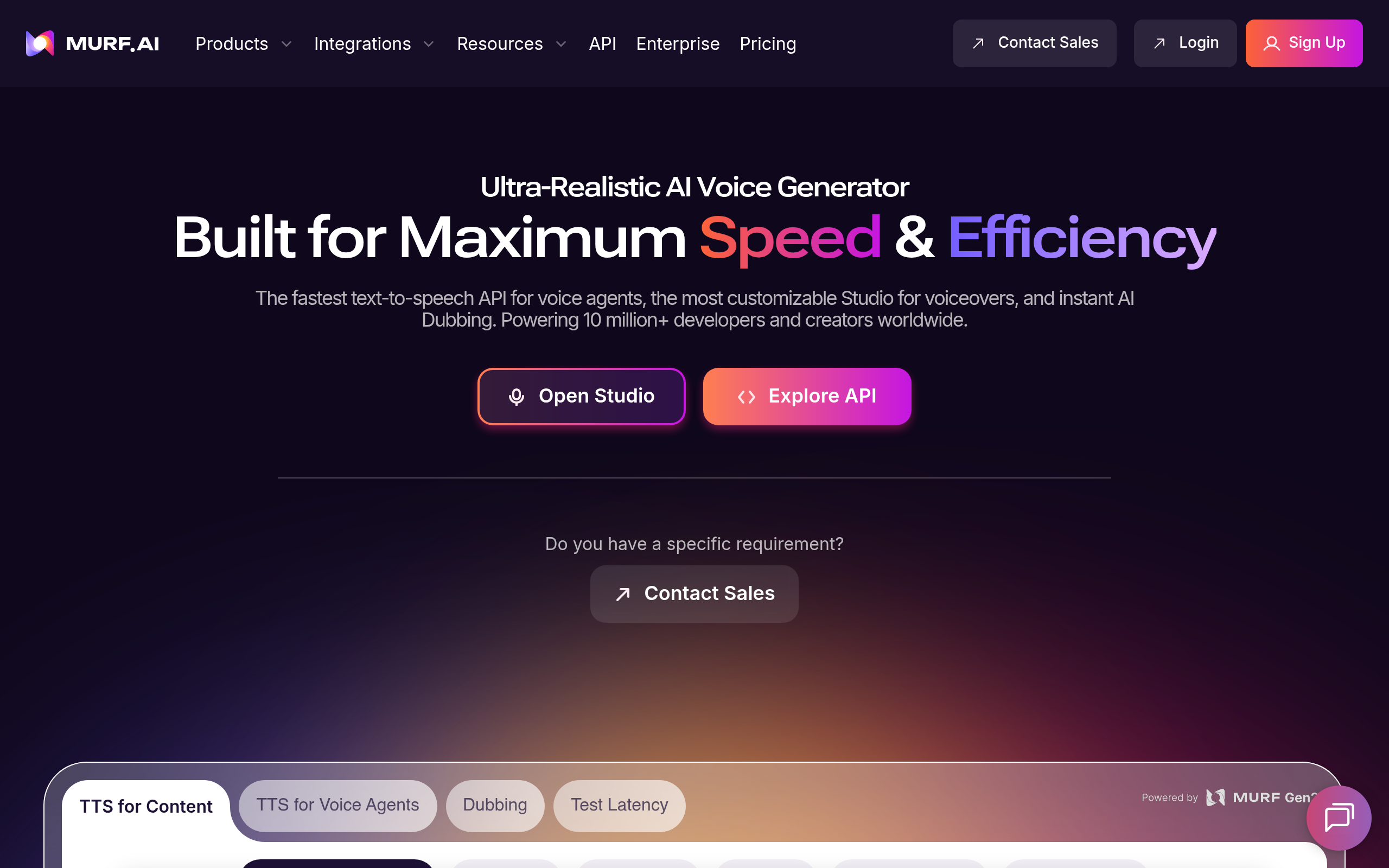
What is Murf?
Users expect AI text-to-speech tools to sound like robotic automated phone menus. Murf delivers audio that actually sounds like a human sitting in a recording studio. You type a script (even a rough draft), and the software generates a natural voiceover complete with pauses and emphasis.
Murf Inc. developed this AI voice generator to solve the high cost of hiring voice actors. It targets marketers, educators, and YouTube creators who need fast audio production. You can sync these voices directly to video footage or Google Slides presentations.
- Primary Use Case: Generating professional voiceovers for e-learning modules and corporate training videos.
- Ideal For: Marketers and educators needing fast audio narration.
- Pricing: Starts at $19 per month. The free tier is essentially a trial since it blocks file downloads.
Key Features and How Murf Works
Voice Generation and Control
- Voice Library: Access 120 AI voices across 20 languages. The Basic plan limits you to 60 voices.
- Pitch and Speed Control: Adjust voice pitch by 50 percent and speed from 0.25x to 2.0x.
- Emphasis Tool: Highlight specific words to change pronunciation. Complex jargon still requires manual phonetic spelling.
Workflow Integrations
- Google Slides Integration: Direct add-on to narrate presentations. You must stay within the Google ecosystem to use it.
- Canva Integration: Access Murf voices directly inside Canva. Video project exports depend on your Canva plan limits.
Advanced Audio Tools
- Video Sync: Upload videos and time voiceover blocks to specific timestamps. Timeline editor limits depend on your monthly generation quota.
- Voice Cloning: Create custom AI voice clones. This requires a custom Enterprise contract.
- API Access: Programmatic voice generation for developers. This is restricted to Enterprise plans.
Murf Pros and Cons
Pros
- High-quality output: Voices sound significantly less robotic than standard engines like AWS Polly.
- Granular control: Users adjust pronunciation, pauses, and emphasis word-by-word for natural delivery.
- Integration ecosystem: Native apps for Canva and Google Slides speed up the creative workflow.
- Speed of production: Studio-quality voiceovers generate in minutes compared to days for human talent.
Cons
- No downloads on free plan: Users can only preview audio and cannot export files without paying.
- Credit-based limits: The Basic plan caps voice generation at two hours per month.
- Occasional pronunciation errors: Complex technical jargon often requires manual phonetic correction.
Who Should Use Murf?
- Corporate Trainers: You can quickly convert text-heavy training manuals into engaging audio modules.
- YouTube Creators: The timeline editor helps sync narration to video clips without external software.
- Podcast Producers: You can turn written blog posts into audio formats for wider distribution.
- Not for High-Volume Audiobook Publishers: The two-hour monthly limit on the Basic plan makes long-form narration too expensive.
Murf Pricing and Plans
The Free plan costs $0 per month. It includes 10 minutes of voice generation and transcription. You cannot download any files, making this a trial rather than a true free tier.
The Basic plan costs $19 per month. It provides two hours of voice generation per month. You get access to 60 voices and 10 languages, plus commercial usage rights.
The Pro plan costs $26 per month. It provides high-quality voice generation and access to all 120 voices.
The Enterprise plan costs $75 per month. It adds advanced collaboration tools, security features, and API access.
How Murf Compares to Alternatives
Similar to ElevenLabs, Murf offers highly realistic AI voices. ElevenLabs focuses heavily on emotional range and character voices for fiction. Murf targets corporate and educational users with its presentation integrations. ElevenLabs offers a cheaper starting tier at $5 per month.
Unlike Play.ht, Murf includes a built-in video sync editor. Play.ht excels at bulk audio generation and offers unlimited generation plans. Murf restricts generation time strictly by the hour. Play.ht is better for long-form audiobooks, while Murf wins for short marketing videos.
The Verdict for Corporate Marketers and Educators
Murf delivers excellent value for teams creating short training videos and marketing clips.
The Canva and Google Slides integrations save hours of editing time (a massive benefit for busy designers).
Solo creators producing long audiobooks should look elsewhere. The monthly time limits will drain your budget quickly. Play.ht offers a better unlimited model for those users.
Expect Murf to expand its emotional voice range over the next 12 months to compete directly with ElevenLabs.