



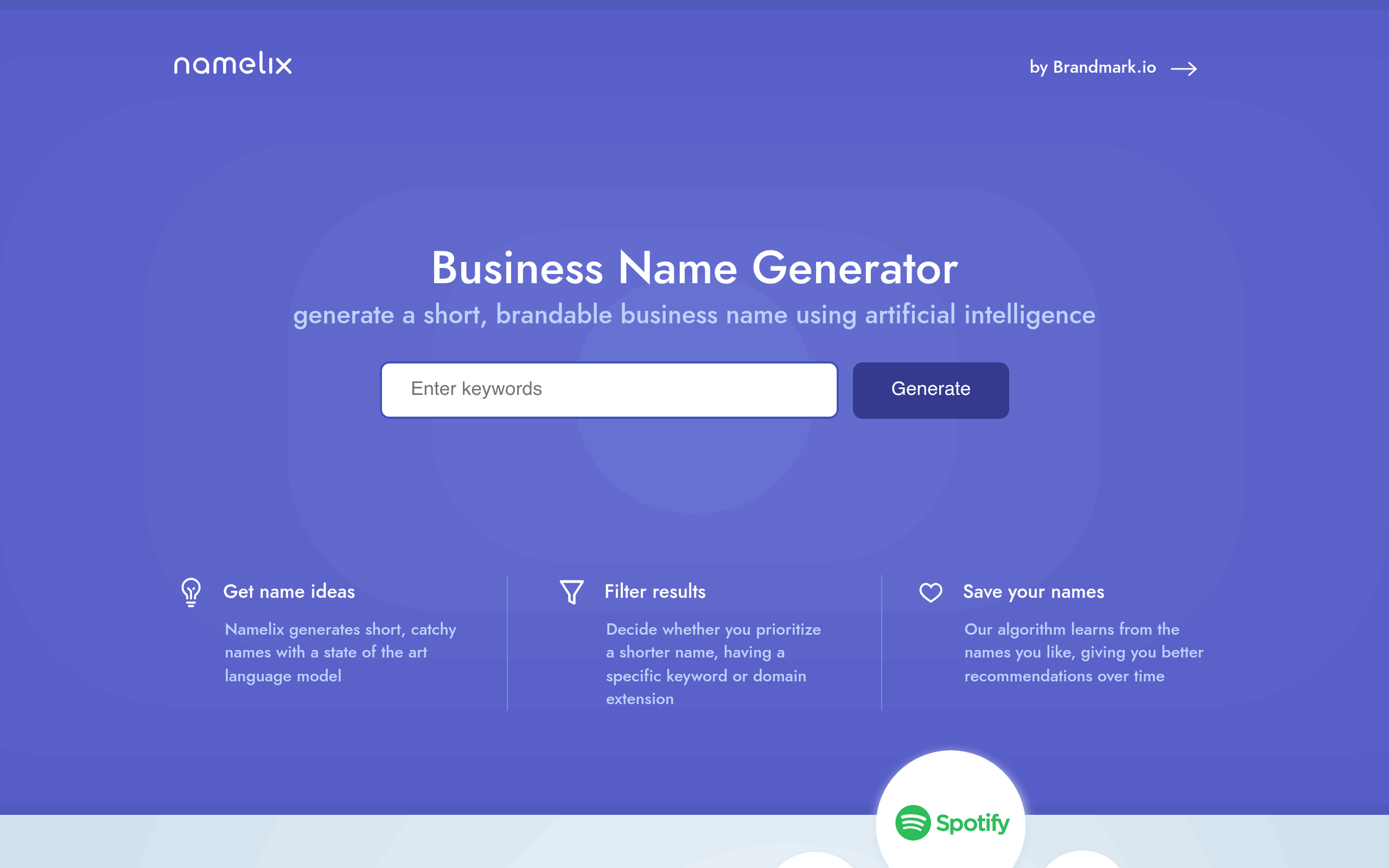
What is Namelix?
Founders expect AI naming tools to spit out available dot-com domains for ten dollars. Instead, Namelix delivers creative, abstract brand names that often carry premium domain price tags of $2,000 or more.
Developed by Brandmark.io, Namelix is an AI business name generator. It solves the blank-page problem for new tech startups and solo founders. The tool uses GPT-3 language models to invent short, brandable words rather than just mashing dictionary terms together.
- Primary Use Case: Generating short, brandable business names with specific keyword constraints.
- Ideal For: Early-stage tech startups and solo founders needing rapid brand ideation.
- Pricing: Starts at $25 (One-time) – Free to generate names, but logo downloads require paid plans.
Key Features and How Namelix Works
AI Generation and Filtering
- Style Selection: Choose from 8 naming styles like Compound or Misspellings. Limited to one style per search query.
- Length Filter: Restrict results to 3-6, 6-12, or 12+ characters. Short names yield fewer available standard domains.
- Creativity Slider: Adjust randomness across 3 levels (Low, Medium, High). High creativity often ignores your seed keywords entirely.
Visual Branding and Export
- Logo Preview: Generates over 10 visual brand concepts per name. Icons come from a standard, repetitive library.
- Brandmark Integration: Export names directly to Brandmark.io for full identity kits. Requires a paid tier starting at $25.
- Vector Export: Download high-resolution SVG and EPS files. Restricted to the $95 Professional Plan.
Domain and Keyword Management
- Domain Search: Checks real-time dot-com availability via Namecheap API. Many short results default to premium broker listings.
- Negative Keywords: Exclude up to 10 specific terms from the generation process.
- Favorites: Save up to 100 names for later review. Saves rely on local browser sessions and clear if you empty your cache.
Namelix Pros and Cons
Pros
- High-quality brandability relies on language models to invent unique words instead of basic dictionary combinations.
- Immediate visualization pairs every name with a logo mockup, cutting down the time needed to judge brand potential.
- The creativity slider gives users granular control over how literal or abstract the generated names become.
- Users can generate thousands of names without creating an account or paying any upfront fees.
Cons
- A high percentage of short suggestions are premium domains priced at $2,000 or more.
- The tool skips legal trademark searches, forcing users to perform manual verification before adopting a name.
- Logo generation relies on generic icons from standard libraries, lacking custom artistry.
Who Should Use Namelix?
- Bootstrapped Solo Founders: You need a catchy name fast and have zero budget for a branding agency. The free generation phase provides endless inspiration.
- Tech Startups: You want an abstract, Web2 style name (like Flickr or Twilio). The misspellings and short-word filters excel here.
- Local Service Businesses (Not a good fit): Plumbers or roofers needing literal, SEO-friendly names will find the AI too abstract. A basic keyword combination tool works better.
Namelix Pricing and Plans
Namelix operates on a freemium model. You only pay when you want to download the generated logo assets.
The free tier is real for name generation, allowing unlimited searches without an account.
The Basic Plan costs $25 and provides 10 name suggestions with basic PNG logo files. The Designer Plan jumps to $65, offering 30 suggestions and advanced features like full brand kits. The Professional Plan costs $95, delivering 60 suggestions and high-resolution vector files.
How Namelix Compares to Alternatives
Similar to Looka, Namelix pairs name generation with instant logo mockups. Looka focuses much more on the design aspect, offering deeper customization for fonts and layouts. Namelix provides better linguistic variety for the actual names, using GPT-3 to invent words rather than just matching fonts to user input.
Unlike Squadhelp, Namelix relies entirely on AI generation. Squadhelp crowdsources naming contests to human creatives, which costs much more (starting around $299). Squadhelp also guarantees that their premium names pass basic trademark screening, a feature Namelix ignores.
The Best AI Naming Tool for Bootstrapped Founders
Namelix offers the highest value for solo founders who need rapid, abstract brand ideas without spending money upfront. The visual mockups help sell the concept internally (even if the icons are slightly generic).
Funded startups requiring strict trademark clearance should look elsewhere.
Squadhelp remains a safer choice for teams with actual branding budgets. Expect Namelix to integrate direct trademark database API checks within the next 12 months as AI legal screening becomes cheaper.