Perplexity surfaces cited answers to research questions in seconds, but its footnotes can mislead as easily as they inform. A genuinely useful research layer, with documented hallucination and trust problems that serious users need to understand before relying on it.
We asked Perplexity Pro to identify recent Life Cycle Assessment studies on lab-grown meat published between 2023 and 2025, a narrow, academic research task where citations matter more than prose fluency. It returned a structured synthesis: numbered footnotes, a rough timeline of publication dates, and explicit uncertainty notes where studies disagreed with each other. Exactly what you'd want. Then we clicked the citations. Two linked to real papers that matched the descriptions precisely. One linked to a journal index page that did not contain the specific paper cited at all. That single experience, repeated across different queries, captures the core Perplexity proposition in 2026: genuinely useful, structurally sound, and intermittently unreliable in a way that looks reliable until you check.
That tension, citations as signal, citations as risk, runs through every serious discussion of the tool. Perplexity built its identity around being the answer engine that shows its work. For most queries, that works. The problem is the percentage where it does not, because the footnotes' visual consistency makes it nearly impossible to tell the difference at a glance.
Perplexity at a glance. April 2026
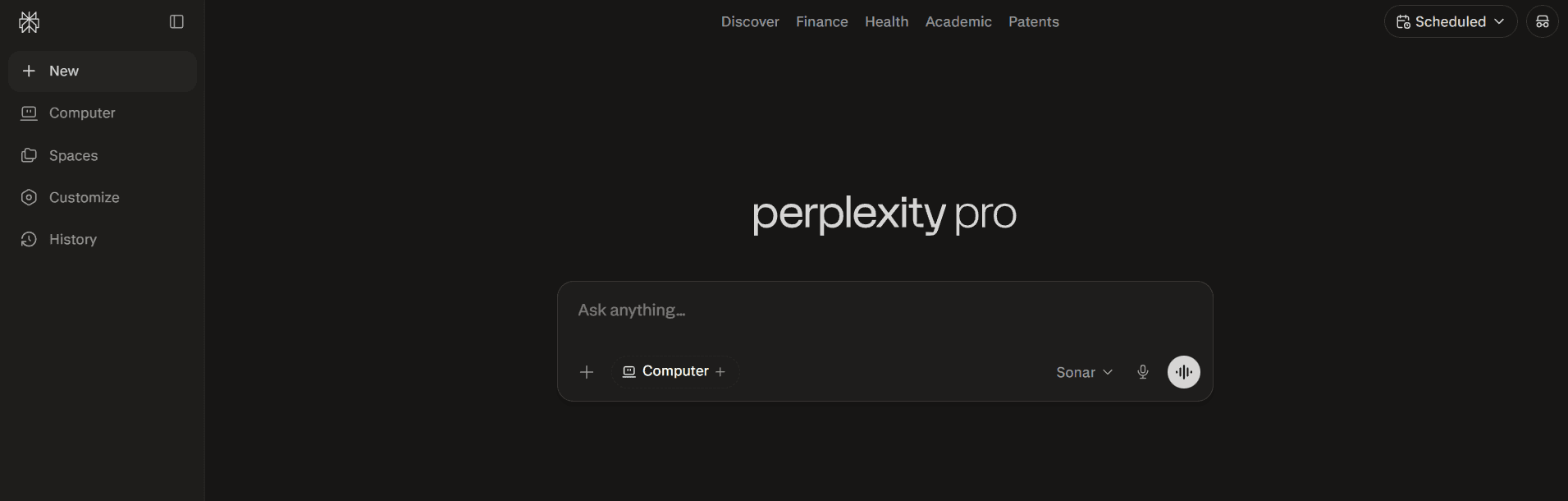
Perplexity is a subscription-first answer engine. Advertising was removed from responses in February 2026. The free tier handles basic cited searches using Sonar (Llama 3.3 70B, approximately 1,200 tokens per second via Cerebras). Pro at $20 per month adds unlimited searches, 20 Deep Research queries per day, and bundled access to GPT-5, Claude Sonnet, and Mistral Large. Max at $200 per month adds Model Council, three frontier models run simultaneously on a single query, plus Perplexity Computer, a 19-model agentic AI launched February 2026. Enterprise tiers start at $40 per user per month with SSO, audit logs, and SOC 2.
The Comet browser, free worldwide since October 2025, iOS launched March 2026, hitting number three on the US App Store within 48 hours, integrates Deep Research directly into browsing sessions. Sonar-Reasoning-Pro scored 1136 in Search Arena evaluations, statistically tied with Gemini 2.5 Pro Grounding at 1142. The Samsung Galaxy S26 ships with Perplexity as the default OS-level AI integration, the first non-Google company to hold that position on a Samsung device.
What Perplexity is actually good at
The strongest use case remains what the product was built for: factual retrieval on current topics where you want to read the sources, not just accept a summary. Technology news, scientific publications, company announcements, regulatory tracking, queries where answer quality depends directly on source quality, and where you'll click through to verify. Citation density here runs higher than ChatGPT's browsing mode and is more readable than Google's AI Overviews in most cases tested in April 2026.
"With its ability to provide sources to its answer, this has been steadily replacing Google.". ProductHunt reviewer, 2025
The speed advantage is real. Sonar's 1,200 tokens-per-second throughput means a well-formed research query, with citations, subheadings, and source breakdown, often completes before a comparable ChatGPT search finishes loading. For users doing rapid iterative research, the difference is perceptible.
A documented professional case: Inteleos, a medical credentialing organization, uses Enterprise Pro to generate cited rationales for certification exam questions. Subject-matter experts review rather than draft from scratch; a task that took many minutes per question dropped to under one minute. The workflow works because experts verify every output. Perplexity replaced blank-page writing, not final judgment. The enterprise data-not-trained-on guarantee was a hard requirement for an organization handling sensitive exam materials.
The Pro tier's multi-model bundling is a practical consolidation win. A single $20 subscription covers GPT-5, Claude Sonnet, and Mistral Large alongside Sonar, useful for users who want to compare model outputs without managing separate subscriptions.
"Using Perplexity for research then feeding results to ChatGPT, quality improved much, much better.". Reddit user in r/ChatGPT, 2025
This two-stage workflow. Perplexity as retrieval layer, a full assistant for synthesis, is common among power users. The logic: cited source material fed into a downstream model produces fewer hallucinations than prompting from parametric memory alone.
Where Perplexity breaks, the failure modes users keep hitting
The most damaging failure mode is not that Perplexity gets facts wrong, every AI system does that. It is that Perplexity gets facts wrong while providing numbered footnotes that look correct. A user independently testing Deep Research in late 2025 found it fabricated sources including one with a publication date of "July 2025" for a paper that did not exist; when pressed, the tool acknowledged it could not find links. The problem is not the acknowledgment, it is that users who do not press for verification receive the fabricated citation as if it were real. Confidently formatted misinformation is categorically worse than unformatted uncertainty.
The November 2025 model-substitution incident hardened this distrust. Pro subscribers discovered they were receiving Claude Haiku responses, a model roughly one-third the cost of Claude Sonnet, while the interface displayed the Sonnet name. CEO Aravind Srinivas publicly acknowledged the issue as an "engineering bug" with fallback logic for peak demand and fraud prevention. The user response was largely unpersuaded:
"Whenever some 'bug' occurs, it appears to be profitable for Perplexity", with "no bugs" benefiting users. Reddit community response to the model-substitution incident, November 2025
What compounded the damage was the pattern it fit: the Pro search limit was quietly cut from 600 queries per week to 200 in early 2026 with no announcement. Deep Research queries on Pro were halved from 50 to 20 per month, again with no email or changelog entry. The recurring user observation is that Perplexity raises limits to attract subscribers, then reduces them once the base is locked in.
Beyond the trust issues, there are technical limits worth noting: math reasoning errors occur on problems that should be routine; PDF analysis fails above approximately 10 pages; long conversation threads lose context on mobile. Users accessing Claude or ChatGPT via Perplexity also report those models feeling weaker than when accessed directly, a platform-level serving issue distinct from the Sonar models themselves.
Perplexity vs. Google Gemini Deep Research vs. ChatGPT search
Perplexity is citation-first. Every answer surfaces numbered footnotes; the interface is built around source transparency. It runs faster than the other two in most tests, and its multi-model Pro bundling gives access to third-party frontier models without separate subscriptions. The failure mode is citation fabrication and silent quality degradation. It also carries the most active legal exposure in April 2026, copyright suits from Reddit and the New York Times, plus the Incognito data-routing allegations.
Google Gemini with Deep Research draws on Google's full search index, its structural edge. Gemini 2.5 Pro Grounding scores 1142 on Search Arena evaluations versus Perplexity's 1136, statistically identical, but Gemini's indexing breadth is real. Deep Research produces longer, more structured reports for formal contexts. The trade-off: Gemini's citation interface is less readable than Perplexity's, and it locks users into Google's model stack.
ChatGPT search (via the browsing-enabled version) is the most flexible general-purpose tool of the three, stronger on creative synthesis, sustained multi-turn reasoning, and tasks that blend research with writing. Its citation interface is less prominent than Perplexity's, links appear but the footnote-first presentation is not the default experience. Users who switched to Perplexity specifically cite ChatGPT's tendency to fabricate without sourcing as the reason, which is a reasonable trade if you actually verify Perplexity's citations. If you don't verify, you're trading one hallucination risk for a more misleading one.
The practical split: Perplexity for fast cited fact retrieval where you'll click through. Gemini Deep Research for structured reports needing index-scale source breadth. ChatGPT search when the task requires reasoning or synthesis on top of retrieval.
Is the paid tier worth it?
The Free tier is genuinely useful for occasional research queries, standard Sonar search with citations, available on web and mobile, with a daily query limit of roughly 5 to 20 searches. For users who hit that limit or who need Deep Research, Pro at $20 per month is reasonable: unlimited standard searches, 20 Deep Research queries per day, and bundled access to GPT-5, Claude Sonnet, and Mistral Large. Education subscribers can access Pro for $10 per month, and students with verified institutional email sometimes receive 12 months free.
The honest accounting on Deep Research: the limit dropped from 50 queries per month to 20 without announcement in early 2026. Users who planned their workflow around the previous limit found it changed under them. That's a material reduction for power users, and the lack of communication around it remains a trust issue regardless of the business rationale.
Max at $200 per month is harder to justify for most individuals. Model Council, Perplexity Computer, and Comet Max add capabilities that overlap substantially with Pro for typical research workflows. If you need the compliance package. SSO, audit logs, SOC 2, data-not-trained-on guarantees, the Enterprise tiers ($40 to $325 per user per month) are the right frame, not Max.
Best use cases (and when to skip it)
Perplexity performs best as a first-pass research layer for factual, time-sensitive queries. Technology news, scientific literature searches, regulatory and policy tracking, product specification lookups, company background checks, tasks where the answer exists in indexed sources and the value is speed plus source transparency. It also works well as a grounding layer feeding into longer-form writing: retrieve cited claims from Perplexity, paste them with sources into a full assistant for synthesis.
Skip Perplexity, or verify rigorously, when: citations need to be publication-ready accurate; the task involves multi-step mathematical reasoning; you're analyzing documents longer than roughly 10 pages; you need sustained multi-turn context on a complex creative or analytical project; or you are working in a domain where a confident-looking fabricated citation could cause real professional harm. Legal, medical, and academic research contexts fall into that last category. The Inteleos use case worked precisely because experts reviewed every output, the tool accelerated drafting, it did not replace verification.
Getting started with Perplexity
The web interface at perplexity.ai requires no account for basic queries. A free account unlocks Spaces and mobile apps for iOS and Android. The Comet browser is a free separate download since October 2025. For API access, Sonar starts at $1 per million input tokens plus $1 per million output; Sonar Pro is $3 input plus $15 output.
For research workflows: treat citations as leads, not verified sources, click through before staking credibility on a claim. Use Deep Research for synthesis tasks; standard search for quick lookups. The 7-day Pro trial is enough to assess whether Deep Research volume and multi-model access justify the cost for your workload.
User Reviews
No reviews yet. Be the first to share your experience!
Sign in to write a review.
Related articles
Guides and articles related to Perplexity.

Perplexity AI Tutorial: Maximize Your Research Workflows
The Perplexity Due-Diligence Prompt Library: 10 Prompts That Surface Red Flags (2026)
Gemini Deep Research for a Thesis Literature Review in One Day (2026)
TAM SAM SOM Market Sizing With Perplexity: The Sourcing Pattern That Survives Pushback (2026)
How to Research a New Industry Fast: The 30-Minute Perplexity Template (2026)