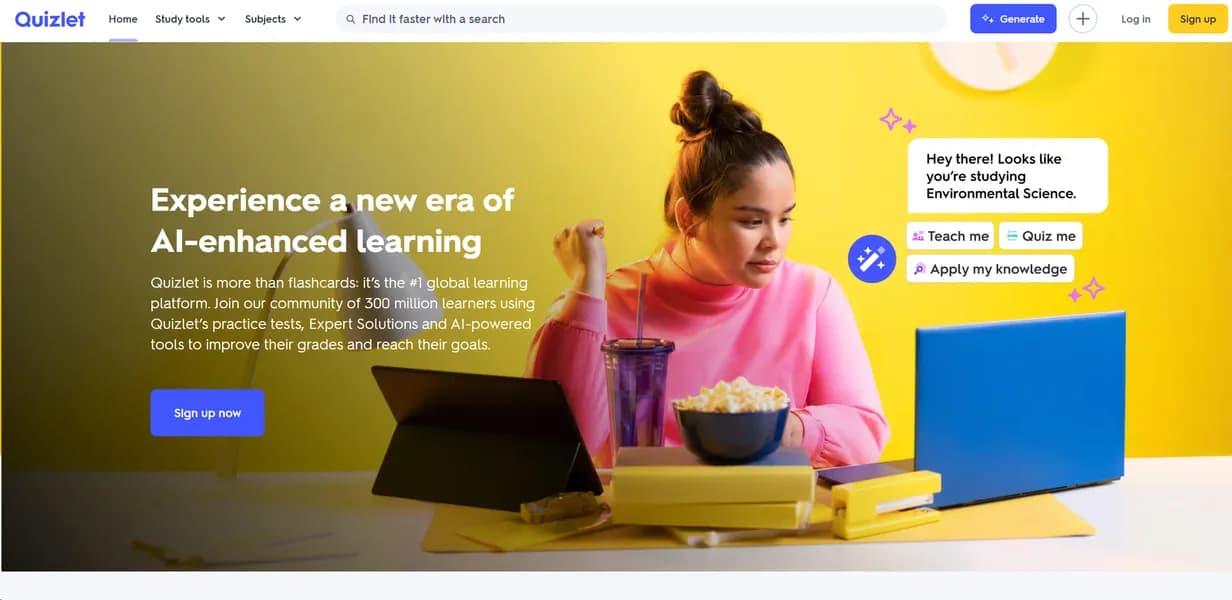

Quizlet is an AI-enhanced learning platform that helps students and teachers master academic subjects through active recall. Users can convert lecture PDFs into interactive flashcards using Magic Notes. While the platform hosts over 500 million study sets, the free tier restricts core features like Learn mode behind a paywall.
What is Quizlet?
A college freshman stares at a 40-page biology PDF two days before a midterm. Instead of manually writing index cards, they upload the document to Quizlet. Within seconds, the platform generates 50 interactive flashcards and a practice test. This immediate conversion saves hours of manual prep work.
Developed by Quizlet, Inc., this global learning platform targets students and educators who need active recall tools. It replaces static study methods with spaced repetition algorithms and AI tutoring. The system works well for rote memorization. Complex problem-solving requires the paid tier. Millions of users rely on the platform daily to prepare for exams.
- Primary Use Case: Converting lecture notes into interactive flashcards and practice exams.
- Ideal For: High school and college students preparing for heavy memorization subjects.
- Pricing: Starts at $2.99/mo (Freemium). Annual billing offers the best value.
Key Features and How Quizlet Works
AI Content Generation
- Magic Notes: Automatically generates flashcards and summaries from uploaded documents (we tested this with a 15-page history syllabus). Limit: The AI struggles to parse complex data tables.
- Q-Chat: An AI tutor uses the Socratic method to guide students through difficult concepts. Limit: The bot sometimes loops questions without providing direct answers.
Study and Testing Modes
- Learn Mode: Uses spaced repetition algorithms to move terms into long-term memory. Limit: This feature is now restricted to the paid Plus tier.
- Test Mode: Generates practice exams with multiple-choice and written formats. Limit: Smart grading occasionally marks correct synonyms as wrong.
Classroom and Expert Tools
- Quizlet Live: A classroom game where students work in teams to match terms. Limit: You need at least four students to play effectively.
- Expert Solutions: Access step-by-step explanations from 14,000 verified textbooks. Limit: Niche upper-level college texts are often missing.
Quizlet Pros and Cons
Pros
- Hosts over 500 million user-generated study sets covering almost every academic subject.
- Cross-platform synchronization saves study progress across web, iOS, and Android devices.
- Q-Chat AI provides immediate feedback mimicking a human tutor.
- Verified textbook solutions offer high-accuracy answers peer-reviewed by subject matter experts.
Cons
- Core features like Learn and Test modes require a paid Plus subscription.
- The free version contains frequent advertisements that disrupt focus.
- User-generated public sets often contain factual errors or outdated information.
Who Should Use Quizlet?
- High school students: The platform excels at SAT prep and foreign language vocabulary.
- Teachers: Educators use Quizlet Live to engage a classroom of 30 students simultaneously.
- Advanced medical students (Not Recommended): These users should look elsewhere. Anki offers better granular control over spaced repetition intervals for massive decks.
Quizlet Pricing and Plans
- Free: $0/mo. Includes basic flashcard creation and access to public study sets with ads.
- Quizlet Plus: $2.99/mo (billed annually at $35.99). Adds AI study tools, offline access, and removes ads.
- Quizlet Plus Monthly: $7.99/mo. Provides all Plus features with month-to-month flexibility.
The free tier functions more like a trial for the core study modes.
Users hit paywalls quickly when trying to use Learn or Test features. Students on a tight budget often find the monthly plan too expensive. The annual plan requires an upfront commitment.
How Quizlet Compares to Alternatives
Similar to Anki but easier to set up. Anki is free and open-source. It offers superior customization for spaced repetition algorithms. However, Anki has a steep learning curve. Quizlet provides a polished interface ready in minutes.
Unlike Brainscape, Quizlet includes gamified elements like Quizlet Live and AI tutoring. Brainscape focuses on cognitive science and self-assessed confidence ratings. Users who want strict flashcard efficiency prefer Brainscape. Those who need varied study modes lean toward Quizlet.
Kahoot! offers another alternative for classroom engagement. Teachers use Kahoot! for live quizzes. Quizlet Live focuses specifically on team-based vocabulary matching. Kahoot! provides broader trivia and quiz formats.
The Verdict: Best for General Academic Memorization
High school and undergraduate students get the most value from Quizlet Plus. The $35.99 annual cost pays for itself during midterm season. Users studying complex medical or law subjects should look elsewhere.
We recommend Anki for those intensive use cases.
The honest limit remains unclear. We still do not know if Quizlet will lock all user-generated content behind a paywall to force higher conversion rates.
User Reviews
No reviews yet. Be the first to share your experience!
Sign in to write a review.
Related articles
Guides and articles related to Quizlet.

Perplexity AI Tutorial: Maximize Your Research Workflows
The Personal AI Productivity Stack (2026): One Tool Per Job, Nothing Extra

How to Get an AI Model Wearing Your Clothes (Step by Step)
Undetectable AI Review (2026): What It Does, What It Costs, and 7 Alternatives
Google Vision AI Explained (2026): Pricing Per 1,000 Units, Free Tier, and Alternatives