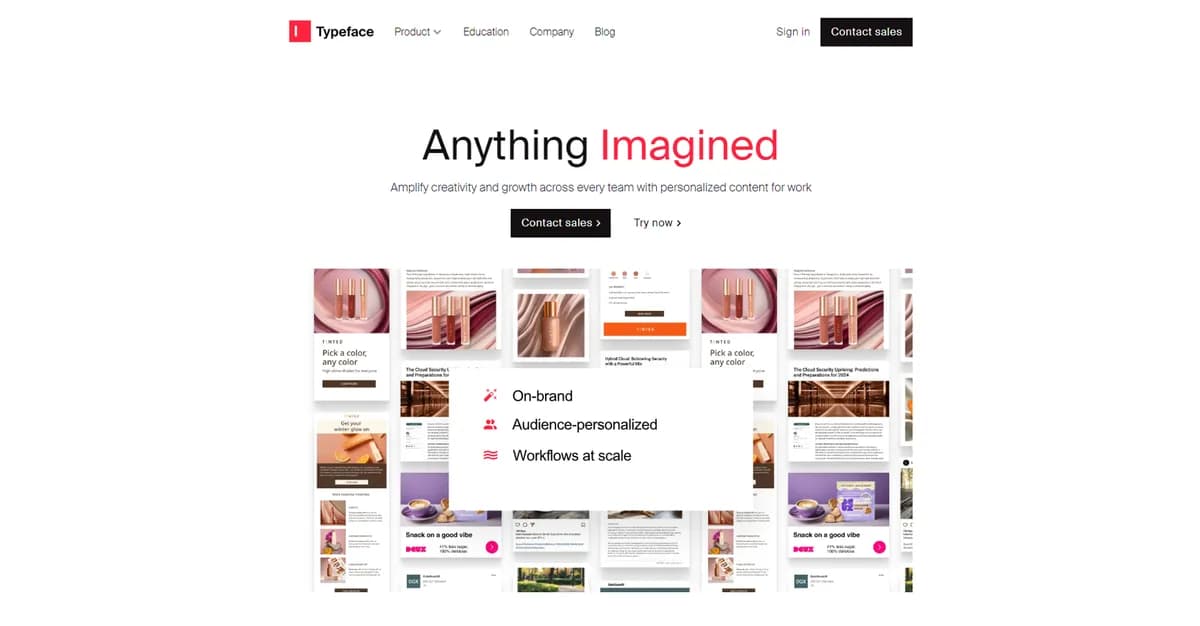

Typeface is an enterprise generative AI platform that creates personalized brand content. It helps marketing teams produce high-fidelity images and text aligned with corporate style guidelines. While it excels at brand consistency, the heavy initial setup process and high pricing make it unsuitable for solo creators.
What is Typeface?
Most AI writing tools ignore your brand guidelines completely, but Typeface forces every generated word and image through a strict corporate filter before you ever see it.
Typeface Inc. built this enterprise generative AI platform to solve a specific marketing problem. It stops teams from publishing generic ChatGPT copy. The software blends GPT-4 and Stable Diffusion with your uploaded style guides. Large marketing departments use it to produce high-fidelity images and text that actually sound like their company.
- Primary Use Case: Generating brand-aligned blog posts and product imagery at scale.
- Ideal For: Enterprise marketing teams and corporate content directors.
- Pricing: Starts at $17 per month (freemium). A steep jump to $100 per month exists for power users.
Key Features and How Typeface Works
Brand Identity Management
- Brand Kit: Upload logos, fonts, and style guides to enforce exact brand alignment. Limit: Requires manual setup of all assets before generation begins.
- Typeface Blend: Combines your brand data with GPT-4 and Stable Diffusion. Limit: Processing complex brand rules slows down generation times by several seconds.
Visual Content Production
- Image Studio: Generate 2048×2048 high-resolution images with specific product placement. Limit: Background swapping struggles with complex transparent edges.
- Safe AI: Enterprise-grade filters prevent copyright infringement and bias. Limit: Strict safety filters occasionally block harmless creative prompts.
Workflow and Integrations
- Content Workflows: Access 50 pre-built templates for blogs, ads, and social media. Limit: Custom template creation requires administrative access.
- Salesforce Integration: Generate content directly within Salesforce Marketing Cloud. Limit: Requires an active Salesforce enterprise license to function.
Typeface Pros and Cons
Pros
- Maintains strict brand consistency by training on specific company assets.
- Integrates directly into Microsoft Teams and Salesforce Marketing Cloud.
- Generates 2048×2048 images that preserve actual product details.
- Provides enterprise-grade security controls for sensitive corporate data.
Cons
- Initial setup of brand assets and voice training takes hours to complete.
- The $100 per month Max plan prices out solo creators.
- Text generation still produces occasional hallucinations requiring manual fact-checking.
Who Should Use Typeface?
- Enterprise Marketing Teams: Large departments can enforce brand guidelines across dozens of writers.
- E-commerce Managers: Product teams can swap backgrounds on product photos without hiring a photographer.
- Solo Freelancers: Independent creators will find the setup time and $100 power user pricing too high. This tool is not a good fit for individuals.
Typeface Pricing and Plans
The Free plan costs $0 per month and provides basic access to Claude models with strict daily usage limits.
The Pro plan costs $20 per month or $17 billed annually. It offers five times more usage than the Free tier and priority access. The Team plan costs $30 per month per user. It requires a minimum of five seats and includes a shared workspace.
The Max plan costs $100 per month. It targets power users with the highest usage limits. The Claude Code Premium Seat costs $150 per month. It adds a developer environment and advanced coding tools. The Enterprise plan uses custom pricing. It adds role-based access, SSO, and administrative controls.
How Typeface Compares to Alternatives
Similar to Jasper, Typeface targets marketing teams with template-driven content creation. Jasper focuses heavily on text generation speed and SEO optimization. Typeface prioritizes strict brand voice adherence and includes native high-resolution image generation.
Unlike Copy.ai, which excels at quick social media ideation for small teams, Typeface targets large enterprises. Copy.ai offers a simpler interface for beginners. Typeface requires a complex initial setup but integrates directly into Salesforce Marketing Cloud.
Adobe Firefly competes directly with the Image Studio feature. Firefly offers superior fine-grain control over image editing and typography. Typeface wins on workflow integration by combining text and image generation into a single campaign brief.
Are these enterprise features worth the high price tag?
The Verdict for Enterprise Marketing Directors
Typeface solves the brand consistency problem for large organizations. If you manage a team of ten marketers and need them all sounding identical, choose this platform. The Salesforce and Microsoft Teams integrations save hours of copying and pasting.
If you run a small agency or work alone, look elsewhere. The heavy initial setup (which took us about three hours during testing) creates unnecessary friction for quick projects. Solo users should choose Jasper for faster text generation or Adobe Firefly for standalone image creation.
User Reviews
No reviews yet. Be the first to share your experience!
Sign in to write a review.
Related articles
Guides and articles related to Typeface.

Wix Logo Maker Review (2026): Real Costs, the Edit Catch, and AI Alternatives

How to Train AI to Write in Your Brand Voice (Complete Setup Guide)

AI Fashion Prompts That Stay Consistent: The Working Formula (2026)

Best AI Fashion Model Generators for Clothing Brands (2026)

How to Get an AI Model Wearing Your Clothes (Step by Step)