



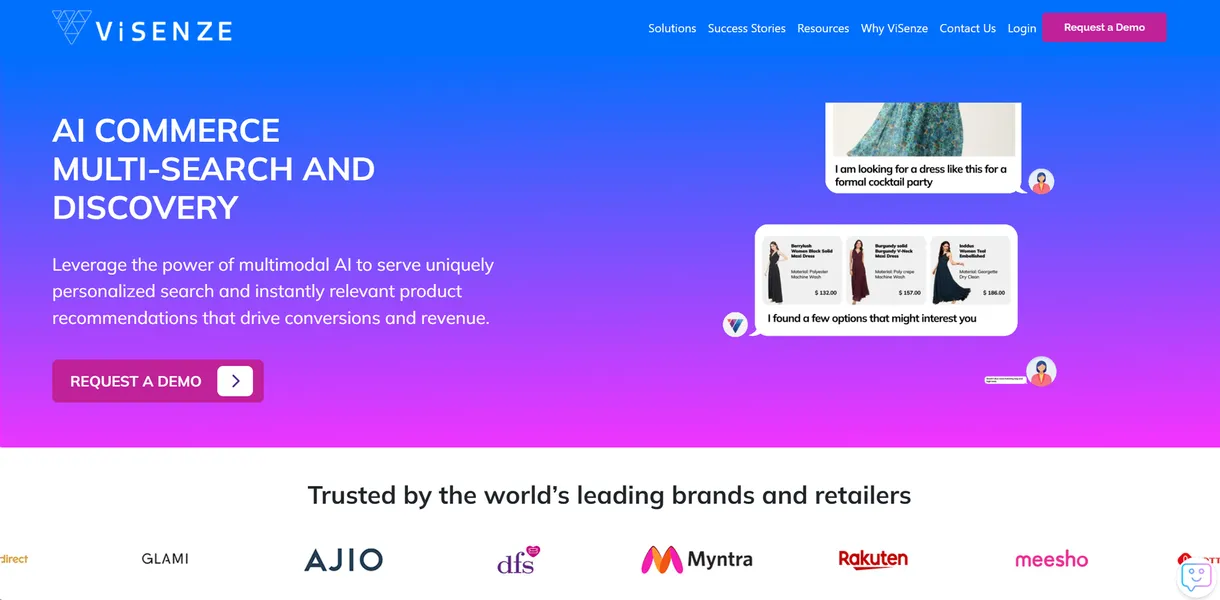
What is ViSenze?
Retailers processing over one billion visual queries per month depend on specific computer vision APIs to drive sales. ViSenze Pte Ltd builds AI visual search and product discovery tools for enterprise e-commerce brands. The platform helps shoppers upload photos to find identical or similar-looking products in an online store.
It targets large retailers managing massive catalogs with complex metadata. Shoppers expect instant results when they snap a picture of a jacket or chair. ViSenze delivers those results using custom visual model training.
- Primary Use Case: Enabling image-based search and automated product tagging for large retail catalogs.
- Ideal For: Enterprise e-commerce brands and global marketplaces.
- Pricing: Custom Pricing (Enterprise) – High entry cost tailored for large-scale operations.
Key Features and How ViSenze Works
Visual Search and Discovery
- Visual Search API: Matches user images to products. It maintains sub-200ms latency during high-traffic events.
- Similar Recommendations: Suggests comparable items based on shape and texture. This feature requires available catalog inventory to function.
- Shop the Look: Isolates multiple items in one image for direct purchase links. The tool needs clear object separation to work.
Catalog Management
- Smart Tagging: Extracts over 20 attributes per image, including color and pattern. Low-resolution photos cause rapid accuracy drops.
- Catalog Enrichment: Processes thousands of SKUs daily to standardize metadata. Initial setup demands manual oversight to map attributes.
- Multi-Language Support: Processes automated tagging and search in over 10 global languages. It requires accurate localized product data.
Developer Tools
- Mobile SDKs: Provides pre-built iOS and Android components. Developers use these for point-and-shoot search features in native apps.
- Visual Analytics: Tracks search volume and click-through rates. The real-time dashboard shows exact conversion attribution.
ViSenze Pros and Cons
Pros
- Achieves high accuracy in fashion and home decor recognition.
- Increases average order value by up to 15 percent for enterprise clients.
- Integrates with Shopify Plus, Salesforce Commerce Cloud, and Magento.
- Handles over 1 billion visual queries per month for global marketplaces.
Cons
- Lacks transparent pricing and excludes small boutique businesses.
- Requires high-quality product photography to maintain search accuracy.
- Demands significant manual oversight during initial catalog indexing.
Who Should Use ViSenze?
- Enterprise Retailers: Brands with massive catalogs need automated tagging to manage inventory at scale. The API handles high query volumes without crashing.
- Fashion and Decor Marketplaces: Platforms depending on visual aesthetics benefit from the similar recommendations engine. Shoppers find exact matches for intricate garment details.
- Mobile App Developers: Teams building native shopping apps can use the iOS and Android SDKs for quick integration. The pre-built components save weeks of development time.
- Not for Small Boutiques: Independent shops with limited budgets will find the custom enterprise pricing prohibitive. The setup process requires technical resources that small teams lack.
ViSenze Pricing and Plans
ViSenze operates on a custom pricing model based on usage and catalog size. Buyers must contact sales for a quote based on their specific query volume.
The company does not offer a free trial.
The Enterprise plan includes full API access, unlimited SKU indexing, and dedicated account management. Users also get custom visual model training tailored to specific retail categories. This custom training ensures the AI understands niche products like luxury watches or specific furniture styles. The lack of transparent pricing creates friction for mid-market brands trying to evaluate costs (expect a long sales cycle to get basic numbers).
How ViSenze Compares to Alternatives
Syte targets a similar enterprise retail audience with high-end visual discovery tools. Similar to Syte, ViSenze offers visual search and automated tagging for large catalogs. Unlike Syte, ViSenze provides custom visual model training tailored to specific retail categories like niche jewelry. Both tools require enterprise budgets and dedicated implementation teams.
Vue.ai focuses on product digitization and AI model generation for fashion brands. ViSenze places more emphasis on the direct consumer search experience and point-and-shoot mobile integrations. Vue.ai works better for backend catalog creation and virtual try-on features. ViSenze wins for frontend user discovery and fast image-to-product matching.
The Best Visual Search API for Enterprise Retailers
ViSenze delivers high-speed visual search for large e-commerce operations. Enterprise brands with massive fashion or home decor catalogs get the most value here. The platform increases average order value by keeping shoppers engaged with relevant visual recommendations.
Small businesses should look elsewhere.
If you run a boutique Shopify store, consider simpler plugins before investing in a custom enterprise API. ViSenze requires a significant budget and technical resources to implement.