SOAP Notes to Patient Summary With ChatGPT: A HIPAA-Safe Pattern (2026)
SOAP Notes to Patient Summary With ChatGPT: A HIPAA-Safe Pattern (2026)
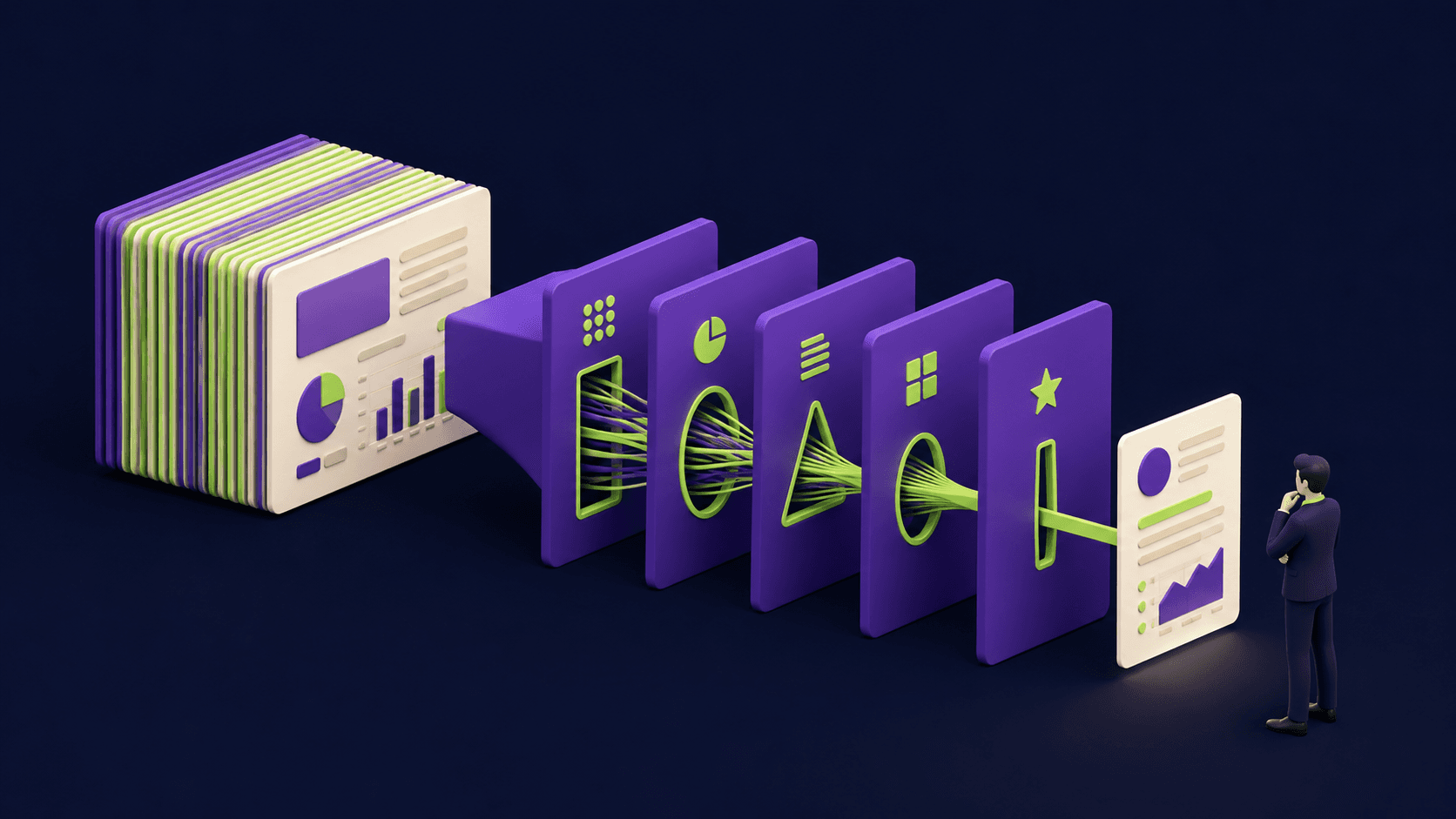
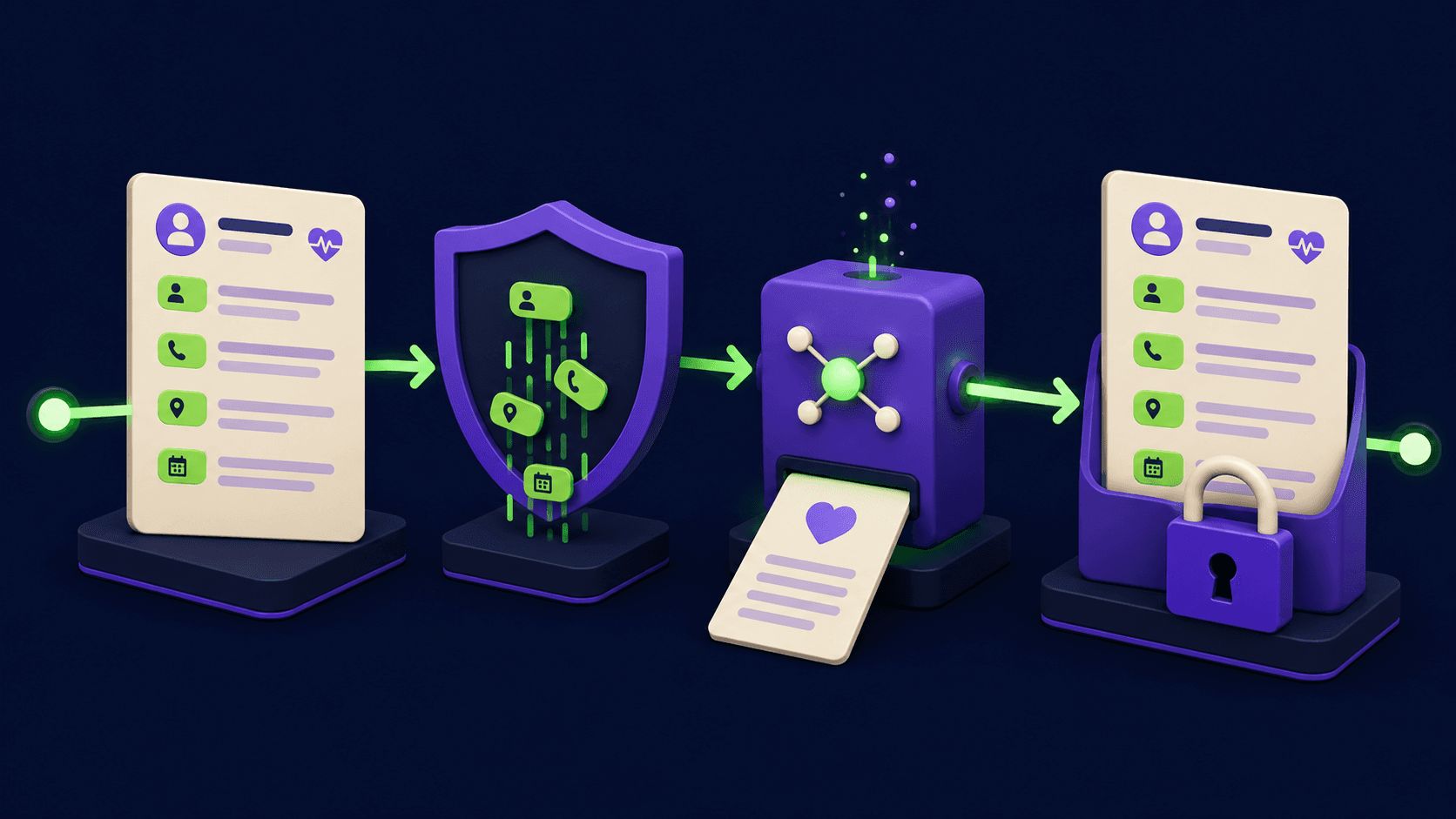
Care teams spend roughly 20 minutes per patient producing plain-language summaries that portal rules and federal information-blocking requirements now demand at scale. The solution is not pasting clinical notes into a consumer AI tool. It is a three-step pattern: de-identify the note to the HIPAA Safe Harbor standard before any text leaves your system, send only the de-identified version to the model, then reattach identifiers locally. This article explains exactly how that works, with a paste-ready prompt, a before/after example using entirely fictional data, and clear guidance on where the pattern breaks down.
TL;DR
Standard consumer ChatGPT is not HIPAA-eligible; you cannot get a BAA for it
PHI must never reach any AI tool without a signed Business Associate Agreement
De-identify to HIPAA Safe Harbor first, translate second, reattach identifiers locally
Keep a local audit log of every de-identified text sent and who sent it
Stop and escalate any case where translation might change clinical meaning
Why does this matter now?
Federal information-blocking rules that took effect under the 21st Century Cures Act require covered entities to provide patients with timely access to their health information, including clinical notes. Patient portals are the delivery mechanism. Many patients cannot parse clinical shorthand, so "accessible" increasingly means plain-language summaries, not raw SOAP text. The volume this creates, multiplied across every encounter, makes manual rewriting unsustainable without automation.
The Office of the National Coordinator for Health Information Technology (ONC) enforces information-blocking provisions and has published guidance on what constitutes appropriate patient access. Separately, the HHS Office for Civil Rights enforces HIPAA Privacy and Security Rules. Both pressures land on the same care team simultaneously. The pattern described here gives clinicians a practical path through that compliance pinch without introducing new PHI exposure.
The de-identification step: the 18 HIPAA Safe Harbor identifiers
Before a single word of a clinical note goes to any AI tool without a BAA, you must strip or replace all 18 categories the HIPAA Safe Harbor method defines. The HHS guidance on de-identification, published at hhs.gov, lists these categories explicitly and is the authoritative source. Missing even one category means the text is still PHI and cannot leave your system under the Safe Harbor standard.
The practical approach is a token scheme: replace each identifier with a placeholder like [NAME-1] or [DATE-2] in a local lookup table you control. After translation, you swap tokens back. The table below shows every category, a concrete example, and the token format to use.
Identifier | Example in a note | Replace with token |
|---|---|---|
Names | Margaret Holloway | [NAME-1] |
Geographic subdivisions smaller than a state | 3402 Elm Street, Apt 7B, Boston, MA 02130 | [ADDR-1] |
Dates (except year) directly related to an individual | DOB 03/14/1958; visit date 06/16/2026 | [DOB-1], [DATE-1] |
Phone numbers | (617) 555-0192 | [PHONE-1] |
Fax numbers | (617) 555-0193 | [FAX-1] |
Email addresses | [EMAIL-1] | |
Social Security numbers | XXX-XX-4421 | [SSN-1] |
Medical record numbers | MRN 00847291 | [MRN-1] |
Health plan beneficiary numbers | BCBS ID 994003821 | [PLAN-1] |
Account numbers | Acct 77102984 | [ACCT-1] |
Certificate or license numbers | NPI 1234567890 | [LIC-1] |
Vehicle identifiers and serial numbers | VIN 1HGCM82633A123456 | [VEH-1] |
Device identifiers and serial numbers | Pacemaker SN 8834920 | [DEV-1] |
Web URLs | patientportal.hospital.org/mholloway | [URL-1] |
IP addresses | 192.168.1.44 | [IP-1] |
Biometric identifiers (fingerprints, voice prints) | Voice print ID VPR-002 | [BIO-1] |
Full-face photographs and comparable images | [Photo attached] | [IMG-1] |
Any other unique identifying number, characteristic, or code | Employee badge 44912 | [ID-1] |
Two implementation notes. First, ages over 89 must also be generalized (the Safe Harbor method requires replacing them with the category "90 or older"). Second, dates that are not directly tied to the individual (for example, a published drug approval year) are not PHI and do not need tokenizing. When in doubt, tokenize.
The translation prompt rubric
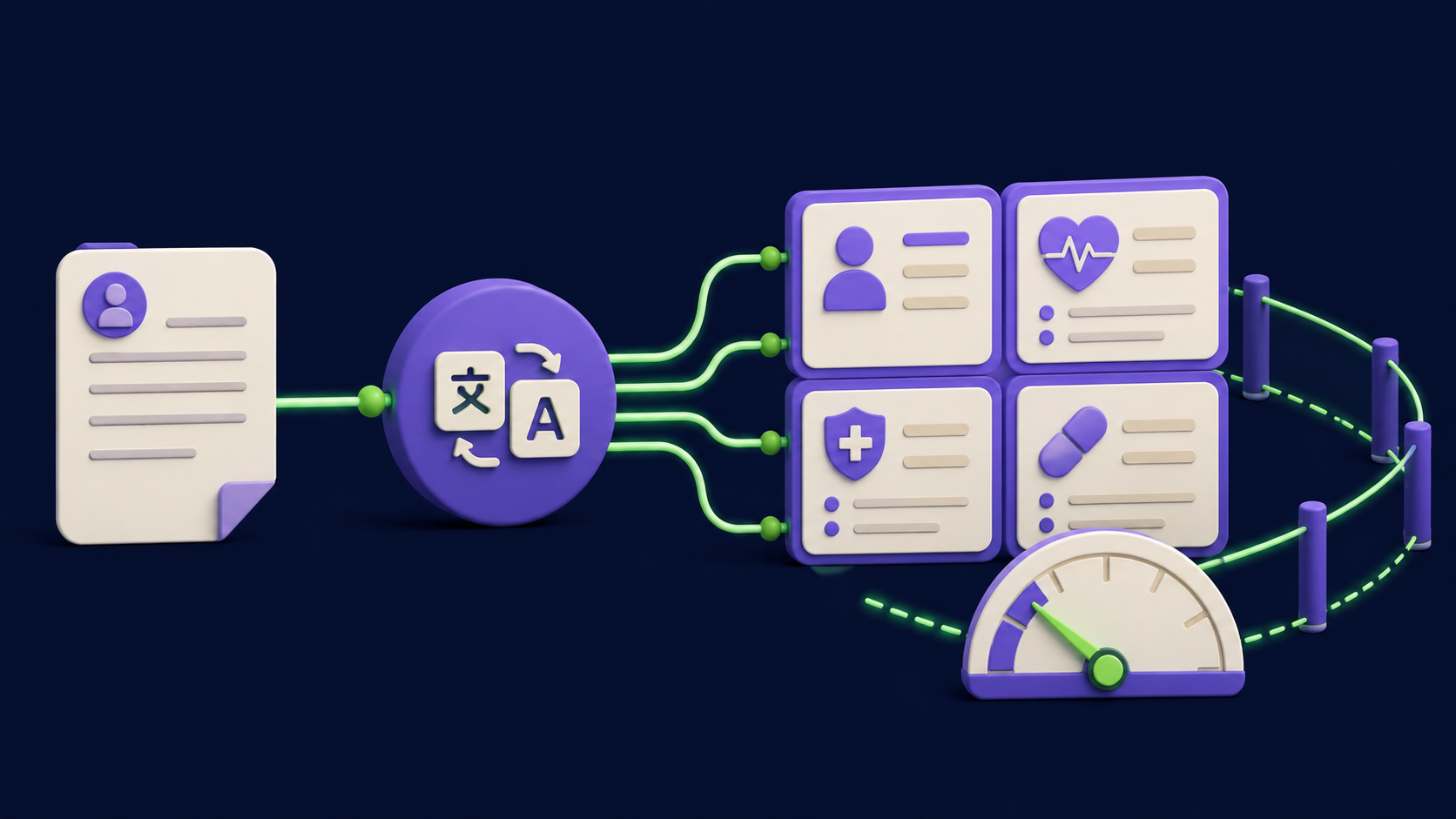
A well-structured prompt constrains the model to translating only what is in the note, at a reading level patients can follow, without adding clinical claims. The target is roughly a grade 6 to 8 reading level. The prompt must set hard scope limits: no diagnosis additions, no interpretation beyond what is written, no advice. Structure the output so patients know what happened, what the plan is, and what they need to do next.
Here is a paste-ready translation prompt. Copy this exactly, substituting the de-identified note text in place of [DEIDENTIFIED_NOTE_TEXT].
"You are a plain-language medical summarizer. You will receive a de-identified clinical note. Your job is to rewrite it as a brief patient summary following this exact structure: (1) What we checked today. (2) What we found. (3) Your care plan. (4) What you need to do before your next visit. Rules: write at a 6th-to-8th-grade reading level. Use short sentences. Do not add any diagnosis, interpretation, or advice that is not already in the note. Do not infer or speculate. If something in the note is ambiguous, describe it neutrally without guessing. Do not address the patient by name or use any identifying information. Output only the four-section summary, nothing else. Here is the note: [DEIDENTIFIED_NOTE_TEXT]"
Run the output through a reading-level check before reattaching identifiers. Free tools like the Flesch-Kincaid calculator can verify the grade level. If the output exceeds grade 8, add a second prompt: "Rewrite the above summary at a grade 6 reading level. Keep all four sections. Do not add or remove clinical content."
The reattach and audit-log step
After the model returns the plain-language summary, the reattach step runs entirely inside your system. Replace every token in the output with the original value from your lookup table. Then destroy the lookup table for that session or archive it under your records-retention policy. The translated text that left your system contained no PHI; the final patient-facing document is assembled locally.
The audit log matters for both HIPAA accountability requirements and for internal quality review. Log the following for each summary generated: the staff member who initiated the request, a timestamp, the encounter ID (not the patient name), the token count of de-identified text sent, and the model or API endpoint used. This log is not PHI, so it can live in a standard EHR activity table or a simple append-only file your privacy officer can review. Teams report that this log also catches scope creep early: if someone starts sending full discharge summaries instead of single-encounter SOAP notes, the token count spikes visibly.
Specialty examples: how tone and scope shift by context
The same prompt structure applies across specialties, but the emphasis in each section shifts. These examples use entirely fictional patients with invented names, dates, and conditions. They are illustrative only and represent no real individual.
Cardiology (fictional example). Original de-identified SOAP note fragment: "S: [NAME-1] reports mild exertional dyspnea on stairs since [DATE-1]. No chest pain. O: HR 72, BP 138/84. Echo [DATE-2]: EF 52%, mild MR. A: Preserved EF HF, mild MR, HTN. P: Continue lisinopril 10 mg, add furosemide 20 mg daily, f/u 4 weeks." Patient summary output: "What we checked today: Your heart and blood pressure. What we found: Your heart is pumping at a normal rate. You have a small amount of backward flow through one valve, and your blood pressure is mildly elevated. Your care plan: Continue your current blood pressure medicine. We are adding a new water pill once a day to reduce fluid buildup. What you need to do: Take both medicines daily. Come back in four weeks. Call us right away if you have chest pain or sudden shortness of breath."
Oncology follow-up (fictional example). Scope narrows here: the prompt should explicitly tell the model not to describe prognosis or survival statistics, since those carry a specific emotional weight that requires direct clinician involvement. The four sections still work, but the "what we found" section should describe the test result (for example, "your scan shows no new areas of concern"), not extrapolate what that means for treatment.
Pediatrics (fictional example). The summary should be addressed to the parent or guardian, not the minor patient. Add a fifth section: "When to call us." Pediatric notes often include weight and developmental milestones, which are fine to include in the summary because they inform the family's understanding of care. The reading level target stays the same (grade 6 to 8) because the goal is the caregiver's comprehension, not the child's.
When NOT to use AI for this
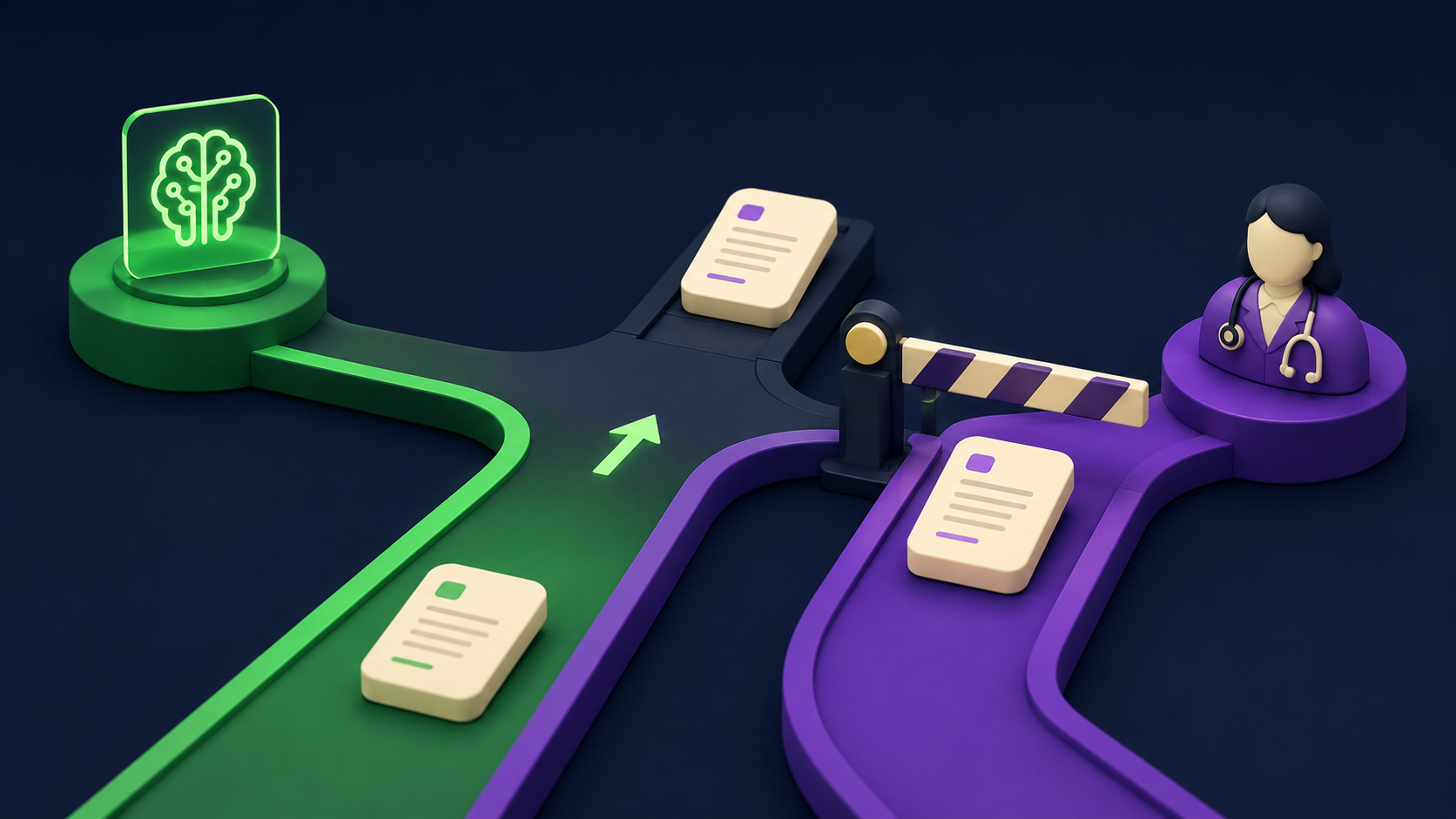
The pattern breaks down in predictable ways. Stop and route to a clinician in any of these situations: the note contains ambiguous findings where a neutral summary would still mislead (for example, a mass described as "indeterminate" that needs immediate context from the ordering physician before the patient reads about it); the case involves a mental health diagnosis where reductive plain-language could cause harm; the note spans multiple encounters with conflicting findings that require reconciliation; or you do not have a de-identification step in place and the note would need to go to the model as-is.
AI translation also should not be the last hand that touches the summary. Every output needs a clinical review before it reaches the patient portal. The automation saves the first-draft time; the clinician's review catches the cases where the model stayed within scope but produced something the patient would misread. The business automation tools hub covers where AI assistance is appropriate versus where human sign-off is the control that protects you.
Compliance disclaimer
Important: This article is general information only. It is not legal advice, medical advice, or a compliance determination. The pattern described here reflects the authors' understanding of publicly available HHS guidance as of 2026. Your organization's specific obligations under HIPAA, state law, and your contracts with health plans may differ. Before implementing any AI-assisted workflow involving patient data, confirm your compliance posture with qualified legal counsel and your organization's privacy officer. Nothing in this article creates a business associate relationship between your organization and any tool or vendor mentioned.
Need a compliant automation workflow built for your practice?
Vantaige builds done-for-you AI automation for health-tech operators and practice managers: intake flows, documentation support, and patient communication pipelines that are designed around your compliance constraints from day one. Book a free automation audit and we will map where AI assistance fits within your current workflows.
FAQ
Is ChatGPT HIPAA compliant?
Standard consumer ChatGPT (chat.openai.com) is not HIPAA-eligible and you cannot obtain a Business Associate Agreement for it. OpenAI does offer enterprise and API tiers with different data-handling terms, but a BAA is required before any PHI can flow to any AI tool regardless of tier. The de-identify-first pattern in this article sidesteps the BAA requirement because de-identified text under Safe Harbor is no longer PHI. Confirm this with your privacy officer before deployment.
What is a Business Associate Agreement?
A BAA is a written contract between a HIPAA-covered entity (or another business associate) and a vendor that handles PHI on its behalf. It obligates the vendor to safeguard the data, report breaches, and comply with applicable HIPAA rules. Without a signed BAA, transmitting PHI to a third-party tool is a HIPAA violation regardless of how secure the tool claims to be. OpenAI publishes information about its enterprise data handling and BAA availability at openai.com.
Is de-identified data still PHI under HIPAA?
No. Data de-identified under either the Safe Harbor method (removing all 18 categories) or the Expert Determination method (a qualified statistician certifies re-identification risk is very small) is no longer PHI under the HIPAA Privacy Rule. It can be shared or processed without the restrictions that apply to PHI. The key word is "properly": partial de-identification does not qualify. All 18 Safe Harbor identifiers must be removed or replaced before the text is considered de-identified.
What about OpenAI's enterprise or API tier?
OpenAI offers a Healthcare API program and enterprise agreements with data-handling commitments. As of 2026, you need to evaluate whether OpenAI's current BAA offering covers your specific use case and whether it meets your organization's security requirements. This is not a generic yes or no; it depends on your covered-entity status, what data flows, and what your privacy officer and counsel assess. Check openai.com and request their current BAA terms directly.
Who is liable if a de-identification step fails?
Liability depends on where the failure occurred. If your staff failed to remove an identifier before sending, the covered entity bears responsibility. If a vendor's tool was supposed to strip identifiers and missed one, contractual liability depends on your agreement with them. This is exactly why the token-substitution step described in this article is done manually or with locally-run tooling under your control, not delegated to a cloud process. Your privacy officer should own the de-identification procedure.
Can patients opt out of AI-assisted summaries?
Nothing in the de-identify-then-translate pattern removes patient rights. Patients retain all rights under HIPAA, including the right to restrict certain disclosures and to request corrections. Whether they can opt out of AI-assisted drafting specifically is a policy question your organization must answer and document. The summary they receive must still be accurate and clinically reviewed, regardless of how the first draft was generated.
Does this replace clinician review?
No. Every AI-generated summary must be reviewed by a qualified clinician before it reaches the patient portal. The pattern replaces the time-consuming first-draft step, not the clinical judgment step. A summary that is technically accurate but tonally wrong for a specific patient (for example, one dealing with a terminal diagnosis) needs human judgment that no prompt can reliably supply. Think of the AI as a first-draft assistant, not a sign-off authority.
Does this work with EHR-native summary tools?
Some EHR vendors (Epic, Oracle Health, others) are building patient-summary features directly into their platforms. Those tools operate under the EHR vendor's BAA and data-handling terms. The de-identify-then-translate pattern in this article applies to workflows where you are using an external AI tool that does not have a BAA in place. If your EHR vendor offers a built-in summary feature with a valid BAA, evaluate that first before building a custom workflow.
Related from Vantaige
References
U.S. Department of Health and Human Services, Guidance Regarding Methods for De-identification of Protected Health Information. hhs.gov
Office of the National Coordinator for Health Information Technology, Information Blocking and Patient Access rules. healthit.gov
OpenAI, Enterprise privacy, data handling, and healthcare programs. openai.com
HHS Office for Civil Rights, HIPAA Privacy Rule overview and enforcement. hhs.gov/ocr
Get the best new AI tools and guides, weekly
One short email a week. The tools worth trying, the guides worth reading, nothing else.
No spam. Unsubscribe anytime.
Aymen B
Contributing writer at Vantaige, covering the AI tools ecosystem.