
CrewAI is an open-source Python framework for building multi-agent AI systems using role-based crews. Founded by João Moura in 2023, it powers billions of agent executions monthly and offers both self-hosted and enterprise cloud deployment options.
CrewAI is a Python framework for orchestrating teams of AI agents that each carry a specific role, goal, and backstory. Founded by João Moura, a former AI engineering director at Clearbit, the project launched quietly on GitHub in November 2023 and reached nearly 48,000 stars within two and a half years. It is MIT-licensed, fully independent of LangChain, and runs on Python 3.10 through 3.13. The framework solves a specific problem: rather than writing bespoke orchestration code for every multi-step AI workflow, developers define agents as named roles with responsibilities and let the framework handle task delegation, memory sharing, and output passing between them.
The core architecture has two layers. Crews handle autonomous, role-based collaboration where agents divide labor dynamically. Flows add deterministic, event-driven control for workflows that need precise sequencing, conditional branching, or human-in-the-loop checkpoints. As of v1.14 (April 2026), CrewAI supports checkpoint and fork operations for long-running agents, a 29% cold-start improvement, native compatibility with OpenRouter, DeepSeek, Ollama, vLLM, Cerebras, and Dashscope alongside OpenAI and Anthropic, and a Qdrant Edge memory backend for persistent agent memory. The companion CrewAI Studio provides a visual no-code editor for building crews without writing Python directly.
What CrewAI actually does in April 2026
CrewAI's model organizes agents around three defining properties: a role (what the agent is), a goal (what it is trying to achieve), and a backstory (context that shapes its reasoning style). Tasks are assigned to agents explicitly, and agents can be configured to use tools (web search, database queries, code execution, API calls) with the framework routing outputs from one agent to the next. Crews can run sequentially (one agent finishes before the next starts) or hierarchically (a manager agent delegates to workers). Flows layer on top of Crews, allowing event-driven triggers, conditional logic, and fine-grained state control without abandoning the role abstraction.
The v1.12.0 release introduced Agent Skills, a composable unit for reusable agent behaviors, and Qdrant Edge for embedded vector memory. The January 2026 update added native agent-to-agent (A2A) communication with poll, stream, and push update mechanisms, plus global human-in-the-loop feedback for Flows. On the enterprise side, CrewAI offers SOC 2 compliance, SSO via Microsoft Entra and Okta, role-based access control, FedRAMP High certification on request, and PII masking for regulated industries. The Studio visual editor integrates with GitHub, supports Gmail, Slack, Notion, HubSpot, Salesforce, and Microsoft Teams as built-in connectors, and runs on CrewAI's hosted cloud or a private VPC.
"CrewAI makes it easy and fast to develop both simple and complex multi-agent AI workflows.". Andrew Ng, investor and co-founder of Coursera, October 22, 2024 (GlobeNewswire press release)
Where CrewAI sits versus AutoGen and LangGraph
The three dominant open-source multi-agent frameworks take fundamentally different approaches to the same problem: how to coordinate multiple AI agents toward a shared goal.
AutoGen (Microsoft, now AG2): AutoGen models agent interactions as conversations. Agents are "conversable" entities that pass messages back and forth in group chats, with tool calls emerging from the dialogue rather than being pre-assigned. This conversational architecture is flexible and natural for research or brainstorming tasks but creates growing complexity at scale. AutoGen rates low for production readiness because it lacks built-in observability tooling, security features, and deterministic execution guarantees. Its Core layer handles event-driven messaging, while AgentChat sits above it as a higher-level interface, but the gap between prototype and production is wide. Compared to CrewAI, AutoGen requires more manual orchestration and offers less out-of-the-box structure for sequential or hierarchical workflows.
LangGraph (LangChain): LangGraph implements a graph-based state machine. Developers define workflows as nodes (processing steps) and edges (transitions), with typed state objects that persist across the graph and reducer functions to handle concurrent state updates. It does not abstract away architecture decisions: every branch, loop, and recovery path must be defined explicitly. This verbosity pays off in workflows that need precise branching logic, crash recovery, or durable execution across long time horizons. LangGraph currently sits at 28,200 GitHub stars versus CrewAI's 47,800, reflecting the higher onboarding friction of explicit graph definition. For developers who need fine-grained state control and are comfortable writing more boilerplate, LangGraph offers better fault tolerance than CrewAI's higher-level model. For teams that want something running in a day, CrewAI is faster to prototype.
"For rapid prototyping and getting something deployed fast, CrewAI is probably the best option out there right now.", softmaxdata.com, Definitive Guide to Agentic Frameworks in 2026
The practical split: CrewAI for structured business workflows where roles are clear and speed of development matters; LangGraph for complex pipelines needing deterministic state management; AutoGen for conversational or research-oriented multi-agent systems where dialogue drives the process.
What the agent loop reality looks like
Building a functional crew is genuinely fast. Defining three agents with roles and tasks takes under 50 lines of Python; the framework handles memory sharing, output passing, and tool routing automatically. The role/goal/backstory pattern produces surprisingly coherent agent behavior for structured workflows, and the Flows abstraction makes it practical to mix deterministic control with autonomous agent reasoning in the same pipeline.
The friction starts at scale. Agents inherit each other's outputs without built-in verification, which means one agent's hallucination compounds as it passes to the next. Ondřej Popelka, writing about using CrewAI to process a 7-million-row database, found that without careful Flows architecture, success rates on repeated components sat at 1%. After restructuring to supply data incrementally through Flows rather than letting agents fetch it themselves, he reached 90%. The lesson: "Switching from agents handling all data processing to supplying relevant data incrementally through CrewAI Flows improved success rates from 1% to 90%." That is real improvement, but it took significant engineering to get there.
Logging is another friction point. Standard Python print and logging functions do not work cleanly inside CrewAI Tasks, making it hard to trace failures in production multi-agent runs without custom instrumentation. Execution latency on complex crews commonly runs 2-5 minutes per run, which rules out real-time or user-facing applications. Context window overflows are a recurring theme for data-heavy workflows, since multi-agent systems are naturally chatty and CrewAI does not aggressively minimize inter-agent token usage.
The cloud pricing model adds a separate consideration. Executions on the hosted platform are capped per tier, with a hard wall at tier limits (upgrade required, no per-execution overage on lower plans beyond the $0.50/execution rate). For workflows with spiky or unpredictable execution patterns, cost planning requires care.
Who CrewAI is built for
CrewAI fits Python developers who want to move from a single-LLM script to a coordinated multi-agent system without learning graph theory or writing a custom orchestration layer. It works well for teams building internal tooling, data pipelines, research automation, content workflows, or back-office process automation where the task structure is relatively clear and latency requirements are loose. The role abstraction maps naturally to how human teams divide work, making it easy to reason about what each agent is doing and to hand the architecture off to colleagues who do not write LLM code themselves.
Enterprise teams benefit from the full-stack offering: the open-source framework for development, CrewAI Studio for visual iteration, and the Enterprise cloud tier for deployment with SSO, RBAC, and compliance certifications. The company reported that nearly 60% of Fortune 500 companies were using the open-source framework by late 2025, with 150 beta enterprise cloud customers signed in the first six months after the October 2024 launch.
What CrewAI is not
CrewAI is not a good fit for production user-facing applications that need sub-second response times or guaranteed output correctness. The agent loop is non-deterministic, execution time varies unpredictably, and there is no built-in truth-verification layer. As one practitioner analysis put it: "The moment someone asks: 'Can you guarantee this will work every time?' That's where the conversation gets uncomfortable." If your workflow requires an SLA, a human review gate or deterministic validation code should sit downstream of the agents, not inside them.
It is also not suited to teams running small open-source models locally. Models below roughly 7 billion parameters struggle with function-calling reliability in CrewAI's tool mechanism, which limits self-hosted deployments to capable models like Llama 3.1 70B, Mistral Large, or hosted API models. Completely non-technical users will hit a ceiling without Python knowledge, even with Studio's visual interface. And for workflows that genuinely need fine-grained conditional branching with crash recovery, LangGraph's explicitness is a better architectural choice despite the steeper learning curve.
User Reviews
No reviews yet. Be the first to share your experience!
Sign in to write a review.
Featured in collections
Curated lists that include CrewAI.
Related articles
Guides and articles related to CrewAI.
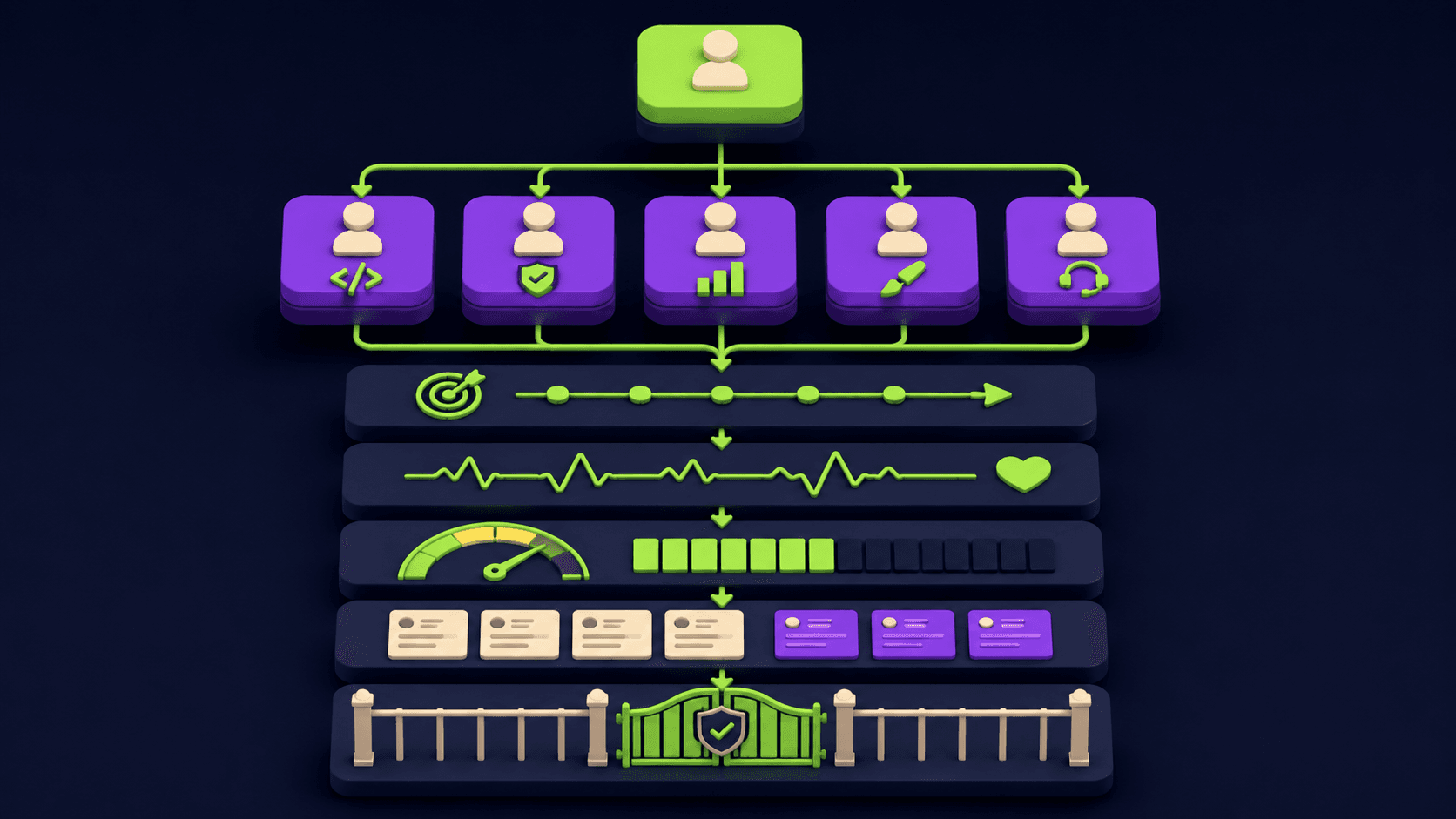
Run a Company With AI Agents: The Open-Source Orchestration Setup (2026)
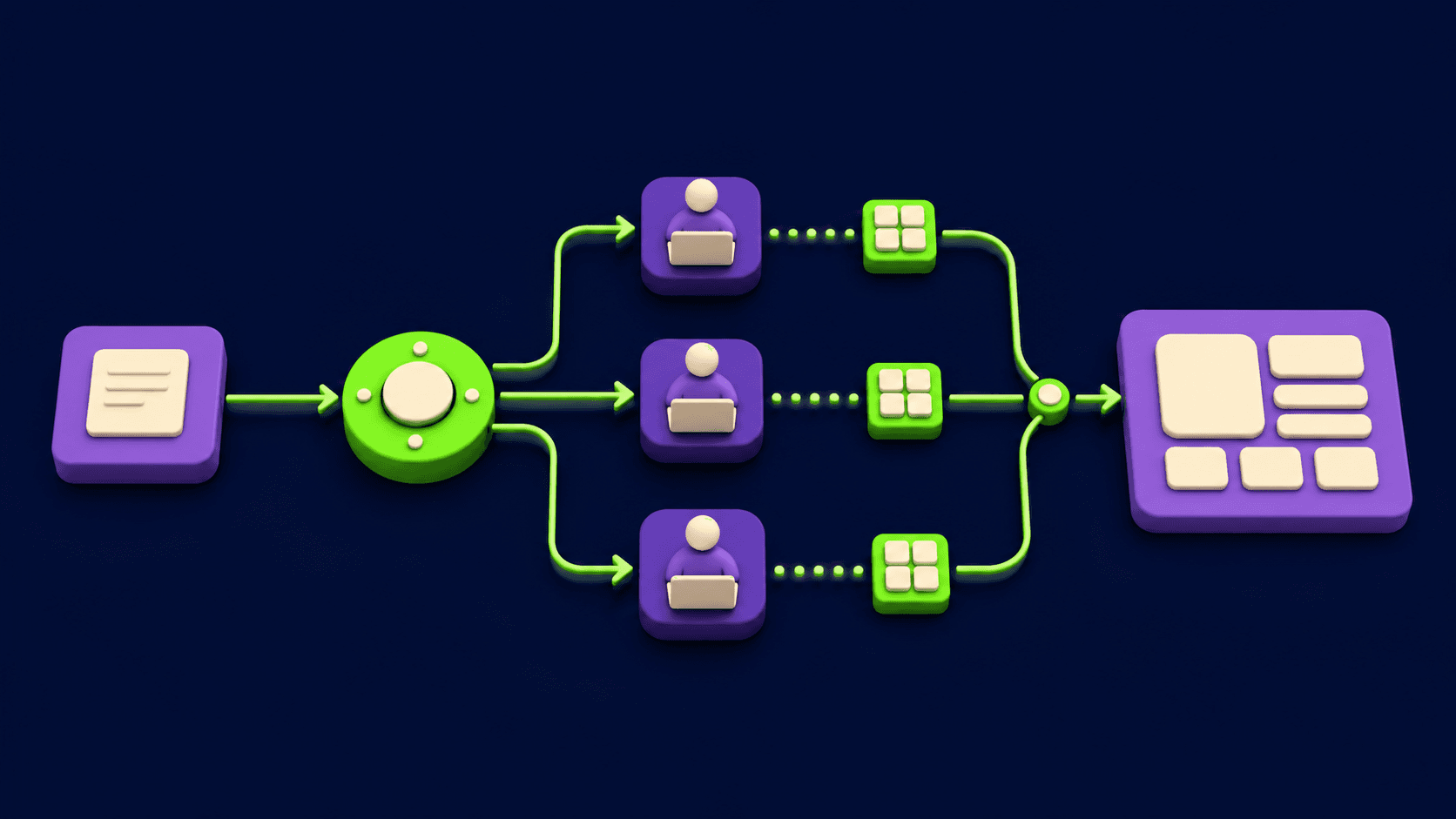
Orchestrator-Workers: The Multi-Agent Pattern That Actually Scales (2026)
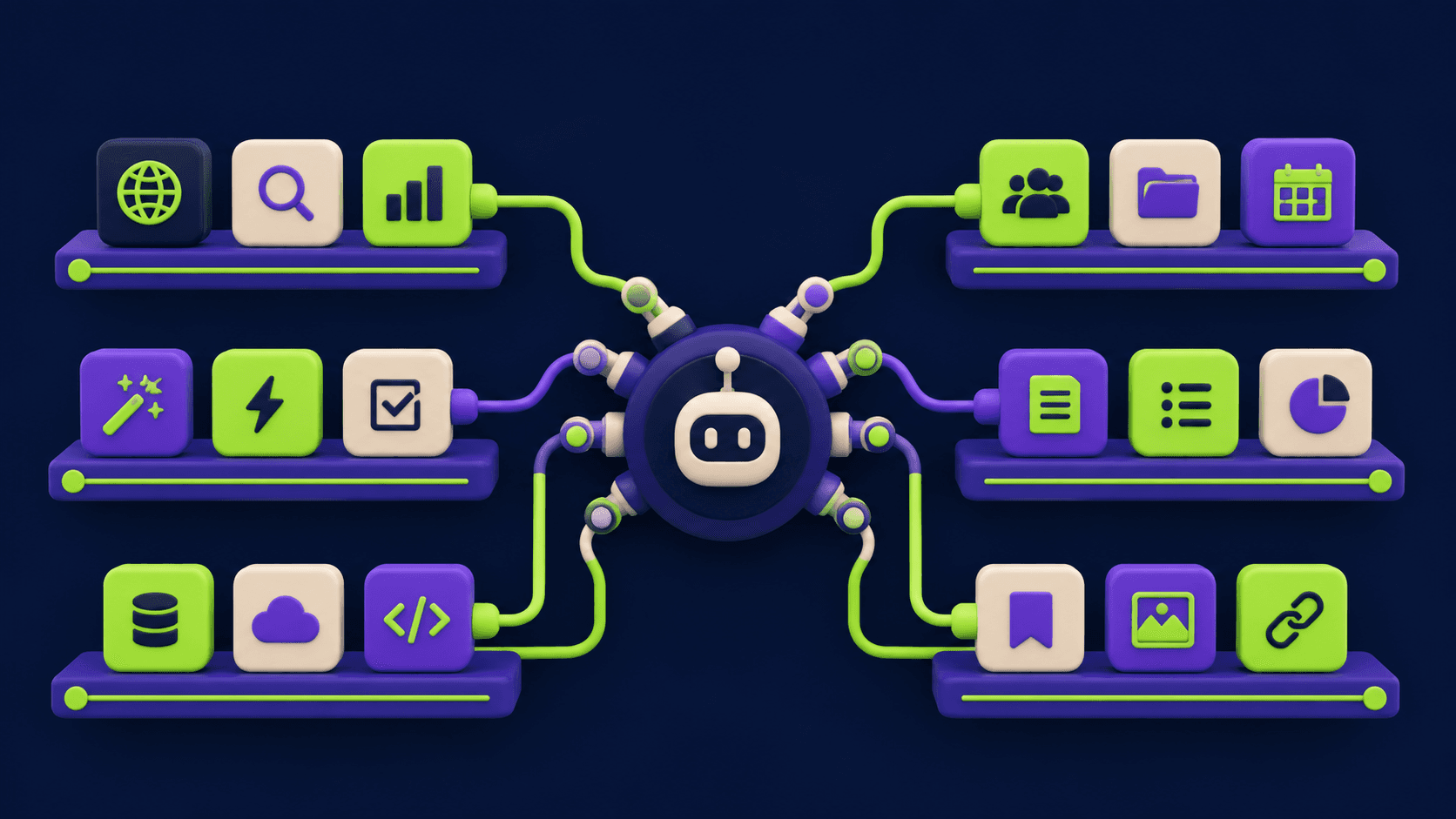
Turn Any AI Agent Into a Superagent: The 12-Integration Stack (2026)
How AI Agents Work: Architecture & Implementation Guide (2025)

15 AI Agent n8n Workflows You Can Build This Weekend (2026)