Orchestrator-Workers: The Multi-Agent Pattern That Actually Scales (2026)
Orchestrator-Workers: The Multi-Agent Pattern That Actually Scales (2026)
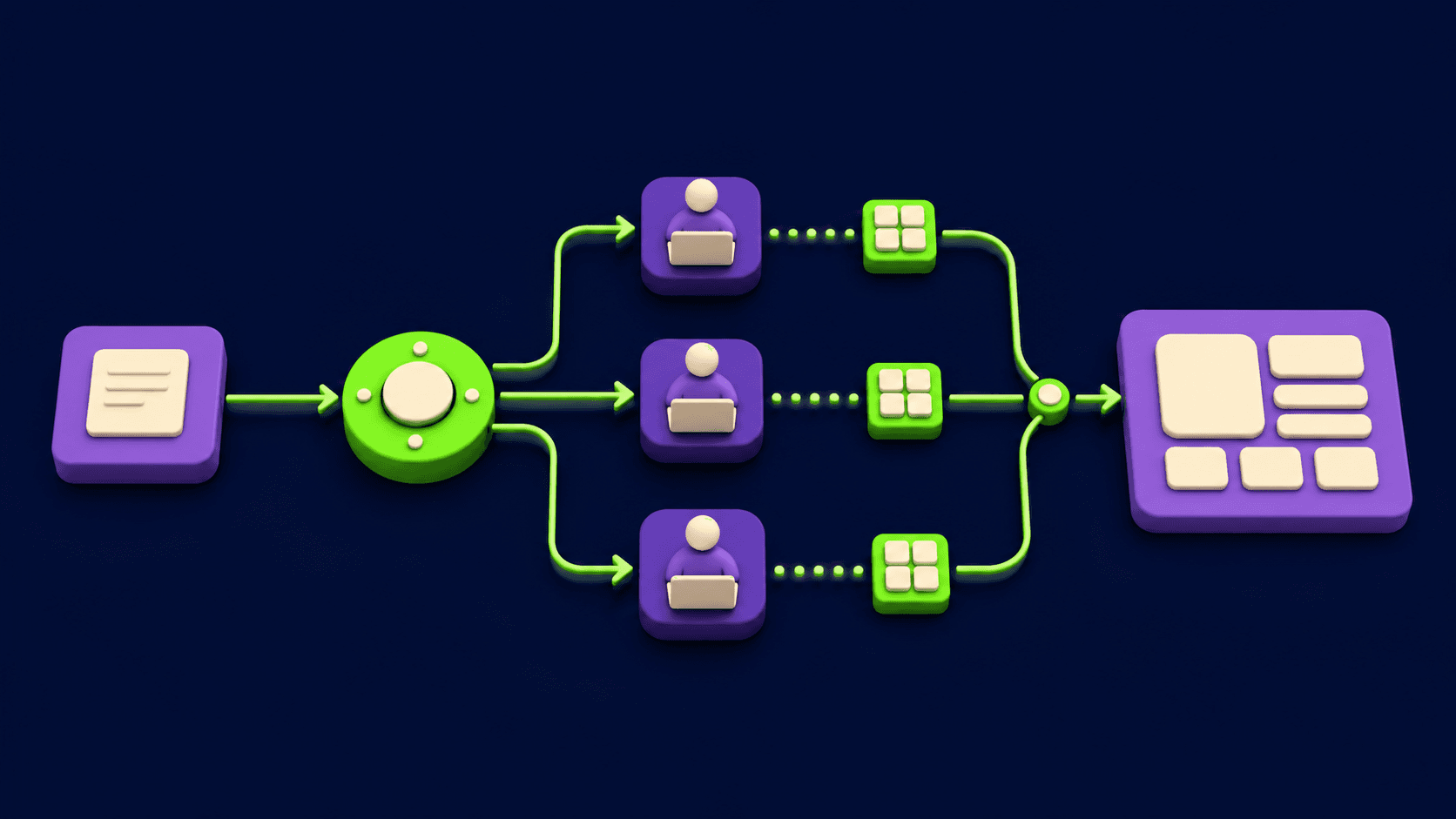
Orchestrator-workers is a multi-agent orchestration pattern where one central LLM plans a task, splits it into subtasks, delegates each to a specialist worker agent, then merges the results into one answer. It is the pattern enterprises moved to in 2026 once single-agent tools stopped scaling on multi-stage work. This guide defines the pattern, shows when to pick it over sequential or parallel agents, and walks the exact wiring in Claude Code, n8n, and MCP, tool-agnostic and without inventing framework features.
TL;DR
Orchestrator-workers: one LLM plans, delegates to specialist agents, merges results.
Use it when subtasks are unknown until runtime and vary in number.
Sequential fits fixed pipelines. Parallel fits known, independent subtasks.
The orchestrator owns planning and synthesis. Workers own narrow execution.
Main failure mode is the orchestrator context window, not the workers.
Published 2026-05-19 · 13 min read · Last reviewed 2026-05-19
What is the orchestrator-workers pattern in multi-agent systems?
The orchestrator-workers pattern is a multi-agent design where a central orchestrator LLM decomposes a task into subtasks, assigns each to a specialist worker agent, and synthesizes their outputs into a final result. The orchestrator decides the plan at runtime. It does not follow a hardcoded sequence.
The defining property is dynamic delegation. The orchestrator reads the request, decides how many workers it needs and what each should do, then dispatches them. A research request might spawn three search workers and one synthesis worker. A code request might spawn one worker per file. The number and shape of the work is not known until the orchestrator looks at the input.
This is the difference from a fixed pipeline. In a pipeline you wire step 1 to step 2 to step 3 in advance. In orchestrator-workers, the orchestrator writes that plan live, every run, based on what the task actually needs. Anthropic describes this in its building effective agents guide as the workflow where subtasks cannot be predicted upfront.
How does orchestrator-workers differ from sequential and parallel agents?
Orchestrator-workers delegates dynamically and merges results. Sequential agents pass output forward through a fixed chain. Parallel agents run a known set of independent agents at once and aggregate. The split comes down to one question: do you know the subtasks before runtime, and are they independent?
Sequential agents form a chain. Agent A produces output, Agent B consumes it, Agent C consumes that. Order is fixed and known at design time. A draft-then-edit-then-fact-check flow is sequential. It is simple and debuggable, and it fails when one early step degrades and every later step inherits the error.
Parallel agents (also called parallelization or fan-out) run several agents simultaneously on subtasks you defined in advance, then combine the results. Running the same risk review through three different prompts and voting is parallel. It is fast and good for coverage, but you must know the full set of subtasks before you start.
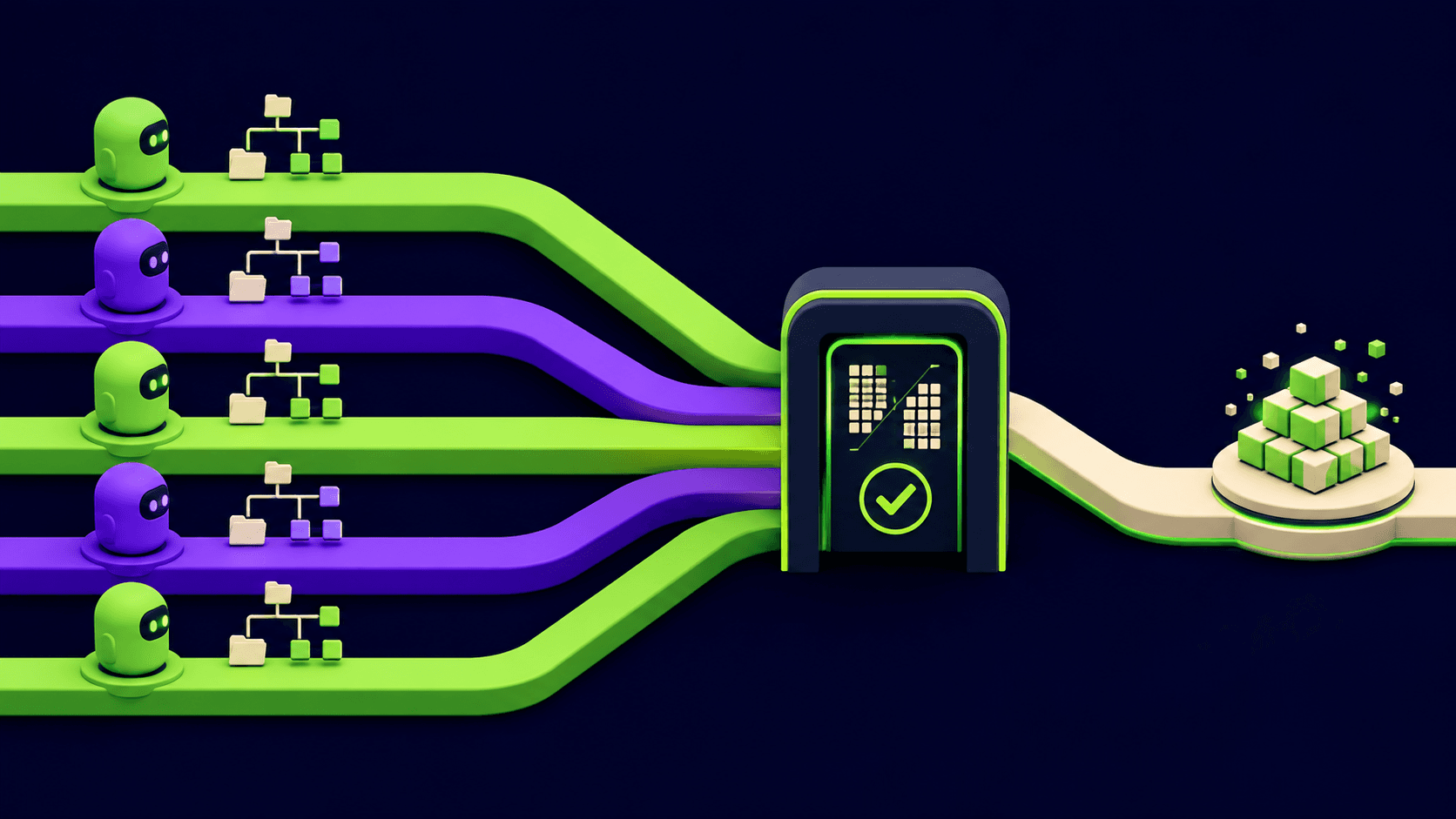
Orchestrator-workers sits above both. The orchestrator can choose to run workers in sequence, in parallel, or a mix, and it decides how many and which ones per request. It is the only one of the three where the plan itself is generated by an LLM at runtime. That flexibility is also its cost, covered below.
When should you use orchestrator-workers vs simpler patterns?
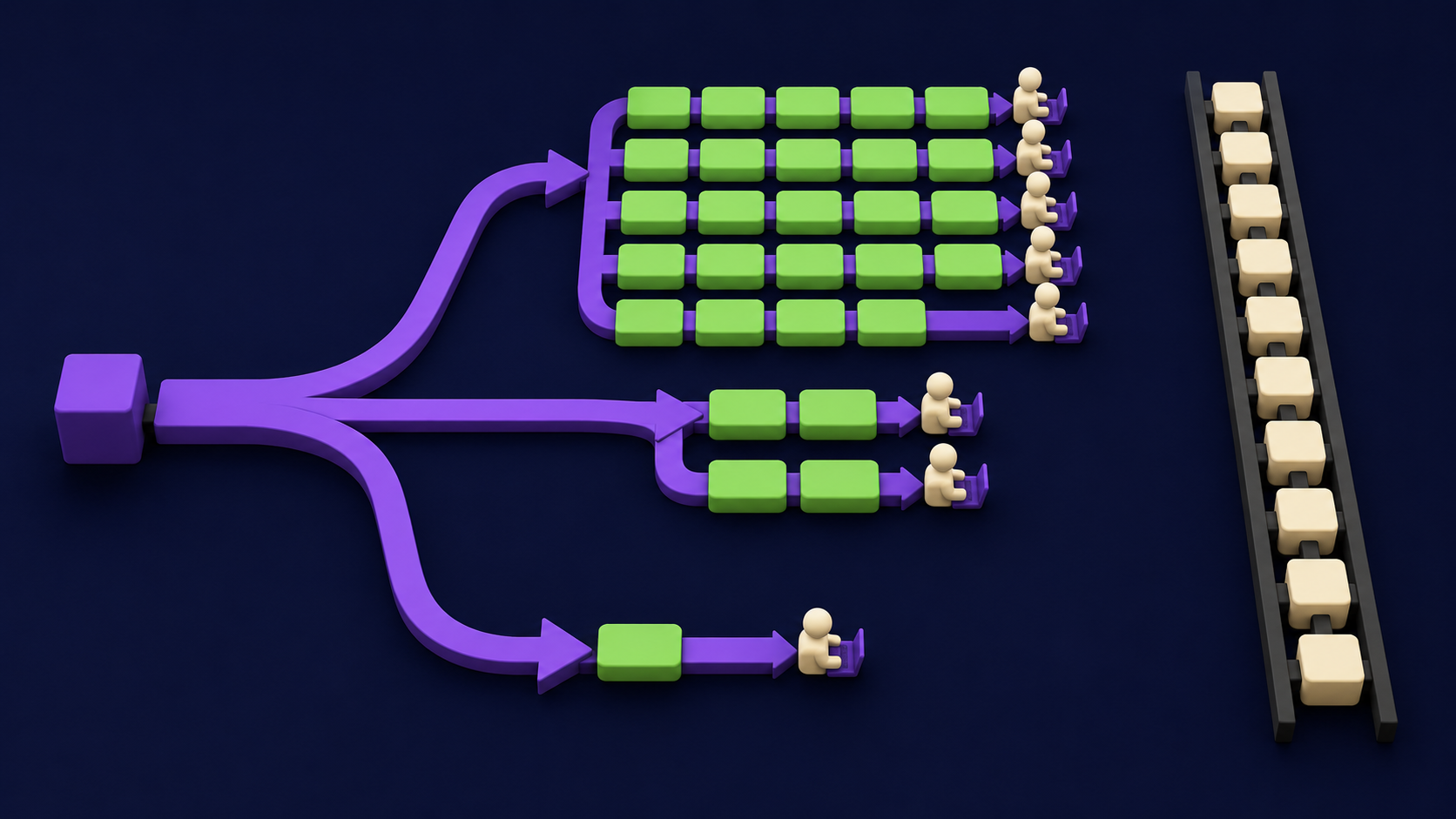
Use orchestrator-workers when the subtasks are not known until you see the input, vary in number per request, and need different specialist skills. Use sequential when the pipeline is fixed. Use parallel when the subtasks are known and independent. Use a single agent when one prompt and one toolset can finish the job.
Pick orchestrator-workers when the plan is data-dependent. Coding tasks where the number of files to change depends on the request. Research where the number of sources to chase depends on the question. Support where the routing depends on the ticket. In all three, a fixed chain cannot express the variation, so you need an LLM to plan.
Do not reach for it by default. Each worker is another LLM call with its own latency, cost, and failure surface. If a single well-scoped agent with the right tools can do the task in one pass, that is the correct architecture. The cost comparison in our Agent 365 vs Claude managed agents breakdown shows how fast multi-agent token spend compounds when the pattern is applied where it is not needed.
Pattern | When to use | Failure mode |
|---|---|---|
Single agent | One prompt plus one toolset finishes the task; no decomposition needed | Task outgrows context or needs skills the one agent does not have, output degrades silently |
Sequential agents | Fixed, known pipeline where each step strictly depends on the previous one | Early-step error propagates and compounds through every later step with no recovery |
Parallel agents | Subtask set is known in advance and the subtasks are independent of each other | Aggregation is hard or conflicting; cannot express tasks discovered at runtime |
Orchestrator-workers | Subtasks are unknown until runtime, vary in count, and need different specialists | Orchestrator context window overflows tracking all worker state; planning errors cascade to every worker |
What are the core components of an orchestrator-workers system?
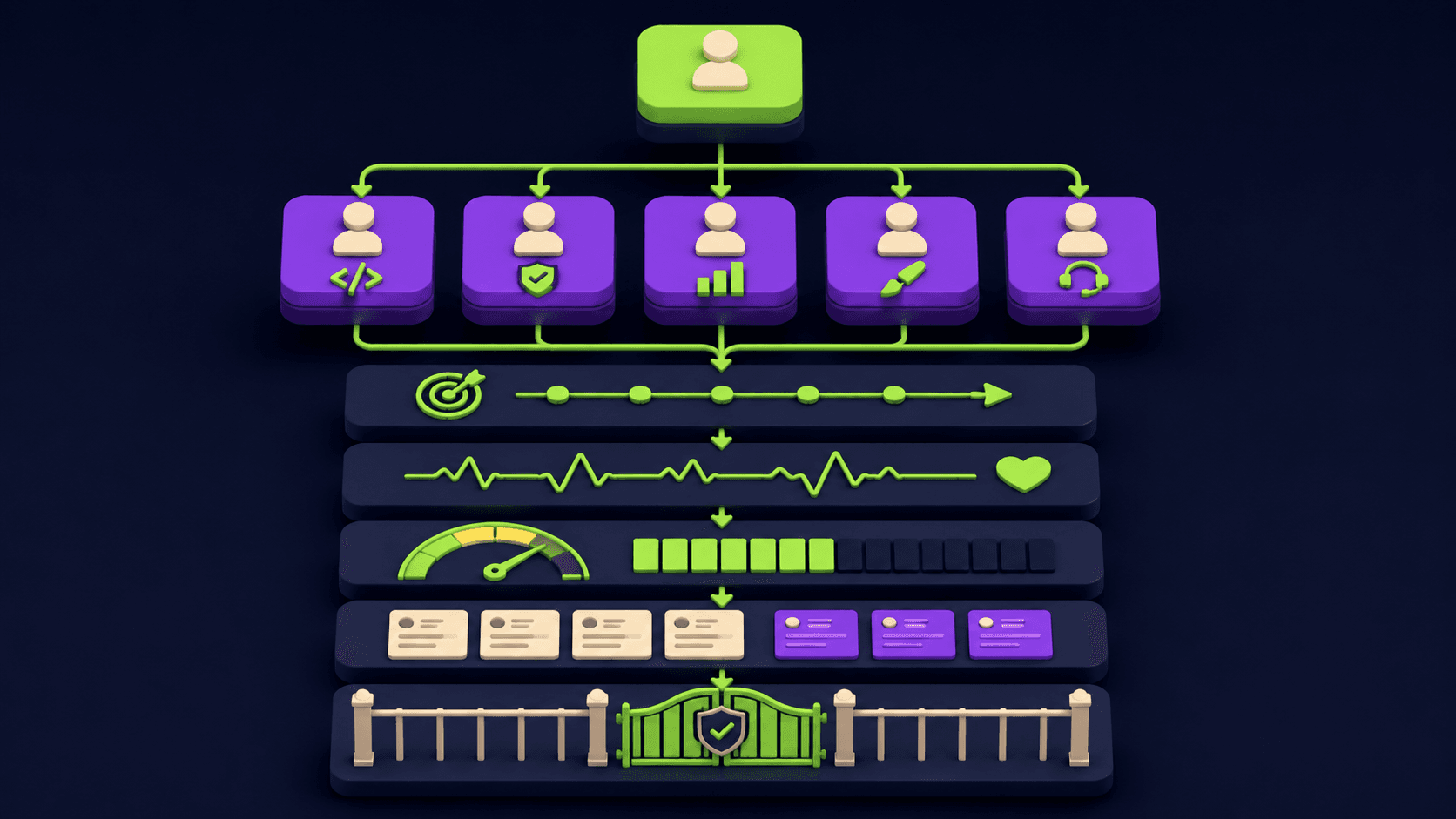
An orchestrator-workers system has four parts: the orchestrator that plans and delegates, a pool of specialist workers, a context isolation boundary so workers do not pollute the orchestrator, and a synthesis step that merges worker outputs. Each part has one job, and keeping those jobs separate is what makes the pattern scale.
The orchestrator. It receives the request, produces a plan, dispatches workers with scoped instructions, and decides when the task is done. It never executes the detailed work itself. Its context holds the plan and worker summaries, not the raw work product.
The workers. Each worker is a narrowly scoped agent with its own prompt and tools. A worker does one subtask, returns a compact result, and forgets the rest. A search worker searches. A code worker edits one file. Narrow scope is what keeps each worker reliable.
Context isolation. Workers run with their own context window. They report a summary back, not their full transcript. This is the load-bearing detail. We cover the mechanics for Claude Code in our Claude Code subagents context patterns guide. Without isolation, every worker fills the orchestrator and the system stalls.
Synthesis. A final step, sometimes the orchestrator itself, sometimes a dedicated synthesizer worker, takes the worker summaries and produces the single coherent answer. Synthesis quality decides whether the user sees one answer or a pile of fragments.
How do you implement orchestrator-workers in Claude Code?
In Claude Code you implement orchestrator-workers with subagents. The main session acts as orchestrator, and each subagent is a worker with its own context window and a scoped task. The main agent delegates, each subagent runs isolated and returns a summary, and the main agent synthesizes. This is the native shape, not a workaround.
Define worker behavior in subagent configuration so the orchestrator can dispatch a specialist instead of doing the work inline. A typical layout:
.claude/
  agents/
    researcher.md      # worker: searches and summarizes sources
    code-writer.md     # worker: edits one file, returns a diff summary
    reviewer.md        # worker: audits a change, returns findings
  CLAUDE.md            # orchestrator-level instructions and routing rules
The orchestrator instruction in CLAUDE.md tells the main agent when to delegate rather than act:
When a task spans multiple files or needs research:
1. Plan the subtasks. Do not execute them inline.
2. Dispatch one subagent per independent subtask.
3. Wait for each subagent summary. Do not re-read its full output.
4. Synthesize the summaries into the final answer yourself.
The behavior to verify is context isolation. The subagent does the heavy reading and returns a compact summary, so the orchestrator transcript stays small even across many workers. The three patterns for keeping that boundary clean are documented in the subagents context guide. If the orchestrator starts re-reading full worker transcripts, isolation has broken and you lose the pattern's main benefit.
How do you implement orchestrator-workers in n8n or with MCP?
In n8n, the orchestrator is an AI Agent node whose tools are other agent sub-workflows; it calls them dynamically based on the input. With MCP, the orchestrator is an LLM that calls specialist agents exposed as MCP tools or servers. Both keep the same contract: the orchestrator plans, specialist workers execute in isolation, the orchestrator synthesizes.
The n8n shape uses an AI Agent node as the orchestrator. Each worker is a separate workflow registered as a tool the orchestrator can invoke. The orchestrator decides at runtime which workers to call and how many times, based on the incoming data, not on a fixed wired path. Our n8n MCP and Claude Code setup guide covers wiring the MCP bridge that lets these talk.
The MCP shape keeps a clean separation. Workers are exposed as MCP servers or tools with a defined input and output schema. The orchestrator LLM treats each worker as a callable specialist and never sees inside its execution. MCP defines this client-server tool contract in the Model Context Protocol specification, which is what makes the pattern portable across runtimes.
One MCP failure to plan for: if a worker server writes diagnostics to stdout it can corrupt the protocol stream and the orchestrator loses its tools. We document the exact symptom and fix in fixing MCP server stdout so Claude keeps its tools. It is the most common reason an MCP-based orchestrator silently stops delegating.
What are the common mistakes when building orchestrator-workers?
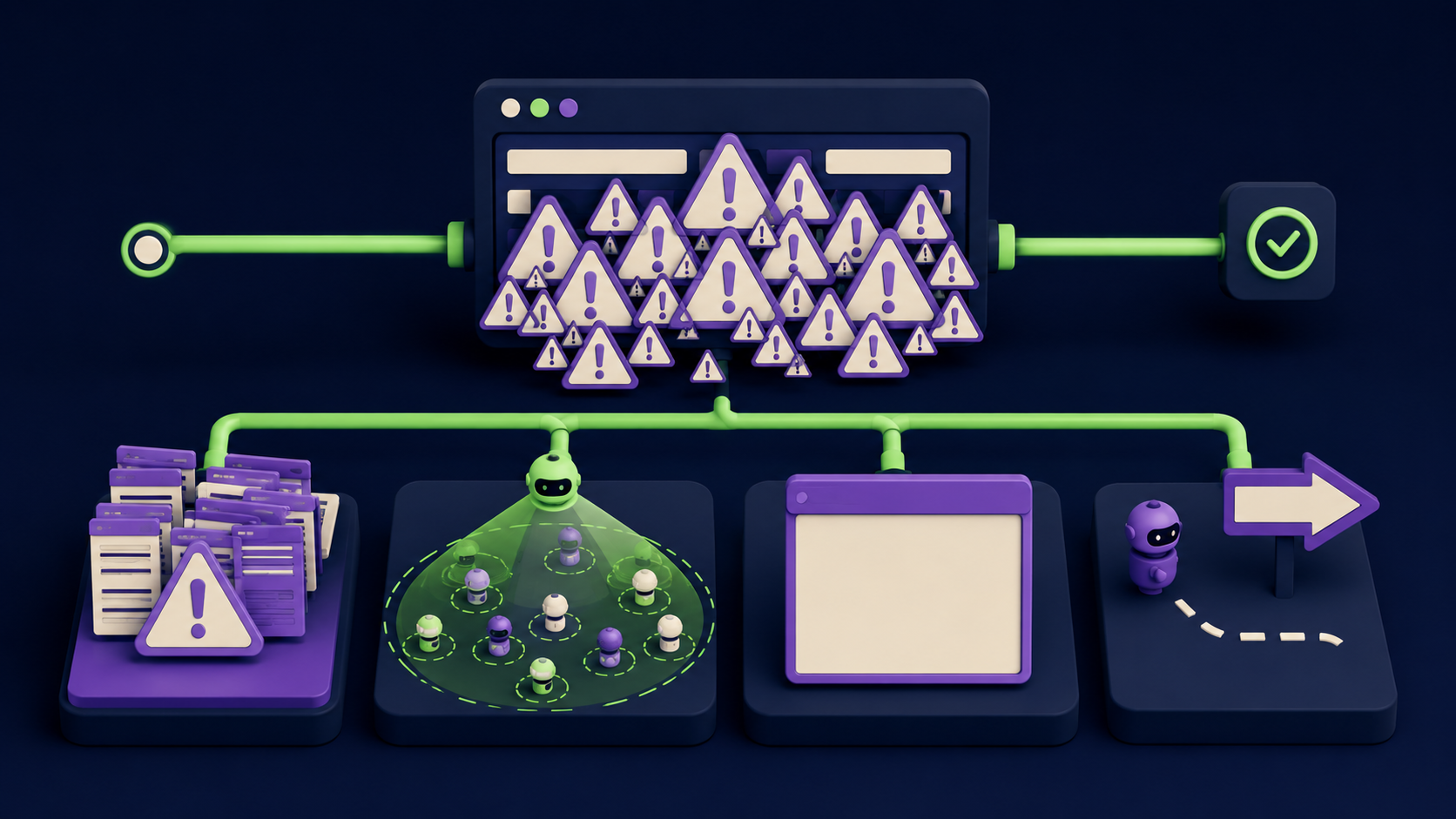
The common mistakes are overflowing the orchestrator context, making workers too broad, skipping synthesis, and using the pattern when a single agent would do. Each one removes a property the pattern depends on, so the system either stalls, gives fragmented answers, or costs more than it should for no benefit.
Orchestrator context overflow. The most frequent failure. If workers return full transcripts instead of summaries, the orchestrator window fills and the run degrades or stops. Fix: every worker returns a compact result, and the orchestrator never re-reads raw worker output.
Workers too broad. A worker told to research, write, and review is just a single agent in disguise, with extra latency. Fix: one worker, one narrow responsibility. If you cannot name a worker's job in one phrase, split it.
No real synthesis. Concatenating worker outputs is not synthesis. The user gets fragments that contradict each other. Fix: a dedicated synthesis step that resolves conflicts and produces one coherent answer.
Wrong pattern entirely. If the subtasks are fixed and known, a sequential or parallel design is simpler and cheaper. Reaching for an orchestrator adds an LLM planning call you did not need. Fix: only use orchestrator-workers when the plan is genuinely data-dependent.
No worker timeout or failure handling. One stuck worker can hang the whole task. Fix: bound each worker call and define what the orchestrator does when a worker fails or returns nothing.
How do you keep an orchestrator-workers system observable and cheap?
Keep it observable by logging the orchestrator plan, each worker dispatch, and each worker summary as discrete events. Keep it cheap by using a strong model only for the orchestrator and synthesis, and a smaller model for narrow workers. Cost scales with worker count, so the plan must justify every worker.
Trace the plan first. The orchestrator's decomposition is the single most important thing to log. Most multi-agent failures are planning failures, not worker failures, so the plan is the first artifact you inspect when output is wrong. If you cannot see the plan, you cannot debug the system.
Tier the models deliberately. Planning and synthesis need reasoning, so they justify a stronger model. A worker that extracts one field or searches one query does not. Routing the orchestrator and workers to different model tiers is the same logic as the GPT-5.5 vs Claude Opus 4.7 routing matrix: match model strength to task difficulty per call, not per system.
Cap the fan-out. An orchestrator that can spawn unbounded workers is a runaway cost. Set a maximum worker count per request and make the orchestrator prioritize within that budget. The token math compounds the same way it does in the multi-agent cost analysis linked earlier in this guide.
Frequently asked questions
Is orchestrator-workers the same as a supervisor agent?
Functionally yes. Supervisor agent and orchestrator agent describe the same role: a central LLM that plans, delegates to subordinate agents, and combines their work. The terminology differs by framework, but the contract is identical. A planning and routing layer sits above a pool of specialist workers, and the workers do not coordinate with each other directly. Pick the term your tooling uses; the design is the same.
Can an orchestrator have nested orchestrators?
Yes. A worker can itself be an orchestrator with its own sub-workers, forming a hierarchy. This helps when a subtask is large enough to need its own decomposition, such as a research worker that orchestrates several search workers. Keep the depth shallow. Every layer adds latency and another context boundary to manage, and debugging difficulty grows with depth, so two levels is usually the practical ceiling.
How many workers is too many?
There is no fixed number, but cost and latency scale linearly with worker count and the orchestrator context grows with each summary it tracks. Practically, bound the fan-out per request with an explicit cap and have the orchestrator prioritize the highest-value subtasks within that budget. If a request needs dozens of workers, reconsider whether the task should be batched, paginated, or handled by a different pattern.
Does orchestrator-workers work without a framework?
Yes. The pattern is an architecture, not a library. You can build it with raw API calls: one LLM call produces a plan, your code dispatches worker calls per the plan, and a final call synthesizes. Frameworks like Claude Code subagents, n8n agent nodes, or MCP servers reduce boilerplate, but none of them own the pattern. The contract of plan, delegate, isolate, synthesize is what matters.
What is the single biggest risk of this pattern?
The orchestrator context window. Because the orchestrator tracks the plan plus a summary from every worker, a system that returns verbose worker output or spawns too many workers fills the orchestrator and degrades or stalls. Strict context isolation, compact worker summaries, and a hard fan-out cap are the three controls that keep this from happening. Treat the orchestrator window as the scarce resource, not worker count.
Why did 2026 shift toward orchestrated multi-agent systems?
2026 moved from single chatbots to autonomous multi-agent orchestration because enterprises hit the ceiling of what one agent and one context window can do on multi-stage work. Single-agent tools degraded as tasks grew. Splitting work across a planning orchestrator and isolated specialist workers let teams keep each context small and each agent reliable. The shift is a response to context limits and task complexity, not a trend.
Should a worker be allowed to call back to the orchestrator?
Generally no. Workers should be one-shot: take a scoped task, return a result, end. Letting workers call back into the orchestrator creates cycles that are hard to bound and debug, and it blurs the planning boundary the pattern depends on. If a worker needs more input, it should fail clearly with what it needs, and the orchestrator decides the next step. Keep the flow one-directional.
Is orchestrator-workers slower than a single agent?
Often yes for simple tasks, because planning, multiple worker calls, and synthesis add round trips a single agent does not have. It can be faster for complex tasks when independent workers run in parallel and each handles a smaller context. The pattern trades latency on easy tasks for scalability on hard ones. If your tasks are simple, the single agent is both faster and cheaper.
How is this different from a plain tool-calling agent?
A tool-calling agent invokes deterministic functions and processes the raw return itself, all in one context. An orchestrator delegates to other agents that reason in their own isolated context and return summaries. The distinction is the worker's autonomy and context isolation. A weather API call is a tool. A research subagent that plans its own searches and returns a synthesized brief is a worker.
Can you mix patterns inside one orchestrator?
Yes, and good systems do. An orchestrator can run some workers sequentially where order matters and others in parallel where they are independent, within the same request. The orchestrator-workers pattern is the outer shell; sequential and parallel are execution choices the orchestrator makes per subtask. Mixing them deliberately, guided by the plan, is normal and is one reason the pattern scales across varied workloads.
Related from Vantaige
References
Get the best new AI tools and guides, weekly
One short email a week. The tools worth trying, the guides worth reading, nothing else.
No spam. Unsubscribe anytime.
Aymen B
Contributing writer at Vantaige, covering the AI tools ecosystem.