Flowise is an open-source, drag-and-drop builder for LLM workflows and AI agents. Self-host it free under Apache 2.0 or use the managed cloud. 52,000+ GitHub stars, acquired by Workday in August 2025.
Flowise is an open-source platform for building AI agents and LLM-powered applications through a visual, node-based interface. Created by engineers Henry Heng and Chung Yau Ong, backed by Y Combinator in 2023, and acquired by Workday in August 2025, it wraps the complexity of LangChain and vector-store integrations into a drag-and-drop canvas that requires minimal code. The core problem it solves: going from an LLM idea to a working chatbot, RAG pipeline, or multi-agent system in hours rather than weeks.
The platform ships three builder modes that escalate in complexity. Assistant mode handles single-agent chatbots with tool-calling and retrieval out of the box. Chatflow mode gives full control over LangChain chain construction and prompt engineering. Agentflow mode adds branching, looping, and multi-agent routing for production agentic systems. Flowise connects to 100-plus LLMs (OpenAI, Anthropic, Mistral, local models via Ollama), 100-plus vector databases and embedding models, and exposes everything via a REST API, TypeScript/Python SDKs, and an embeddable chat widget. The repo has 52,300 GitHub stars and ships under Apache 2.0, meaning self-hosting is entirely free.
What Flowise actually does in April 2026
Version 3.1.2 (released April 14, 2026) is the current stable release. The v3.x series introduced Agentflow, a graph-based multi-agent layer where each node can be a sub-agent, a decision branch, a loop, or a tool call. This replaced the older linear chain-only model and brought Flowise closer to production-grade orchestration.
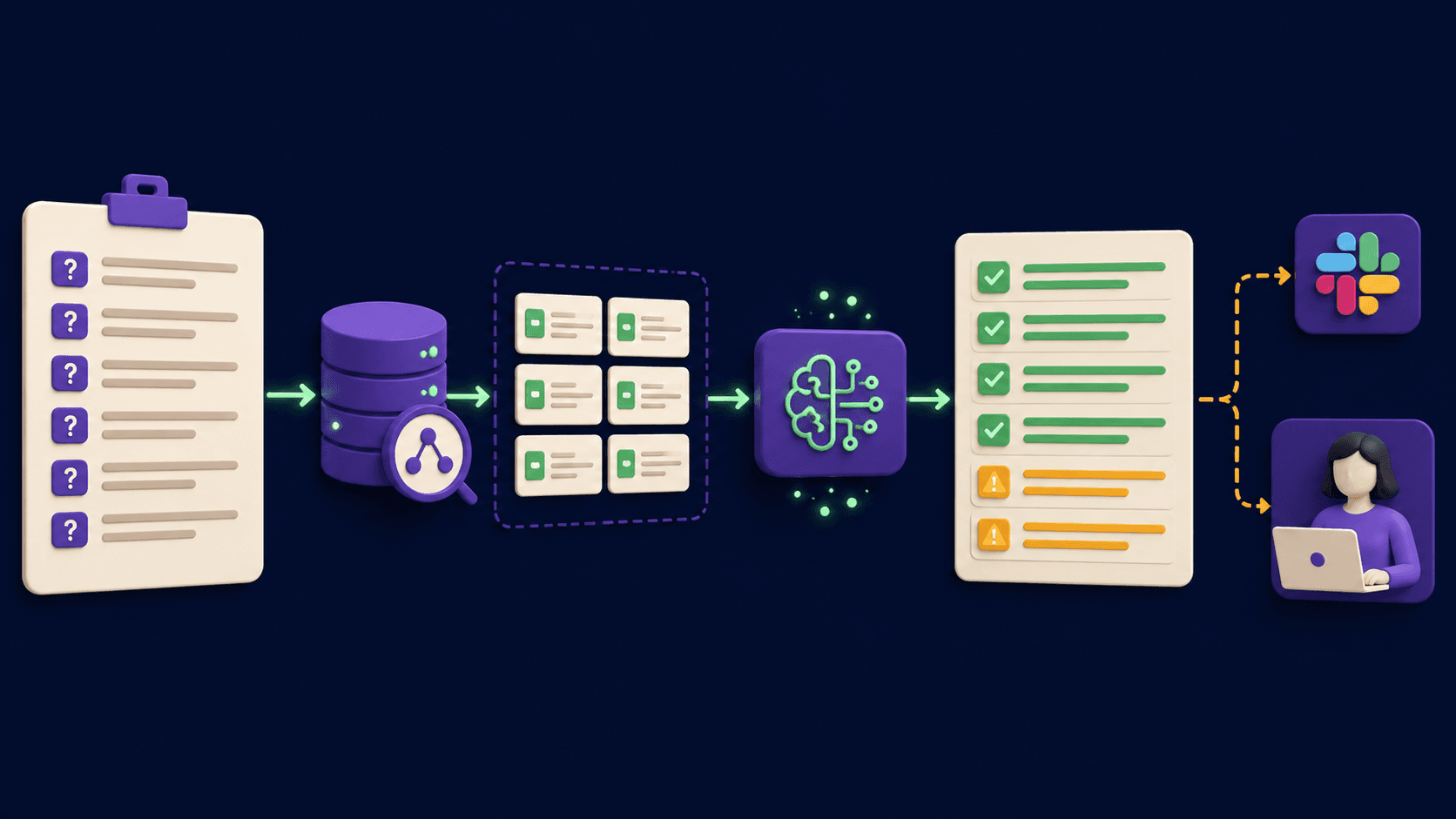
A typical build starts on the canvas: you drag in an LLM node (select your model and API key), a vector store node (Pinecone, Chroma, Weaviate, pgvector, and others), a document loader, an embeddings model, and a chat interface. Wire them together and you have a document Q&A assistant ready to test in the built-in chat panel, no deployment required for prototyping. For more complex flows, AgentFlow lets you define supervisor agents that route tasks to worker agents, with human-in-the-loop checkpoints before certain actions execute.
Enterprise-grade features that arrived in v2.x and v3.x include role-based access control, SSO, rate limiting, audit logs, full execution traces with token usage and timing data, and Prometheus/OpenTelemetry support. The self-hosted path remains Apache 2.0 and free, deployable on AWS, Azure, GCP, DigitalOcean, Railway, or any Docker host.
"I build AI agents 5-10 times faster than coding from scratch." - nova_gg, DEV Community, 2026
Where Flowise sits versus LangFlow and n8n
The two most common comparison points are LangFlow (the Python-native peer) and n8n (the broader automation platform). The differences are architectural, not cosmetic.
Flowise vs. LangFlow (backed by DataStax/IBM): LangFlow is Python-native. Every component in LangFlow can be opened, modified, and exported as raw Python. Teams already writing Python can drop LangFlow into an existing codebase and extend it without Node.js knowledge. LangFlow also ships native MCP (Model Context Protocol) server/client support and integrates LangSmith and LangFuse for observability. Flowise, built on Node.js/TypeScript, has broader template marketplace coverage and the three-tier builder modes that give non-developers a gentle ramp. It includes RBAC, SSO, and audit logs at the platform level where LangFlow delegates those to cloud infrastructure. DataStax backing means LangFlow's cloud has AstraDB as a first-class vector store and better enterprise SLAs. Flowise's cloud is lighter but sufficient for most small-team use cases.
Flowise vs. n8n: n8n is a general-purpose automation platform with 400-plus pre-built nodes covering Slack, Salesforce, Stripe, Jira, and hundreds of other SaaS products. Flowise has approximately 100-plus nodes, almost all LLM, vector-store, and embedding-specific. The data models differ fundamentally: n8n passes structured JSON between nodes; Flowise passes conversational context, embeddings, and LLM chat history. When an AI agent's output needs to trigger a CRM update, send a Slack message, or create a ticket, n8n is the right tool, or a Flowise-plus-n8n hybrid where Flowise handles the LLM reasoning and n8n handles the downstream integrations. For pure RAG pipelines, multi-agent document processing, or conversation management, Flowise handles the LLM-native primitives more cleanly than n8n's single LangChain wrapper node.
"Making AI agent development reliable and accessible is a major technical challenge. By bringing Flowise into Workday and investing in its open-source foundation, we are empowering our customers and partners to build and deploy their own AI agents on Workday." - Peter Bailis, Workday CTO, August 14, 2025
What the daily build reality looks like
The first hour with Flowise is genuinely smooth. A working chatbot connected to local documents is achievable in under an hour: create a flow, add a PDF loader, an embeddings node, a vector store, a retrieval chain, and a chat widget, then paste in an API key. For demos and internal prototypes, this speed is real and significant.
The friction compounds as flows grow. Node graphs become difficult to read once a flow has twenty-plus nodes with branching routes and sub-agents. There is no native flow diffing or version control within the canvas. Debugging relies on execution traces and logs rather than breakpoints or step-through tooling. Error messages expose Node.js stack traces and LangChain internals, which defeats the no-code promise for users without a development background.
Performance degrades on complex flows at scale. Multiple vector store lookups combined with sequential tool calls produce timeouts on the managed cloud plan at production traffic levels. Self-hosters who provision adequate infrastructure avoid this, but that adds operational overhead that the "no-code" framing underplays.
Documentation quality has been a consistent complaint through 2025 and into 2026. Screenshots go stale after major releases, code samples in the docs occasionally reference deprecated APIs, and community Discord remains the most reliable source for current troubleshooting patterns.
Who Flowise is built for
Flowise fits teams that need to move from an LLM idea to a working internal tool in days, not months. It works well for: developers who want to prototype and ship RAG-based chatbots without building a full backend; small teams where domain experts (non-engineers) need to participate in shaping prompts and flow logic; organizations with strong data-sovereignty requirements that want fully self-hosted AI workflows under an open license; and consulting or professional-services shops that spin up custom AI tools per client engagement.
The Workday acquisition in August 2025 adds a specific enterprise use case: HR and finance teams that will eventually get Flowise-based agent building embedded directly in Workday products. That is a future roadmap item, but it signals that the platform will receive sustained investment and enterprise hardening.
What Flowise is not
Flowise should not be the default choice for teams that need to integrate tightly with a wide SaaS ecosystem. If the agent workflow involves updating a CRM, triggering Slack notifications, processing e-commerce webhooks, and querying half a dozen business APIs, n8n or a Zapier-adjacent tool handles that surface area better.
Flowise is also not a safe default for organizations that cannot maintain disciplined patch management on self-hosted software. By April 2026, the platform has recorded three CVEs with confirmed in-the-wild exploitation: CVE-2025-26319 (CVSS 8.9, arbitrary file upload), CVE-2025-8943 (CVSS 9.8, OS command RCE), and CVE-2025-59528 (CVSS 10.0, code injection via the CustomMCP node allowing unauthenticated RCE). The CVSS 10.0 vulnerability, fixed in version 3.0.6 in September 2025 but actively exploited as of April 7, 2026, exposed over 12,000 internet-facing instances to full system compromise. Security teams should treat self-hosted Flowise as critical infrastructure requiring prompt patching and network access controls.
Python-first engineering teams who want to read, modify, and export framework code will find LangFlow's architecture more natural. And teams building very high-volume inference pipelines may find the visual abstraction layer adds latency overhead compared to direct API integration.
User Reviews
No reviews yet. Be the first to share your experience!
Sign in to write a review.
Featured in collections
Curated lists that include Flowise.
Related articles
Guides and articles related to Flowise.

15 AI Agent n8n Workflows You Can Build This Weekend (2026)

Replace 6 SaaS Subscriptions With 4 n8n AI Agents (2026)

The Orchestrator-Worker n8n Template: One Workflow, Six AI Agents (2026)

n8n vs Zapier vs Make in 2026: The Honest Migration Math
Build an Internal Knowledge Bot (RAG) for Your Company: A No-Nonsense Guide