
Flowith replaces the linear chatbox with an infinite 2D canvas where AI outputs become persistent, branching nodes. Its NEO agent runs autonomous multi-step tasks in the cloud, including deep research, content creation, and website generation, with a 10 million token context window.
Flowith is an agentic AI workspace built around an infinite 2D canvas rather than a linear chat thread. Founded in 2023 by Yichen Wu and Derek Nee and based in San Francisco, the platform lets users work across multiple AI threads simultaneously, with every prompt and response existing as a movable, editable node on a spatial canvas. The core problem it solves is context loss: when you manage complex research, strategy, or content work across traditional single-thread tools like ChatGPT, ideas get buried, threads multiply across tabs, and anything beyond a simple question becomes copy-paste gymnastics. Flowith puts everything on one persistent canvas.
The platform's centerpiece is Agent NEO, launched May 2025, which Flowith positions as "the world's first AI agent with infinite steps, infinite context, and infinite tools." NEO runs autonomously in the cloud, executing 1,000-plus inference steps per session with a 10 million token context window, allowing it to handle multi-hour research and creation tasks even when you are offline. Supporting NEO is the Knowledge Garden, a personal retrieval-augmented generation (RAG) system where uploaded documents are broken into "seeds" and automatically retrieved during relevant sessions. Users get access to 40-plus frontier models from OpenAI, Anthropic, and Google within the same workspace, and outputs span text, images, video, slideshows, and full websites, all on one canvas.
What Flowith actually is in June 2026
The product has two distinct layers that work together. The first is the canvas workspace itself: a spatial, non-linear board where you build out projects visually. Unlike Google Gemini or any standard AI chat interface, there is no single conversation thread. Instead, you create branches: a node for raw research, another for counterpoints, another for the final draft. You can run different AI models on parallel branches and compare outputs side by side on the same board.
The second layer is Agent NEO, the autonomous execution engine. Where the base canvas requires user-directed prompting, NEO operates on a "Dynamic Recipe" loop: it sets a goal, plans sub-steps, executes tools (web search, code execution, file generation), evaluates results, self-corrects if a step fails, and continues until the task is complete. NEO leads the GAIA benchmark, a standardized test measuring how well general AI agents handle real-world multi-step tasks, achieving 90% accuracy on the hardest Level 3 category as of its May 2025 launch, outperforming Claude 3.7 Sonnet and GPT-4o on that benchmark at the time.
The Knowledge Garden is the third pillar. Users upload documents (PDFs, Excel files, research notes) and the system indexes them into retrievable "seeds." Any future canvas session can pull from that index automatically, so the AI always has access to your institutional knowledge. Over time, the Knowledge Garden compounds: the more you add, the more precisely NEO can ground its outputs in your specific context rather than generic web information.
Flowith reached 1 million users by summer 2025, supported by Google, NVIDIA, Microsoft, and AWS partnerships, and reported 20 million-plus agent requests served.
Where Flowith sits versus Manus and ChatGPT
Manus and Flowith both aim at long-horizon autonomous tasks, but they take fundamentally different architectural approaches. Manus runs in a virtual machine environment with asynchronous, hands-off delegation: you give it a goal, it disappears into a cloud process, and you come back to results. Its context is scoped per-task, and there is no persistent spatial workspace connecting projects over time. Flowith, by contrast, is user-in-loop by design. The canvas keeps every step visible; you can intervene, edit, branch, or redirect at any point. Manus is better for pure delegation where you want to walk away and return to a finished artifact. Flowith is better for work where you want to think alongside the agent, build organizational structure across sessions, and accumulate a growing knowledge base.
ChatGPT is the clearest contrast. ChatGPT's chat interface is single-threaded and session-scoped: even with memory enabled, you navigate one conversation at a time, and history is linear. Flowith's canvas is spatially organized and persistent across sessions by design. ChatGPT executes short task chains through its operator/agent features; Flowith's NEO runs 1,000-plus inference steps autonomously. For a quick factual question or a one-shot drafting task, ChatGPT wins on simplicity and speed. For a weeks-long research project where you need branching structure, multi-model comparison, and a growing document knowledge base, Flowith handles what ChatGPT cannot structurally provide.
A useful third reference point is Genspark, which uses a "Mixture-of-Agents" architecture that dynamically routes tasks across multiple language models for fast, coordinated output generation. Genspark is synchronous and optimized for rapid multimodal output (presentations, documents); Flowith is asynchronous and optimized for long-running iteration and knowledge accumulation. They serve different working rhythms.
"This is wild. Flowith Agent Neo just completely changed the AI Agent game. Anyone can now unlock infinite AI agents in the cloud, 1000+ reasoning steps with 10M token context, parallel AI agent teams working while you sleep." - @minchoi (Min Choi), X/Twitter, May 19, 2025
How AI actually works inside Flowith
The canvas is not just a visual skin over a chat interface. Each node on the canvas carries its own context, and you can connect nodes to create context chains: the output of node A becomes the input context for node B. This means you can build explicit reasoning paths where later steps are grounded in earlier steps without manual copy-pasting. When you run Agent NEO on a task, it creates its own node subgraph on the canvas, so you can follow its reasoning in real time rather than receiving a black-box output.
The Oracle System acts as NEO's intelligent scheduler. When you set a complex goal, Oracle breaks it into a dependency graph of subtasks, assigns the right tools to each step, and manages execution order. Tool access includes live web search, Python code execution, image generation, video generation, file I/O, and external API calls. The Dynamic Recipe mechanism means Oracle does not lock in a plan upfront: if a web search returns insufficient data, NEO reroutes to a different source rather than failing.
Model selection is user-controlled per node. You can pin GPT-4o on one branch and Claude Sonnet on a parallel branch and run both simultaneously, comparing outputs visually on the canvas. This multi-model comparison workflow is one of the features power users specifically call out as genuinely useful rather than a marketing bullet point.
The Knowledge Garden operates as a background RAG layer. When you activate it for a session, the system retrieves relevant seeds from your uploaded documents and injects them into the model's context automatically. For agencies or researchers with recurring clients or topics, this means the AI consistently works within your established context without re-prompting on every session.
"You can do it too with Flowith Neo AI Agent from a simple prompt. Flowith already outperforms the existing general AI Agent frameworks on GAIA benchmark." - @Saboo_Shubham_ (Shubham Saboo), X/Twitter, May 2025
The friction and cost concerns users keep raising
The credit system is the most consistent source of friction. Flowith charges credits per operation, and costs vary dramatically by model and output type: text generation runs 100 to 15,000 credits per million tokens depending on which model you use, images cost 20 to 190 credits each, and videos require 475 to 6,000 credits depending on length and resolution. The variability makes it genuinely difficult to predict how fast a Pro plan's 22,000 monthly credits will disappear. One Trustpilot reviewer reported that image generation jumped from roughly 1-10 credits per image to around 160 credits per image after a pricing update, with the change not clearly disclosed at renewal time. Their refund request was rejected.
The learning curve is real. Multiple independent reviewers cite a 30 to 60 minute ramp-up period before the canvas interface starts feeling productive. Users trained on linear chat find the spatial paradigm disorienting at first: there is no obvious "next step" the way a chat reply box provides. For simple tasks, the overhead is not worth it. For complex, multi-session projects, it pays off, but you have to tolerate the friction to get there.
Mobile is effectively unsupported. The canvas requires a large screen for productive use. If your workflow is split across devices, Flowith is not your tool.
Extended NEO sessions carry connectivity risk. Because NEO runs in the cloud, a network interruption mid-task can break a multi-hour autonomous run. The platform does not currently offer robust session resume mechanics that protect against this. AIbase noted at the NEO launch that "high-concurrency task costs need further optimization," a concern that remains relevant for heavy users.
Finally, Flowith is not strong for technical developer tasks. It handles code generation and website building at a surface level, but for deep scripting, CI/CD integration, or code that needs iterative local testing, dedicated coding tools like GitHub Copilot or Cursor serve better.
Who Flowith is for
Flowith works best for knowledge workers managing complex, multi-session projects: researchers synthesizing large document sets, content strategists building editorial pipelines, agencies maintaining client knowledge bases, and anyone whose work involves parallel threads of thinking that need to stay connected over time. If you regularly find yourself losing context across tabs, copying outputs between tools, or re-explaining the same background to an AI on every session, Flowith's canvas and Knowledge Garden directly address those pain points.
It has particularly strong traction in Asia and among Western AI power users who want a single workspace that replaces scattered subscriptions to Notion, Perplexity, a chat AI, and an image generator. The multi-model access and multi-modal output (text, image, video, websites) in one canvas makes that consolidation genuinely possible.
Skip Flowith if you primarily need quick one-off answers (ChatGPT's speed advantage is decisive for simple queries), if you work mainly on mobile, if you need predictable flat-rate pricing, or if your core task is software development that requires a real code execution environment and version control integration. The free tier (300 credits, one-time) gives you enough to test the canvas and run a light NEO session before committing to a paid plan.
User Reviews
No reviews yet. Be the first to share your experience!
Sign in to write a review.
Related articles
Guides and articles related to Flowith.
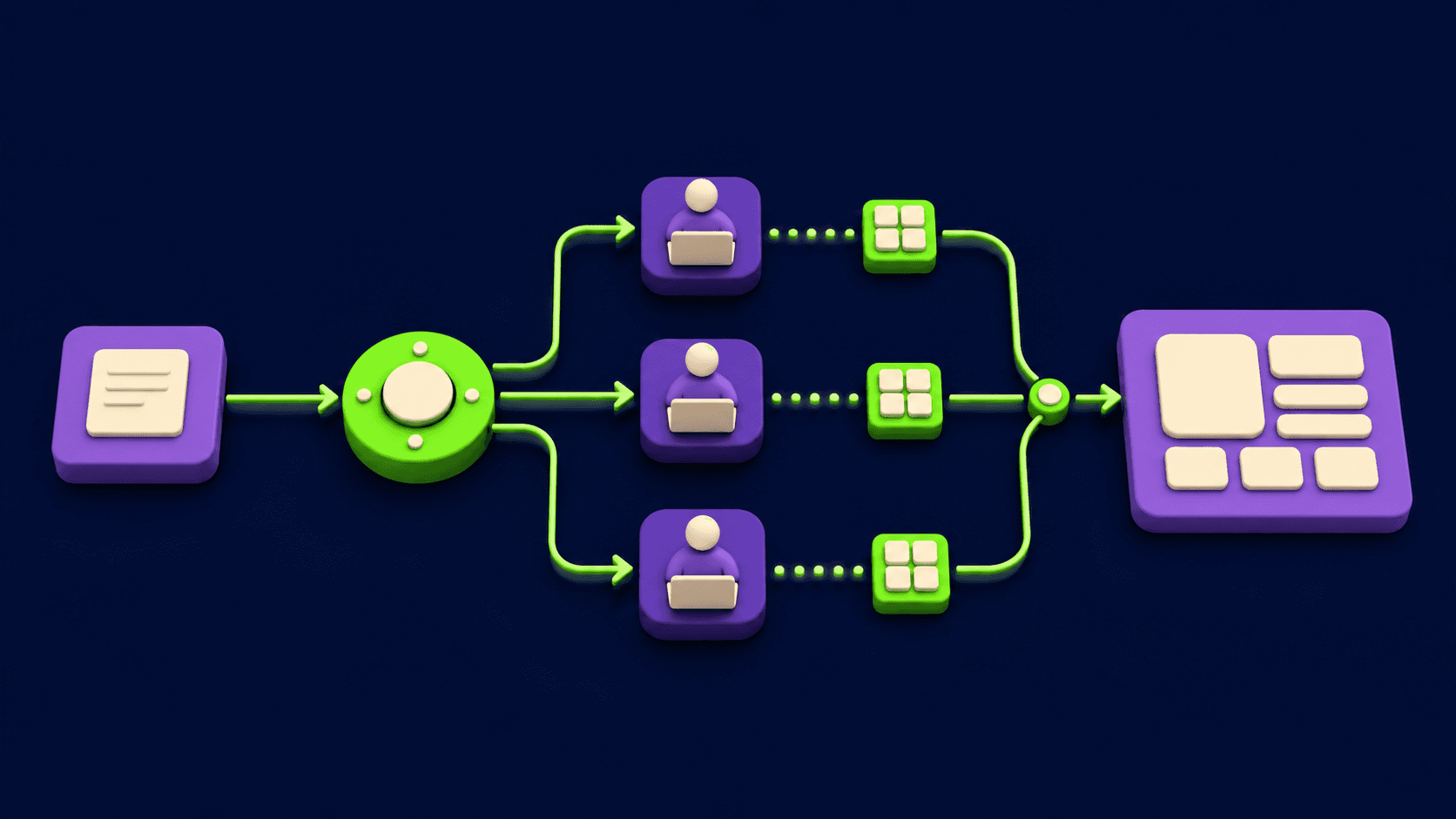
Orchestrator-Workers: The Multi-Agent Pattern That Actually Scales (2026)
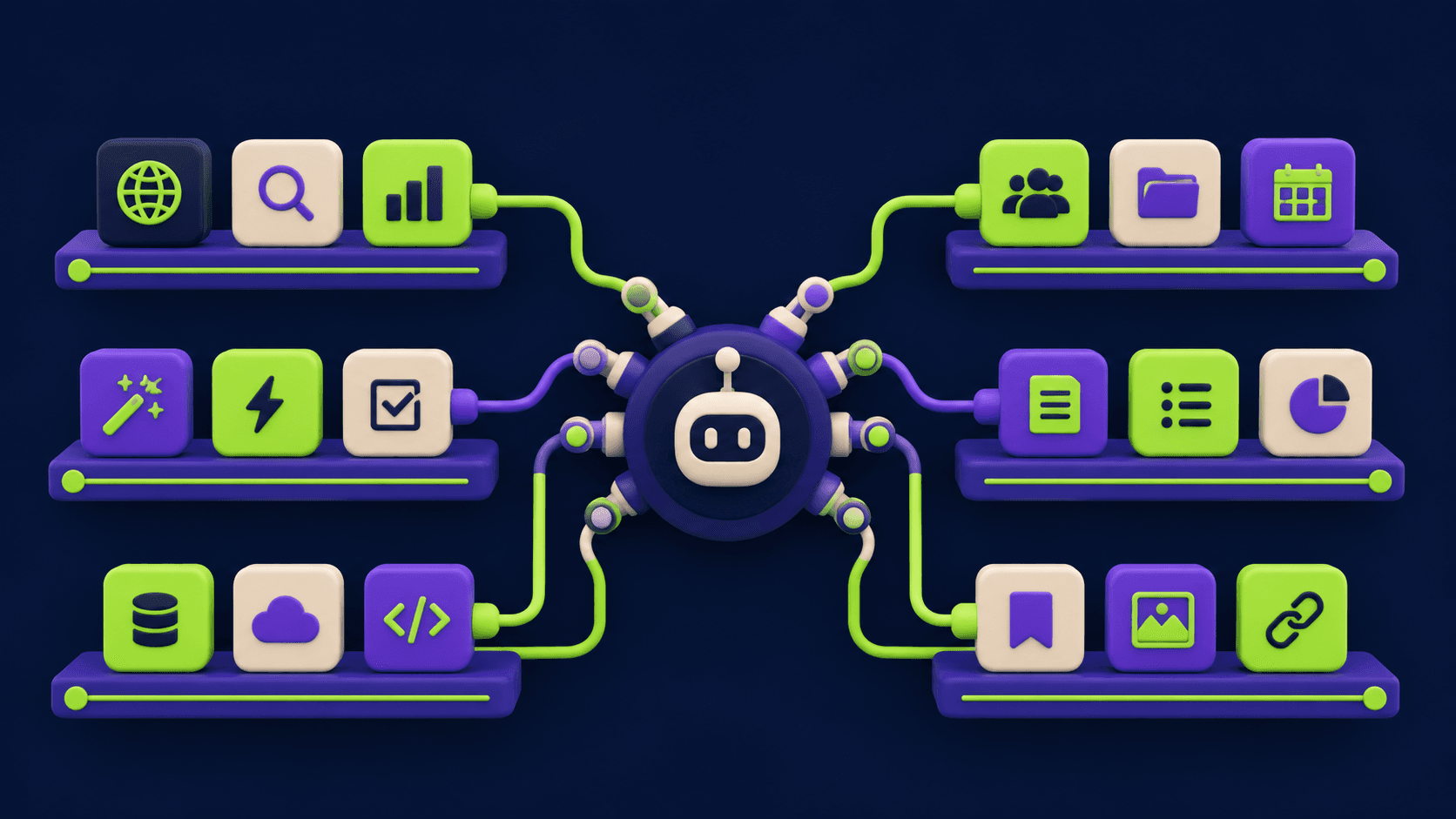
Turn Any AI Agent Into a Superagent: The 12-Integration Stack (2026)
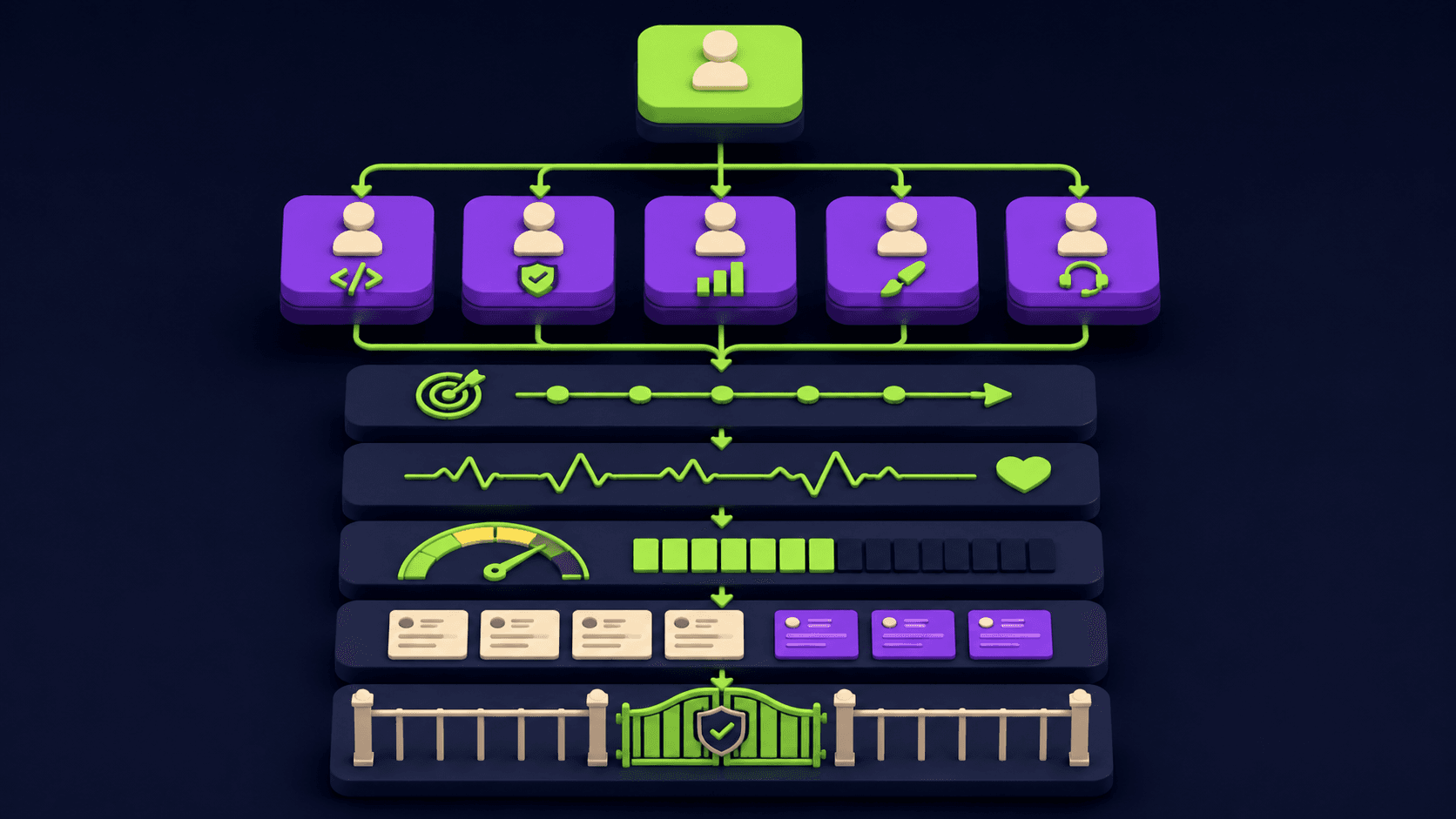
Run a Company With AI Agents: The Open-Source Orchestration Setup (2026)
How AI Agents Work: Architecture & Implementation Guide (2025)
Google vs OpenAI vs Anthropic Agents: The May 2026 Platform Showdown