Google vs OpenAI vs Anthropic Agents: The May 2026 Platform Showdown
Google vs OpenAI vs Anthropic Agents: The May 2026 Platform Showdown
The three companies that set the pace for AI agents spent April and May 2026 repositioning at the same time. Google released a new family of AI agents to challenge OpenAI and Anthropic, per a Bloomberg report dated April 22, 2026. OpenAI shipped a refreshed voice and translation stack and is reported to be raising roughly $4B for a separate deployment company. Anthropic ran its own deployment initiative reported near $1.5B and originated MCP, the agent tool protocol that has crossed 97M installs and now sits under the Linux Foundation. This article compares the three platforms on the axes a builder actually decides on: agent offering, MCP support, pricing posture, ecosystem, and best fit. If you only read one line: all three now speak MCP, so your real choice is ecosystem lock-in and pricing model, not tool compatibility.
TL;DR
All three platforms ship MCP-compatible agent tooling in May 2026.
MCP crossed 97M installs and moved under the Linux Foundation.
Google reportedly launched new agents to challenge OpenAI and Anthropic.
OpenAI is reported raising about $4B for a deployment company.
Pick on ecosystem and pricing model, not tool compatibility.
<your real name> · Founder, Vantaige · Published 2026-05-19 · 14 min read · Last reviewed 2026-05-19
What changed across Google, OpenAI, and Anthropic agents in May 2026?
All three moved within four weeks. Google reportedly released new agents to take on OpenAI and Anthropic (Bloomberg, April 22, 2026). OpenAI shipped an updated realtime voice and translation stack and is reported to be raising about $4B for a deployment company. Anthropic ran a comparable deployment initiative reported near $1.5B and continued stewarding MCP.
The pattern is convergence, not divergence. A year ago the three platforms differed on whether agents were a product, a protocol, or a research direction. As of May 2026 each ships a hosted agent offering, each supports MCP for tool calling, and each is funding a separate deployment-focused effort. The differentiation has moved from "can it run an agent" to "whose cloud, whose pricing model, and whose ecosystem do you want to depend on."
That convergence is why a feature checklist is the wrong way to choose now. The capability gaps that mattered in 2025, function calling, long context, parallel tool use, are largely closed across the three. What is not interchangeable is the billing model, the identity and governance layer, and the surrounding tool catalog. The rest of this article compares those.
How should you read "reported" agent claims when comparing platforms?
Read reported claims as direction, not specification. When a release is covered by business press but not backed by a published spec sheet or pricing page, treat it as a signal of intent and distribution, not a confirmed capability you can build a roadmap on. The three platforms all have reported moves in this window, so a consistent rule keeps the comparison honest.
The reason this matters for a builder: a comparison built on press positioning will drift the moment official docs land. A defensible decision uses only what is verifiable today, MCP support, billing model, where your data lives, and where the ecosystem is, and treats reported funding, reported research projects, and reported new agent families as tie-breakers, never as primary inputs. That is the exact weighting used in the matrix later in this article.
A simple test: if a claim would change your architecture, it must be verifiable from an official source before you act on it. If it only changes your watchlist, reported is good enough. Applying that one filter prevents most of the expensive mistakes teams make in a fast news cycle, and it is why every reported figure in this piece is labeled rather than presented as fact.
Which AI agent platform has the strongest agent offering as of May 2026?
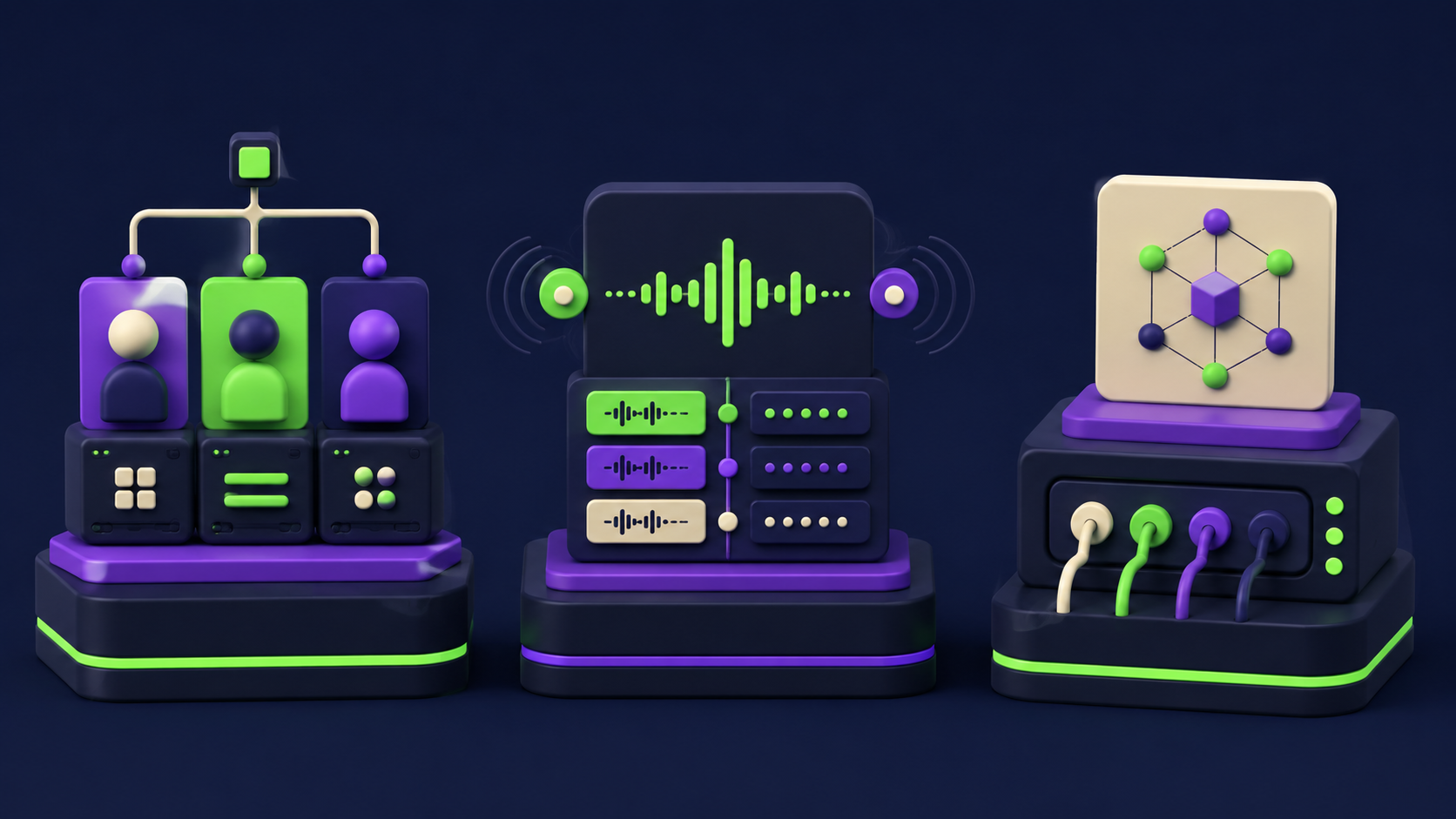
There is no single strongest offering. Google leads on reported breadth of new agent releases and its existing cloud and workspace distribution. OpenAI leads on the realtime voice and translation surface it shipped most recently. Anthropic leads on protocol ownership through MCP and its agent runtime. The right answer depends on which surface you build on.
Google's reported April 2026 move was a family of agents positioned directly against OpenAI and Anthropic, per Bloomberg. Treat the specifics as reported positioning rather than confirmed internal specs: the public signal is breadth and distribution through Google's existing cloud and workspace footprint, not a published spec sheet. For a builder, the practical read is that Google agents are easiest to justify when your data and identity already live in Google's stack.
OpenAI's most concrete recent shipment is on the voice and translation side: a refreshed realtime model line plus a translation and transcription stack. If your agent is conversational or voice-first, that surface is the strongest reason to pick OpenAI right now. We walk through one such build in the OpenAI GPT-Realtime-2 voice agent setup guide.
Anthropic's differentiation is structural rather than a single feature. It originated MCP, the protocol every major provider now implements, and runs a session-priced agent runtime. Project Glasswing and the Claude Mythos work are reported research and deployment efforts; treat them as reported, not as a product spec. The builder takeaway: Anthropic is the safest pick if you want the tool layer to be vendor-neutral by design.
How does MCP support compare across the three providers?
MCP support is now table stakes across all three. MCP, the Model Context Protocol, originated at Anthropic, crossed 97M installs, and moved under the Linux Foundation as a neutral standard. Every major provider, Google, OpenAI, and Anthropic included, ships MCP-compatible tooling, so an MCP server you write works across all three with little to no rewrite.
This is the single most important fact for a builder in 2026. In 2025, choosing a model platform often meant rewriting tool integrations per vendor. As of May 2026 that cost is largely gone for MCP-based tools. The protocol moving under the Linux Foundation matters because it signals the standard is no longer controlled by one commercial vendor, which lowers the risk of building on it.
The practical implication: build your tools as MCP servers first. They become portable assets that survive a platform switch. If you are new to MCP, the n8n MCP and Claude Code setup guide walks through a working server end to end, and the common stdout failure mode is covered in fixing an MCP server with no tools showing.
One caveat worth stating plainly: "MCP-compatible" does not guarantee identical behavior. Auth flows, transport defaults, and error surfacing still vary by host. The protocol is portable; the operational edges still need per-platform testing. Plan a short integration pass per platform rather than assuming zero work.
What is the pricing posture of each platform in May 2026?
Pricing posture differs by model, not just by number. Google and OpenAI lean toward usage-based token pricing with enterprise seat bundles layered on top. Anthropic prices its agent runtime per session-hour plus token usage. None has published a single flat "agent price," so compare on billing model and workload shape, not a headline rate.
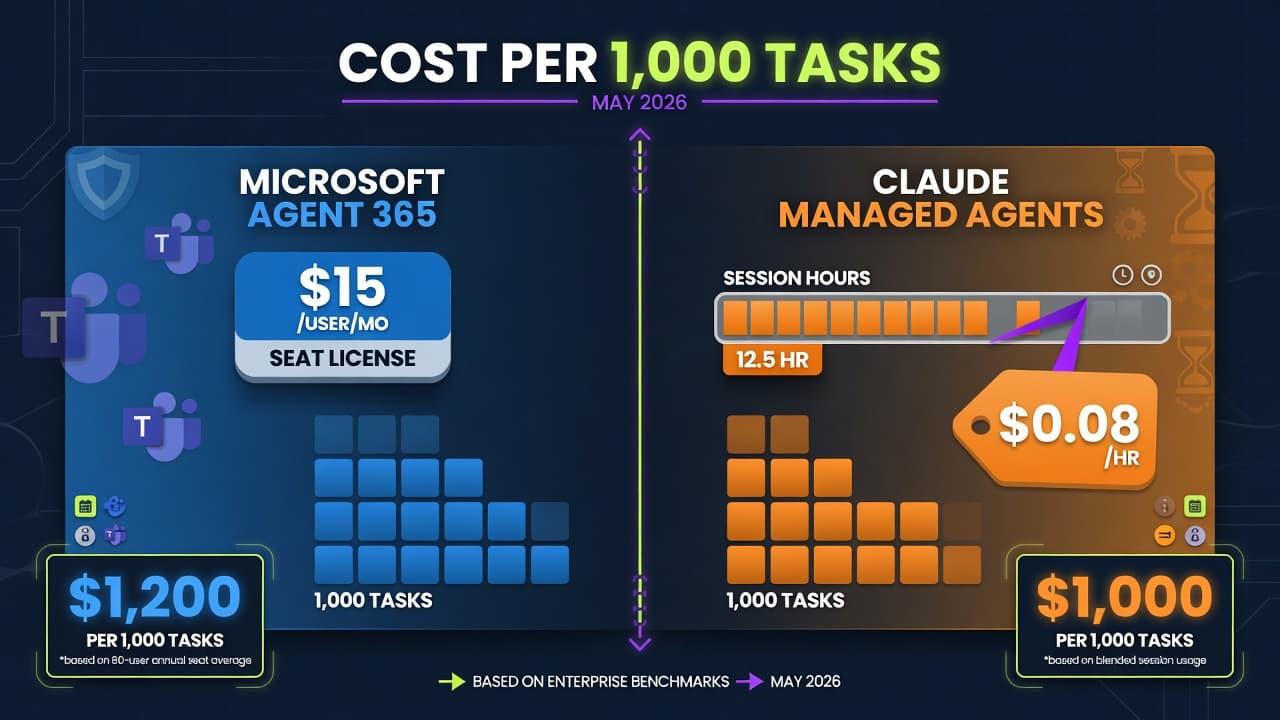
The reason this matters: the same workload can be cheapest on different platforms depending on whether it is bursty or steady, short-session or long-running. A per-session-hour model penalizes long idle sessions but rewards short bursty tasks. A pure per-token model rewards steady predictable load. We modeled this tradeoff in detail for two specific stacks in the Agent 365 vs Claude Managed Agents cost comparison, and the same logic applies when comparing all three majors.
On the funding side, the reported deployment initiatives matter to pricing posture indirectly. OpenAI is reported raising about $4B for a deployment company and Anthropic ran a comparable effort reported near $1.5B. Treat both figures as reported. The signal for builders is that all three are investing in the deployment and operations layer, which usually precedes more managed, higher-touch, and differently-priced agent products.
Practical guidance: do not pick on list price. Run your real workload, in your real session shape, against each platform's calculator for one week. The routing tradeoffs between a fast cheap tier and a slower expensive tier are laid out in the GPT-5.5 Instant vs Claude Opus 4.7 routing matrix, and the same per-tier thinking applies across vendors.
How do the three ecosystems and developer surfaces compare?
Ecosystem is now the strongest differentiator, since capabilities have converged. Google's advantage is distribution through its existing cloud and workspace install base. OpenAI's advantage is its large third-party app and assistant ecosystem plus the recent voice surface. Anthropic's advantage is protocol ownership and a developer-tool-heavy following.
For a builder, ecosystem decides three things: how fast you can find an existing integration, how much governance tooling exists around the agent, and how locked-in your data becomes. Google scores highest when your identity, documents, and pipelines already live in its cloud. OpenAI scores highest when you want the widest catalog of off-the-shelf assistant integrations. Anthropic scores highest when you want the tool layer itself to be portable and you live in a code-first workflow.
Governance is the second underrated axis. An agent that calls tools also needs identity, audit logs, policy enforcement, and a kill switch. Google's pitch is that this already exists in its enterprise control plane if you are inside its stack. OpenAI's governance story is tied to its enterprise tiers. Anthropic's is session-scoped plus whatever your own MCP host enforces. None of the three removes the need for a governance plan; they differ on how much of it you inherit versus build. For regulated workloads, that difference often outweighs every model metric.
Lock-in is the part teams underrate. MCP makes tools portable, but identity, logging, billing, and the managed runtime are still per-vendor. A realistic switching cost in May 2026 is low for tools and moderate-to-high for the surrounding operations layer. Budget your migration plan around the operations layer, not the model call. The same lesson showed up in the broader agent IDE landscape, summarized in the Claude Code vs Cursor vs Codex vs Devin vs Replit scorecard.
What does the full platform matrix look like for May 2026?
Here is the side-by-side. Each cell reflects reported positioning as of May 2026, not confirmed internal specs. Use it to shortlist, then validate pricing and integration against your own workload before committing.
Platform | Agent offering (reported) | MCP support | Pricing posture | Best for |
|---|---|---|---|---|
New agent family reported April 2026 to challenge OpenAI and Anthropic (Bloomberg) | Ships MCP-compatible tooling | Usage-based tokens plus enterprise seat bundles | Teams already on Google cloud and workspace | |
OpenAI | Refreshed realtime voice and translation stack; reported ~$4B raise for a deployment company | Ships MCP-compatible tooling | Usage-based tokens plus enterprise tiers | Voice-first and broad assistant-integration builds |
Anthropic | Session-priced agent runtime; MCP originator; Glasswing and Mythos reported initiatives | Originated MCP; first-class support | Per session-hour plus token usage | Code-first builders wanting a portable tool layer |
Two things to read carefully from this table. First, the MCP column is effectively a tie, which is the headline finding: tool compatibility is no longer a deciding factor. Second, the pricing column differs by model shape, not headline price, so it cannot be compared as a single number.
Which AI agent platform should you pick? (decision matrix)
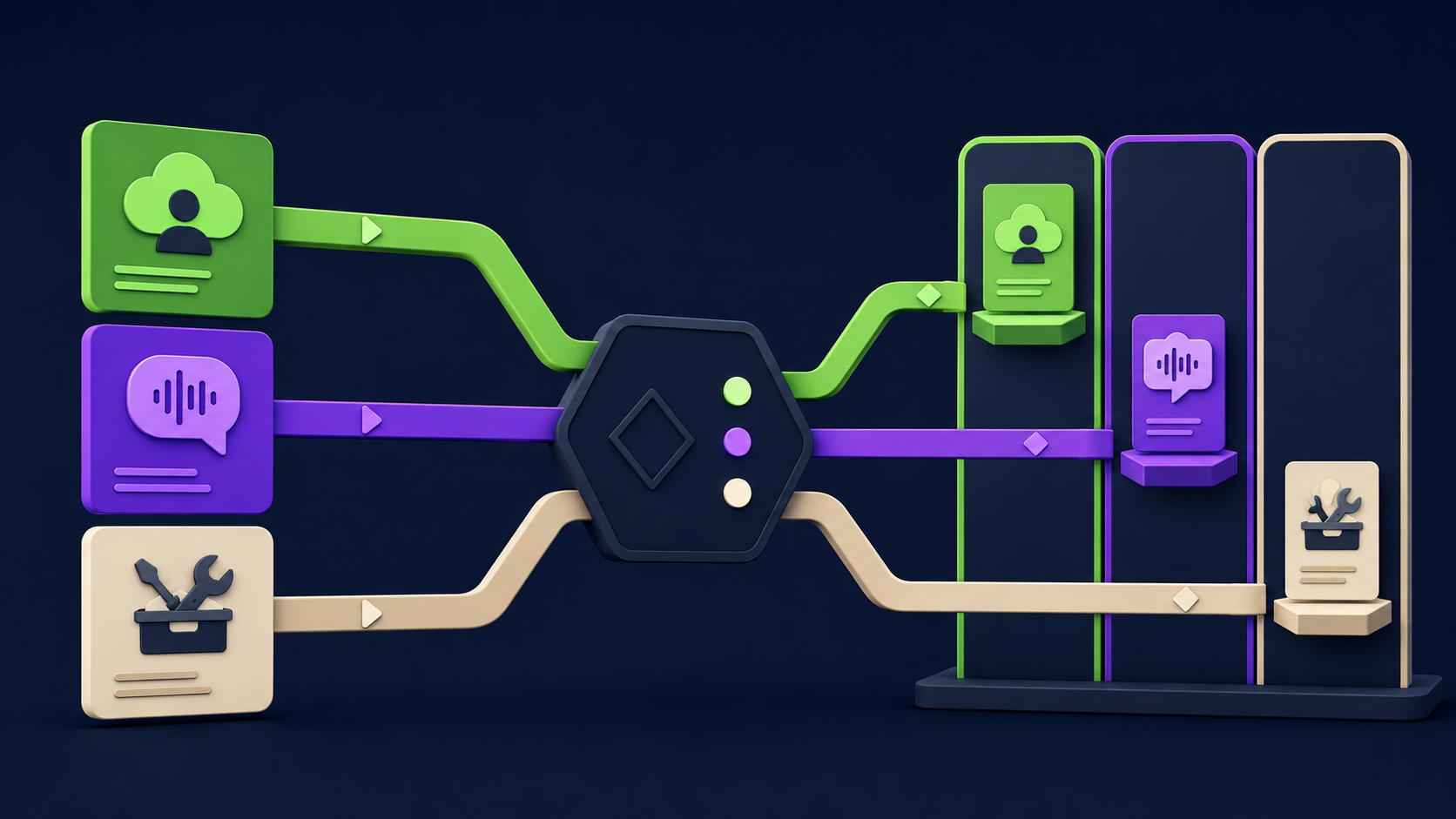
Pick by your dominant constraint, not by brand. If your data and identity already live in Google, pick Google. If your agent is voice-first or needs the widest assistant integrations, pick OpenAI. If you want a vendor-neutral tool layer and a code-first workflow, pick Anthropic. The matrix below maps common situations to a recommendation.
Your situation | Pick | Why |
|---|---|---|
Identity, docs, and pipelines already in Google cloud or workspace | Lowest integration and governance friction on the stack you already run | |
Voice-first, conversational, or translation-heavy agent | OpenAI | Strongest recently shipped realtime voice and translation surface |
You want widest off-the-shelf assistant and app integrations | OpenAI | Largest third-party assistant ecosystem as reported |
Tool portability and avoiding vendor lock-in is the priority | Anthropic | MCP originator; tool layer designed to be vendor-neutral |
Code-first developer workflow, agentic IDE use | Anthropic | Developer-tool-heavy ecosystem and session-priced runtime |
Bursty short-session workloads, cost-sensitive | Test all three | Per-session-hour vs per-token flips the cheapest option by load shape |
Multi-cloud, want a hedge against any single vendor | Anthropic plus MCP-first tools | Portable tool assets reduce switching cost across all three |
Notice that no row says "pick the one with the best model." In May 2026 the model layer is close enough across the three that it rarely decides the outcome. The deciding factors are where your data lives, what your agent's modality is, and how much you fear lock-in. A separate vendor, xAI, sits outside this three-way but is worth a look on price if you are migration-flexible; the math is in the Grok 4.3 API agents pricing and migration guide.
What are the common mistakes when choosing between these platforms?
The most common mistake is choosing on a model benchmark instead of on ecosystem and pricing shape. Other frequent errors: assuming MCP support means zero integration work, comparing pricing on headline rates, ignoring the operations-layer lock-in, and treating reported funding news as a product spec. Each has a concrete fix.
Picking on a leaderboard score. Fix: capabilities have converged; decide on data location, modality, and lock-in instead.
Assuming MCP means no work. Fix: budget a short per-platform integration pass for auth, transport, and error handling.
Comparing headline prices. Fix: run your real workload at your real session shape against each calculator for one week.
Ignoring operations lock-in. Fix: plan migration around identity, logging, and billing, not the model call.
Reading reported funding as a spec. Fix: treat the $4B and $1.5B figures and Glasswing or Mythos as reported signals, not confirmed product capabilities.
Single-vendor by default. Fix: build tools as MCP servers first so the tool layer survives a switch.
The throughline: in 2026 the expensive mistakes are operational, not model-quality. A wrong model is a config change. A wrong operations stack is a quarter of migration work.
Frequently asked questions
Did Google really launch new AI agents in 2026?
Yes, per a Bloomberg report dated April 22, 2026, Google released a new family of AI agents positioned to challenge OpenAI and Anthropic. Treat the specifics as reported positioning rather than a confirmed internal spec sheet. The public signal is breadth and distribution through Google's existing cloud and workspace footprint, which is what matters for a builder choosing a platform.
Do OpenAI, Google, and Anthropic all support MCP?
Yes. MCP originated at Anthropic, crossed 97M installs, and moved under the Linux Foundation as a neutral standard. As of May 2026 every major provider, including Google and OpenAI, ships MCP-compatible tooling. An MCP server you write is largely portable across all three, though auth and transport edges still need per-platform testing.
Is OpenAI raising money for a deployment company?
OpenAI is reported to be raising roughly $4B for a separate deployment-focused company, and Anthropic ran a comparable initiative reported near $1.5B. Both figures are reported, not officially itemized. The relevant signal for builders is that all three majors are investing in the deployment and operations layer, which usually precedes more managed agent products.
Which platform is cheapest for AI agents in May 2026?
There is no single cheapest platform. Anthropic prices its runtime per session-hour plus tokens, while Google and OpenAI lean usage-based with enterprise bundles. The cheapest option flips based on whether your workload is bursty and short-session or steady and long-running. Run your real workload against each calculator for a week before deciding.
What is the safest choice to avoid vendor lock-in?
Build your tools as MCP servers and keep the tool layer vendor-neutral. Anthropic, as the MCP originator, is the most lock-in-resistant default for the tool layer. The harder lock-in is the operations layer, identity, logging, billing, and the managed runtime, which is still per-vendor. Plan migrations around that layer, not the model call.
What are Project Glasswing and Claude Mythos?
Project Glasswing and Claude Mythos are reported Anthropic research and deployment efforts as of May 2026. They are referenced as reported initiatives, not published product specs. For a platform decision, do not weight them as confirmed capabilities; weight the concrete, shipped surface and MCP support instead.
Should I switch platforms now or wait?
If your tools are already MCP servers, switching cost is low and you can defer the decision cheaply. If you are early, build MCP-first now so the choice stays reversible. The platforms are converging on capability, so waiting rarely loses you a feature; it mostly loses you time. Commit when a clear ecosystem or pricing fit appears.
Related from Vantaige
References
Bloomberg. "Google Releases New AI Agents to Challenge OpenAI and Anthropic." Reported April 22, 2026.
OpenAI official blog. Realtime voice, translation, and transcription stack updates, May 2026 (conceptual reference).
OpenAI deployment company funding, reported ~$4B raise, May 2026 (reported, business press).
Anthropic official blog and reporting. Project Glasswing and Claude Mythos initiatives plus a deployment effort reported near $1.5B, May 2026 (reported).
Model Context Protocol project. 97M installs milestone and transition under the Linux Foundation, 2026 (conceptual reference).
Get the best new AI tools and guides, weekly
One short email a week. The tools worth trying, the guides worth reading, nothing else.
No spam. Unsubscribe anytime.
Aymen B
Contributing writer at Vantaige, covering the AI tools ecosystem.