
Vapi is an AI voice infrastructure platform for building and deploying phone agents at scale. It lets developers bring their own LLM, TTS, and telephony stack, handling real-time orchestration, turn-taking, and function calling across 100+ languages.
Vapi is a voice AI infrastructure platform that lets developers build, deploy, and scale AI phone agents using their own choice of language models, voice providers, and telephony carriers. Founded by Jordan Dearsley and Nikhil Gupta, University of Waterloo engineers and Y Combinator W23 graduates, the company raised a $20M Series A led by Bessemer Venture Partners in December 2024. It is not a hosted voice provider or no-code chatbot builder. It is orchestration middleware: a programmable layer that connects your STT, LLM, and TTS providers in real time, handles turn detection and interruption logic, manages function calling against external APIs, and runs the whole pipeline over a persistent WebSocket connection at sub-500ms end-to-end latency under optimal conditions.
As of April 2026, Vapi reports 500,000+ developers on platform, 300M+ calls processed, and 2.5M+ assistants launched. Core capabilities include bring-your-own-model (BYOM) support across OpenAI, Anthropic, Groq, Google, Together AI, and custom LLM endpoints; voice providers including ElevenLabs, Azure, Deepgram, and Vapi's own curated voices; telephony via Twilio, Vonage, Telnyx, or SIP trunks you already own; A/B testing for prompt and voice optimization; automated hallucination detection; and a REST API plus SDKs for TypeScript, Python, and React. Teams use Vapi for inbound customer support, outbound appointment setting, sales dialing, patient intake in healthcare, and real-time voice assistants in products.
What Vapi actually does in April 2026
Vapi's architecture is a real-time audio pipeline that connects three external provider layers: speech-to-text (transcription), a language model (reasoning and response generation), and text-to-speech (voice output). Every incoming audio frame flows through this pipeline in sequence, and Vapi manages the orchestration: detecting when the user stops speaking, suppressing false positives (background noise, breathing), routing the transcript to the LLM, injecting function call results if the agent needs to query an external API, and converting the LLM response into audio with the chosen voice provider before returning it to the call.
The platform supports 100+ languages with automatic detection and adaptation. Concurrent conversation handling scales with the plan: the pay-as-you-go tier caps at 10 concurrent calls; enterprise plans are uncapped. Function calling lets agents query CRMs (Salesforce, HubSpot), ticketing systems (Zendesk), databases, or any REST API during a live call, with results injected into the conversation context. Webhooks fire on call start, call end, transcript completion, and function call events, making it straightforward to sync conversation data to downstream systems in real time.
The dashboard provides a no-code assistant builder for prototyping, but the full power of the platform lives in the API. You can programmatically create and configure assistants, manage phone numbers, run call campaigns, pull transcripts, and access recordings via the REST API. A/B testing support lets teams run parallel variants on voice, prompt, and model configuration and compare conversion or resolution rates across a call sample.
"A key technical requirement was the ability to bring our own stack. Vapi's developer-friendly API-first approach made this possible." - Quang Tran, CTO at FleetWorks, vapi.ai, April 2026
In December 2024, Bessemer partner Byron Deeter cited Vapi's "10x improvement on the development experience for voice agents" as the primary investment thesis, pointing to a proprietary real-time audio model that detects emotional inflections in callers' voices. The company positions itself explicitly as infrastructure in the Twilio/AWS tradition: "we make the engine that powers the magic." Feature requests submitted Friday evenings have reportedly shipped in production by Saturday morning, a cadence that earned community loyalty in the early growth phase.
Where Vapi sits versus Retell AI and Bland AI
Vapi vs. Retell AI: Retell is a managed, bundled platform. It provides an all-in-one stack with included transcription, a curated set of LLM integrations, native CRM connectors, and built-in phone number provisioning across many countries. Users pay a single per-minute rate starting around $0.07/min that covers STT, LLM, and TTS together. No separate Deepgram or ElevenLabs contracts. Retell's managed approach removes the multi-hop API latency that Vapi's orchestration layer introduces when any external provider is slow. Testing has shown Retell achieves 500-800ms end-to-end latency more consistently, while Vapi's range extends to 1200ms depending on which LLM and TTS providers you've connected. The practical difference: Retell is faster to ship and easier to budget; Vapi is more flexible for teams with an existing model stack. If you've fine-tuned your own LLM or already have an ElevenLabs enterprise voice agreement, Vapi lets you plug that in directly without rebuilding. Retell locks you into their supported provider set.
Vapi vs. Bland AI: Bland is vertically integrated. The company self-hosts its entire fine-tuned model stack in co-located clusters next to telephony infrastructure, eliminating external API hops entirely. This architectural choice makes Bland's latency more consistent at 600-1000ms regardless of traffic spikes on OpenAI or Anthropic, because those hops don't exist. Vapi can hit 3-4 second latency during peak external provider load. Bland also provides advanced campaign management tooling designed explicitly for high-volume outbound calling: batching, scheduling, retry logic, and a graph-based conversation flow interface. Bland's pricing is simpler: one per-minute rate with volume discounts. Vapi requires managing 4-6 vendor relationships. The split: Bland is built for enterprise contact center replacement at volume with a simple commercial model; Vapi is built for developer teams that need maximum provider flexibility and programmable orchestration. If your primary use case is 100,000 outbound calls per month to a contact list, Bland's infrastructure is purpose-built for that. If you need to swap LLMs per use case, test new voice models, or route different call types to different model tiers, Vapi's modular architecture earns its complexity.
"Support is non-existent and documentation is extremely poor. They rolled out new features and EVERYTHING broke." - Verified user, Trustpilot/Product Hunt, 2025
What the daily build reality looks like
A production Vapi deployment typically involves setting up accounts with three to five external providers before you write a line of agent logic. At minimum: a Twilio or Telnyx account for telephony, a Deepgram or Azure account for STT, and an OpenAI or Anthropic account for the LLM. If you want a non-synthesized voice, add an ElevenLabs account. Each has its own billing, API key management, and usage limits. Vapi's dashboard consolidates configuration, but the invoices arrive separately.
Once providers are wired in, you configure an assistant via the dashboard or API: set system prompt, pick STT/LLM/TTS models, configure interruption sensitivity, define tools (functions the agent can call), and set up webhooks. The dashboard's test call feature lets you dial into the agent through a browser. The assistant creation API is clean and well-documented; builders commonly use it to template assistants for multi-client agency deployments.
Latency tuning is the most technically demanding part of operating Vapi. The platform's claimed sub-500ms end-to-end latency requires careful selection of lower-latency models (GPT-4o-mini over GPT-4o, Deepgram Nova over Nova-2, etc.) and doesn't hold during external provider traffic spikes. In independent testing at softailed.com, pushing the interruption sensitivity below 750ms caused the assistant to interrupt callers mid-sentence. Builders typically tune latency for their specific use case and model combination rather than expecting it to work well out of the box.
The test-and-iterate loop is functional but limited compared to Retell. Auto-generated evaluation tests return pass/fail results without actionable optimization suggestions. The workflow builder does not support calling other assistants within the same flow, which matters for multi-agent architectures. The call history and transcript retrieval caps at 14 days for non-enterprise plans.
Who Vapi is built for
Vapi fits developer-led teams that need full-stack control over their voice agent infrastructure. The platform rewards teams that already have LLM fine-tunes they want to put to work, existing agreements with specific TTS or STT providers, or use cases that require routing different call types to different model tiers. Agencies building voice agents for multiple clients benefit from the API-first approach: you can programmatically create and configure assistants per client, manage voice and model settings per deployment, and run everything through one Vapi account with client-specific API keys.
Healthcare and financial services teams needing HIPAA, SOC2, or PCI compliance can use the enterprise tier, which includes compliance certifications and forward-deployed support. The A/B testing and automated hallucination detection features are genuinely valuable for regulated-industry deployments where conversation quality needs to be measured and audited.
Teams at the exploratory stage get a reasonable starting point: $10 in free credits covers roughly 150-200 minutes of test calls with mid-tier models, enough to build and test a working prototype before committing to multi-vendor contracts.
What Vapi is not
Vapi is not a no-code platform. The dashboard assistant builder supports basic prototyping, but production deployments with conditional logic, multi-step tool calling, or dynamic prompt construction require a developer writing TypeScript, Python, or REST calls. If you need a non-engineer to build and manage voice agents, you are in the wrong product.
Vapi is not a predictable-cost platform below the enterprise tier. The advertised $0.05/minute is the orchestration fee. Production deployments using GPT-4o, ElevenLabs, and Twilio routinely land at $0.25-0.35/minute all-in. CloudTalk's 2026 analysis puts typical enterprise deployment annual spend at $40,000-$70,000 when modeling realistic usage volumes. Running realistic cost projections requires modeling each provider layer separately before committing to the platform.
Vapi is not optimized for pure outbound dialing volume. Bland AI offers superior campaign tooling, scheduling, and batch management for contact-center replacement scenarios. Vapi's campaign capabilities require building your own orchestration layer on top of the API.
Vapi is not reliable during provider outages. Because the pipeline depends on external LLM and STT providers, any degradation at OpenAI, Anthropic, Deepgram, or ElevenLabs propagates directly to call quality. Teams with hard uptime SLA requirements should either use the enterprise tier with dedicated infra, or evaluate Bland's vertically integrated stack.
Finally, Vapi's phone number provisioning is US-only natively. Non-US and non-Canada deployments require importing Twilio or Vonage numbers manually, adding setup friction for international use cases.
User Reviews
No reviews yet. Be the first to share your experience!
Sign in to write a review.
Related articles
Guides and articles related to Vapi.
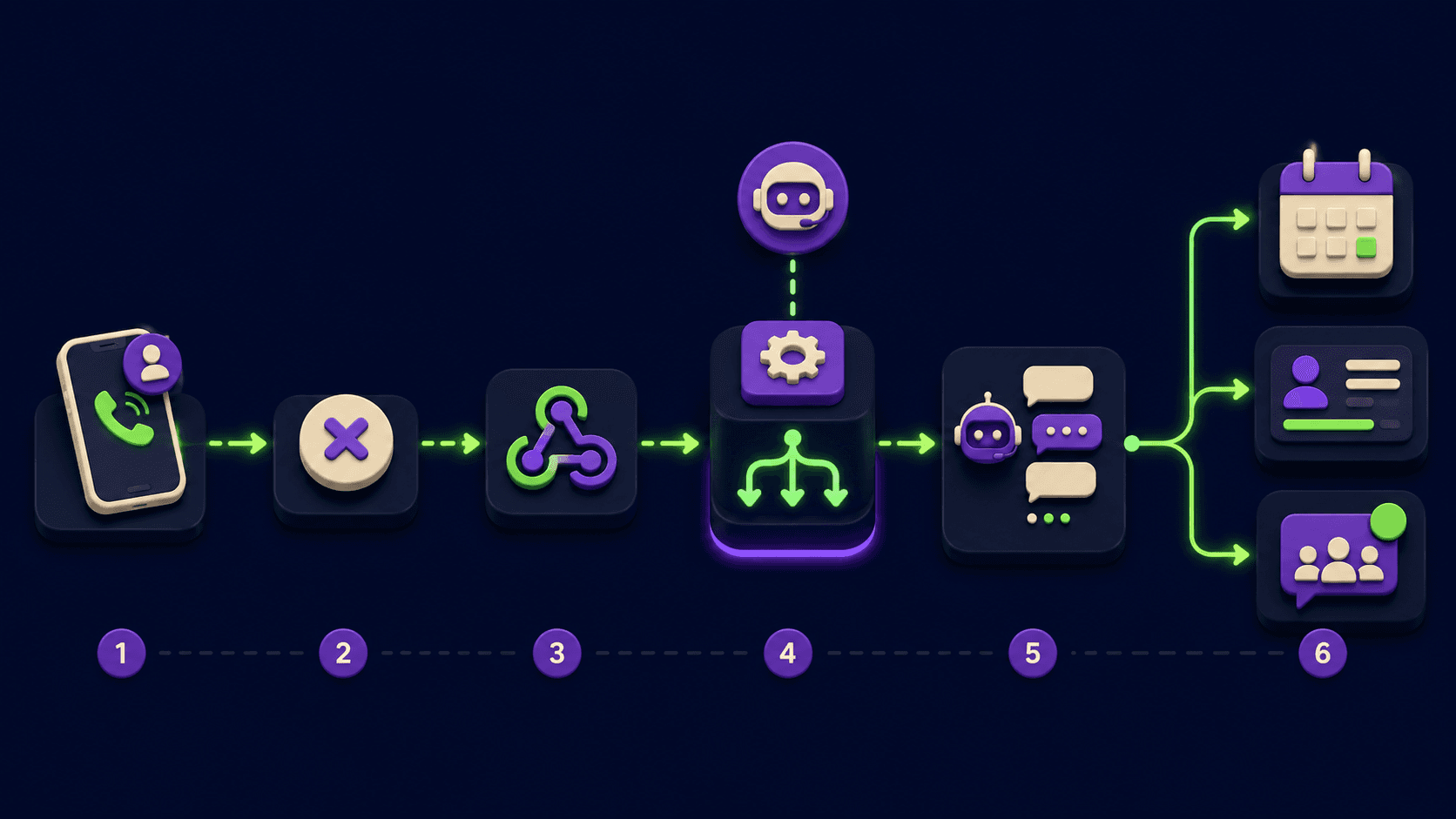
Voice Agent for Missed Calls: Every Service Business Is Bleeding Leads After Hours (2026)

AI Receptionist for Solo Professionals: Replace the Answering Service (2026)
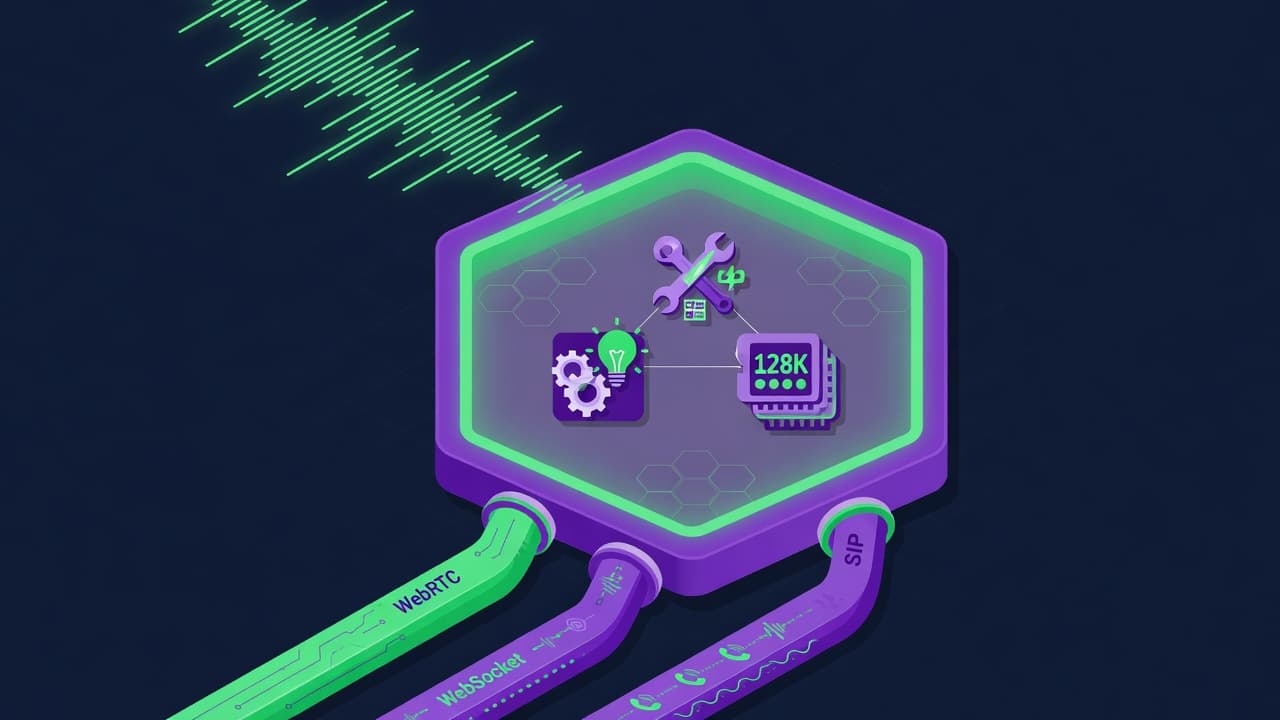
OpenAI GPT-Realtime-2 (May 2026): Pricing, Latency & 30-Min Voice Agent

How to Sell AI Chatbots to Local Businesses ($1K-$5K Retainers, 2026)
Build a 70-Language Live Voice Agent With GPT-Realtime-Translate (2026)