Voice Agent for Missed Calls: Every Service Business Is Bleeding Leads After Hours (2026)
Voice Agent for Missed Calls: Every Service Business Is Bleeding Leads After Hours (2026)
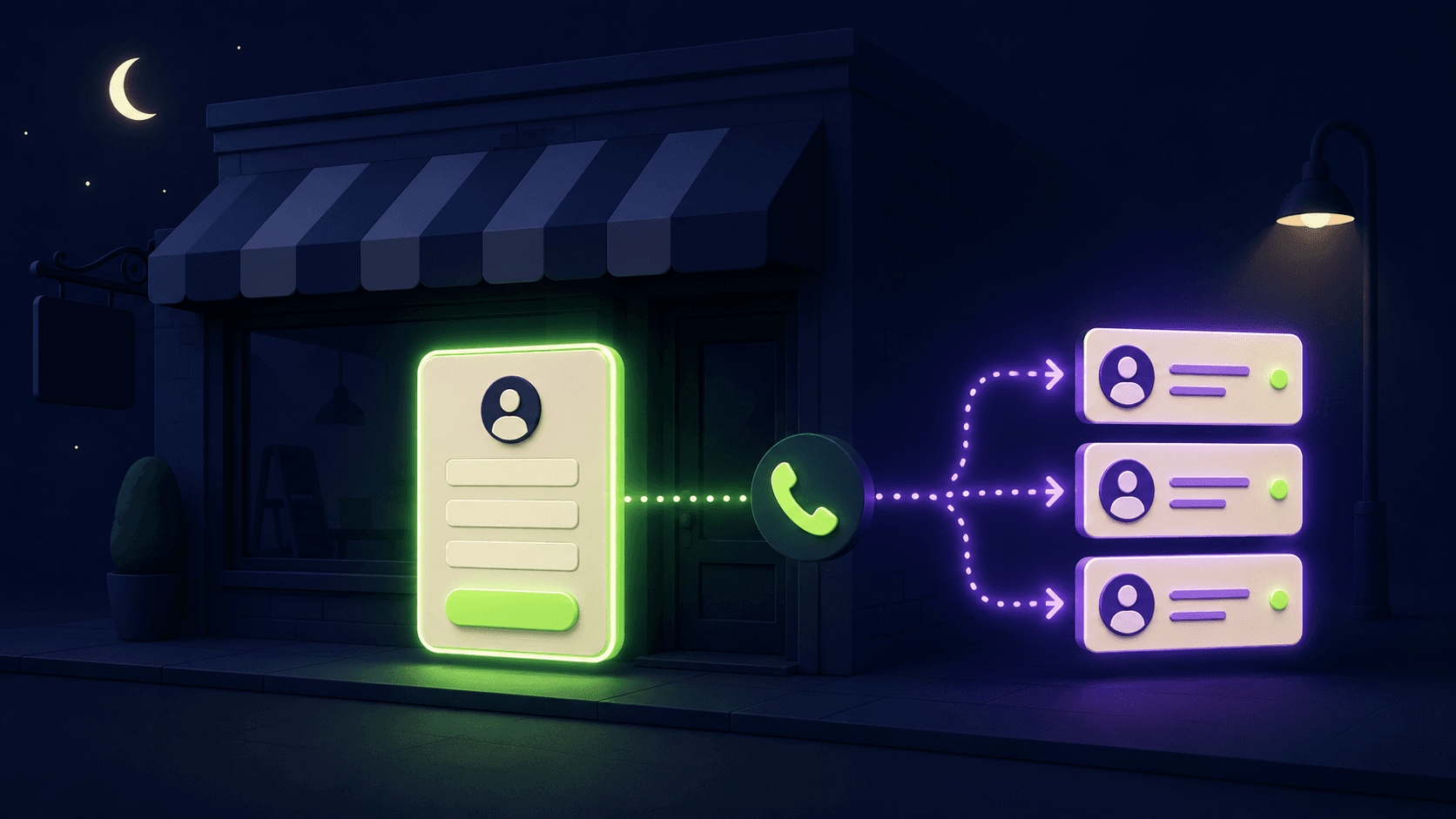
If you run a service business and the phone rings after 5pm, that lead is gone. They hit voicemail, hang up, and tap the next listing on Google. The 2024 Marchex Call Analytics benchmark reported that the average missed call to a home-services SMB is followed by an outbound call to a competitor inside 90 seconds. This guide builds the architecture that closes that gap: a Twilio number, a missed-call webhook, an AI voice agent that calls back inside 3 seconds, captures the job, books a slot, and logs everything to your CRM and Slack by the time you wake up.
TL;DR
Most service-business leads die in voicemail after 5pm.
A Twilio webhook plus an AI voice agent answers back in seconds.
The agent captures name, callback, issue, urgency, then books or escalates.
Slot booking via Cal.com, log to CRM, Slack alert on every call.
Never let the AI quote final prices or handle life-safety calls.
Published 2026-05-21. Last reviewed 2026-05-21. 12 min read.
What is a missed-call voice agent and why do service businesses need one?
A missed-call voice agent is an AI system that detects when an inbound phone call goes unanswered, then calls the caller back within seconds using a real-time voice model that can hold a natural conversation, capture the details of the job, and book a follow-up. It replaces voicemail with a live exchange the caller actually responds to. BIA Advisory Services' SMB Voice Index reported in 2024 that small service businesses miss between 27 and 62 percent of inbound calls during peak hours, and 80 percent of callers who hit voicemail will not leave a message.
For a plumber, electrician, locksmith, restaurant manager, clinic admin, or real-estate agent, the math is brutal. Every after-hours ring is a person ready to spend money now, and the silence of voicemail tells them you do not want the work. The next Google listing answers in 90 seconds. The voice agent fills that 90-second window. It does not replace the human who closes the $4,000 install. It replaces the silence that loses the lead before the human ever hears about it.
What changed in 2026 is the latency. OpenAI's gpt-realtime-2 release notes published in March 2026 reported end-to-end voice round-trip latency under 300ms, low enough that the call no longer feels like an IVR. Vapi and Bland.ai ship hosted layers on top of comparable real-time models with similar latency profiles. A caller who picks up a callback inside 3 seconds and gets a natural-sounding voice asking for their address does not hang up. They book.
How does the missed-call voice agent architecture actually work?
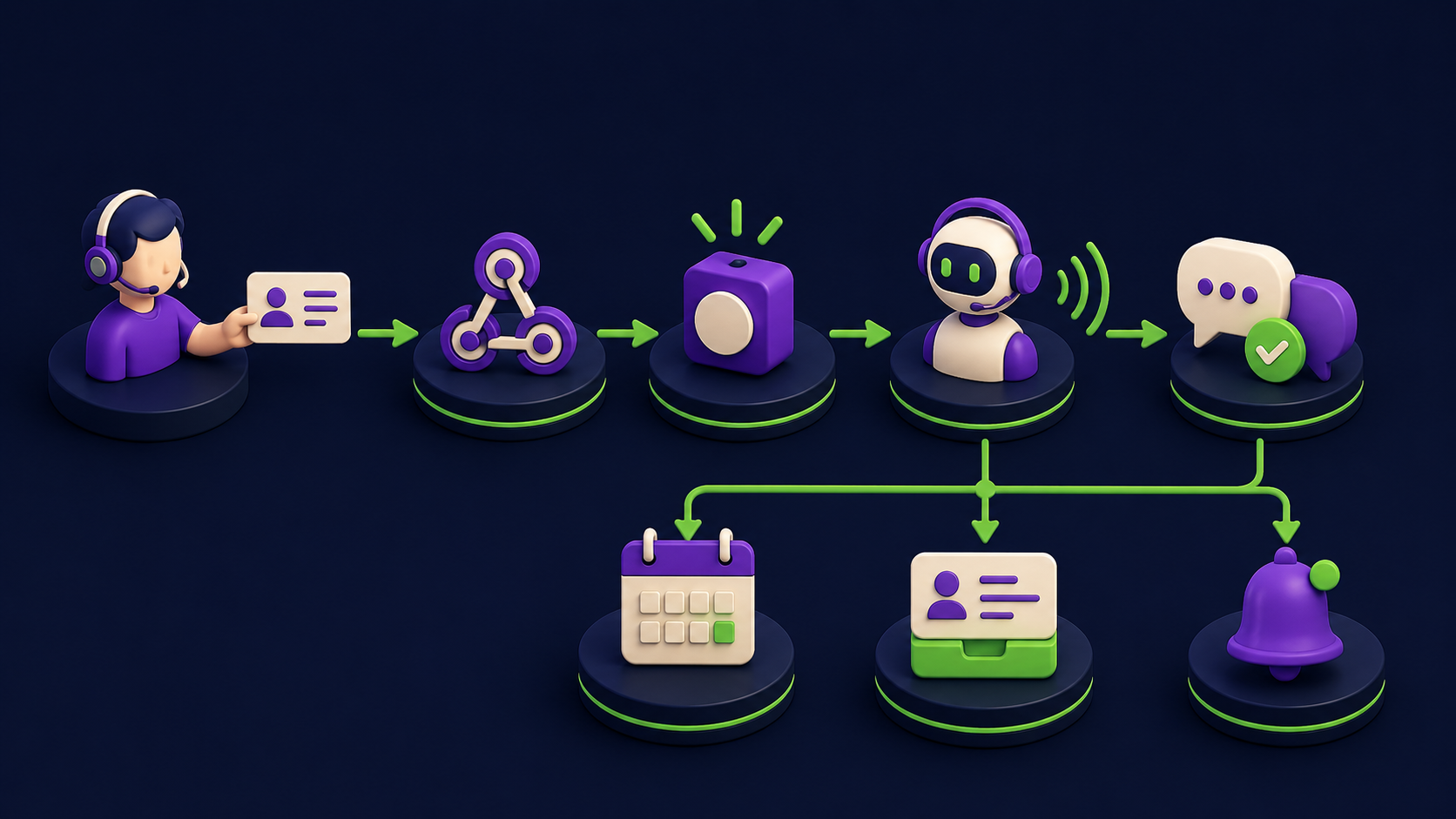
The architecture is a six-step chain: Twilio receives the inbound call, detects it went unanswered, fires a webhook to n8n, which spawns a voice agent (OpenAI Realtime API, Vapi, or Bland) that dials the caller back, runs a scripted conversation, then writes a Cal.com booking, a CRM record, and a Slack alert. Every box in the table maps to one named service and one defined output.
Step | Service / API | What it does | Output |
|---|---|---|---|
1. Inbound call | Twilio Voice API (Programmable Voice) | Receives the call, plays a hold tone, then forwards or hits voicemail | Call SID, From, duration, AnsweredBy status |
2. Missed-call detection | Twilio Status Callback webhook | Fires when CallStatus = no-answer, busy, or failed; posts JSON to your n8n webhook URL | POST with From, To, CallSid, CallStatus, Timestamp |
3. Workflow orchestration | n8n Webhook node + Set node | Validates the payload, dedupes against the last 5 minutes, formats callback context | Normalized job JSON ready for the voice agent |
4. AI voice callback | OpenAI Realtime API gpt-realtime-2, or Vapi, or Bland.ai | Initiates outbound call to the caller, opens with the disclosure, runs the script, captures structured fields, ends with confirmation | JSON transcript plus extracted fields: name, callback number, issue, urgency, address, preferred window |
5. Slot booking | Cal.com API (or Calendly), plus Twilio SMS | Pulls next 3 open slots that match the urgency tier, books one, sends an SMS confirm to the caller | Cal.com booking ID, ICS attachment, SMS delivery receipt |
6. CRM log + alert | HTTP Request to HubSpot, Pipedrive, Jobber, ServiceTitan, or Airtable, plus Slack node | Writes contact, job, transcript, booking ID; posts a Slack message with one-tap reassign or cancel buttons | CRM contact ID, Slack message TS, audit row |
That chain runs in roughly 4 to 8 seconds from missed-call webhook to ringback. The conversation itself takes 60 to 120 seconds. By the time you wake up, the booking is in your calendar and the Slack channel has the transcript.
Which AI voice platform should you pick: OpenAI Realtime API, Vapi, or Bland?
Pick OpenAI Realtime API if you have a developer to write the WebSocket glue and you want the lowest per-minute cost at scale. Pick Vapi for a hosted layer with prebuilt Twilio integration, function calling for Cal.com, and a tunable ops dashboard. Pick Bland.ai for the fastest setup, a script-first interface a non-developer can edit, and per-minute pricing with no infrastructure. Each wraps a comparable real-time voice model. The choice is operational, not capability-driven.
Platform | Setup time | Who edits the script | Pricing model (2026) | Best for |
|---|---|---|---|---|
OpenAI Realtime API (gpt-realtime-2) | 1 to 3 days dev work | Developer in code | Per-token audio in/out, plus Twilio media-stream minutes | High volume, custom logic, lowest cost per call at scale |
Vapi | 2 to 6 hours | Developer or savvy ops | Per-minute, model markup, free tier for testing | Mid-volume SMB, hosted ops, ready-made function calls |
Bland.ai | 30 to 90 minutes | Non-developer in dashboard | Per-minute, transparent rate card | Solo operator, restaurant, salon, small clinic, no dev on staff |
For most service-business owners with no developer in-house, Bland is the honest answer for week one. Move to Vapi when you outgrow the dashboard. Move to OpenAI Realtime API when call volume crosses roughly 2,000 minutes a month and the hosted markup stops being worth it.
How do you set up the Twilio missed-call webhook in 20 minutes?
Setup is five steps, under 20 minutes if you already have a Twilio account, an n8n instance, and one of the voice platforms wired. Twilio side is two configuration screens; n8n side is a webhook node and an HTTP Request. The exact sequence and values are below.
Buy a Twilio number with Voice capability. In the Twilio Console, go to Phone Numbers, Buy a Number, filter by Voice, pick a local area code. Cost in 2026: roughly $1.15 per month plus inbound usage at $0.0085 per minute.
Configure the Voice webhook. Open the number, scroll to Voice Configuration, set "A Call Comes In" to your existing forwarding number or a Twilio TwiML Bin that plays a 5-second greeting and dials your cell. Set "Call Status Changes" to POST to your n8n webhook URL (e.g.
https://n8n.your-domain.com/webhook/missed-call).Create the n8n Webhook node. New workflow, drop a Webhook node, set HTTP method to POST, path to
missed-call, response mode "Immediately". Activate the workflow to get the production URL, paste that URL into the Twilio Status Callback field.Add an IF node for "missed" filter. Route only when
{{$json.CallStatus}}is one ofno-answer,busy, orfailed. Drop everything else (completed, canceled). This stops the workflow from firing on every call leg event.Call the voice platform via HTTP Request. POST to Bland's
/v1/calls, Vapi's/call/phone, or your OpenAI Realtime API wrapper. Pass the From number as the dial target, the agent ID as the script, business context as variables. Success: 200 with a call ID returned in under 2 seconds.
Success state: you call your Twilio number from another phone, do not pick up, the status callback fires, n8n logs the missed call, and your phone rings back inside 4 to 8 seconds with the AI on the line. Test three times before wiring booking and CRM. If the callback fires but no return call happens, the bug is in step 5 (voice-platform auth header). If the callback never fires, the bug is in step 2 (wrong Status Callback URL).
What does a tuned voice-agent script for a service business look like?
A tuned script does five things in order: discloses the caller is talking to an automated assistant, identifies the business, asks why they called, captures the urgency tier, and either books a slot or escalates to a human. It does not pretend to be human, freelance on price, or upsell. Total runtime: 60 to 120 seconds. The five capture beats and the field each one produces are below.
Script beat | What the agent says (sample) | Field captured |
|---|---|---|
1. Disclosure (required) | "Hi, this is the Acme Plumbing automated assistant calling you back. We saw you tried us a minute ago. Is now a good time for two questions so we can get you on the schedule?" | Consent yes/no |
2. Identification | "Can I get your first name and the best number for the technician to reach you on?" | Name, callback number |
3. Job capture | "What is the issue, and is there any water, gas, or power involved right now?" | Issue text, safety flag |
4. Urgency tier | "Is this an emergency that needs someone tonight, or can we book the next business day?" | Urgency: emergency, today, this-week |
5. Address + slot | "Best service address, and we have a slot at 9am or 11am tomorrow. Which one works?" | Address, booked slot |
If the safety flag fires (water leak, gas smell, locked out in unsafe weather, chest pain at a clinic), the script must break the capture loop, end with "I am escalating you to a live person right now," and trigger an immediate call to your on-call human plus a Slack page. Never let the agent reassure a safety caller and go silent. That is the failure mode that becomes a lawsuit.
What you should NEVER let the AI voice agent handle
The AI handles intake, qualification, and booking. The human handles money, safety, and consent. The boundary is not a soft suggestion. Crossing it exposes you to TCPA violations, license-board complaints, refund disputes, and harm to callers who needed a real person and got a chatbot. The five hard limits below must be enforced in every script.
Final price quotes on regulated work. Plumbing, electrical, HVAC, locksmith, medical, and legal services have license-holder pricing rules in most US states. The AI can quote a "service-call diagnostic fee" only if it is a posted flat rate. It must never quote the final repair price. Bland's published guidance and most state contractor-board rules require the licensed pro to set the quote.
Emergencies and life-safety calls. Gas leaks, active flooding, smoke, chest pain at a clinic, child stuck in a car, person locked out in freezing weather. The script must detect the safety keywords, end the capture loop, escalate to a live human immediately, and log the call as safety-escalated. Do not let the AI run a 90-second script while the caller is in danger.
Payment over the phone. Never collect card numbers, CVVs, or bank details inside the voice agent. Send a Stripe or Square link via SMS post-call. This keeps you out of PCI DSS scope for the voice channel entirely.
Anything requiring license-holder consent. Diagnoses at a clinic, prescription questions, legal advice, real-estate offer terms, custom medication or treatment confirmation. The agent collects the request, books the human, and stops talking.
Disputes, complaints, and refunds. A caller who is angry about a previous job is not a happy caller for an AI to triage. The script must detect frustration keywords (refund, complaint, manager, lawyer) and route straight to a live operator with a 4-hour SLA, not the AI capture flow.
The rule of thumb: the AI does the boring work that loses you money when it is missed, and the human does the work where the wrong answer creates legal, safety, or financial exposure.
What are the TCPA and state disclosure rules you must follow in 2026?
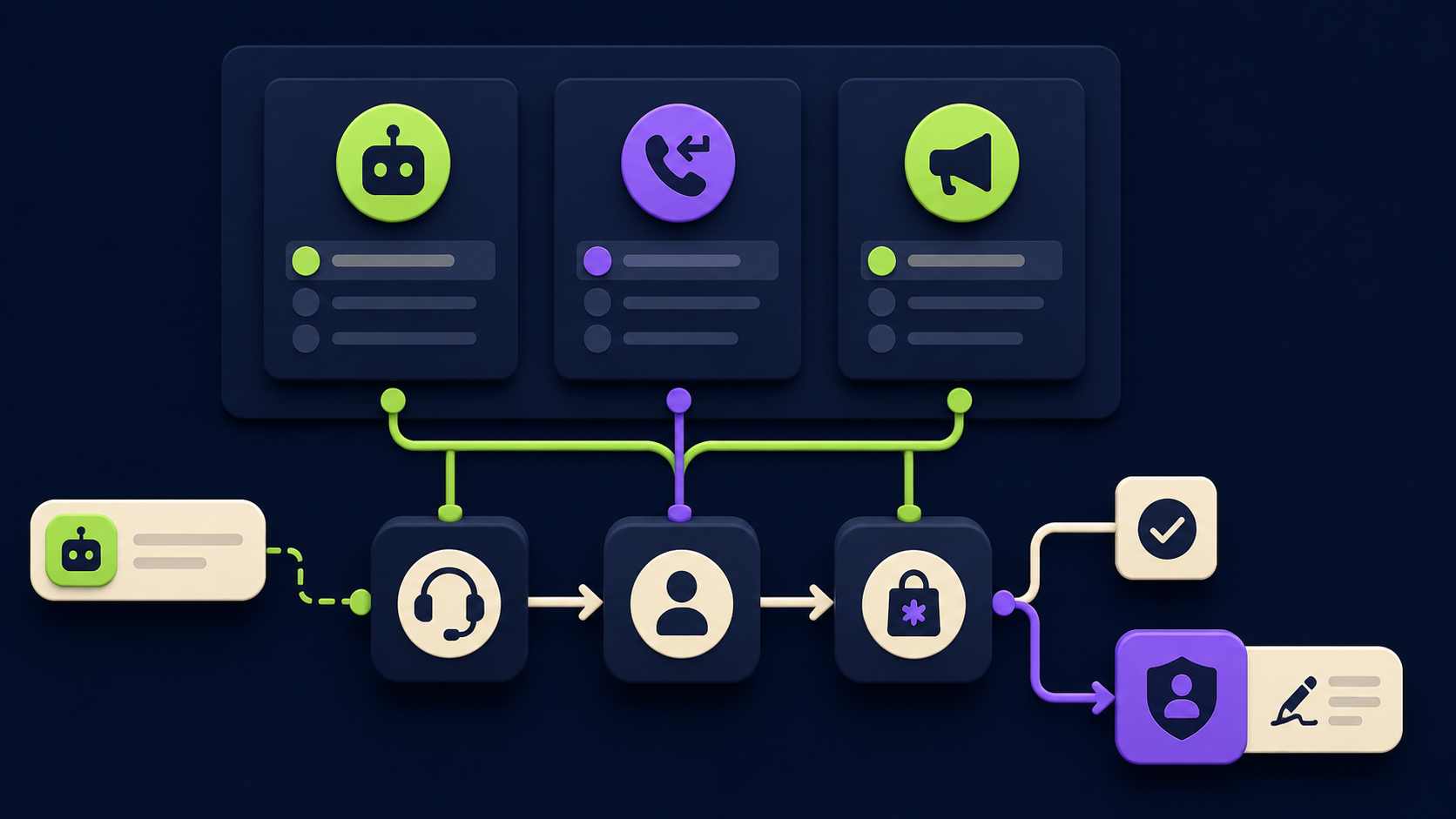
The FCC's 2024 declaratory ruling confirmed that AI voice calls fall under the existing Telephone Consumer Protection Act (TCPA) framework. For a missed-call callback flow this means three things: the automated-system disclosure must come at the start of the call, the callback to a number that just dialed you is generally a return-of-call exception but the disclosure rule still applies, and any marketing language tacked on after booking triggers separate prior-express-written-consent rules.
Rule | Source | What it means for your script |
|---|---|---|
AI disclosure | FCC 2024 declaratory ruling on AI voice (47 CFR 64.1200) | State "this is an automated assistant" inside the first sentence |
Call recording consent | State two-party consent statutes (CA, FL, IL, MA, MD, MT, NH, PA, WA and others) | If you record, the script must ask consent before recording starts in two-party states |
Marketing add-on | TCPA prior-express-written-consent rule | Do not pitch a new product or upsell on the same call without separate written consent |
Do-Not-Call list | FTC National DNC Registry | Return-of-call to a number that called you is generally exempt; cold AI outbound to DNC numbers is not |
HIPAA (clinics only) | HHS HIPAA Privacy Rule | If you are a covered entity, the voice platform must sign a BAA; Bland, Vapi, and OpenAI all publish BAA availability |
Treat the disclosure as a phrase at the top of the script, never fine print. State two-party recording rules in particular trip up workflows that default to "record everything." If you operate in California, Florida, Illinois, or any other two-party state, the recording-consent ask is its own line before the capture flow starts.
What does the daily Slack alert and CRM log look like in practice?
The daily output is two things: a Slack message per missed call with the transcript, the booking, and one-tap buttons to reassign or cancel, plus a CRM row tagged with call type and tier. The Slack channel becomes the single source of truth in the first 30 days; attention shifts to the CRM dashboard once volume justifies it. Wire both on day one.
Slack message structure: one-line caller summary, three-line key fields (issue, urgency, booked slot), expandable transcript, three action buttons (Reassign, Cancel, Mark as spam). CRM record: contact matched on phone number, deal opened with the booking ID as a custom property, transcript attached as a note, custom field tagging the call ai-triaged. The metric that matters in week one is the booking rate. Tune the script when it sits below 35 percent in the first 100 calls; the disclosure phrasing and the urgency-tier question are where callers hang up first.
Common mistakes when deploying a missed-call voice agent
Most failed deployments fail on the same five mistakes. Each is preventable in the first week with the right configuration.
Skipping the disclosure. Operators try to "make it feel human" by omitting the automated-assistant line. Fastest path to a TCPA complaint. Keep the disclosure literal and at the top.
Letting the agent quote prices. The agent guesses, the caller books, the licensed pro corrects it on arrival. The customer feels bait-and-switched. Cap the agent at the diagnostic fee only.
No safety escalation path. The script runs the same 90-second flow for a gas leak that it runs for a faucet drip. Detect safety keywords on the first capture turn, break the loop, page the human.
Recording without consent in two-party states. Default Bland and Vapi recording is on. In CA, FL, IL and other two-party states the consent ask is mandatory.
No human review of the first 100 transcripts. The agent will pick up regional names wrong, mis-tier urgency, and book the wrong slot type. Read every transcript in week one and edit the script weekly until booking rate is stable above 35 percent.
FAQ
Will customers hang up when they realize the callback is an AI?
Most do not, if the disclosure is honest and the agent gets to the booking question inside 30 seconds. Operators on r/smallbusiness and r/HomeImprovement report disclosed-AI callback hang-up rates between 18 and 35 percent, lower than the 80 percent voicemail dropoff BIA Advisory measured. The bigger risk is a hidden AI the caller figures out mid-sentence. Disclosed beats deceptive, every time.
Is it legal to have an AI call customers back in the US?
Yes, with caveats. The 2024 FCC declaratory ruling brought AI voice calls under the TCPA framework. Returning a call to a number that just dialed your business is generally treated as a return-of-call exception, but you must still disclose the call is automated. Recording consent rules vary by state. Cold AI outbound to numbers that did not call you first requires prior express written consent. Talk to a TCPA-aware attorney before any outbound marketing use.
Can the AI book directly into my calendar without me approving each one?
Yes, and most operators do this for routine jobs. Wire Cal.com or Calendly with a service-type that has buffer time, max bookings per day, and the time windows you work. The AI books inside those constraints, the Slack alert shows you the booking, and you cancel inside the calendar if a slot is wrong. For high-ticket installs, route to a "request a callback" branch so the human estimator owns the first contact.
How do I stop the agent from hallucinating job details or pricing?
Constrain the script. Use structured output capture rather than free-form summarization, give the agent a strict list of allowed answers for price (the diagnostic fee only) and for slot times (only the slots Cal.com returns this minute), and forbid the agent from inventing booking IDs or addresses the caller did not say. Vapi and Bland support tool-call enforcement and required-field validation. OpenAI Realtime API supports function calling with strict JSON schemas. Use them.
What is the smallest setup that gets me live in one day?
Bland.ai dashboard, Twilio number, n8n free tier on a small VPS or n8n Cloud, Cal.com free plan, and a Slack workspace. Total config time is roughly 4 hours if you have not done this before, and 90 minutes if you have. Skip Vapi and the OpenAI Realtime API on day one. They are upgrades you take when you outgrow the Bland dashboard, not the place to start when you just want missed-call recovery live by tonight.
Should restaurants and salons use this, or is it just for trades?
Restaurants and salons benefit even more than trades in many cases because their missed-call volume during dinner service or peak appointment hours is structural, not occasional. A salon owner who is mid-haircut cannot pick up the phone. The voice agent books the next available stylist slot, sends an SMS confirmation, and the owner sees the booking in the Slack alert at the end of the appointment. Same architecture, lighter script, faster return on investment because the call durations are shorter.
Would rather have this built and tuned to your script?
If you want this wired end-to-end with your phone number, your service catalog, your booking rules, and your CRM, the team at Vantaige builds and tunes the voice-agent stack for service businesses. We handle the Twilio configuration, the n8n workflow, the platform-of-choice setup, the script tuning, and the 30-day post-launch script review. Get in touch via the contact page with your business type, call volume, and current voicemail dropoff so we can scope the build.
Related from Vantaige
Lead Form to Qualified Call: The 5-Node Automation That Stops the Leak
AI Customer Support Triage That Routes 70% of Tickets Without a Human
Quote to Paid Invoice in One Workflow: The Service-Business Stack
References
Get the best new AI tools and guides, weekly
One short email a week. The tools worth trying, the guides worth reading, nothing else.
No spam. Unsubscribe anytime.
Aymen B
Contributing writer at Vantaige, covering the AI tools ecosystem.