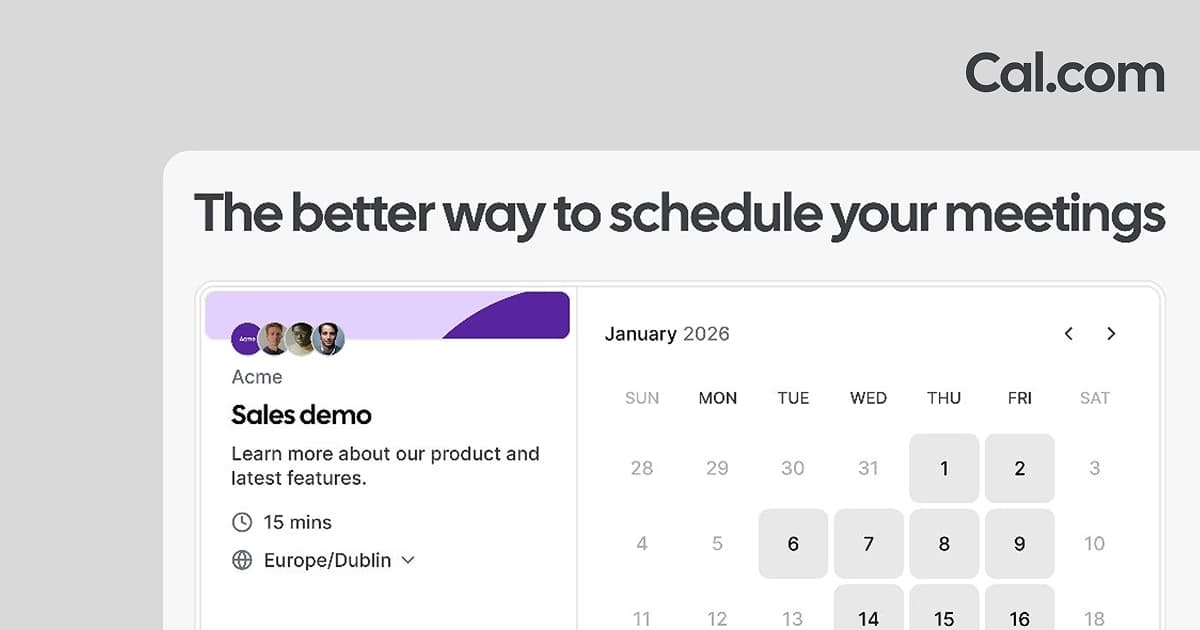

Cal.com is an open-source scheduling platform built by Peer Richelsen and Bailey Pumfleet. It offers unlimited event types on its free tier, developer-grade routing and API access, and Cal.ai voice agents for automated booking calls.
Cal.com is a scheduling infrastructure platform founded in January 2021 by Peer Richelsen and Bailey Pumfleet, built from the start as the open-source alternative to Calendly. The company raised $7.35 million in a December 2021 seed round and $25 million in a Series A in April 2022, backed by Seven Seven Six (Alexis Ohanian's fund), OSS Capital, Obvious Ventures, and Naval Ravikant. Where Calendly optimizes for polished simplicity, Cal.com optimizes for control: routing logic, embeddability, self-hosting, and an API surface deep enough to build entire scheduling products on top of.
The platform ships unlimited event types on its free tier, a genuine differentiator when Calendly caps free users at one. Core capabilities include round-robin and collective team scheduling, conditional routing forms that direct bookers to the right team member based on their answers, native Cal Video (up to 300 participants, unlimited duration), Stripe payment integration for paid bookings, 65+ language support, and embeddable booking widgets. The Cal.ai phone agent layer, launched in September 2025, adds AI-powered outbound calls for booking confirmations, no-show follow-ups, and reminders at $0.29 per minute, billed against a monthly credit allocation that scales by plan. The platform connects to Calendly-style use cases but extends well beyond them for teams that need programmatic control.
What Cal.com actually is in May 2026
Cal.com sits at an interesting intersection in May 2026: it is simultaneously a mature, production-tested scheduling SaaS and a platform that just made a controversial strategic shift. In April 2026, the company moved its production codebase from the AGPL open-source license to a proprietary one, citing AI-powered vulnerability scanning as the reason. The community-facing open-source offering lives on as Cal.diy, re-licensed under MIT for hobbyists and developers who want to self-host a feature-complete fork.
The production Cal.com Cloud product currently serves four tiers: a true Free plan for individuals with unlimited event types, Teams at $15/user/month, Organizations at $37/user/month with white-labeling and SAML/SSO, and Enterprise with custom pricing covering SOC 2, HIPAA, and ISO compliance. The Platform API, starting at $299/month, targets developers embedding scheduling directly into their own SaaS products, a use case Calendly does not seriously address.
Cal.ai deserves its own paragraph. The voice agent feature works natively inside Cal.com Workflows without requiring third-party tools or Zapier. Users write custom prompts, define the agent's tone and goals, then set triggers based on form submissions, confirmed bookings, or no-shows. Call analytics include completion rates, booking outcomes, and customer sentiment. Teams plan members receive 750 credits/month; Organizations members receive 1,000. At $0.29/minute, a five-minute confirmation call costs $1.45, which positions it well below human SDR cost for high-volume booking flows.
Where Cal.com sits versus Calendly and Reclaim AI
Cal.com vs. Calendly is the comparison every prospect runs. The mechanical differences matter more than the marketing positioning. Calendly operates as a cloud-only SaaS with no self-hosting option and a native integration marketplace covering Salesforce, HubSpot, and Zoom at lower tiers. Its free tier restricts users to one event type; Cal.com's free tier gives unlimited event types with no hard ceiling. Cal.com's routing forms support conditional branching, sending bookers to different event types or team members based on their answers. Calendly added AI-assisted routing in 2025, but it operates as round-robin distribution rather than form-based conditional logic. Calendly has native iOS and Android apps; Cal.com's mobile experience runs on responsive web. At scale, many teams switch to Cal.com specifically because Calendly's per-seat pricing compounds quickly, with one reviewer documenting savings exceeding $300/month after migrating. You can also explore Calendly's full review if the comparison is your deciding factor.
Cal.com vs. Reclaim AI is a different kind of comparison because the products solve different problems. Reclaim is a time-blocking AI that integrates inside Google Calendar rather than replacing it. Its core mechanism is proactive: Reclaim defends focus blocks, scheduled habits (exercise, lunch, deep-work windows), and task time by automatically rescheduling those holds when meetings intrude. It connects to Asana, Linear, Todoist, and ClickUp to find and protect time for tracked tasks. Cal.com does none of this. Cal.com is reactive and inbound: it waits for someone to visit your booking page and pick a slot. If your problem is coordinating external meetings, Cal.com is the right tool. If your problem is protecting internal time from being eaten by those meetings, Reclaim addresses that instead. Reclaim also lacks Cal.com's self-hosting option and does not offer any equivalent to Cal.ai's phone agent functionality.
"Cal.com is brilliant and far better than Calendly imho and I run it self hosted." - Reddit user, r/selfhosted, 2024
"The API is well-documented, webhooks are reliable, and the embed options work cleanly." - Nick Hoffman, Consultant, workflowautomation.net review
How AI actually works inside Cal.com
Cal.ai is a first-party AI layer, not a third-party integration. It ships natively inside Cal.com Workflows, which means the trigger-to-call logic is configured inside the same dashboard where you set up availability, routing forms, and reminders. The setup is three steps: define a trigger event (form submission, booking confirmed, no-show detected), assign a dedicated phone number, and write a custom script prompt that sets the agent's voice, tone, and call goal.
The voice quality uses a neural text-to-speech stack described as "lifelike" in product documentation, with conversational adaptation rather than scripted playback. The analytics layer captures call completion rates, booking conversion rates from calls, and customer sentiment scoring in real time. This makes it meaningfully more measurable than a human calling the same list.
Beyond Cal.ai, Cal.com's broader AI surface includes the routing forms' conditional logic (which routes based on submitted data automatically), the team insights dashboard that surfaces booking patterns and availability gaps, and integrations with tools like Sessions and Recall AI for recording and transcription of Cal Video sessions.
One mechanical note: Cal.ai credits are consumed in real time at $0.29/minute with no overage protection by default. Teams on the $15/user/month plan receive 750 credits/month per member (roughly 26 minutes of calls). High-volume users should model their expected call volume against the included credits before committing to a tier.
The friction and trust concerns users keep raising
Three categories of friction appear consistently across reviews, forums, and the April 2026 Hacker News thread.
The closed-source pivot (April 2026) is the most recent and most charged. When Bailey Pumfleet announced the production codebase was going proprietary, the HN thread hit 500+ comments within hours. The stated reason was AI-accelerated vulnerability discovery: "AI can be pointed at an open source codebase and systematically scan it for vulnerabilities," with co-founder Peer Richelsen arguing on the thread that "it takes my 16 year old neighbors son 15 mins and $100 to exploit our open code." Critics pushed back hard, arguing this is security through obscurity, that binary analysis defeats it anyway, and that the real driver is monetization pressure from enterprises and competition from Google Calendar's native scheduling features. User "Opem" wrote: "For real, one of the reasons I use cal.com is because it's open source. Time to migrate." User "Lrvick" posted: "My two companies will be canceling over this." Cal.diy preserves MIT-licensed self-hosting for technically capable users, but the trust damage among the open-source community is real and ongoing.
No native mobile apps is a persistent complaint that predates the licensing controversy. The mobile web experience cannot match native apps for push notification reliability and offline access. Field sales reps and traveling consultants surface this in G2 reviews specifically, with 41 out of roughly 130 G2 reviewers citing "steep learning curve," which often reflects the gap between the developer-first UI and non-technical users.
API rate limiting bites integrators without warning. The API caps at 120 requests per minute, and when exceeded, accounts are disabled without a graceful error state. Multiple users documented needing 5+ support messages and social media escalation to restore access. For teams building production integrations, this requires defensive rate-limiting code on the client side.
Secondary issues: Microsoft Teams integration breaks after a few weeks (multiple reinstalls reported, no consistent fix documented), reminder workflows occasionally fail to trigger, and self-hosted deployments become hard to modify post-setup if the IP or FQDN changes, requiring full backup restoration.
Who Cal.com is for
Cal.com earns its place for four segments. Developers and technical teams building custom scheduling flows or embedding booking into their own products are the clearest fit: the Platform API, embeddable widgets, and webhook reliability are genuinely differentiated from any cloud-only competitor. Cost-conscious teams that have hit Calendly's per-seat pricing wall at scale will find Cal.com significantly cheaper, especially on the Organizations plan where white-labeling and SSO are included at $37/user versus Calendly's Enterprise pricing. Privacy and compliance-sensitive organizations can run Cal.diy on their own infrastructure with full data control. Sales and marketing teams doing high-volume outbound follow-up will find Cal.ai's phone agent a compelling native alternative to Outreach or Apollo for the booking confirmation step specifically.
Skip Cal.com when your team is non-technical and needs a polished tool that works out of the box with minimal configuration. Calendly's guided setup and native CRM integrations deliver faster time-to-value for those teams. Skip it if you need native mobile apps with push notifications. Skip it if your entire scheduling workflow lives inside Google Calendar and you want AI to manage your time proactively rather than simply accepting bookings: Reclaim or Fellow address calendar intelligence in ways Cal.com does not. And skip the self-hosted path if you don't have DevOps capacity to maintain it, because documentation gaps on advanced configurations are a real operational burden.
For teams that want scheduling infrastructure they actually own - or at minimum can control, extend, and price predictably - Cal.com at 4.3 is a strong choice with its eyes open about what it costs and what it doesn't yet do.
User Reviews
No reviews yet. Be the first to share your experience!
Sign in to write a review.
Featured in collections
Curated lists that include Cal.com.
Related articles
Guides and articles related to Cal.com.
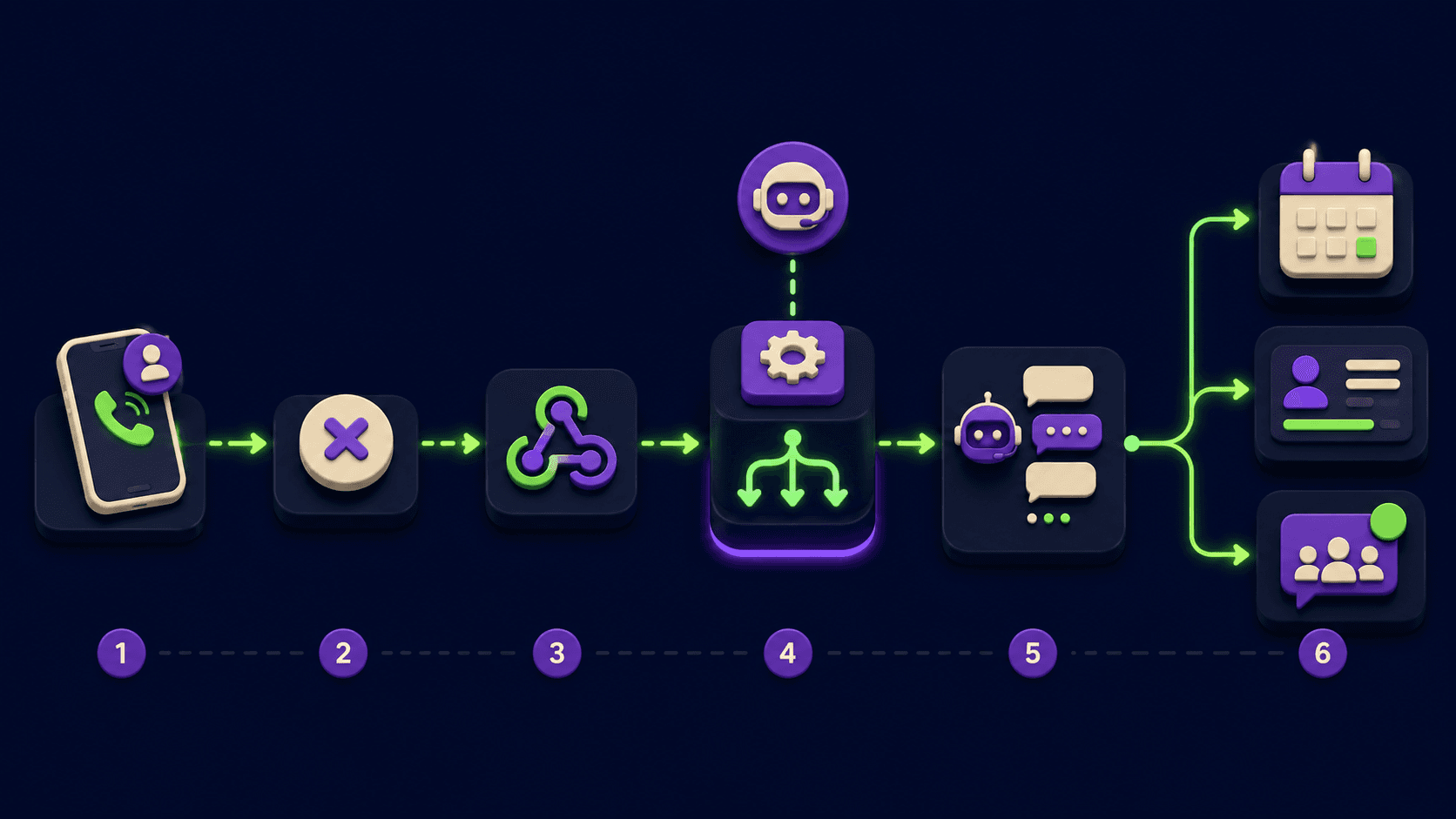
Voice Agent for Missed Calls: Every Service Business Is Bleeding Leads After Hours (2026)

After-Hours Inquiry Capture for Local Businesses: AI Form + Voice Fallback (2026)

Replace 6 SaaS Subscriptions With 4 n8n AI Agents (2026)

AI Receptionist for Solo Professionals: Replace the Answering Service (2026)
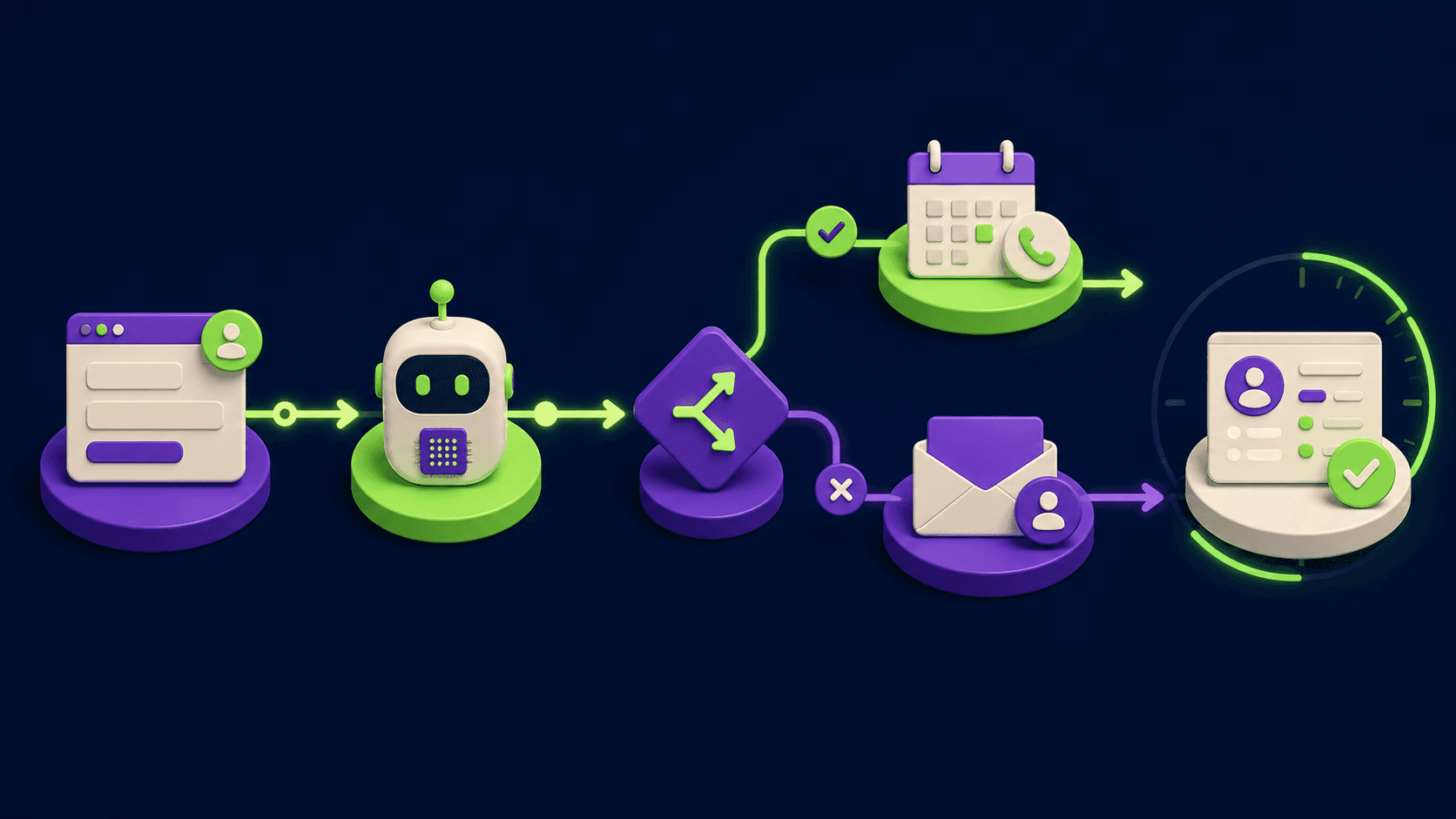
Lead Form to Qualified Call: The 5-Node Automation That Stops the Leak (2026)