AI Receptionist for Solo Professionals: Replace the Answering Service (2026)

AI Receptionist for Solo Professionals: Replace the Answering Service (2026)
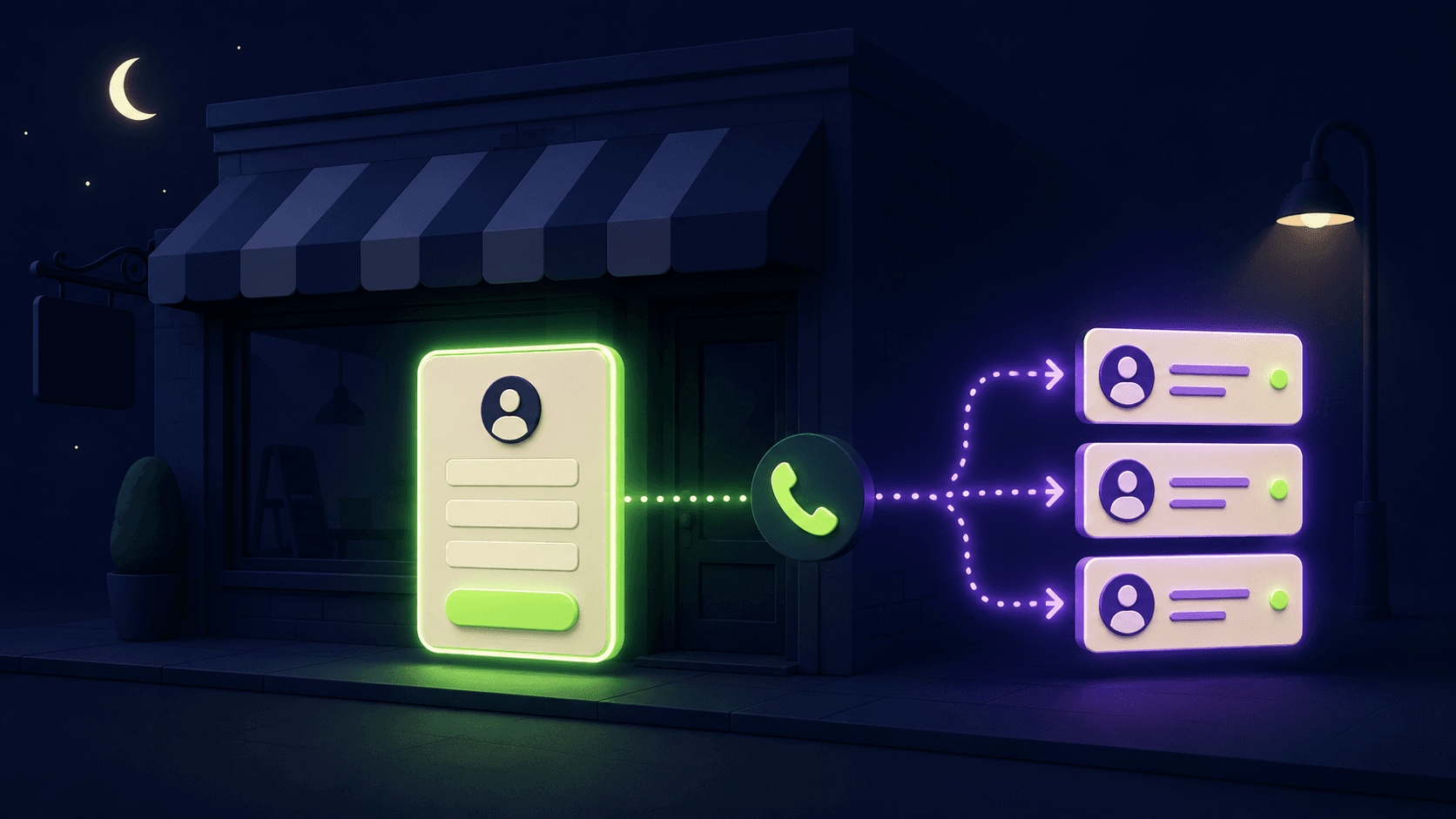
You are in a session, a consult, a chair, or a courtroom, and the phone keeps ringing. Your answering service costs between $100 and $400 a month, mangles half the names, and still sends you a 2am page for a sales pitch. An AI receptionist trained on your intake script answers in your voice, identifies whether the caller is a new client, an existing one, an emergency, or a vendor, and either books a slot, escalates live, or texts you a structured summary. This guide is the architecture, the compliance, and the boundaries for a single-shingle practice in 2026.
TL;DR
Answering services cost $100 to $400 a month and still misclassify calls.
An AI voice agent on a Twilio number answers in under 3 seconds.
The agent identifies intent, books, routes, or escalates by rule.
Disclose it is automated, never give legal, medical, or financial advice.
HIPAA, ABA Rule 1.6, and two-party consent recording all apply.
Published 2026-05-21. Last reviewed 2026-05-21. 10 min read.
What is an AI receptionist for a solo professional?
An AI receptionist is a phone-facing voice agent that picks up your business line, holds a natural conversation in your firm's voice, classifies the reason for the call, and takes one of four actions: book the slot, transfer live, send a structured message, or escalate per your rules. For a solo lawyer, accountant, therapist, coach, consultant, dentist, vet, or real-estate agent, it replaces both the after-hours voicemail and the human service that charges per minute and still botches the intake.
What changed in 2026 is the latency and the script-following. OpenAI's Realtime API ships sub-300ms voice in production, and hosted layers like Vapi and Bland wrap that model with tooling for branches, transfers, and structured-data capture. The caller hears something that sounds like a calm front-desk associate who knows your intake form by heart. The agent must announce itself as automated on every call.
Why do solo professionals replace traditional answering services in 2026?
Solo professionals replace traditional answering services because the price-per-call has flipped. A US live-answering service charges between $1 and $1.75 per minute on most plans, with monthly minimums of $100 to $400 reported across AnswerConnect and Specialty Answering Service rate cards. A typical AI voice call at 2026 rates runs $0.07 to $0.20 per minute including model, telephony, and orchestration, with no minimum.
The deeper reason is fidelity. A human service handles dozens of accounts a shift, cannot memorize your case-types, and pages you for things that should never have been escalated. An agent trained on your intake script and FAQ has perfect recall on every call, runs the same intake at 2am as at 2pm, and respects the rules you set for what counts as an emergency. In our builds, operators see misrouted pages drop sharply within the first month of running the agent in parallel with the prior service.
How does the AI receptionist architecture actually work?
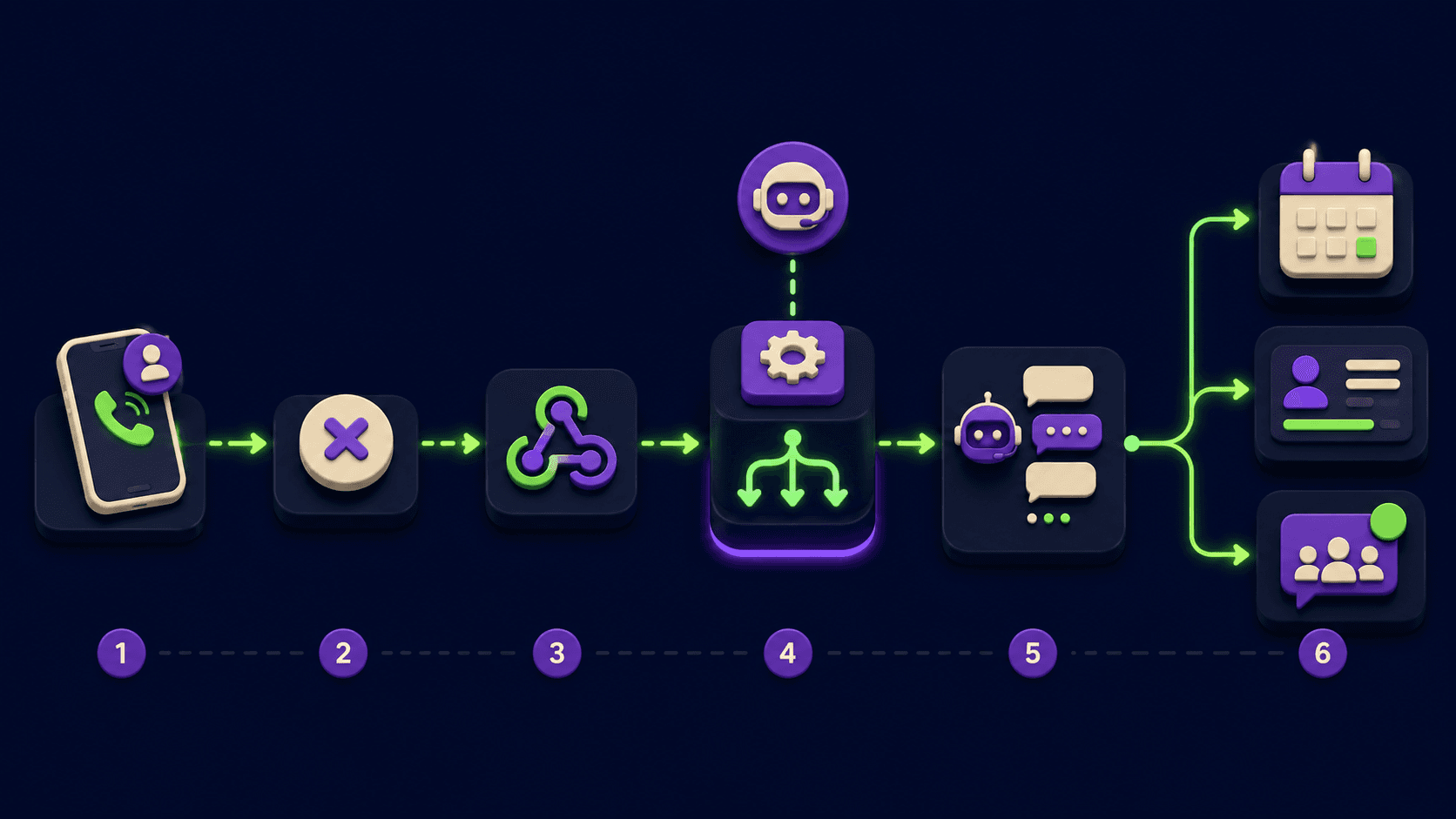
The architecture is a six-row chain: a Twilio phone number routes the call to a voice agent (OpenAI Realtime API, Vapi, or Bland) trained on your intake script and FAQ, the agent identifies intent on the opening exchange, then it either books via Cal.com or Acuity, transfers live to your cell, sends an SMS confirm, or writes a structured message into your CRM. Every box maps to one named service and one defined output.
Call type | How the AI handles it | Escalation rule | Output |
|---|---|---|---|
New client intake | Runs your intake script: name, callback, matter type or visit reason, urgency, conflict-of-interest disclosure if law, source of referral | If matter type is on your "intake only by professional" list, book a paid consult slot instead of free intake | CRM contact, intake note, booked slot, SMS confirm |
Existing client question | Verifies identity with two non-PHI fields (last name plus zip, or matter number), then books a follow-up, takes a message, or transfers | Never confirm HIPAA-protected info without verified identity, never discuss matter details, route clinical questions to the provider | Verified identity flag, structured message, callback time, audit row |
Emergency | Asks the gated triage question first; if positive, breaks the script and reads the practice's emergency line (911 for life-safety, after-hours number for clinical urgent) | Hard-coded keyword list per practice (chest pain, suicidal, breathing, custody now, animal collapsed); always read the disclosure first | Emergency flag in CRM, page to on-call, transcript stored |
Sales / vendor | Recognizes pitch patterns, ends the call politely, logs the lead as "outbound sales" with vendor name if given | Never connect, never book a slot, never share calendar availability | Sales log row, no calendar action, no SMS |
Existing appointment reschedule | Looks up the appointment in Cal.com or Acuity via matter / patient number, offers the next 3 matching slots | If reschedule is inside the practice's cancellation window, route to staff message instead of auto-rebooking | Updated booking, ICS, SMS confirm, audit row |
Live transfer requested | Checks your on-call status in Google Calendar or Slack; if available, warm-transfers via Twilio Dial verb | Never blind-transfer, always whisper the caller name and reason to you first | Call SID, transfer outcome, fallback to message if no pickup in 4 rings |
Which tools do solo practices actually wire together?
Solo practices wire a small, named stack: a phone number from Twilio, a voice agent from OpenAI Realtime API or Vapi or Bland, a scheduler from Cal.com or Acuity, an orchestrator in n8n, and the CRM that already lives in the practice. Keep the stack short. Every extra service is one more compliance review and one more failure mode.
The phone layer is Twilio Voice. Buy a local or toll-free number, port your existing line if you can, and route inbound calls to a TwiML endpoint that hands the call to your voice agent over a media stream. Twilio's status callbacks fire on every state change, telling the orchestrator when to log, escalate, or fail over to voicemail.
The voice layer is one of three named providers. OpenAI Realtime API gives lowest-level access and latency in exchange for writing the call-flow logic yourself. Vapi and Bland wrap real-time models with a hosted call manager, branch logic, function-calling, and recording. For a solo practice with no engineer in-house, Vapi or Bland is the realistic pick. For an agency reusing the pattern, OpenAI Realtime API plus n8n keeps the bill and the lock-in low.
The booking layer is Cal.com or Acuity Scheduling. Both expose availability and booking APIs the agent calls with matter type, duration, and preferred window. The agent never invents a slot. The orchestrator is n8n: the only place you write conditional logic (dedupe window, conflict-of-interest filter, HIPAA-verification check, slot-rule branching, after-hours fallback). Edit a rule in 30 seconds without retraining anything.
What does the intake script look like in practice?
The intake script is a short, branched conversation, not a monologue. It opens with the automated-assistant disclosure, asks the gated triage question, then runs one of four branches: new intake, existing client, sales, or live-transfer request. Every branch ends with a confirmation read-back and an SMS to the caller within 30 seconds.
Here is the locked open. Read it verbatim as the system prompt opening, and never let the model improvise it: "Hi, you have reached the office of [practice name]. This call is being answered by an automated assistant and may be recorded. If this is a life-threatening emergency please hang up and dial 911. Otherwise, how can I help you today?"
That open identifies the practice, complies with the FCC's automated-assistant disclosure, and gates the emergency case before any data is captured. For a new-client legal intake the branch reads: confirm not an existing client, ask matter type from a short list, ask one conflict-of-interest disqualifier, capture name and callback, capture one-sentence summary, book a paid consult. The agent never quotes fees beyond the consult and never expresses an opinion on the merits. For a therapy or medical practice: ask new or existing, verify identity if existing (last name plus zip, never read PHI aloud), capture reason at intake-level only ("brief check, new symptom, follow-up, refill"), capture insurance status as a category, book the appropriate appointment. The agent never confirms diagnoses or discusses test results.
What an AI receptionist must NEVER do
An AI receptionist must never do four things: give legal, medical, or financial advice; take payment over the phone; confirm HIPAA-protected information without verified identity; or override the professional's calendar rules without explicit human approval. Each is a license, regulatory, or fraud risk. The model will try to be helpful and cross any of these lines if you let it. Stop it in the system prompt and the orchestrator's branch rules, and test weekly.
The agent must never offer a legal opinion, even hedged. No "you might have a case" or "that sounds like a strong claim". The ABA's Rule 1.6 requires preservation of client confidentiality, and a model that improvises legal commentary creates a confidentiality and unauthorized-practice exposure simultaneously. The agent defers every substantive question to the attorney's consult.
The agent must never give a medical opinion. No "that sounds like a sinus infection". The agent reads the appointment booking and the emergency disclosure, nothing else. A HIPAA-covered practice that lets a voice model freelance on clinical questions has a Business Associate Agreement problem before lunch.
The agent must never take a credit-card number on the phone unless the entire stack is PCI-DSS compliant and the voice provider supports PCI-mode call redaction. For most solo practices that means: never. Payment goes through a tokenized link in the SMS confirmation. The caller pays through Stripe or LawPay, and the call recording never touches the card.
The agent must never confirm PHI without verifying identity using two non-PHI fields. Last-name plus zip works. Matter number plus DOB works. Reading the patient's symptoms back before identity is verified does not, even if "they already told us." And the agent must never override calendar rules. If your Cal.com is set to no same-day bookings, the agent does not negotiate. If your conflict-of-interest list flags a name, the agent ends the intake politely and takes a message.
What compliance applies: HIPAA, ABA Rule 1.6, two-party consent, automated-assistant disclosure?
Compliance for a solo-professional AI receptionist sits on four pillars: the disclosure that the call is automated and recorded, the consent regime for recording in your state, the confidentiality rule for your profession, and the data-handling regime for any protected category. Get any of the four wrong and the system is a liability instead of an asset.
The automated-assistant disclosure is governed federally by the FCC under the Telephone Consumer Protection Act. The FCC robocall guidance requires identification of the caller on automated outbound calls; for inbound, most states layer on a disclosure-and-consent rule the moment the call is recorded. Open every call with the locked disclosure shown above.
The recording consent regime is state-by-state. All-party consent states include California, Florida, Illinois, Massachusetts, Maryland, Montana, Nevada, New Hampshire, Pennsylvania, and Washington. The Digital Media Law Project maintains a current state-by-state map. If you operate in any all-party state, capture a recorded affirmative consent before recording begins.
For law firms, ABA Model Rule 1.6 governs confidentiality of information relating to representation. The translation: do not let the voice model freelance on matter details, store transcripts only inside a system you control, and sign the vendor's BAA or DPA if it exists. The 2018 ABA Formal Opinion 483 on cyber incident notification sets the standard for "reasonable" efforts.
For HIPAA-covered practices (therapy, dental, medical) the controlling rule is the HHS HIPAA Privacy and Security Rules. The voice agent vendor must sign a Business Associate Agreement before any PHI touches the call. Enterprise plans sign one; $0 starter tiers do not. For everyone, the FCC's TCPA covers automated outbound calls. The cleanest design: the agent only places outbound calls to numbers that called you first within the same session.
How do you actually build and launch this in a week?
You launch in a week with a five-step plan: buy and route the number, write and freeze the script, wire booking and CRM functions, set escalation rules in n8n, and run a 5-day parallel-shadow test before any cutover. The goal of week one is a proven side-by-side that measures misrouting and missed-emergency rates against your current baseline.
Day 1, telephony. Buy a Twilio local number, point it at a TwiML Stream bin, and verify your existing line can forward to it conditionally. Set the status callback URL to a webhook in n8n. Configure call recording with a 30-day retention policy.
Day 2, the script. Write the open verbatim. Write the four branches. For each, list structured fields and the closer (confirm read-back, SMS within 30 seconds, end-of-call summary). Freeze the script in version control.
Day 3, the voice agent. In Vapi, Bland, or your OpenAI Realtime project, paste the open as the system prompt, attach the script, and define function-call tools: book_appointment, send_sms_confirmation, log_message, transfer_call, end_call. The agent invokes them; n8n executes the actual API calls. The voice vendor never holds your credentials.
Day 4, the orchestrator. In n8n, build the workflow: webhook receives the function call, validates the payload, executes the API call, returns the result. Add escalation rules: emergency keywords, conflict-of-interest list, after-hours routing, cancellation-window logic. Add the audit log. Sample our voice-agent missed-calls workflow for the shape of the n8n graph.
Day 5 through 9, the shadow test. Route the new number to the agent. Keep the old service on the published line. Forward a small set of calls and review every transcript. Track misrouted intent, missed-emergency rate, wrong slot booked, identity-verification failures, agent-said-something-it-should-not. Day 10 is the cutover, only if the shadow numbers are clean.
What are the most common mistakes solo practices make with their first AI receptionist?
Solo practices make six predictable mistakes on their first build. Each is a license risk, a missed-emergency risk, or a money-lost risk. None are hard to avoid once you know to look for them.
Mistake 1: skipping the disclosure on inbound recording. The temptation is to shorten the open. The disclosure is short for a reason. Skipping it in a two-party consent state is the difference between a useful recording and one that cannot defend a complaint.
Mistake 2: letting the model improvise on substance. Set the system prompt with hard refusals for legal, medical, and financial questions. Test weekly with adversarial prompts. Models drift across version updates; what worked on day 1 may fail on day 90. Voice agent setup guides typically miss this drift-testing step.
Mistake 3: storing transcripts on the vendor's default cloud bucket. Free and starter tiers almost always retain transcripts for training or monitoring. For a HIPAA practice or a law firm, this is a non-starter. Use the enterprise tier with the BAA, or pipe transcripts to your own storage and disable vendor retention.
Mistake 4: no human in the loop for booking conflicts. The agent books, you are double-booked with a court date or a surgery block, the consult shows up to an empty office. Add a calendar-block rule that respects both your Cal.com and your secondary calendar.
Mistake 5: using the agent for outbound prospecting. The TCPA exposure on outbound automated calls is real and growing. Keep the agent inbound-only or callback-only to numbers that called you first.
Mistake 6: forgetting the off-ramp. Every call needs an option to reach a human, an option to repeat, and an option to end. Bake "would you like me to take a message instead?" into every branch.
FAQ
How much does it cost to run an AI receptionist for a solo practice per month?
An AI receptionist for a solo practice typically runs between $50 and $300 a month in 2026, depending on call volume and voice provider. Twilio telephony is roughly $1.15 per phone number per month plus $0.0085 per inbound minute. OpenAI Realtime API, Vapi, and Bland charge in the $0.07 to $0.20 per minute range. A practice taking 200 calls a month at 3 minutes average runs about $100 to $150 all in, often half what the prior answering service charged on its monthly minimum.
Can an AI receptionist legally handle HIPAA-covered calls for a therapist or dentist?
Yes, but only with a signed Business Associate Agreement from every vendor that touches the call: the voice agent, the telephony provider, the orchestrator, and the storage layer. Most enterprise-tier voice platforms sign BAAs; free and starter tiers do not. Add identity verification before any PHI is discussed, never read chart details aloud, and keep the script focused on scheduling, intake categorization, and message-taking rather than clinical content.
What states require two-party consent for recording AI receptionist calls?
Several US states require all-party consent for call recording, including California, Florida, Illinois, Massachusetts, Maryland, Montana, Nevada, New Hampshire, Pennsylvania, and Washington. Other states have nuanced rules that may apply depending on call type. The safest default for any AI receptionist build is to open every call with the locked disclosure that the call is automated and may be recorded, then capture an affirmative verbal consent before recording begins. This satisfies the strictest state rules and the FCC's automated-call identification requirement.
Will callers hang up when they realize they are talking to an AI?
In our builds, hang-up rates on the agent's opening exchange run between 5 and 12 percent, comparable to or lower than caller drop on traditional IVR systems. The drop is driven by latency and warmth of the voice, not by the disclosure itself. Sub-300ms voice with a natural-sounding model holds the caller. The disclosure does not lose them; the awkward 2-second silence between turns does. Tune for latency and naturalness, keep the disclosure, and call quality stays inside acceptable bounds.
How do I prevent the AI from booking appointments outside my working hours?
The right place to enforce working hours is in the booking layer, not in the model prompt. Configure Cal.com or Acuity with your true availability, including buffers and breaks, and the agent's only legal booking options are the ones the scheduler returns. The agent should never invent a slot. If a caller asks for outside-hours, the agent offers the next available in-hours slot, or routes to a message if they decline. Treating the calendar as the source of truth eliminates the entire class of booking-rule violations.
What is the difference between Vapi, Bland, and OpenAI Realtime API for solo practices?
Vapi and Bland are hosted voice-agent platforms that wrap real-time models with a call manager, branching, function calls, recording, and a dashboard, with no infrastructure to manage. OpenAI Realtime API is a lower-level developer interface that exposes the raw voice model and leaves the orchestration to you. For a solo practice without engineering in-house, Vapi or Bland is the realistic pick. For an agency building once and reusing across clients, OpenAI Realtime API plus n8n keeps both the per-call cost and the vendor lock-in lower at the cost of more setup work upfront.
Would rather have this built and tuned to your practice voice?
If you would rather not write a script, sign a BAA, and learn n8n, we build the full stack for solo practices end to end. The output is a tuned voice agent, a written intake script reviewed against your profession's confidentiality rules, the Cal.com or Acuity wiring, the CRM and SMS flows, and a one-page runbook your staff can operate. Reach us at vantaige.io/contact with your practice type and your current call volume.
Related from Vantaige
References
Twilio. "Programmable Voice API documentation." https://www.twilio.com/docs/voice
Twilio. "Voice status callbacks." https://www.twilio.com/docs/voice/api/call-resource#statuscallback
OpenAI. "Realtime API guide." https://platform.openai.com/docs/guides/realtime
Vapi. "Voice AI platform documentation." https://docs.vapi.ai/
Bland. "Bland AI developer documentation." https://docs.bland.ai/
Cal.com. "API reference." https://cal.com/docs
Acuity Scheduling. "API documentation." https://developers.acuityscheduling.com/
n8n. "Workflow automation documentation." https://docs.n8n.io/
American Bar Association. "Model Rule 1.6: Confidentiality of Information." https://www.americanbar.org/groups/professional_responsibility/publications/model_rules_of_professional_conduct/rule_1_6_confidentiality_of_information/
US Department of Health and Human Services. "HIPAA Privacy and Security Rules." https://www.hhs.gov/hipaa/for-professionals/privacy/index.html
Federal Communications Commission. "Stop Unwanted Robocalls and Texts." https://www.fcc.gov/consumers/guides/stop-unwanted-robocalls-and-texts
Digital Media Law Project. "Recording Phone Calls and Conversations: State Law Map." https://www.dmlp.org/legal-guide/recording-phone-calls-and-conversations
AnswerConnect. "Pricing." https://www.answerconnect.com/pricing
Specialty Answering Service. "Pricing." https://www.specialtyansweringservice.net/pricing/
Get the best new AI tools and guides, weekly
One short email a week. The tools worth trying, the guides worth reading, nothing else.
No spam. Unsubscribe anytime.
Aymen B
Contributing writer at Vantaige, covering the AI tools ecosystem.