
Lambda Labs provides GPU cloud compute for AI researchers and machine learning engineers: on-demand H100 and B200 instances with PyTorch pre-installed, and 1-Click Clusters with InfiniBand networking for large-scale distributed training.
Lambda Labs (now branded simply as Lambda) is a GPU cloud platform founded in 2012 by Stephen and Michael Balaban, headquartered in San Jose, California. The company's core offering is straightforward: rent access to NVIDIA GPU hardware, billed hourly, with pre-installed deep learning frameworks so you can start training or running inference without touching a driver. Lambda owns and operates its own datacenters, which distinguishes it from marketplace-model providers that aggregate third-party supply. In early 2026 the company rebranded its pitch to "The Superintelligence Cloud," reflecting a pivot toward large-scale AI factory infrastructure following its $480M Series D in February 2025 and $1.5B Series E in November 2025.
The current GPU lineup includes NVIDIA B200 SXM6 (starting at $6.69/GPU/hr for 8-GPU nodes), H100 SXM (from $3.99/GPU/hr in 8-GPU configs), H100 PCIe ($3.29/hr), GH200 ($2.29/hr), A100, and older generation cards down to $0.69/hr. Every instance boots with Lambda Stack: Ubuntu Linux, PyTorch, TensorFlow, CUDA toolkit, and cuDNN already installed. The flagship cluster product, 1-Click Clusters, provisions 16 to 2,000+ H100 or B200 GPUs connected via NVIDIA Quantum-2 InfiniBand for distributed training workloads. There are no egress fees and no minimum spend for on-demand instances. The managed Inference API and Lambda Chat products were sunset in September 2025; Lambda now focuses entirely on GPU compute infrastructure.
What Lambda actually does in April 2026
Lambda's product set, stripped down to essentials, is three things: on-demand GPU VMs, reserved multi-node clusters, and the Lambda Stack software environment. On-demand instances spin up in minutes via the web dashboard or REST API. You get root SSH access to a Linux instance with CUDA, PyTorch, and TensorFlow already working. JupyterLab is accessible in-browser. Persistent NFS storage can be attached and shared across multiple instances in the same region.
The 1-Click Cluster product is where Lambda competes at the frontier lab tier. Clusters from 16 to 2,000+ GPUs, running HGX B200 or H100 hardware, with Quantum-2 InfiniBand and SHARP acceleration for collective communications. Orchestration is your choice: managed Kubernetes or Slurm. SOC 2 Type II certification makes this viable for enterprise compliance requirements. Minimum rental is two weeks, with terms up to one year and custom pricing beyond that. As of GTC 2026, Lambda is a launch partner for NVIDIA's Vera CPU platform and has announced a 10,000+ Blackwell Ultra GPU facility.
What Lambda no longer does: managed inference API endpoints. The OpenAI-compatible Inference API and Lambda Chat, which hosted DeepSeek-R1 and other open-source models, were both shut down on September 25, 2025. Teams that had built services on these products had approximately two weeks' warning before the cutoff.
Where Lambda sits versus CoreWeave and RunPod
CoreWeave is the largest dedicated GPU cloud, with Kubernetes-native architecture designed for enterprise foundation model training at scale. CoreWeave offers GB200 instances (Lambda has B200 SXM6 but not GB200 NVL72 rack-scale units as of early 2026), multi-region coverage including a London datacenter launched in 2026, and deep integration with NVIDIA's software stack. CoreWeave H100 on-demand pricing runs around $6.16/hr, significantly higher than Lambda's $3.99-4.29/hr SXM range. The tradeoff: CoreWeave requires significant contract commitments and is not accessible to a solo researcher with a credit card, whereas Lambda supports hourly single-GPU billing. CoreWeave's financial structure also draws scrutiny: the company carried $8B in debt against $1.9B in 2024 revenue, with reported losses of $863M that year.
RunPod operates a marketplace model, aggregating supply from third-party datacenter operators in its Community Cloud alongside a Secure Cloud tier with verified providers. RunPod's Community Cloud offers H100 instances as low as $1.99/hr, roughly 40-50% cheaper than Lambda's H100 PCIe price point, making it the default choice for budget-sensitive researchers who can tolerate variable hardware quality and potential preemption. RunPod also offers Serverless GPU endpoints for inference (pay-per-second billing), which Lambda no longer provides. The key mechanical difference: Lambda owns its hardware and holds SOC 2 Type II certification, making it suitable for enterprise and compliance-heavy workloads that RunPod's community tier cannot serve. Lambda also provides InfiniBand-networked multi-node clusters; RunPod maxes out at 8-GPU single-node configurations without InfiniBand.
"The reliability of the throughout is something I can't find on other OpenRouter offerings." - mpapili, Lambda DeepTalk forums, September 2025 (reacting to the Inference API sunset, acknowledging that Lambda's quality on hosted models was genuinely hard to replace)
What the workflow reality looks like
The typical Lambda workflow for a researcher: log into the dashboard, select GPU type and count, attach or create persistent storage, launch. The instance is ready in under two minutes. SSH in with your key, PyTorch works, CUDA is set up, Jupyter is available at a browser URL. For a solo researcher or small team, this eliminates days of driver debugging and CUDA conflict resolution that plague self-hosted setups.
The friction emerges at scale and at capacity limits. On-demand GPU availability has been Lambda's most persistent documented problem. One Medium reviewer with six months of Lambda usage data found that same-day A100 provisioning succeeded only 64% of the time, meaning roughly one in three requests failed on the spot. A late-2024 incident involving 26 hours of "temporarily unavailable" H100 status during a client project was the breaking point that drove that reviewer to switch to a competitor. Availability has reportedly improved in 2026 with Lambda's expanded infrastructure investment, but the risk remains real for time-sensitive workloads.
For cluster workloads, the 1-Click Cluster product is closer to a managed service: Lambda handles InfiniBand fabric provisioning, Kubernetes or Slurm setup, and storage configuration. The tradeoff is that minimum rental is two weeks and pricing ($6.16/GPU/hr for H100, $9.86/GPU/hr for B200 on reserved terms) is meaningfully higher than on-demand. There is no spot or preemptible pricing anywhere in Lambda's product lineup.
"Over six months, my success rate for same-day A100 provisioning was about 64%, meaning roughly one in three times I couldn't get compute on-demand." - Alexa V., Medium, late 2024 (documenting recurring availability failures that ultimately prompted a switch to vast.ai)
Who Lambda is built for
Lambda's strongest fit is with ML researchers and small-to-medium AI teams who need reliable, compliance-grade GPU access without the complexity of hyperscaler cloud setup. The Lambda Stack value proposition is real: you can go from credit card to running a PyTorch training job in under five minutes. For universities, research labs, and funded AI startups, Lambda sits at the intersection of price efficiency (vs. AWS or Google Cloud, which still run 2-3x Lambda's rates on equivalent hardware despite mid-2025 price cuts) and operational simplicity.
For distributed training at frontier scale, 1-Click Clusters are a credible alternative to CoreWeave for teams that want managed InfiniBand without CoreWeave's contract minimums or financial complexity. Lambda's customer base reportedly includes all top 10 US universities and five of the ten largest tech companies, which speaks to the enterprise credibility of its SOC 2-certified infrastructure.
The $480M Series D co-led by Andra Capital and SGW in February 2025, with participation from NVIDIA, Andrej Karpathy, ARK Invest, and In-Q-Tel, validated Lambda's position as a serious infrastructure player. The follow-on $1.5B Series E in November 2025, led by TWG Global, confirmed the company's ambition to build gigawatt-scale AI factories.
What Lambda is not
Lambda is not a general-purpose cloud. There are no managed databases, no serverless compute, no CDN, no load balancers, no identity and access management primitives, no multi-region VPC networking. If your stack needs any of those things alongside GPU compute, you are running a hybrid setup with a hyperscaler, and you will need to manage the complexity of that yourself.
Lambda is not a managed inference API provider, as of September 2025. The sudden shutdown of the Inference API and Lambda Chat with two weeks' notice left developers who had built production services on that tier without an obvious migration path. The community forum reaction was sharp: "How can you just announce that the Inference API will be sunsetted and that's it?" (dmatic, DeepTalk, September 4, 2025). This incident matters for anyone evaluating Lambda as a platform for building on top of, rather than simply renting compute from.
Lambda is not price-competitive at the very bottom of the market. RunPod's Community Cloud offers H100 instances at $1.99/hr and A100s below $1/hr on community hardware. Vast.ai aggregates even cheaper supply. One documented user dropped their monthly Lambda bill from $1,400 to $590 by moving equivalent workloads to vast.ai. Lambda's premium over the marketplace tier buys datacenter ownership, SOC 2 certification, and hardware consistency, but teams for whom price is the primary variable should evaluate the alternatives.
Skip Lambda when: you need spot/preemptible pricing for cost optimization, you need managed inference endpoints rather than raw compute, your workload requires European or Asian low-latency access, or you need cloud services beyond GPU compute.
User Reviews
No reviews yet. Be the first to share your experience!
Sign in to write a review.
Related articles
Guides and articles related to Lambda Labs.
Mistral Medium 3.5 Self Host: 77.6% SWE-Bench on 4 GPUs (2026)
Grok 4.3 API for Agents (May 2026): Pricing, Benchmarks, Migration
Run Open Source AI Models Locally: Battle-Tested Guide
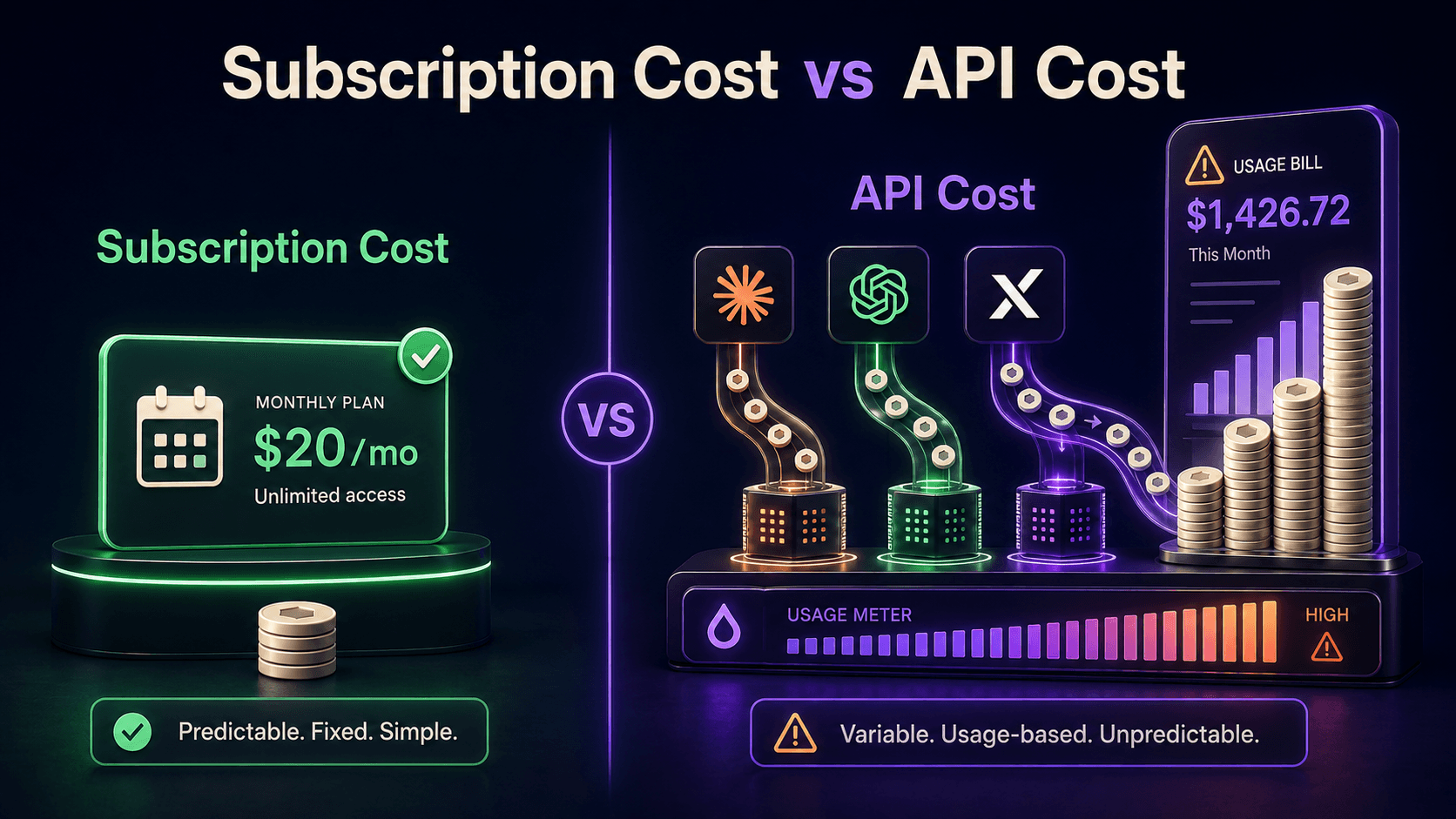
Does API Cost More Than a Subscription for Claude Opus 4.8, GPT-5.5, and Grok?
OpenAI GPT-Realtime-2 (May 2026): Pricing, Latency & 30-Min Voice Agent