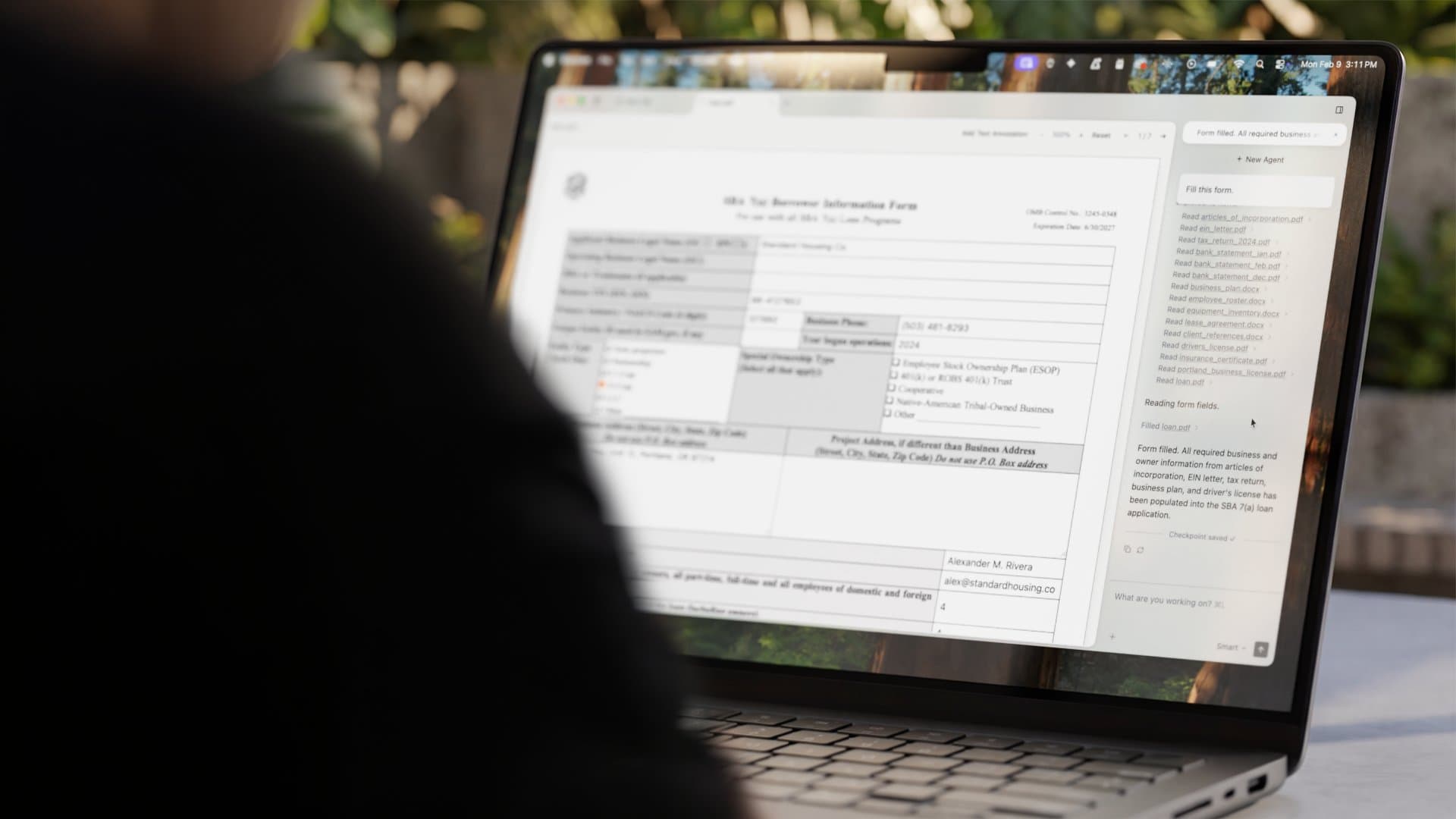

Open Interpreter is a free, open-source CLI that gives large language models direct access to your computer's code execution environment. Describe a task in plain language, review the generated code, and watch it run locally across Python, JavaScript, and shell.
Open Interpreter is a free, open-source command-line tool created by Killian Lucas that gives large language models a natural language interface to your local computer. Released in August 2023 under the AGPL-3.0 license, it works by equipping whatever LLM you connect to it with an exec() function: the model writes code, presents it to you for approval, runs it on your machine, receives the output, and iterates until the task is complete. No cloud intermediary, no upload limits, no runtime caps.
The core workflow covers Python, JavaScript, and shell commands. You connect your preferred LLM backend: OpenAI's GPT-4o (the default), Anthropic Claude, or a locally running model via Ollama or LiteLLM. The interpreter --os mode introduced in v0.4.0 adds screen-reading and mouse/keyboard control powered by Anthropic's computer-use API, extending the agent from scripting tasks into full graphical desktop automation. Install is a single pip command; conversation starts with typing interpreter in your terminal.
What Open Interpreter actually does in April 2026
The current stable version is 0.4.3, released October 2024. The project is installed via pip install open-interpreter or uv tool install open-interpreter and accumulates over 63,000 GitHub stars, making it one of the most-starred open-source AI agent projects.
The execution model is straightforward. You type a natural language request at the terminal prompt. The LLM generates code to accomplish it. Before anything runs, Open Interpreter prints the code block and waits for your confirmation (a "y" keypress). You can also pass -y to auto-approve, though the documentation is explicit about the risks of doing so. After execution, standard output and errors stream back to the LLM, which then decides whether to iterate, debug, or declare success.
Supported code environments out of the box: Python, JavaScript, Shell (bash/PowerShell depending on OS), and HTML. The LLM is informed of the host operating system, so it writes AppleScript on macOS, PowerShell on Windows, and bash on Linux without user configuration. File access is unrestricted: the agent can read, write, move, and delete files anywhere on your system that your user account can reach.
The --os computer control mode marks the most significant capability expansion since launch. In this mode, Open Interpreter can capture screenshots, move the mouse, type keystrokes, and interact with any application visible on screen. This enables voice-like automation of desktop software with no scripting API required.
Backend flexibility is a genuine strength. Users on privacy-sensitive workloads route everything through Ollama, keeping every token on their own hardware. Others use LiteLLM to connect to any OpenAI-compatible endpoint. The quality of the output depends heavily on the model choice: GPT-4o and Claude produce reliable code with few debug cycles; smaller local models often require more iterations and manual intervention.
"It's essentially an open-source, local implementation of OpenAI's Code Interpreter, but without limits on file-size, runtime timeouts, or web access." - killianlucas (Killian Lucas), Hacker News Show HN, Aug 30, 2023
Where Open Interpreter sits versus Cline and Aider
Open Interpreter, Cline, and Aider address adjacent problems using fundamentally different execution models. Understanding where each sits mechanically determines which tool fits which workflow.
Open Interpreter vs. Cline: Cline lives inside VS Code as an extension. Its primary loop is read-diff-edit-commit: it understands the file structure of your project, proposes changes as diffs, and writes directly to existing source files. Open Interpreter has no IDE dependency and no project-level codebase awareness. It runs from any terminal against any directory and its primary loop is write-code-execute-observe. Cline is a code editing agent. Open Interpreter is a code execution agent. Cline shipped native subagents in February 2026 with parallel context windows for multi-threaded workflows; Open Interpreter runs single-threaded. If your task is modifying an existing codebase, Cline wins on context. If your task is running a data pipeline or automating a system operation, Open Interpreter is the direct tool.
Open Interpreter vs. Aider: Aider is also a terminal CLI, which makes the comparison closer on surface. The difference is architectural focus. Aider was built around git: it treats every AI edit as a commit, generates structured diffs against existing files, and builds a repo-map of the entire codebase to give the LLM deep context. Open Interpreter does none of this. It does not map repositories, does not generate diffs, and does not commit. Aider is purpose-built for refactoring, implementing features in existing projects, and PR-level code work. Open Interpreter is purpose-built for one-off scripts, data analysis, file automation, and system scripting where no existing codebase needs to be understood.
Open Interpreter vs. Devin: Devin by Cognition operates in a fully sandboxed cloud environment with its own browser, IDE, and terminal. It works autonomously at the task level: decompose, execute, validate, without requiring per-step approval. Open Interpreter runs on your machine, requires your approval before each code block, and has no sandbox. Devin dropped from $500/month to approximately $20/month Core plus compute units, making it accessible but still proprietary SaaS. Open Interpreter is AGPL-licensed and free. The right choice depends on isolation needs: Devin is safer by design; Open Interpreter is cheaper and more transparent.
What the agent loop reality looks like
Day-to-day use of Open Interpreter is iterative in a way that benefits from understanding its rhythm. A well-specified request ("load sales.csv, group by month, compute average order value, save a bar chart as chart.png") typically completes in two to four code blocks. The first block imports libraries and loads data. If there is an import error, the LLM sees it and writes a corrective block. The loop continues until output is confirmed. For most data analysis tasks, this feels impressively direct.
The friction appears on longer tasks. Because there is no codebase map and no memory across sessions by default, each new conversation starts from scratch. Tasks that require understanding an existing project structure require pasting in file contents or directory listings manually. The LLM cannot browse your filesystem autonomously without explicit instructions.
Token costs are real and variable. A simple file operation might consume a few hundred tokens. An iterative debugging loop on a failing script can balloon to tens of thousands, especially with a verbose model. Users running GPT-4o on complex tasks have reported unexpected API bills from iterative debugging. The project includes an experimental %tokens command to estimate cost before running.
Local model routing changes the economics but not for free. Routing through Ollama on a consumer GPU eliminates API costs but introduces quality variance. Smaller models (7B-13B parameters) often produce syntactically correct but logically flawed code, leading to longer debug cycles that consume more of the user's attention.
"Since code is run directly on your machine there are all sorts of ways things could go wrong if you don't carefully review the generated code." - Simon Willison, simonwillison.net, November 24, 2024
The safety model is a genuine discussion point. The default confirmation prompt protects most users most of the time. The experimental "safe mode" uses semgrep static analysis to flag potentially dangerous patterns before execution. Simon Willison, reviewing the tool in November 2024, assessed that approach skeptically, arguing that true Docker-based sandboxing would be more robust. For users willing to trust an LLM with full local access, the tool works smoothly. For users who want verified isolation, the Docker mode exists as an experimental option but is not the default.
The 01 Light hardware product, a Kickstarter-backed ESP32 voice device designed to serve as a physical AI controller, was announced in early 2024 and represented Open Interpreter's bid to become a hardware platform. On September 9, 2024, Killian Lucas published "It should have been an app," announcing that all 01 Light orders were refunded and manufacturing was cancelled. The team concluded that a smartphone app delivered better performance on hardware users already own. The free 01 App launched simultaneously for iOS and Android, providing the same push-to-talk voice interface for desktop machine control. The pivot illustrated both the project's adaptability and the core challenge of a small team (five people at the time) stretching across software and hardware domains.
Who Open Interpreter is built for
Open Interpreter performs best for a specific kind of user. Developers and power users who are comfortable reading code quickly, who want to describe tasks in plain language rather than writing scripts from scratch, and who value working entirely on their own hardware will find it genuinely useful. Data analysts who want to explore datasets conversationally without spinning up a Jupyter notebook for every question get real productivity gains. Researchers doing exploratory scripting, file processing, and format conversion work across many small one-off tasks benefit from the natural language shortcut.
Privacy-first users have a meaningful reason to choose Open Interpreter over hosted alternatives. With local model routing, the task description, code generated, and data processed never leave the user's machine. This matters for anyone working with sensitive files, proprietary data, or in regulated industries where cloud transmission is restricted.
Security and systems enthusiasts who want to automate desktop workflows without writing AppleScript or PowerShell by hand find the OS control mode particularly useful. Describing an automation in natural language and reviewing the generated script before it runs covers a workflow that previously required dedicated automation tooling.
What Open Interpreter is not
Open Interpreter is not a codebase-aware editing agent. If you need to refactor an existing project, implement a feature across multiple files, or work within a defined software architecture, Aider or Cline serve those needs with better context mechanisms. Open Interpreter has no repo-map, no diff generation, and no automatic git integration. Using it on an existing codebase requires manually feeding relevant file contents into the conversation.
It is not a safe or auditable enterprise tool. There is no role-based access control, no audit log, no sandboxed execution environment by default. Teams requiring documented, reviewed, and isolated code execution pipelines need a different solution.
It is not well-suited for non-technical users. The approval loop requires reading and understanding the proposed code. Approving commands without understanding them is possible but introduces real risk of data loss or unintended system changes. The tool is designed for users who can evaluate what it proposes.
And as of April 2026, the maintenance trajectory is a practical concern. The last stable PyPI release was October 2024. GitHub Issue #1627, opened May 2025 and titled "IS THIS PROJECT DEAD?", was closed as "not planned" without a public response. Commit activity continues but release cadence has slowed significantly from the rapid 2023-2024 period. Users building workflows that depend on Open Interpreter should factor in that dependency maintenance may require self-patching.
User Reviews
No reviews yet. Be the first to share your experience!
Sign in to write a review.
Featured in collections
Curated lists that include Open Interpreter.
Related articles
Guides and articles related to Open Interpreter.
Run a Company With AI Agents: The Open-Source Orchestration Setup (2026)
Turn Any AI Agent Into a Superagent: The 12-Integration Stack (2026)

Replit Pricing Explained (2026): Core vs Pro and Effort-Based Agent Billing
OpenClaw Setup Guide: Secure Config & Automation Hacks
Claude Code vs Cursor vs Codex vs Devin vs Replit Agent 3: 2026 Scorecard