Claude Code vs Cursor vs Codex vs Devin vs Replit Agent 3: 2026 Scorecard

Claude Code vs Cursor vs Codex vs Devin vs Replit Agent 3: The 2026 SWE-bench-Pro Scorecard
By May 2026 the production AI coding agent field consolidated to five names: Claude Code, Cursor, Codex, Devin, and Replit Agent 3. Most "best agent" posts still rank them on SWE-bench Verified, a benchmark whose problems are now in nearly every model's training data. This article ranks all five on the metric that resists contamination, SWE-bench Pro, plus token cost, workflow fit, and price. The answer-first verdict is in the TL;DR below.
TL;DR
Opus 4.7 leads SWE-bench Pro at 64.3%, the only uncontaminated metric
Claude Code uses about 5.5x fewer tokens than Cursor per task
Claude Code wins multi-file long-context terminal work with supervised review
Cursor wins inline IDE pair-programming and multi-provider routing
Pick by workflow, not by leaderboard rank alone
<your real name>, Founder of Vantaige. Published 2026-05-19. 15 min read. Last reviewed 2026-05-19.
Which AI coding agent is best in 2026?
On the only contamination-resistant public metric, SWE-bench Pro, Anthropic's Opus 4.7 model leads at 64.3%, and Claude Code is the agent built directly on it. But "best" depends on the job. Claude Code wins long-context terminal refactors, Cursor wins inline IDE pairing, Devin wins fully delegated tickets, and Replit Agent 3 wins zero-setup app builds.
The field genuinely narrowed. Through 2025 the conversation included a dozen agents. By May 2026 most teams run one of five: Claude Code (Anthropic's terminal agent), Cursor (the agent-first IDE), Codex (OpenAI's CLI plus cloud agent), Devin (Cognition's fully autonomous engineer), and Replit Agent 3 (the browser-native build agent). Everything else either folded into these or became a thin wrapper around the same underlying models.
Why these five and not others: each owns a distinct delivery surface. Claude Code lives in your terminal and your CI. Cursor lives in your editor. Codex spans CLI and a cloud sandbox. Devin runs as a remote employee you assign tickets to. Replit Agent 3 runs in a browser with hosting attached. Same models underneath in several cases, very different operating models on top.
Why does SWE-bench Pro matter more than SWE-bench Verified in 2026?
SWE-bench Pro matters more because its problems resist training-data contamination, while SWE-bench Verified problems are now widely memorized. Verified is a 500-task subset of public GitHub issues. SWE-bench Pro, from Scale AI, draws on copyleft-licensed and private commercial repositories specifically chosen so models cannot have trained on the solutions.
The gap is large and deliberate. On SWE-bench Verified, frontier scaffolds report numbers in the 70s and 80s. On SWE-bench Pro the same systems drop sharply, because they can no longer pattern-match a solution they have seen. Scale AI's own paper documents top models falling from 70%-plus on Verified to roughly the low 20s on the original Pro public set, with a further drop on the proprietary commercial subset (arXiv 2509.16941). The 2026 leaderboard numbers have since climbed as models improved, but the relative ordering and the contamination logic hold.
For a deeper walkthrough of how SWE-bench Pro is constructed and what its subsets mean, see our companion piece linked in the Related section. The short version: if a vendor only quotes SWE-bench Verified in May 2026, treat it as a marketing number, not a capability number. Verified tells you how well an agent memorized the open-source past. Pro tells you how it handles code it has never seen, which is what you actually pay it for.
What is the 2026 SWE-bench Pro scorecard for these five agents?

Claude Code, built on Opus 4.7, posts the leading public SWE-bench Pro result at 64.3% (reported, May 2026). Codex and Cursor's agent trail it. Devin and Replit Agent 3 do not publish directly comparable Pro figures, so their rows below carry a verify note rather than a fabricated number. SWE-bench Verified is included only to show the contamination gap.
Read this table top to bottom. The SWE-bench Pro column is the one that predicts behavior on your private repo. SWE-bench Verified is shown for contrast, not endorsement. Token efficiency is relative cost to complete the same high-complexity task. "Best for" is the workflow each agent wins. Price tier is the entry individual plan, not enterprise.
Agent | SWE-bench Verified (reported) | SWE-bench Pro (reported, the metric that matters) | Token efficiency vs Cursor (identical hard task) | Best for | Entry price tier |
|---|---|---|---|---|---|
Claude Code (Opus 4.7) | 78.4% | 64.3% (field-leading) | Baseline: ~5.5x fewer tokens than Cursor | Multi-file long-context terminal work + supervised review | $20/mo (Claude Pro) |
Codex (GPT-5.x Codex) | 71.0% | Trails Claude Code (verify on Scale leaderboard) | Mid-pack; higher than Cursor, below Claude Code | CLI plus cloud sandbox delegation in the OpenAI stack | $20/mo (ChatGPT Plus) |
Cursor (agent mode) | 67.2% | Trails Claude Code and Codex (verify on Scale leaderboard) | Reference point (highest token use of the five on hard tasks) | Inline IDE pair-programming + multi-provider routing | $20/mo (Cursor Pro) |
Devin (Cognition) | Reported lower than Claude Code; verify | No directly comparable public Pro figure; verify | Billed in ACUs, not tokens; not directly comparable | Fully delegated, async, ticket-to-PR work | $20/mo Core + $2.25 per ACU |
Replit Agent 3 | Not published on the standard board; verify | No directly comparable public Pro figure; verify | Billed by effort credits, not tokens; not directly comparable | Zero-setup full-app builds with hosting attached | $25/mo (Replit Core) |
Three honest caveats. First, every benchmark number is "model plus scaffold," not the model alone, so a Claude Code number and a raw Opus 4.7 number can differ. Second, Devin and Replit Agent 3 are agentic products that do not post head-to-head SWE-bench Pro rows the way Claude Code, Codex, and Cursor do, which is why those cells say verify rather than inventing a figure. Third, the SWE-bench Pro field-leading claim for Opus 4.7 is reported as of May 2026 and should be re-checked against the Scale AI SWE-bench Pro leaderboard before you cite it anywhere binding.
How much do these AI coding agents differ on token cost?
The largest measured spread is between Claude Code and Cursor. On identical high-complexity tasks, Claude Code completes them using roughly 5.5x fewer tokens than Cursor (reported). That is a workflow difference, not just a model difference: Claude Code keeps a tighter working context and re-reads less, while IDE agents tend to resend more file state per turn.
Cost is not one number because the five agents bill on three different meters. Claude Code and Codex meter tokens (or bundle them inside a flat subscription). Devin meters Agent Compute Units, where one ACU is roughly fifteen minutes of active autonomous work. Replit Agent 3 meters effort credits, where a trivial edit can cost cents and a full feature can cost several dollars. Comparing them requires fixing the task, not the meter.
Agent | Billing meter | What drives cost up | Relevant detail | Source |
|---|---|---|---|---|
Claude Code | Tokens (or flat Pro/Max) | Long context resent every turn | Opus 4.7 API is $5 in / $25 out per 1M tokens; prompt caching reads at 10% | |
Cursor | Dollar credit pool | Multi-file edits, repeated context sends | ~5.5x Claude Code's tokens on the same hard task (reported) | |
Codex | Tokens (or ChatGPT plan caps) | Large cloud-sandbox runs | GPT-5.3 Codex API reported around $1.75 in / $14 out per 1M tokens | |
Devin | Agent Compute Units | Open-ended tasks on large monorepos | Core is $20/mo then $2.25 per ACU; ~1 ACU = ~15 min active work | |
Replit Agent 3 | Effort credits | Long autonomous build/debug loops | Simple edit can be under $0.25; a complex feature can exceed $5 |
The practical takeaway: token efficiency compounds. If Claude Code is ~5.5x leaner per hard task and your team runs hundreds of hard tasks a month, that ratio is the line item that matters more than the headline subscription price. If you want to see exactly where Cursor's context budget goes and what to trim first, our Cursor 3.3 context breakdown walks through it line by line.
How do these five agents differ on workflow fit?
Workflow fit is the real decision axis once benchmarks are accounted for. Claude Code is built for engineers who live in a terminal, want MCP as the central tool layer, and review every diff before it lands. Cursor is built for developers who want inline completion and an agent in the same editor, with the freedom to route across Anthropic, OpenAI, and Google models.
Devin and Replit Agent 3 sit at the autonomous end. Devin behaves like a remote junior engineer: you file a ticket, it works async in its own sandbox, it opens a PR. Replit Agent 3 behaves like a build partner that owns the whole loop, from scaffold to deploy, inside a browser, useful when you have no local environment at all. Codex straddles the middle: a CLI for local supervised work plus a cloud sandbox for delegated runs.
Dimension | Claude Code | Cursor | Codex | Devin | Replit Agent 3 |
|---|---|---|---|---|---|
Primary surface | Terminal + CI | IDE (agent-first) | CLI + cloud sandbox | Remote async worker | Browser + hosting |
Supervision model | Supervised, diff-by-diff | Inline, you stay in the loop | Supervised CLI or delegated cloud | Fully delegated, async | Mostly autonomous loop |
Tool layer | MCP as central hub | Built-in + MCP | Built-in + MCP | Internal toolchain | Internal toolchain |
Model routing | Anthropic models | Multi-provider (Anthropic / OpenAI / Google) | OpenAI models | Cognition-managed | Replit-managed |
Best task shape | Multi-file refactor, long context | Feature work while editing | Mixed local + delegated | Bounded, well-scoped tickets | Greenfield app, no local setup |
Weakest at | No native GUI editor | Higher token spend on hard tasks | Cloud runs can balloon cost | Open-ended tasks burn ACUs | Long loops burn effort credits |
Notice the tool-layer row. Claude Code's bet is that MCP is the single integration surface, so your database, your browser automation, and your internal APIs all plug into one place the agent already knows. If you run multiple Claude Code agents, the context-saving patterns in our Claude Code subagents guide stack on top of this and keep long sessions from rotting.
What is the price comparison for Claude Code vs Cursor vs Codex vs Devin vs Replit Agent 3?
Four of the five start at roughly $20 per month for an individual: Claude Code (via Claude Pro), Cursor (Cursor Pro), Codex (ChatGPT Plus), and Devin (Core). Replit Agent 3 starts at $25 per month (Replit Core). Above entry, the meters diverge sharply, which is why two agents at the same headline price can produce very different monthly bills.
Entry price is the least useful number for heavy users. What actually moves the bill is how each agent meters work past the included allowance, and how token-efficient it is per task. The table below is entry plus the next tier up, with the official source on each row. Re-verify before quoting; pricing on this set changed several times across 2025 and 2026.
Agent | Free / entry | Individual paid | Power tier | Meter past allowance | Source |
|---|---|---|---|---|---|
Claude Code | Claude Pro $20/mo (includes Claude Code) | Max 5x $100/mo | Max 20x $200/mo | API tokens (Opus 4.7 $5/$25 per 1M) | |
Cursor | Hobby $0 (limited) | Pro $20/mo ($20 credit pool) | Pro+ $60/mo; Ultra $200/mo | Dollar credit pool, then on-demand in arrears | |
Codex | Included in ChatGPT Free (capped) | ChatGPT Plus $20/mo | ChatGPT Pro $200/mo (20x) | 5-hour rolling caps, then add credits | |
Devin | Core $20/mo base | $2.25 per ACU pay-as-you-go | Team $500/mo (250 ACUs at $2.00) | ACUs (~15 min active work each) | |
Replit Agent 3 | Free $0 (limited) | Core $25/mo ($25 monthly credits) | Pro $100/mo ($100 credits, Turbo) | Effort credits per task |
The pricing story for May 2026 in one line: subscription prices clustered, but the meters did not. Claude Code's roughly 5.5x token lead over Cursor on hard tasks (reported) does more for a heavy team's monthly cost than any $20-vs-$25 entry difference. Devin's ACU model rewards tightly scoped tickets and punishes open-ended ones. Replit Agent 3's effort credits reward short loops and punish long autonomous grinds.
Which AI coding agent should you actually pick?
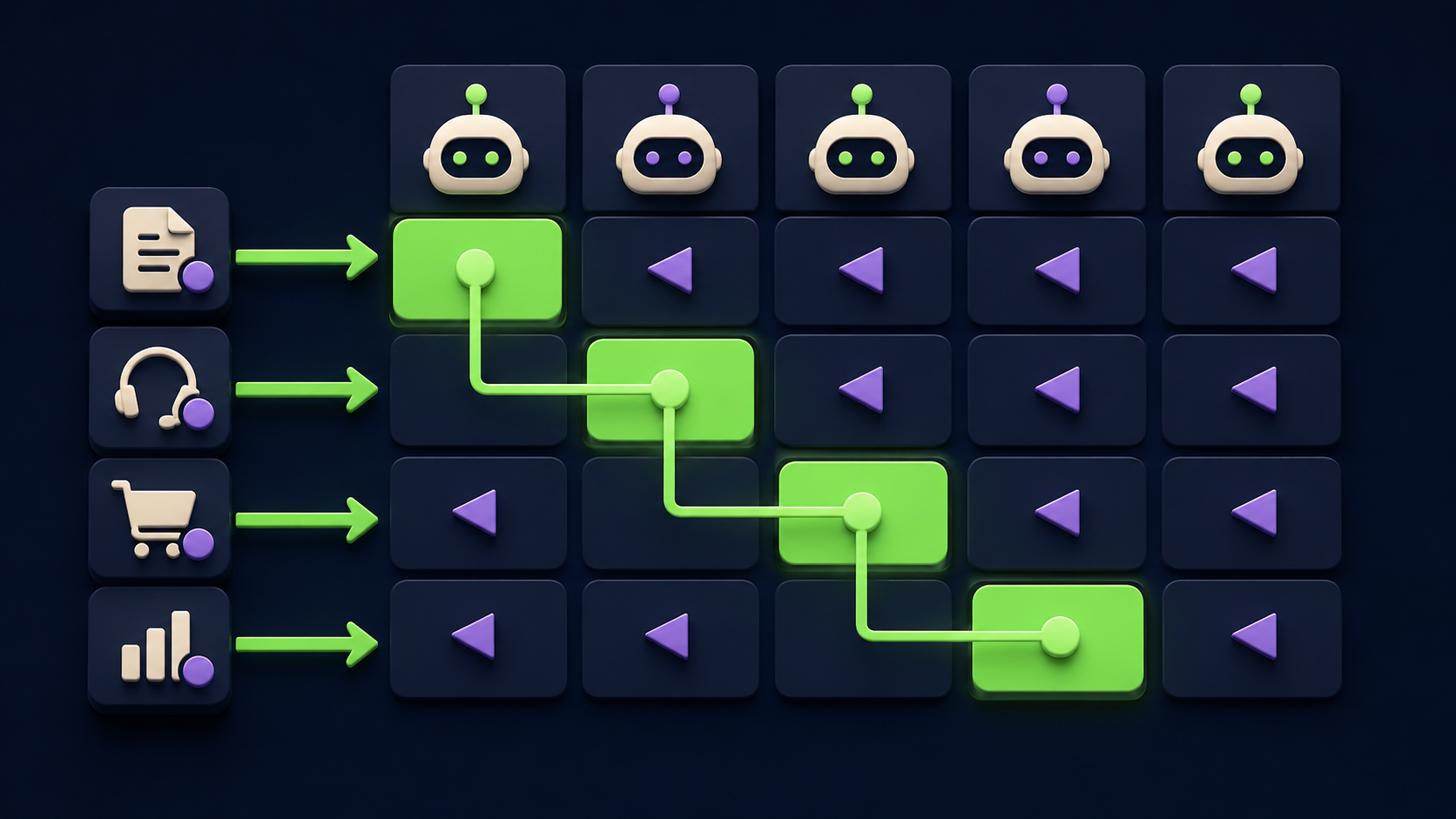
Pick Claude Code if your work is multi-file, long-context, terminal-centric, and you want to review every diff. Pick Cursor if you want an agent inside the editor while you still type. Pick Codex if you are in the OpenAI stack and want CLI plus cloud delegation. Pick Devin for fully delegated tickets. Pick Replit Agent 3 if you have no local environment and want to ship a full app fast.
Use the decision matrix below as the actual selector. Find the row that matches your dominant working style, not the agent with the highest single benchmark. The "why" column is the deciding mechanism, not a slogan.
Your situation / role | Pick | Why this one |
|---|---|---|
Senior engineer doing large multi-file refactors | Claude Code | Leads SWE-bench Pro (64.3% reported) and uses ~5.5x fewer tokens than Cursor on hard tasks |
You want AI help while still typing in an IDE | Cursor | Inline completion plus agent in one editor; routes across Anthropic, OpenAI, Google |
Already deep in the OpenAI / ChatGPT ecosystem | Codex | CLI for supervised work plus a cloud sandbox for delegation, billed inside ChatGPT plans |
You want to hand off whole tickets and get a PR back | Devin | Async remote worker; ACU billing rewards well-scoped, bounded tasks |
No local dev environment, need a deployed app fast | Replit Agent 3 | Browser-native build loop with hosting attached; up to 200 min autonomous |
Cost-sensitive team running many hard tasks monthly | Claude Code | Token efficiency compounds; the ~5.5x ratio dominates the monthly bill |
You want MCP as one central tool layer for everything | Claude Code | MCP-first design; one integration surface for DB, browser, internal APIs |
Mixed team: some pair-program, some delegate | Cursor + Devin | Cursor for in-editor work, Devin for the async backlog; they coexist fine |
Avoid the "one agent to rule them all" framing. Most teams we talked to in May 2026 run two: a supervised primary (Claude Code or Cursor) for daily work, and an autonomous secondary (Devin or Replit Agent 3) for the delegated backlog. They are not mutually exclusive, and the benchmarks only decide the supervised primary.
What are the most common mistakes when comparing these agents?
The most common mistake is ranking them by SWE-bench Verified in 2026, a benchmark whose problems are now memorized. The second is comparing headline subscription prices instead of cost-per-completed-task. The third is treating Devin and Replit Agent 3 as drop-in replacements for a supervised IDE agent when they are async, autonomous tools with different failure modes.
Quoting SWE-bench Verified as a 2026 capability number. The fix: use SWE-bench Pro for capability, keep Verified only as a contamination contrast.
Comparing $20 vs $25 entry prices. The fix: fix one hard task and compare cost-to-completion, where Claude Code's ~5.5x token lead over Cursor shows up.
Reading a benchmark number as model-only. The fix: remember every score is model plus scaffold; a Claude Code row and a raw Opus 4.7 row differ.
Assuming Devin's ACU price is fixed per task. The fix: scope tickets tightly; open-ended tasks on large monorepos burn far more ACUs.
Letting Replit Agent 3 run unbounded. The fix: cap the loop; long autonomous grinds consume effort credits fast.
Picking by leaderboard, not workflow. The fix: use the decision matrix above; the highest single score rarely matches your dominant task shape.
For two adjacent benchmark reads that use this same contamination-aware methodology, see our Zed 1.0 vs Cursor vs VS Code benchmark for editor-level speed, and our DeepSeek V4 Pro vs Claude Opus 4.7 refactor benchmark for model-level refactor quality. Together they triangulate the same question from three angles: editor, model, and agent.
FAQ
Is Claude Code better than Cursor in 2026?
On the contamination-resistant metric, yes. Claude Code is built on Opus 4.7, which leads SWE-bench Pro at 64.3% (reported, May 2026), and it completes identical high-complexity tasks using roughly 5.5x fewer tokens than Cursor. Cursor still wins a different axis: inline IDE pair-programming with multi-provider routing across Anthropic, OpenAI, and Google models. If you live in a terminal and review every diff, Claude Code. If you want an agent inside the editor while you type, Cursor. They are optimized for different workflows, so the honest answer depends on yours.
What is SWE-bench Pro and why is it harder than SWE-bench Verified?
SWE-bench Pro is a Scale AI benchmark that draws problems from copyleft-licensed and private commercial repositories chosen so models cannot have trained on the solutions. SWE-bench Verified uses public GitHub issues that are now widely memorized. The gap is intentional: the same scaffolds that score in the 70s and 80s on Verified drop sharply on Pro, because they can no longer pattern-match a solution they have seen. Pro predicts behavior on private code you actually pay an agent to handle. Verified mostly measures recall of the open-source past.
Is Devin worth it compared to Claude Code?
Devin is worth it for a different job. It is a fully autonomous async worker: you file a bounded ticket, it works in its own sandbox, it opens a PR. Claude Code is supervised, terminal-based, and reviews diffs with you in the loop. Devin bills in Agent Compute Units, roughly fifteen minutes of active work each, starting at $20 per month plus $2.25 per ACU. It rewards tightly scoped tickets and gets expensive on open-ended monorepo tasks. Many teams run Claude Code as the supervised primary and Devin for the delegated backlog.
How much cheaper is Claude Code than Cursor?
On identical high-complexity tasks, Claude Code completes them using approximately 5.5x fewer tokens than Cursor (reported, May 2026). Entry subscriptions are similar, both around $20 per month, so the difference shows up in usage past the included allowance, not in the sticker price. For a team running hundreds of hard tasks monthly, that token ratio is the dominant cost line. The mechanism is workflow, not just model: Claude Code keeps a tighter working context and re-reads less, while IDE agents tend to resend more file state per turn.
Which AI coding agent has the best benchmark score in 2026?
On SWE-bench Pro, the only contamination-resistant public metric, Opus 4.7 leads at 64.3% (reported, May 2026), and Claude Code is the agent built on it. On SWE-bench Verified, reported figures are higher across the board (Claude Code around 78.4%, Codex around 71.0%, Cursor's agent around 67.2%), but Verified is now widely memorized and should not be read as a 2026 capability number. Always re-check the live Scale AI SWE-bench Pro leaderboard before citing a figure, since scaffolds and rankings change.
Can you use more than one of these agents at the same time?
Yes, and most serious teams do. The common May 2026 pattern is a supervised primary plus an autonomous secondary. Claude Code or Cursor handles daily in-the-loop work; Devin or Replit Agent 3 handles the async, delegated backlog. They do not conflict on disk or in workflow because they occupy different surfaces: terminal and IDE for the primary, remote sandbox or browser for the secondary. Benchmarks only decide the supervised primary; the autonomous secondary is chosen by delegation style and billing meter.
Does Replit Agent 3 compete with Claude Code directly?
Not directly. Replit Agent 3 targets zero-setup, full-app builds inside a browser with hosting attached, and can run autonomously for extended sessions. Claude Code targets supervised, multi-file engineering in an existing codebase from the terminal. They overlap only at the edges. Replit Agent 3 does not publish a directly comparable SWE-bench Pro figure, so its capability cannot be ranked on the same axis as Claude Code. Pick Replit Agent 3 when you have no local environment and want a deployed app fast; pick Claude Code for engineering inside an existing repo.
Why did the AI coding agent field consolidate to five?
It consolidated because each survivor owns a distinct delivery surface that the others do not serve well. Claude Code owns the terminal and CI. Cursor owns the agent-first IDE. Codex owns CLI-plus-cloud inside the OpenAI stack. Devin owns fully delegated async work. Replit Agent 3 owns browser-native builds with hosting. Tools without a defended surface either folded into one of these or became thin wrappers over the same underlying models, which removed their reason to exist as separate products by May 2026.
Related from Vantaige
Zed 1.0 vs Cursor vs VS Code: Real Benchmark on a 50k-LOC Repo (2026), editor-level speed using the same methodology.
DeepSeek V4 Pro vs Claude Opus 4.7 Refactor Benchmark (2026), model-level refactor quality on a real codebase.
Cursor 3.3 Context Breakdown: What to Cut First, where Cursor's token budget goes and how to trim it.
Claude Code Subagents That Save Context: 3 Patterns, keep long multi-agent sessions from rotting.
References
Scale AI, "SWE-Bench Pro: Raising the Bar for Agentic Coding", scale.com/blog/swe-bench-pro
Scale AI, "SWE-Bench Pro Leaderboard (Public Dataset)", scale.com/leaderboard/swe_bench_pro_public
Wang et al., "SWE-Bench Pro: Can AI Agents Solve Long-Horizon Software Engineering Tasks?", arXiv 2509.16941
SWE-bench project, official site, swebench.com
Anthropic, "Plans & Pricing", claude.com/pricing
Anthropic, "API Pricing", platform.claude.com/docs/en/about-claude/pricing
Cursor, "Pricing", cursor.com/pricing
OpenAI, "Codex Pricing", developers.openai.com/codex/pricing
OpenAI, "Codex Pricing (ChatGPT)", chatgpt.com/codex/pricing
Cognition, "Devin Pricing", devin.ai/pricing
Replit, "Pricing", replit.com/pricing
Get the best new AI tools and guides, weekly
One short email a week. The tools worth trying, the guides worth reading, nothing else.
No spam. Unsubscribe anytime.
Aymen B
Contributing writer at Vantaige, covering the AI tools ecosystem.