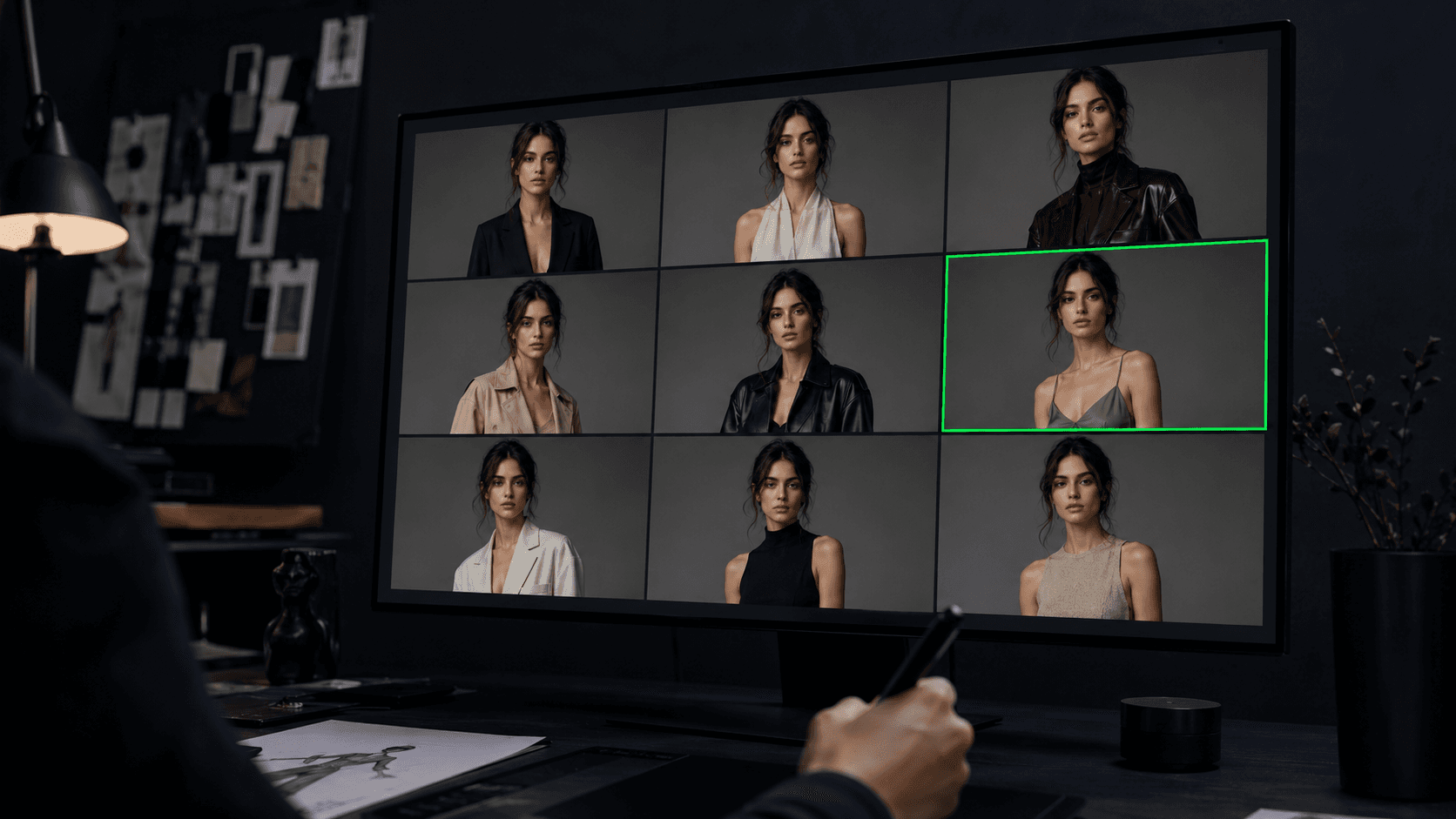

Pollo AI is a Singapore-based platform that routes your prompts to 10+ top video generation models, including Kling, Runway, Veo 3, Hailuo, and Pika, under a single subscription starting around $10/month, replacing the need for separate accounts.
Pollo AI is an AI video and image generation aggregator launched in September 2024 by Singapore-based Pollo AI Inc., founded by Zhu Chenbiao. Rather than developing a single proprietary video model, Pollo routes your prompts to whichever of 10+ major video generation APIs you select, including Kling AI, Runway, Hailuo AI, Pika, Luma Dream Machine, Google Veo 3, Vidu, and PixVerse, all within one interface and under one subscription. In December 2025, the company raised a $14 million seed round led by Gaorong Capital, disclosing 20 million registered users, 6 million monthly active users, and profitability since May 2025.
The platform supports text-to-video and image-to-video generation across all integrated models, plus 150+ one-click video effects (Ghibli-style conversion, AI Kissing, Muscle Generator), 12+ image models including Flux Pro Ultra and DALL-E, a credit-based pricing system with a free entry tier, and native iOS and Android apps alongside the web interface. An API tier lets developers build multi-model video pipelines without maintaining separate integrations with each upstream provider.
What Pollo AI outputs in May 2026
As of May 2026, Pollo AI gives subscribers simultaneous access to the following video generation engines: Kling AI (multiple model versions optimized for dynamic human motion), Runway Gen-3 Alpha and Gen-4 (cinematic coherence and motion consistency), Google Veo 3 and Veo 3.1 (native audio generation alongside video, first-and-last-frame control, image reference style matching), Hailuo AI, Pika 2.0, PixVerse, and Vidu. Users select the model per generation, making it possible to send the same prompt to three engines in sequence and compare outputs without logging into separate accounts.
Video output capabilities depend on the underlying model but generally span 5-10 second clips at up to 1080p on Lite plans and up to 4K on Pro. Veo 3.1 integration adds frame-to-frame control, character consistency improvements, and synchronized native audio. The 150+ effect library handles viral social formats, letting creators apply one-click transformations to photos or short clips without manual prompt engineering. The platform also hosts 12+ image generation models under the same subscription, including Flux Pro Ultra, DALL-E, and Stable Diffusion variants, making Pollo a unified output layer for both formats.
Where Pollo AI sits versus Runway and Higgsfield
The most common direct alternatives to Pollo AI are single-model platforms, and the difference is architectural, not cosmetic.
Runway is a proprietary model shop. A Runway Standard subscription gives access only to Runway's own Gen-4 model and its first-party editing tools: inpainting, Multi Motion Brush, video-to-video transformation. Gen-4 uses a Transformer-based video diffusion architecture optimized specifically for cinematic motion coherence, and Runway invests heavily in that single model's quality improvements. If you want both Runway and Kling or Hailuo, you need separate subscriptions, which quickly pushes monthly costs past $70-100. Pollo's aggregator model includes Runway's API as one of many routable backends, so Runway power is available inside Pollo without a standalone Runway account. The tradeoff: you are one layer removed from Runway's full feature surface, and some Runway-native editing tools are not exposed through Pollo's interface.
Higgsfield AI, built by ex-Snap leadership, takes the opposite approach from both: a single cinematic reasoning engine with native camera grammar logic. Higgsfield's system understands "follow-shot," "crane-up," and "dolly-in" as distinct compositional directives and applies them automatically. It offers 7,000+ trend-aware templates and click-to-video generation up to 5 seconds, optimized for enterprise advertisers who need repeatable shot consistency across many brand videos. Pollo AI has no equivalent native camera control layer. When users need sophisticated camera behavior from Pollo, they rely on whatever camera grammar the routed upstream model (such as Veo 3.1) happens to support. For a solo creator making a quick TikTok, Pollo's flexibility wins. For a brand producing 50 consistent product videos per week, Higgsfield's shot automation may outperform Pollo's model-switching approach.
"The sheer variety of models is impressive and great for broad experimentation. However, performance is inconsistent." - MimicPC staff reviewer, July 2025
The real cost of generating video with Pollo AI
Pollo AI uses a credit system where each generation consumes credits based on the model chosen, clip length, resolution, and output quantity. A standard 5-second 1080p clip runs roughly 10-15 credits. A 10-second 4K generation using a premium model like Veo 3 can consume 50-60 credits. The Free tier provides 10 one-time credits on signup, enough for two or three test generations with limited model access and watermarked exports. Watermarks appear on Free and some Lite tier outputs.
The Lite plan runs approximately $10/month on annual billing or $15/month billed monthly, delivering roughly 300 credits per month. The Pro plan is approximately $29/month ($25/month annual) with around 800 credits and 4K export rights. Add-on credit packs are available separately; unlike subscription credits, add-on credits do not expire at month's end and persist even if you cancel your subscription. Subscription credits do not roll over.
The case for Pollo is straightforward math: subscribing individually to Kling, Runway, Luma, Hailuo, and Pika would cost anywhere from $70 to $330 per month depending on the tiers selected. Pollo claims an 83% cost savings for users requiring multiple models. For creators genuinely using three or more platforms today, consolidation is real. For creators primarily using one model deeply, Pollo adds a layer of indirection without offsetting cost benefit.
The API tier (documented at docs.pollo.ai/pricing) supports programmatic access for developers building automated video workflows. Pricing at the API level is per-generation rather than subscription-based.
Where Pollo AI consistently breaks
The most documented recurring issue is error transparency. When a generation fails, Pollo returns a generic failure notice with no indication of the cause: whether it was a content policy rejection, a server timeout, an upstream model error, or a prompt parsing failure. Credits are typically consumed regardless. Users cannot determine whether to adjust the prompt, retry with the same settings, or switch models.
"When a job fails, you usually get a generic notice with no hint whether the issue was content policy, timeout, or transport. The time lost is the real tax, not the credits." - queencaffeineai.com reviewer, August 2025
Credit discrepancies appear repeatedly in Trustpilot 1-star reviews. Multiple users report that their credited balance shows zero after consuming only a fraction of their allocated monthly total. The credit accounting system has no built-in reconciliation tool visible to users. Several reviewers recommend using virtual credit cards specifically to limit unintended billing exposure.
A secondary billing complaint involves auto-enrollment into annual subscriptions. At least one Trustpilot reviewer reported being charged 96 GBP for a full year when they intended to sign up for a monthly plan. Marketing copy has also drawn criticism: promotions labeled "UNLIMITED for Paid Users" and "60 FREE uses" were found by reviewers to have undisclosed credit limits and blocks that contradicted the advertised terms.
On the output quality side, character consistency across multiple generations is weak. Pollo has no brand DNA system or product catalog, so each generation starts from scratch without persistent visual identity. Longer clips in the 5-7 second range show temporal inconsistencies and motion artifacts in some models. The built-in upscaler can reach 16x resolution scaling, but reviewers note results are often soft compared to specialist upscaling tools. Customer support is under-resourced: the Discord is described as under-moderated, and formal support tickets have gone unanswered for extended periods.
One specific limitation for Sora and Veo fans: Pollo can route prompts to these models, but it cannot expose every native control surface that each model's own interface offers. Power users of specific upstream models may find Pollo's wrapper strips options they rely on.
Pop-up fatigue is also a documented irritant. The interface generates modal prompts after routine actions, including switching menus, deleting a project, or closing a section. Several Trustpilot reviewers specifically mentioned the interruption frequency as a reason they downgraded or canceled. This is a UX issue unrelated to generation quality but affects day-to-day workflow comfort, particularly for high-volume creators running dozens of generations per session.
Best use cases versus skip-this scenarios
Pollo AI is strongest for social media creators and small agencies who regularly need to produce content across multiple visual styles and video formats. If you are currently paying for three or more separate video AI subscriptions, Pollo consolidates that spend meaningfully. The model-switching capability is genuinely useful for A/B testing: the same prompt routed to Kling for motion-forward results and to Veo 3 for audio-integrated output within one session, without juggling separate logins.
The 150+ one-click effects library reduces prompt engineering friction for viral social formats. For creators who want to apply Ghibli-style transformations or AI portrait effects quickly without understanding model parameters, Pollo's effect presets work well. The iOS and Android apps extend this workflow to mobile, covering the segment of creators who edit on-device.
Skip Pollo if you are a filmmaker or brand operator who needs strict character consistency across many generations. Pollo's current architecture provides no session memory or brand DNA persistence between generations. Skip it if your primary tool is one specific model at depth: if you are a heavy Runway user who relies on Runway-native editing tools, the Pollo wrapper reduces your feature surface without saving money on a standalone basis. Skip it if you need enterprise-grade SLAs with responsive support, given documented customer service gaps. Skip it if the credit system's lack of transparency will frustrate you: the model is genuinely opaque for new users, and the discrepancy between advertised promotions and actual behavior is a documented recurring problem.
For developers, the API tier makes Pollo a plausible single-integration point for multi-model video pipelines, replacing five separate API agreements with one. The tradeoff is vendor dependency on Pollo's continued access agreements with upstream model providers.
User Reviews
No reviews yet. Be the first to share your experience!
Sign in to write a review.
Related articles
Guides and articles related to Pollo AI.
Sell AI-Generated Short Films on TikTok Shop, Instagram & YouTube (2026)

AI Video Generator Prompting: The Filmmaker's Real Workflow

AI Instagram Reels Factory: 30 Reels/Day on Autopilot (2026)

Grok 4.3 API for Agents (May 2026): Pricing, Benchmarks, Migration
One Product Photo, Full Fashion Campaign: AI Images and Video That Sell (2026)