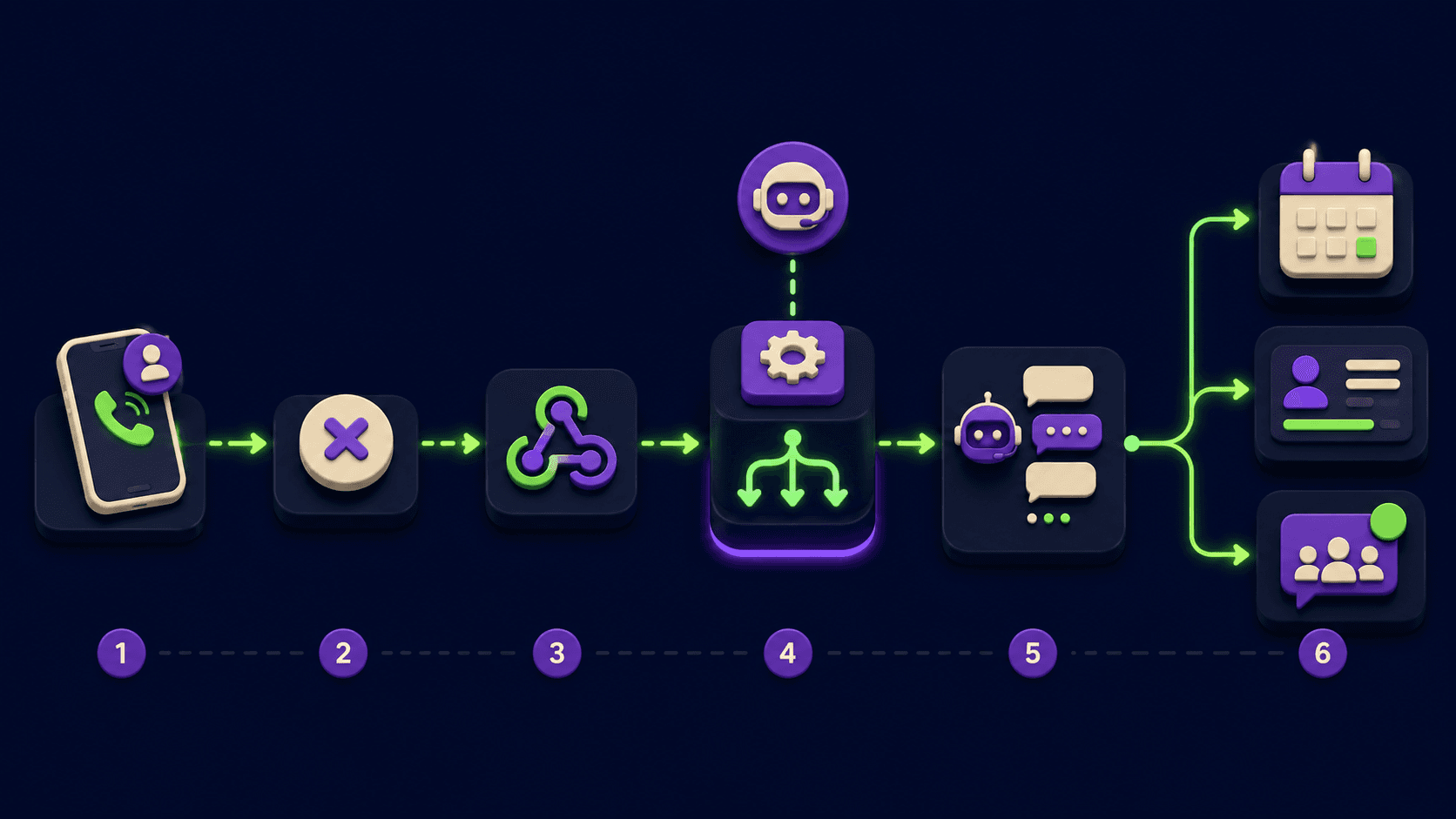

Tidio is an AI-powered customer service platform combining live chat, the Lyro AI agent, and rule-based automation flows. Used by 300,000+ businesses, it is built specifically for SMB ecommerce teams on Shopify and WooCommerce.
Tidio is a customer service platform built for small and mid-sized businesses, combining live chat, an AI agent called Lyro, and a rule-based automation builder called Flows. Founded in 2013 in Szczecin, Poland, by Titus Golas and Marcin Wiktor, the company has grown to serve over 300,000 businesses globally and raised $26.8 million in funding, including a Series B in May 2022. Its deepest integrations are with Shopify and WooCommerce, and the majority of its user base runs ecommerce stores that need 24/7 support coverage without a large support team.
The core product has three parts that work together: Lyro AI handles incoming questions automatically using a knowledge base trained on your website content; Flows trigger rule-based responses and offers based on visitor behavior (time on page, cart value, exit intent); and live chat routes unresolved conversations to human agents with full context. Lyro runs on Anthropic's Claude LLM combined with Tidio's own grounding mechanism to reduce hallucinations. It can be deployed on the website widget, email, Facebook Messenger, Instagram, and WhatsApp. The mobile apps for iOS and Android let agents respond on the go, and the API enables custom integrations for teams with developer resources.
What Tidio actually is in April 2026
Tidio started as a straightforward live chat widget in 2013, but since July 2023, when it launched Lyro, it has repositioned itself as an AI-first customer service platform. As of April 2026, the three-module architecture is the product: Lyro AI (the AI agent), Flows (the automation builder), and Help Desk (the ticketing system). These are separate products that can be bought individually or bundled, which matters because the pricing model reflects that modularity.
Lyro is trained by scanning up to 60 website pages, or by manual Q&A entry, CSV uploads, or chat history analysis. It understands natural language, maintains conversation context across a session, and can be set to hand off to a human agent when confidence is low. Lyro Actions, the more advanced capability, lets Lyro connect to external APIs to execute tasks like checking order status, initiating returns, or looking up account details. This feature requires developer setup and is not self-service for non-technical users. The Flows builder works separately, handling rule-based triggers: greet a visitor who has been on the checkout page for two minutes, offer a discount when cart abandonment signals fire, collect a lead's email before the agent connects. Together, these create a reasonably complete support stack for teams under 50 agents.
Tidio integrates natively with Shopify, WooCommerce, and BigCommerce. The Shopify integration is notably deep: agents and Lyro both see full order details, customer history, and shipping status without switching tabs. Tidio also connects to Mailchimp, Klaviyo, HubSpot, and Zapier, though the CRM integrations are read-light compared to enterprise platforms.
Where Tidio sits versus ManyChat and Drift
The chatbot and live chat category contains tools aimed at very different problems. Understanding where Tidio fits requires comparing it to two platforms it frequently gets named alongside, neither of which is truly competing for the same buyer.
Tidio vs. ManyChat: ManyChat is built for Meta's messaging ecosystem. Its core product is broadcast-style marketing automation: send sequences to Facebook Messenger subscriber lists, run Instagram DM campaigns, trigger offers based on comment keywords. It is a proactive outreach tool for marketers. Tidio is a reactive support tool for customer service teams. ManyChat has no native help desk, no ticketing system, and no AI agent capable of resolving open-ended support questions. Its G2 review count (154 as of 2025 vs. Tidio's 1,879) reflects the narrower use case. If your priority is automating Instagram DM replies to ad comments, ManyChat wins. If your priority is resolving customer support questions on your website and Shopify store, Tidio is the right choice.
Tidio vs. Drift: Drift (now part of Salesloft) targets enterprise B2B companies building sales pipelines. Its product includes account-level visitor identification by firmographics, playbook builders for enterprise buyer journeys, deep Salesforce and HubSpot bidirectional sync, and pipeline routing for inside sales teams. Drift Premium starts at roughly $2,500 per month. Tidio Starter is $29 per month. Drift has no native Shopify integration and no ecommerce-specific features. Tidio has no account-level visitor identification, no ABM playbooks, and no meaningful sales pipeline tooling. These are not substitute products. A DTC Shopify brand choosing between them should choose Tidio. A B2B SaaS company with a 10-person sales team should choose Drift or a comparable enterprise platform.
"The automation features and chatbots has saved us so much time while helping us stay connected with our customers 24/7." - CinemaDen, Shopify App Store, March 2026
How the AI actually works inside Tidio
Lyro's AI is first-party, not plugin-mediated. Anthropic's Claude powers the language understanding layer, and Tidio's proprietary grounding mechanism restricts Lyro's responses to the content in your knowledge base. This design choice deliberately limits hallucination risk: Lyro will say it doesn't know the answer rather than generate a plausible-sounding wrong one. That tradeoff works well for FAQ-style ecommerce support but creates friction when a customer asks a nuanced question that isn't in the knowledge base.
The knowledge base is the key operational variable. Lyro scans up to 60 website pages automatically. For stores with larger catalogs, detailed return policies spread across multiple documents, or product-specific technical content, 60 pages is not enough. Teams that hit the ceiling must maintain manual Q&A entries, which requires ongoing editorial effort. This is worth knowing before committing to the platform at scale.
In July 2023, when Tidio launched Lyro, the announcement claimed a resolution rate between 50 and 70 percent. In practice, users report a range. One ecommerce owner in a G2 review described Lyro handling "5 out of every 9 conversations automatically," which maps to roughly 56 percent. That is consistent with the published benchmark, but it depends heavily on the quality and coverage of the knowledge base. Sparse knowledge bases produce more handoffs, which increases the load on human agents and reduces the ROI of the AI tier.
Lyro Actions extends the AI beyond question-answering into task execution. With developer-configured API connections, Lyro can look up an order, check its shipping status, and relay that information in the conversation without human involvement. For Shopify stores, this is already partially pre-built through the native integration. For custom backends, it requires API work. This is a meaningful capability that separates Tidio from simpler FAQ-bot tools, but it is not plug-and-play for non-technical teams.
Users often pair Tidio with tools like ChatGPT for drafting knowledge base content, or with Jotform AI Agents for form-based intake workflows that feed into Tidio's ticketing system. Teams managing complex customer interactions at scale sometimes layer Echowin for voice-channel coverage alongside Tidio's chat-based stack.
The friction and pricing concerns users keep raising
The most consistent complaint across Tidio's review profile is the pay-per-conversation billing model. Every plan tier is gated by a monthly conversation count. Free gets 50. Starter gets 100. Growth starts at 250 and scales up to 2,000. When conversation volume spikes during busy periods (Black Friday, product launches, viral traffic), costs spike proportionally. Users on the eesel.ai review aggregation described planning for Black Friday and receiving much larger bills than expected because the conversation count system doesn't distinguish between a two-message exchange and a 20-message resolution thread.
Billing transparency has generated a second cluster of complaints. Multiple users across Capterra, G2, and the eesel.ai review aggregation report being moved to higher-tier plans without clear consent, followed by friction during refund requests. This is not a universal experience, but it is persistent enough across platforms to be worth flagging before signing up. Reading the plan upgrade triggers in Tidio's terms before going live is advisable.
The 60-page knowledge base ceiling is a product limitation that users accept or work around, but it creates ongoing maintenance burden. Tidio has not announced a higher limit as of April 2026. The lack of a unified dashboard across multiple Shopify stores or projects is a specific pain point for agencies and merchants running more than one brand: each project is siloed, and there is no cross-project reporting view.
"Tidio has solved our 'support fatigue' problem by allowing Lyro to act as our first line of defense for repetitive inquiries. It has effectively eliminated the need for our human agents to answer the same shipping or policy questions over and over, as the AI now handles 5 out of every 9 conversations automatically." - ecommerce store owner, G2, 2025
Lyro Actions setup is technically demanding. The API integration layer for custom backends requires developer involvement. Non-technical founders who want Lyro to do more than answer questions from the knowledge base will need engineering time or a Tidio implementation partner. This is not unusual for tools with API-level automation, but it is worth setting expectations correctly when evaluating the platform.
Who Tidio is for
Tidio's strongest fit is a Shopify or WooCommerce store with 1 to 20 support agents, a clear set of repeating customer questions (shipping, returns, size guides, order status), and a goal of reducing agent workload without hiring more staff. The onboarding is genuinely fast: multiple reviews note going from signup to a live chat widget in under one hour, with Lyro answering questions from the knowledge base the same day. For that profile, the platform delivers meaningful deflection with minimal technical overhead.
The free plan is a real evaluation tier. Fifty Lyro conversations per month is enough to validate the AI's performance on your actual customer questions before committing to a paid plan. That is more than most competitors offer at zero cost.
Skip Tidio when your support volume is high enough that conversation-based billing becomes unpredictable. If you routinely handle more than 2,000 support conversations per month, the Growth plan's caps and the Plus plan's $749 starting price may not offer better unit economics than a flat-rate helpdesk with a separate AI layer. Skip it for enterprise B2B sales workflows, for teams needing Salesforce bidirectional sync, or for businesses with knowledge bases that substantially exceed 60 pages and require AI grounded in that full context. In those cases, tools like Character AI's enterprise-grade persona tooling or purpose-built enterprise support platforms will serve better.
For the SMB ecommerce segment it targets, Tidio has been a stable, consistently improving platform for over a decade. SHOO-FOO, an eco home linens brand on Shopify, noted in January 2026 that after nearly 10 years of use, it remains one of their most dependable tools. That kind of long-term retention in a high-churn software category says something about the product's reliability even if it doesn't satisfy enterprise requirements.
User Reviews
No reviews yet. Be the first to share your experience!
Sign in to write a review.
Related articles
Guides and articles related to Tidio.

AI Customer Support Triage That Routes 70% of Tickets Without a Human (2026)

AI Customer Support Automation: Cut Ticket Volume 50% Without Hurting CX

AI Agents for Business: What They Actually Are and 12 Things You Can Automate Today

How to Sell AI Chatbots to Local Businesses ($1K-$5K Retainers, 2026)
The AI Inbox Triage That Gives Owner-Operators 5 Hours Back a Week (2026)