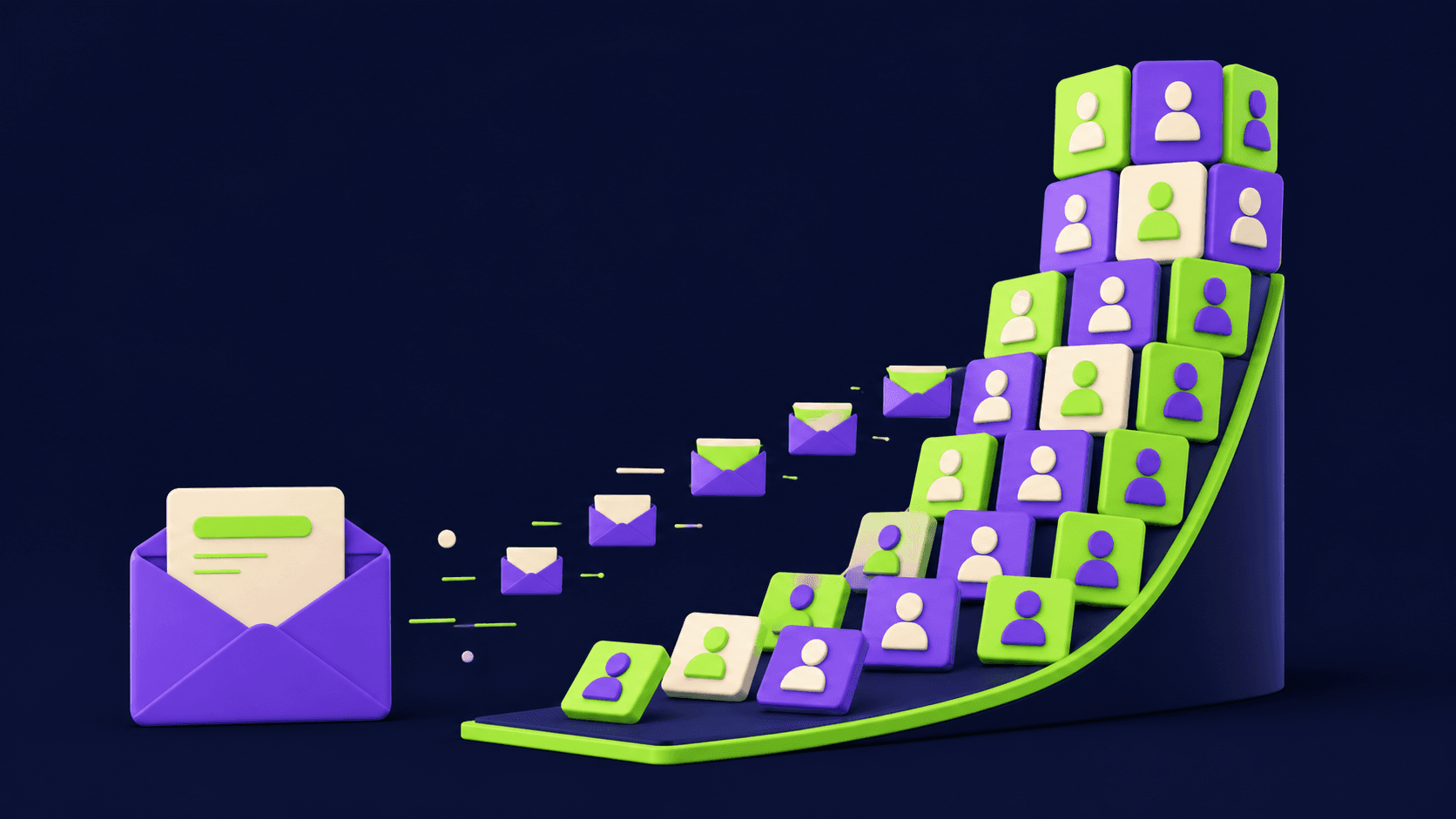
Everyone's Vibe-Coding. Nobody's Getting Customers. The AI Marketing Fix (2026)
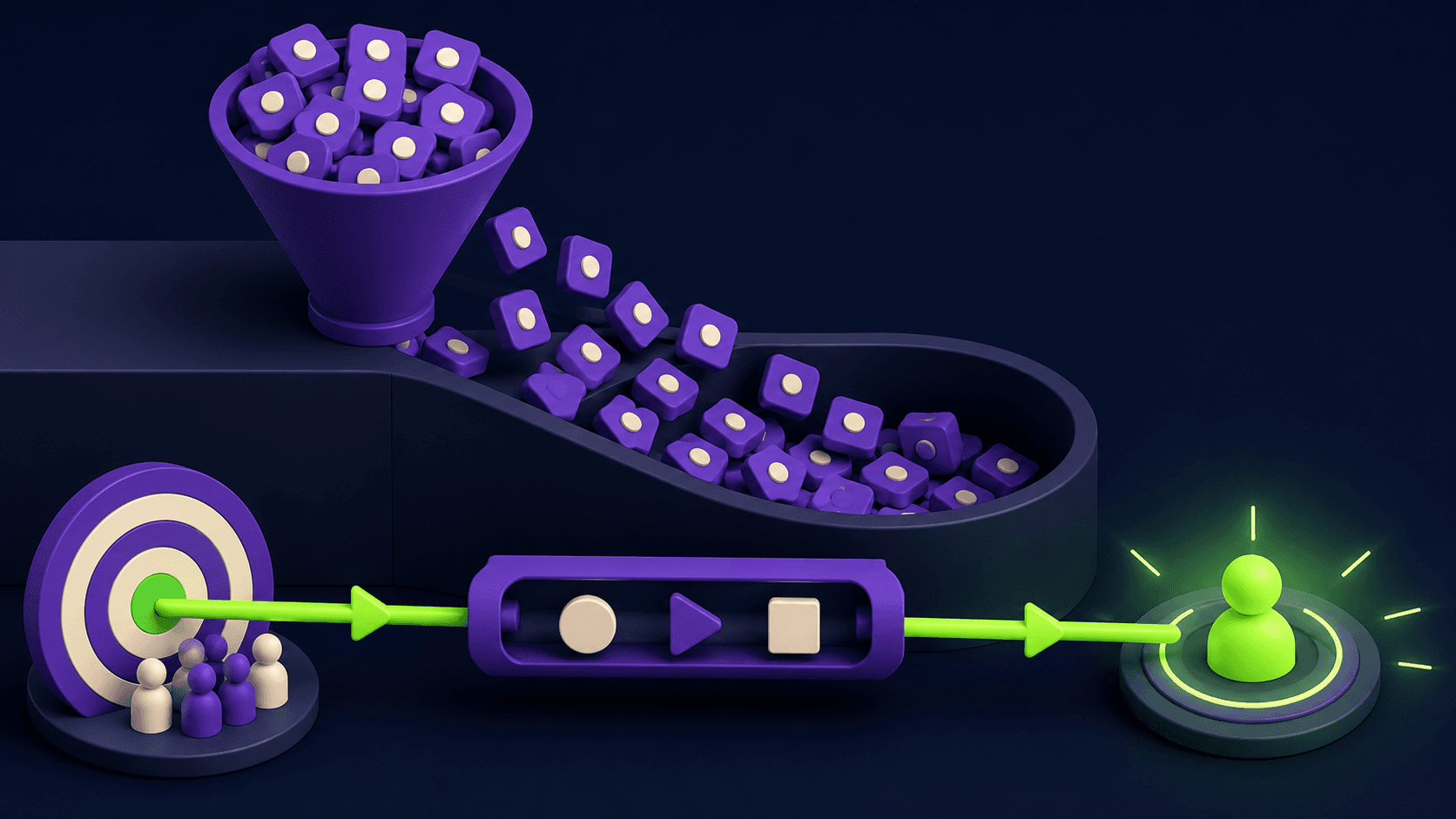
Everyone's Vibe-Coding. Nobody's Getting Customers. The AI Marketing Fix (2026)
Everyone is vibe coding. Almost nobody is getting customers. Lovable alone reports more than 100,000 new projects built every single day, and across every AI builder combined the daily count runs far higher. Shipping a working app stopped being the hard part in 2025. Getting one human to use it is now the entire game. This guide explains why most vibe-coded apps reach zero users, the one positioning sentence that fixes it, and the distribution motions a solo builder can actually run while still building.
TL;DR
Shipping is free now. Distribution is the only real bottleneck.
Most vibe-coded apps get zero users because they had zero audience first.
Positioning is one sentence: who it is for, what outcome.
Build-in-public, founder content, GEO, and community work for solo builders.
Paid ads with no funnel and Product Hunt as a strategy do not.
Why is everyone vibe coding but nobody getting customers?
Builders get customers by spending as much effort on distribution as on the build, and almost nobody does. AI made shipping nearly free, so the bottleneck moved entirely to attention. Y Combinator reported that for 25% of its Winter 2025 batch, 95% of code was AI-generated. The supply of apps exploded. The supply of buyers did not.
The mistake is treating "it works" as the finish line. It is the starting line. A product nobody can find is identical to a product that does not exist. When 100,000 apps launch on a single platform in a day, "I built something good" is not a position. It is background noise.
The builders who get traction in 2026 are not better engineers. They started telling people what they were making before the code compiled, picked a narrow group of users on purpose, and ran one repeatable way of reaching them every week. That is the whole difference.
What is vibe coding and why does it create a distribution problem?
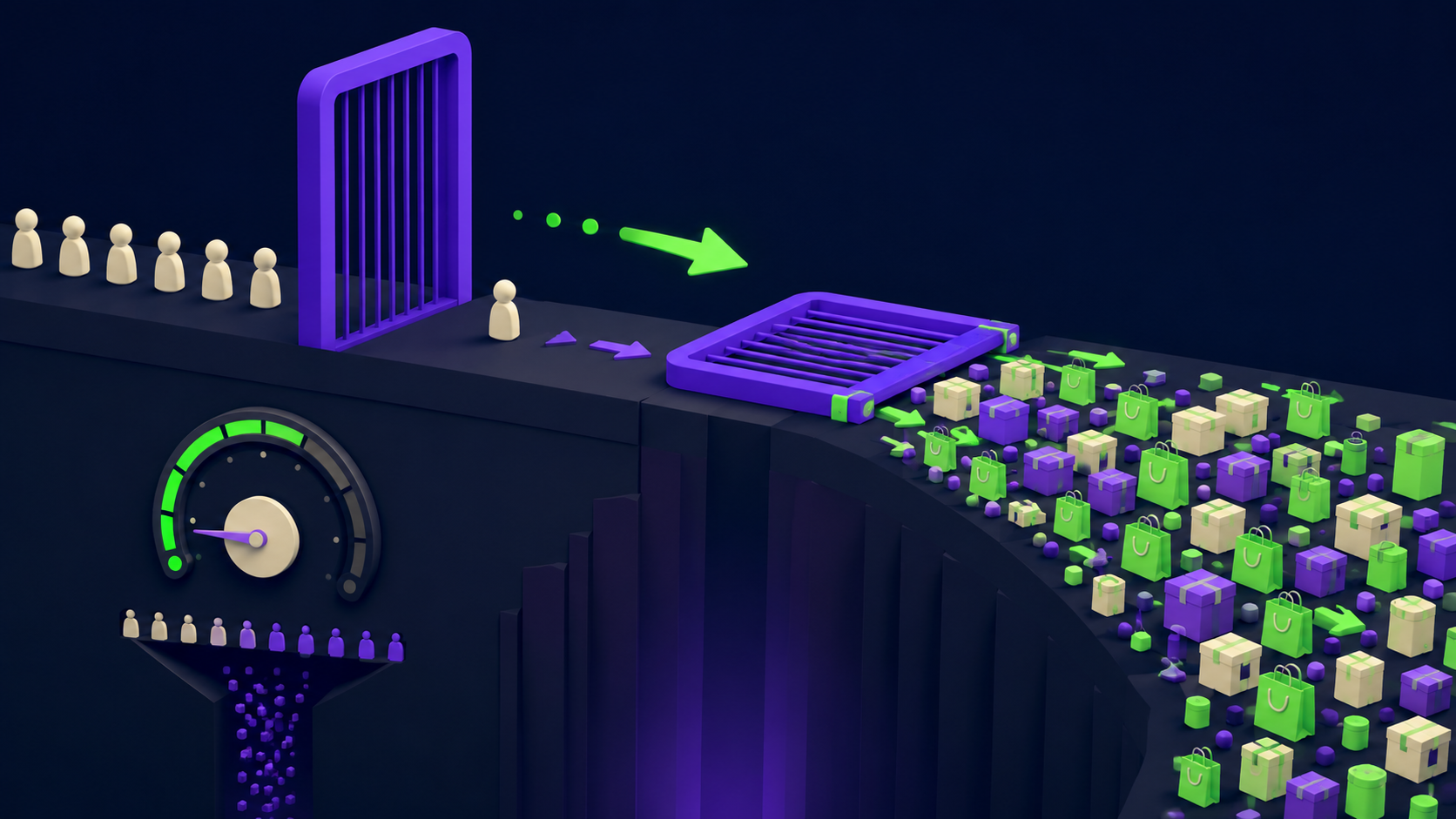
Vibe coding is building software by describing what you want in natural language to an AI model and accepting the generated code with light review, rather than writing it by hand. The term was coined by Andrej Karpathy in February 2025. It collapses build time from weeks to hours, which is exactly what creates the distribution problem.
When building was slow, the build itself filtered out most people. Finishing a working product meant you had survived months of effort, so the survivors were relatively few. That scarcity did some of your marketing for you. A finished product was, by itself, somewhat rare.
Vibe coding removed that filter. Per aggregated startup failure data, the single most common reason products fail is no market need, and "no market need" is almost always a distribution and positioning failure wearing a product costume. The app may be fine. Nobody was ever told who it was for.
Why do most vibe-coded apps get zero users?
Most vibe-coded apps get zero users because they were built before anyone wanted them, for nobody in particular, with no audience standing by at launch. The order is backwards. The build came first, the user came never. Three failures repeat across almost every dead project.
No audience built before launch. Launch day is when you reap an audience, not plant one. If your reach on launch day is your existing followers plus your group chat, your ceiling is roughly twenty people. You needed those people six to twelve weeks earlier, watching you build.
Built for nobody. "Anyone could use this" means no specific person urgently needs it. A tool for "everyone who manages tasks" loses to a tool for "freelance video editors tracking client revisions." Broad is invisible. Specific is findable, and findable is the entire job.
No positioning. If you cannot say in one sentence who the product is for and what changes for them, nobody else can either. Your homepage says "AI-powered platform for modern teams." That sentence describes ten thousand apps and sells none of them.
What is the positioning fix for an indie builder?
The positioning fix is one sentence with two required parts: exactly who it is for, and the specific outcome they get. Format: "[Product] helps [narrow specific user] [achieve specific outcome] without [the pain of the old way]." If you cannot fill every bracket with a concrete noun, you are not ready to market.
Compare two versions of the same app:
Weak: "An AI tool that helps teams be more productive."
Strong: "Helps solo Shopify store owners write product descriptions that match their brand voice in under two minutes, without hiring a copywriter."
The strong version names the user (solo Shopify owners), the outcome (on-brand descriptions fast), and the rejected alternative (hiring a copywriter). It tells you exactly who to talk to, where they gather, and what words to use. The weak version tells you nothing.
This narrow group is the wedge niche. You are not shrinking your ambition. You are choosing the first hundred users you can actually reach, beat, and learn from. You expand outward from a position you own, not from a puddle you are invisible in. Pick the niche where you have unfair access: a community you are already in, a job you used to do, a problem you personally still feel.
Which distribution channels actually work for solo builders in 2026?
Six channels work for solo builders because they cost time instead of money and compound instead of decaying: build-in-public, founder-led content, SEO and GEO for the long tail, community-first launches, partnerships, and cold outbound for B2B. Each works in a different situation. Pick one or two, not all six.
Channel | Best for | First concrete action | Time to first result |
|---|---|---|---|
Build-in-public | Pre-launch, building an audience while you code | Post one screenshot plus one decision daily for 30 days | 4 to 8 weeks |
Founder-led content | B2B and prosumer, building authority | Write one specific how-you-did-it post weekly | 6 to 12 weeks |
SEO and GEO long tail | Evergreen demand, durable traffic | Publish one article answering one exact buyer query | 3 to 6 months |
Community-first launch | Niche tools with a clear home community | Spend 4 weeks helping in that community before posting your tool | 2 to 6 weeks |
Partnerships | Tools that complement an existing product's users | Offer to write a free integration or guide for one adjacent tool | 4 to 10 weeks |
Cold outbound | B2B with a clear named buyer and real contract value | Send 20 hand-personalized messages to one tight segment | 1 to 4 weeks |
Build-in-public
Build-in-public is posting your progress, decisions, numbers, and mistakes publicly while you build, so an audience forms before launch. It works when you start six or more weeks before you need users and post consistently. First action: post one screenshot and one decision every day for 30 days, on the one platform your buyer already reads.
Founder-led content
Founder-led content is you, as a named person, publishing specific lessons and teardowns instead of a faceless company account. It works for B2B and prosumer tools where trust drives the purchase. Personal profiles reliably outreach company pages on most networks, per founder marketing analyses. First action: write one post a week that shows exactly how you solved one real problem in your domain.
SEO and GEO for the long tail
SEO and GEO mean writing pages that answer the exact narrow questions your buyer types into Google and asks ChatGPT, Perplexity, or Claude. It works for problems with steady, repeated search demand. It is slow but it compounds and it keeps working while you sleep. First action: publish one article that answers one precise buyer query in the first 60 words. Our guide to building a niche AI newsletter to 10k subscribers in 90 days walks through pairing content with an owned audience channel.
Community-first launches
Community-first launch means becoming a known, helpful member of the one community where your users already gather, then sharing your tool from inside that trust. It works when your niche has an obvious home: a subreddit, a Discord, a Slack, a forum. First action: spend four weeks answering questions there with zero self-promotion before you ever mention what you built.
Partnerships
Partnerships mean putting your product in front of another product's existing users by being genuinely useful to that product. It works when your tool complements something people already use. First action: pick one adjacent tool, build a real integration or write a high-quality guide for its users, and offer it to that team for free.
Cold outbound for B2B
Cold outbound is direct, personalized one-to-one messages to a tightly defined buyer segment. It works only for B2B with a clearly named decision-maker and contract value high enough to justify manual effort. First action: define one narrow segment, find 20 real people in it, and send 20 messages each referencing something specific about that person, never a template blast. The same motion underpins our playbook for selling AI chatbots to local businesses on a 1k to 5k retainer.
What does NOT work for indie builders trying to get customers?
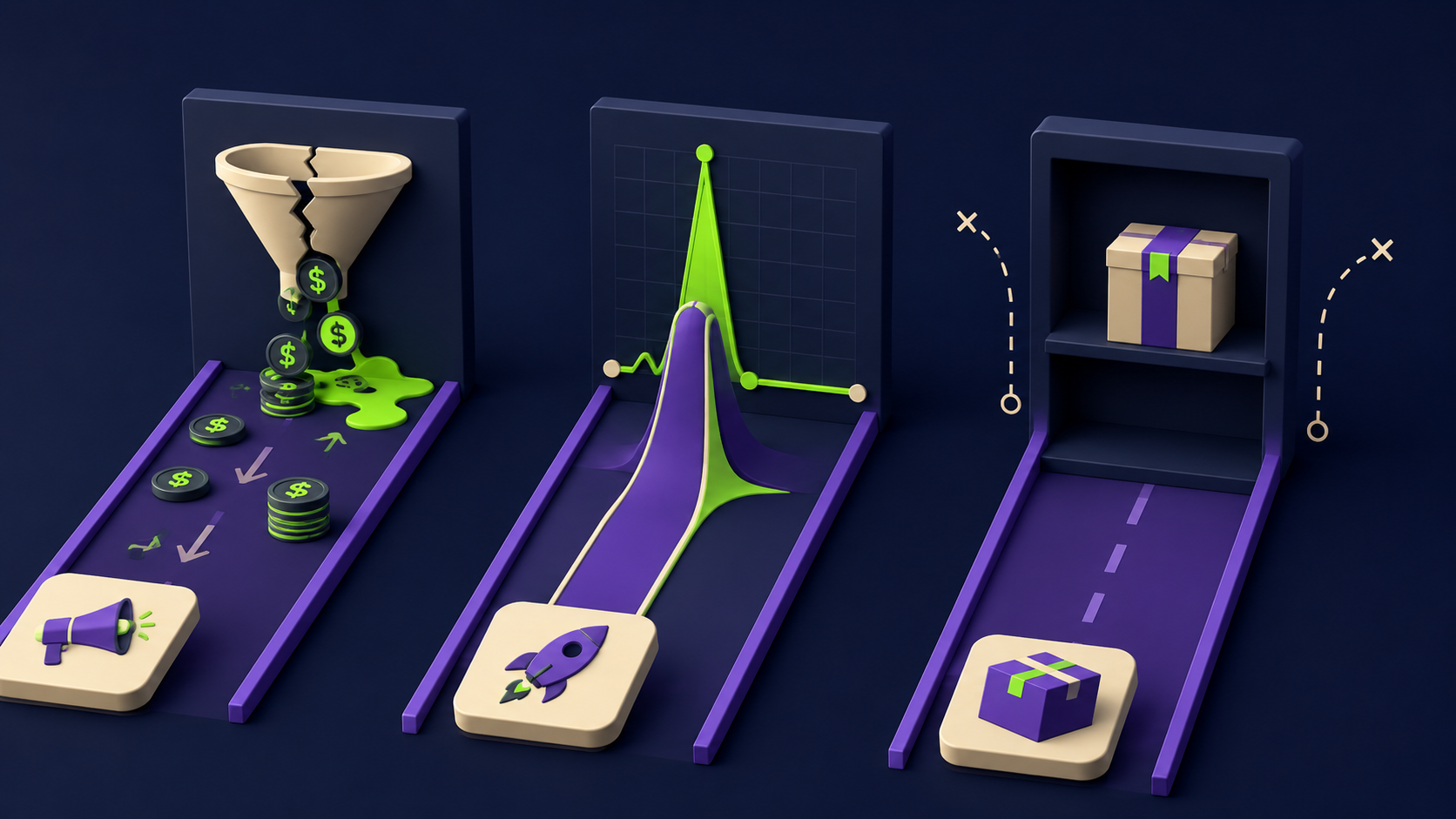
Three things consistently fail solo builders: paid ads with no funnel, treating Product Hunt as a strategy, and "if you build it they will come." Each feels like marketing while producing no customers. Naming them honestly is the point. If you are doing any of these as your main plan, that is why the numbers are flat.
Paid ads with no funnel. Ads send cold strangers to a page that has no positioning, no proof, and no follow-up. You are paying to accelerate a process that does not convert. Ads amplify a working funnel. They cannot create one, and a solo builder rarely has the budget to learn this lesson at scale.
Product Hunt as a strategy. A launch is one day of borrowed attention from people who collect tools, not your buyers. It can be a useful spike on top of an existing audience. As the entire plan it produces a traffic blip, a few signups that never return, and silence by Thursday. A launch is an event, not a distribution channel.
"If you build it they will come." This is not a strategy. It is the absence of one. Quality is necessary and completely insufficient. With more than 100,000 apps shipping daily on one platform, no product is discovered by being good. It is discovered by someone deliberately putting it in front of the right people, repeatedly.
The honest version: nothing here is a hack. Every channel that works is slow, manual, and unglamorous. Every channel that fails is fast, passive, and feels productive. That tradeoff is the actual lesson.
What is a weekly marketing cadence a solo builder can actually run?
A workable solo cadence is roughly five focused hours a week, split across one consistent build-in-public habit, one deeper content piece, and ten direct conversations with potential users. It runs alongside building because it is fixed-time and repeatable, not heroic. The point is consistency over months, not intensity for one week.
Daily, 10 minutes: post one build-in-public update. A screenshot, a decision, a number, a mistake. One platform only, the one your buyer reads.
Monday, 90 minutes: write and publish one content piece. A how-you-did-it post or one long-tail article answering a real buyer question.
Wednesday, 60 minutes: have ten direct conversations. DMs, replies, community answers, or cold outbound to your one segment. Talk to humans, not the void.
Friday, 30 minutes: review three numbers only. New signups, replies received, and which single piece of content drove the most attention. Do more of the winner next week.
That is under five hours. It does not require ad budget, a team, or a launch event. It requires the same discipline you already apply to building, pointed at distribution instead. If you only have one hour this week, keep the daily post and the ten conversations. Those two compound the fastest.
Frequently asked questions
How long before marketing gets a vibe-coded app its first real users?
It depends on the channel, and the honest range is weeks to months. Cold outbound to a tight B2B segment can produce conversations in one to four weeks. Build-in-public typically takes four to eight weeks of consistent posting. SEO and GEO take three to six months to compound. Nobody can promise a number of customers by a date. Anyone who does is selling you something. Pick the channel whose timeline matches your runway.
Should I build the product first or build the audience first?
Build the audience and the product in parallel, with the audience starting first if you have to choose. The most common fatal error is building in silence for months, then launching to nobody. Start posting your progress and talking to potential users from day one. By the time the product works, real people already know it exists and want it. The build and the distribution are one project, not two phases.
Is positioning the same as a tagline?
No. A tagline is marketing copy you write once it sells. Positioning is the underlying decision about exactly who the product is for and what specific outcome it delivers, which then drives every tagline, page, and post. Positioning answers "who is this for and what changes for them." A tagline is a polished sentence that comes after that answer exists. Get positioning right first; the copy follows easily.
Do I need a big audience to get customers?
No. You need a precisely targeted small one. A hundred people who are exactly your wedge niche convert far better than ten thousand random followers. Building in public to the right narrow group beats chasing a large general following. The metric that matters is not audience size. It is how closely your audience matches the person whose problem you actually solve.
Why does niching down feel like it limits growth?
Niching down feels limiting because it is counterintuitive, but a narrow niche is where you can actually be found, be the obvious choice, and learn fast. Broad positioning makes you invisible against thousands of similar tools. You expand outward later from a position you own. Starting narrow is not a ceiling on ambition. It is the only entry point that works when supply is this large.
Can AI tools do my marketing for me?
AI can accelerate execution but it cannot replace the two things that actually matter: the positioning decision and genuine conversations with real users. AI can draft posts, repurpose content, and speed up your weekly cadence. It cannot decide who your product is for, and it cannot build trust through a relationship. The same AI that let everyone ship also flooded every channel, which makes a clear human position more valuable, not less.
Is Product Hunt ever worth doing?
It can be worth doing as a spike on top of an audience you already built, not as your distribution plan. A launch concentrates attention from people who already follow you into one day, which can be useful for a credibility moment. Treating it as the source of customers is the failure mode. Build the audience first; use a launch as one event within a longer cadence, never as the cadence itself.
What is the single most effective first move?
Write your positioning sentence and start posting build-in-public on one platform today. Most builders skip straight to tactics while the underlying who-is-this-for question is still unanswered, which is why the tactics fail. The one sentence forces the decision. The daily post starts the audience clock running. Together they fix the two failures behind almost every zero-user app, and you can do both this afternoon.
Related from Vantaige
How to build an AI niche newsletter to 10k subscribers in 90 days (2026)
Sell AI chatbots to local businesses for a 1k to 5k retainer (2026)
Build a faceless YouTube channel with AI for 5,000 a month (2026)
References
Andrej Karpathy, original "vibe coding" post, X, February 2025
Garry Tan, "25% of the Winter 2025 batch, 95% of lines of code are LLM generated," X, March 2025
Lovable, official site (projects-per-day and total projects figures)
Startup failure rates and statistics, 2026 (no-market-need as leading cause)
Startup marketing strategy 2026: founder-led content and reach analysis
Get the best new AI tools and guides, weekly
One short email a week. The tools worth trying, the guides worth reading, nothing else.
No spam. Unsubscribe anytime.
Aymen B
Contributing writer at Vantaige, covering the AI tools ecosystem.