How to Build an AI Newsletter to 10k Subscribers in 90 Days (2026)

How to Build an AI Newsletter to 10,000 Subscribers in 90 Days (2026)
Newsletters are the cleanest distribution channel an indie operator can own in 2026. AI-focused newsletters specifically grew 340% between 2023 and 2025 per Beehiiv's State of Newsletters 2026, the median time to a first dollar dropped to 66 days, and Beehiiv alone now distributes more than $1 million per month to its publisher network per Beehiiv Boosts. The 10,000-subscriber milestone in 90 days is aggressive but documented: it requires a sharp niche, an AI-assisted production loop, and a paid acquisition stack from week one. This tutorial is the full operator playbook with real 2026 prices, real CPMs, and real case-study revenue numbers.
TL;DR
10K AI newsletter subs in 90 days = niche + paid acquisition + daily Notes
Beehiiv Scale plan $49/mo, 0% paid-sub fee, vs Substack 10% cut
Sparkloop pays $2-3 per subscriber, Beehiiv Boosts CPA averages $1.63
Realistic 10K newsletter ad revenue: $2K-$8K/mo depending on niche CPM
Full AI stack costs roughly $130-$220/mo in software
What is an AI-assisted newsletter and why are creators picking 2026 to launch?
An AI-assisted newsletter is an email publication where research, summarization, and first-draft writing are automated through LLMs (Claude, GPT-5, Perplexity Sonar), while a human owns the niche, the voice, and the editorial filter. Creators are launching in 2026 because the economics finally work: production cost is near zero, ad demand is record-high, and the platform layer (Beehiiv, Substack, Kit) finally rewards niche over scale.
Three structural numbers make 2026 the cleanest entry window the medium has ever had:
Newsletter paid subscriptions generated $19M industry-wide in 2025 vs $8M in 2024, a 138% jump driven specifically by niche operators per the Beehiiv State of Newsletters 2026 report.
The Beehiiv Ad Network alone pays out more than $1M per month, with a 2026 target of $3M per month per Beehiiv's 2026 ad-network roadmap.
The median newsletter launched in 2025 reached its first paying customer in 66 days, vs over 200 days in 2023.
The arbitrage is the same one that made YouTube tutorials a viable income in 2014 and TikTok a viable agency in 2022: incumbent media companies move slowly, indie operators with one tight niche and an AI-augmented workflow can ship a daily product at a marginal cost of cents, and brand advertisers will pay $50-$150 CPM for a list that proves it has a real audience. You sell attention to a defined buyer, not "content."
How much can a 10k-subscriber newsletter actually earn?
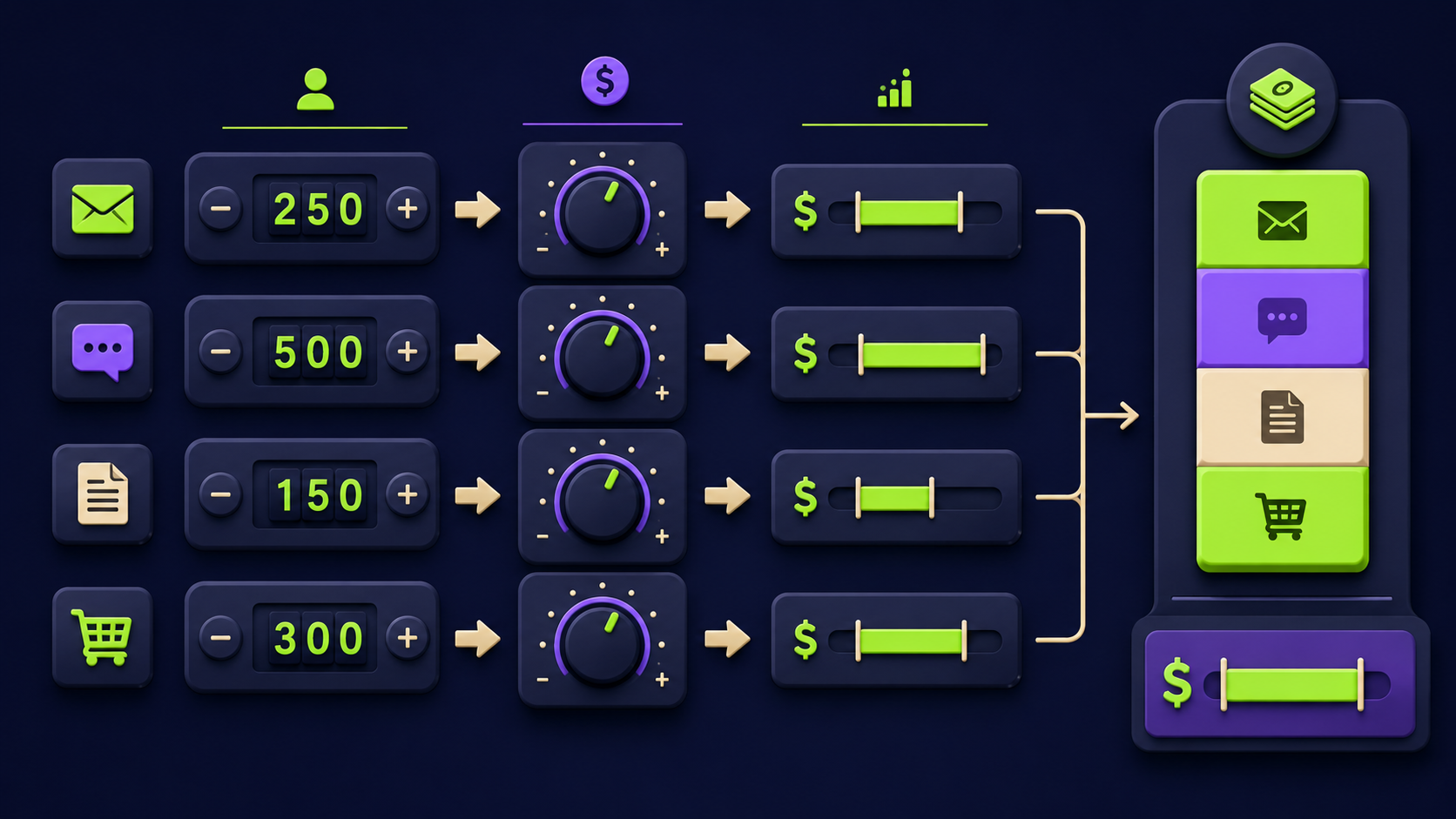
A 10,000-subscriber newsletter at a 40% open rate generates 4,000 monthly opens per send. At a $50 CPM (general consumer) you earn roughly $200 per sponsored ad; at a $100 CPM (B2B SaaS) you earn $400 per ad; with daily sends and stacked monetization (Beehiiv Boosts + Sparkloop + paid tier + affiliates) realistic monthly revenue lands between $2,000 and $8,000 depending on niche.
Revenue stream | Mechanism | 10k newsletter monthly | Source |
|---|---|---|---|
Direct sponsorship (consumer niche) | 4 sends/wk x $50 CPM x 4,000 opens | $800-$1,600 | |
Direct sponsorship (B2B SaaS / finance) | 4 sends/wk x $100-$150 CPM x 4,000 opens | $1,600-$3,600 | |
Beehiiv Ad Network (programmatic) | Auto-filled ads, $25-$40 CPM avg | $300-$700 | |
Beehiiv Boosts (sponsored recs) | Avg $1.63 net per active subscriber referred | $200-$1,000 | |
Sparkloop paid recommendations | $2-$3 per qualified subscriber referred out | $300-$1,500 | |
Paid tier (5% conversion x $7/mo) | 500 paid subs x $7 | $3,500 | |
Affiliate revenue (tool reviews, gear) | Niche-dependent, 1-3% click-thru | $200-$2,000 | |
Realistic blended monthly | 2-3 streams stacked | $2,000-$8,000 | (blended) |
Three honest caveats on this table. First, the 40% open rate is realistic for a niche AI newsletter under 50K subs but drops to 25-30% at scale. Second, "direct sponsorship" requires you to actually sell the placement; the Beehiiv Ad Network fills the slot for you at a lower CPM but with zero sales effort. Third, paid tiers only work if your free product is genuinely habit-forming. The MarketingSherpa case study of 10,000 subscribers paying $10 each documents that 5% paid conversion is possible but takes 12-18 months of trust-building, not 90 days.
Which platforms should you use? (Beehiiv vs Substack vs Kit vs Ghost)
Beehiiv is the default in 2026 for growth-focused operators because of the bundled ad network, Boosts, referral program, and 0% paid-sub fee. Substack wins on built-in network effect (Notes, Recommendations) and low friction for writers. Kit (formerly ConvertKit) wins on automation and creator commerce. Ghost wins for self-hosters who want full ownership of design and revenue.
Platform | Entry price (May 2026) | Paid-sub fee | Built-in ads | Referral program | Best for |
|---|---|---|---|---|---|
Free up to 2,500 / Scale $49/mo | 0% | Yes (Ad Network + Boosts) | Built-in | Growth-focused niche operators | |
Free | 10% + Stripe | No (Notes-driven org growth) | Recommendations network | Writers, essayists, opinion-led | |
Free up to 10,000 / Creator $29/mo | 0% | Sponsor Network (invite-only) | Add-on (Sparkloop) | Creators selling products / courses | |
Self-hosted free / Pro from $9-$15/mo | 0% | None (DIY) | None (DIY) | Owner-operators, design control |
Two pricing notes worth flagging. Beehiiv's Scale tier scales with subscribers ($49 at 1K, around $69 at 2.5K, $99+ at 10K) per Beehiiv's pricing page. Substack's free entry is the lowest friction in the industry but the 10% paid-sub cut adds up fast: at $3,500/mo of paid revenue, Substack takes $350 vs Beehiiv's $0. Ghost's $9-$15/mo Pro plan does not include email infrastructure on self-hosted, so budget another $10-$30/mo for Mailgun or Sender per the Ghost Forum's 2025 pricing announcement.
The defensible default for the 90-day plan in this article: Beehiiv Scale. The bundled Ad Network, Boosts, and referral program collapse the toolchain into one bill, and the 0% paid-sub fee compounds as you scale. Substack is a strong alternative if you want zero upfront cost and your growth strategy is primarily Notes-driven (covered later).
What's the full AI newsletter tool stack?
The minimum AI newsletter stack has six layers: research, write, design, send, grow, monetize. You do not need every tool. Pick one per layer to start, swap as you learn what your workflow actually demands. The total monthly software cost for a 90-day launch sits between $130 and $220.
Layer | Tools | Entry price (May 2026) | What it does |
|---|---|---|---|
Research | Perplexity Pro, Tavily, Sonar API | $20/mo (Perplexity) or $40/mo (Tavily) | Pulls fresh sources with citations; daily news summarization |
Write | $20/mo each (consumer) or API at $3/M tokens | First-draft generation, headline ideation, hook variants | |
Design | Midjourney, Flux, Ideogram, Canva | $10-$30/mo | Header art, social cards, embedded charts |
Send (platform) | $0-$49/mo | Hosting, send infra, signup pages, analytics | |
Grow | $0-$99/mo | Paid acquisition, recs, referral programs | |
Monetize | Beehiiv Ad Network, Sparkloop, Passionfroot, ConvertKit Sponsor Network | Revenue share, no upfront | Sponsorship sourcing and fulfillment |
Automate (optional) | $0-$29/mo | Glue research → draft → send pipeline | |
Calendar / Ops | $0-$10/mo | Editorial calendar, sponsor pipeline, swap tracking | |
Hosting (custom domain / self-hosted n8n) | $2.99-$8/mo | Custom newsletter domain, n8n VPS |
Realistic minimum-viable stack for the 90-day plan: Beehiiv Scale ($49) + Perplexity Pro ($20) + Claude Pro ($20) + Midjourney ($10) + Hostinger custom domain ($3) + Sparkloop free tier = roughly $102/mo. Add n8n on a $6/mo Vultr instance and Notion free, and you are operational at around $108/mo. Per the Hackceleration n8n + Claude curator tutorial, the per-issue Claude API cost runs about $0.01 per send for 2-3K tokens at Sonnet pricing.
Step-by-step: how to set up your first issue in one weekend
This walkthrough takes a niched topic to a published first issue in a single weekend, using Beehiiv as the platform and Claude + Perplexity for research and drafting. Estimated time: 8-12 hours split over Saturday and Sunday. Estimated cost: $52 (Beehiiv Scale + Perplexity Pro pro-rated, plus a $3 domain).
Pick the niche (45 min). Use the niche-selection rubric in the next H2. Output: one sentence describing your reader (job, daily problem, what they would forward this to a colleague for).
Buy the domain (15 min). Register a clean.com or.ai on Hostinger ($2.99 first year for.com per Hostinger's domain pricing). Avoid hyphens, abbreviations, and any name longer than 18 characters.
Set up Beehiiv (60 min). Create the publication, point the domain via the Beehiiv DNS instructions, build the signup page (one input, one button, one promise of what arrives in their inbox), turn on the welcome email, enable the Beehiiv Referral Program from the Grow tab per the Beehiiv referral setup docs.
Research the first issue (90 min). Open Perplexity Pro, run 4-6 Deep Research queries on the topic (every Pro account gets 20 Deep Research queries per day per Perplexity's pricing docs). Save every cited source in a Notion page. Reject any "fact" without an inline source.
Draft with Claude (90 min). Open Claude, paste the Perplexity research, prompt: "You are writing one issue of [NEWSLETTER NAME]. The reader is [JOB]. Output 5 stories in [VOICE] voice, each 80-120 words, each with a one-line takeaway. Cite every claim with the source URL." Edit ruthlessly. Cut anything you cannot personally vouch for.
Design the header (30 min). Generate a header image in Midjourney or Canva. Stay minimal: logo + issue number + one line of context. Save the template; you will reuse it every issue.
Schedule and send (30 min). Set the send time in Beehiiv based on your audience (B2B = Tuesday-Thursday, 8am ET; consumer = Saturday morning). Send a test to your own inbox on phone + desktop. Hit Send.
Promote within 1 hour of send (60 min). Post on X with the issue's strongest insight as a standalone hook. Cross-post to LinkedIn. Post a Substack Note if you cross-posted there. DM 5 people you respect who would actually want this issue and ask for honest feedback.
Success after weekend 1: 30-50 subscribers from your warm circle, 1 published issue, 5 pieces of feedback you can use to iterate. If you have fewer than 30 subscribers from warm outreach by Monday, your niche is too narrow OR your signup page is unclear (likely the second; rewrite the promise sentence in plain language).
How do you pick a niche that's profitable AND under-served?
The best niches are intersection-niches: two or more existing audiences nobody serves at the join. "AI for accountants," "AI for HR ops," "AI for solo law firms," "AI tools for indie game devs." Each combines a hot category (AI) with a defined buyer who already pays for tools and information. Generic "AI news" is fully saturated by The Rundown, TLDR AI, and Superhuman; intersections are where 2026 launches still win.
The 4-question filter to validate a niche before you write a single issue:
Is there a paying buyer? Search "[niche] software" on Google. If you see 5+ paid SaaS products with ad spend, the audience converts. If you only see free Reddit posts, they don't pay.
Is there a gap in coverage? Search "[niche] newsletter" on Beehiiv's discovery page and Substack's leaderboard. If there are zero or one strong incumbents in the top 5, you have a real gap. If there are 5+ above 20K subscribers, the niche is closed.
Can you produce 50 issues without burning out? List 50 article topics on a Notion page in one sitting. If you stall before 30, the niche is too narrow or you don't actually care about it.
Does it have a sponsorship adjacency? Name 5 SaaS or services that would pay $200-$500 to put a single ad in front of this audience. If you cannot name 5, monetization will be hard.
Per Beehiiv's State of Newsletters 2026, the fastest-growing newsletters in 2026 are run by "1-3 person teams hitting 7-figure run rates" by serving "specific, expensive problems." Translate that to your niche: pick a problem that costs your reader real money to ignore. AI for accountants ignored = lost billable hours. AI for solo law firms ignored = client churn. Pain that has a price tag will always pay for a newsletter.
How do you write issues people actually open and forward?
People open issues whose subject lines promise one specific thing they want to know right now. People forward issues that contain a single insight worth their colleague's 90 seconds. Both come from the same discipline: one issue = one promise = one takeaway. Stuffed roundups underperform every other format in 2026.
The proven structure for 2026 niche newsletters:
Subject line. Specific number or specific outcome. "The 4 prompts our team uses to triage support tickets" beats "AI roundup #14" every time. Per Escape the Cubicle's 10K-subscriber teardown, specificity in the subject is the single largest open-rate lever.
Hook (first 50 words). State the problem in the reader's own words, name the outcome, drop one credible source. The first 50 words decide whether they read or archive.
The body (300-1,000 words). One main insight, broken into scannable sub-sections. Use bold sparingly to signal the "money line" in each block. Aim for one bolded line per 200 words.
Tools / sources block. A short list of named tools or sources (with links). This is what readers screenshot and share. It is also where affiliate revenue lives.
One CTA. Either "reply with your hardest problem in [niche]" (builds replies, helps deliverability), "share this with a colleague" (referral program), or "upgrade to paid for [specific bonus]" (paid tier conversion). Never more than one CTA per issue.
Three hook templates that work in 2026 niche newsletters:
Contrarian + number. "We spent $4,200 on AI tools last quarter. 80% of the value came from one $20 tool."
Behind-the-scenes + outcome. "Here is the exact n8n workflow we used to cut research time from 3 hours to 18 minutes per issue."
Common mistake + cost. "Most [niche] teams use ChatGPT this way. It's costing them roughly $X per month in wasted time. Here is the better pattern."
How do you grow from 0 to 1,000 subscribers (month 1)?
Month 1 to 1,000 is built on the warm circle plus paid acquisition turned on early. The split: roughly 200 from warm outreach (your network, social posts, communities you already belong to), 500 from Beehiiv Boosts and Sparkloop paid recommendations, and 300 from a Substack Notes / X / LinkedIn organic loop. Cost: $300-$700 in paid acquisition, justified by the math in the next section.
Warm circle (days 1-7, target 100-200 subs). Personally DM 50 people who would honestly want this. Post the launch on every social account you own. Add the signup link to your email signature, X bio, LinkedIn header. Per the Beehiiv 0-1,000 in 90 days LinkedIn case study, an active LinkedIn presence alone can deliver the first 1,000 subs without any paid spend if you post 4-5x per week with a niche promise.
Beehiiv Boosts (days 8-30, target 300-500 subs). Once you have a published issue, accept Boost offers from larger newsletters in adjacent niches. Average net payout per active subscriber acquired is $1.63 per RooKnows' 2026 Beehiiv breakdown; for the first 30 days you are usually the smaller side accepting Boosts (free subs) rather than paying out.
Sparkloop Upscribe (days 8-30, target 200-300 subs). Add the Sparkloop one-click "you may also like" widget on your post-signup page. Subscribers click through to recommended newsletters and you get paid $2-$3 per qualified sub they end up subscribing to per Sparkloop's paid recommendations docs. This is your first revenue line, often before you even monetize ads.
Daily Notes / X threads (days 8-30, target 100-300 subs). Per the Substack Notes formula breakdown, posting 3 strategic Notes per day (morning community, midday education, evening motivation) consistently produces 10-30 subs/day after the first month. The same pattern works on X if you cross-post.
Reddit organic (days 8-30, target 50-100 subs). Post 1-2 substantive answers per week in r/[your niche] subs. Never link the newsletter in the post body. Link only when DM-asked. Per the Newsletter Operator Reddit growth playbook, this slow-burn channel delivers higher-engagement subs than any paid acquisition.
Hard truth: if you are not at 500 subs by day 21 with daily content + paid acquisition turned on, your niche is too narrow OR your signup page promise is too vague. Iterate the promise, not the channel.
How do you scale 1,000 to 10,000 in months 2-3?
Months 2-3 is built on a paid acquisition flywheel: every dollar of revenue from sponsorships, Boosts, and Sparkloop gets re-spent on more Boosts and Sparkloop CPL. The compounding loop is the only realistic way to add 9,000 subscribers in 60 days as a solo operator. The math: 150 net subs/day for 60 days = 9,000 subs. Achievable if your CAC sits between $2 and $4 per sub.
Pay-out side of Beehiiv Boosts (day 31+, target 80-120 subs/day). Once you have demonstrated subscriber quality (real opens, real clicks), enable outgoing Boosts to other newsletters. You pay around $1.63 average net CPA per Beehiiv Boosts; budget $200-$400/day in spend if you want 120-250 subs/day. Cut spend on any Boost partner where 30-day open rate from their referrals drops below 25%.
Sparkloop Upscribe payouts (day 31+, target 30-50 subs/day). Treat Sparkloop as both an income line (recommendations OUT) and a cost line (you can also pay to be recommended IN by other newsletters). Budget asymmetrically: keep your earning side on, only pay for recommendations from newsletters with proven >30% inbound open rates.
Cross-promo swaps (day 31+, target 200-500 subs per swap). Run one 1:1 swap per week with a peer newsletter at similar size. Per the Growth In Reverse cross-promo guide, swap conversion sits at 1-3% of the partner's open base; a 10K-sub partner with a 40% open rate translates to 40-120 new subs per swap.
Referral program rewards (day 31+, target 50-150 subs/day at scale). Set up Beehiiv referral milestones: 1 referral = exclusive PDF, 5 referrals = template library, 25 referrals = a 1:1 call with you. The 1-referral tier moves the most volume because the friction is lowest. Per Beehiiv's referral program guide, well-tuned programs deliver 5-15% of total subscriber acquisition.
Sponsored placements in larger newsletters (day 45+, target 1,000-3,000 subs per placement). Once you have $2K+ MRR from your own monetization, buy direct sponsorship slots in 2-3 larger newsletters in adjacent niches. Expect $300-$1,500 per slot at $50-$100 CPM, converting at 1-3% of opens to your signup page.
The compounding math: starting from 1,000 subs at end of month 1, adding net 150 subs/day x 60 days = 10,000 by end of month 3. CAC budget at $3/sub blended = $27,000 to acquire 9,000 subs. That is real cash; the only way it works is if your monetization is keeping pace (Sparkloop + sponsorships should already be generating $2K-$5K/mo by the time you hit 5K subs, which funds the next 5K).
How do you automate research + draft generation with AI?

The reference automation: an n8n workflow that pulls your niche's RSS feeds and X lists every morning, hands the items to Claude with a curation prompt, drops a structured draft into Notion for human edit, and queues the final version in Beehiiv via API. Total human time per issue drops from 4 hours to 30-45 minutes. Per-issue Claude cost: roughly $0.01-$0.05 depending on token count.
The 5-node workflow that ships a daily AI newsletter:
Schedule trigger. n8n cron at 6am local time. Fires daily.
Source ingestion. RSS Read nodes pulling from 8-15 niche-relevant feeds (publications, blogs, GitHub releases). Optional: Twitter/X list scraping via Apify or Tweepy. Optional: Perplexity Sonar API call ("what's new in [niche] in the last 24 hours, with sources") at $5/1,000 searches per Perplexity's API pricing.
Claude curation. Pass raw items to Claude with a strict prompt: "Pick the 5 most consequential stories for [persona]. Diverse topics. Reject duplicates and rewrites. Output JSON: {title, source_url, why_it_matters_50_words, takeaway_15_words}." Per the Hackceleration n8n + Claude tutorial, this prompt pattern hits 90%+ usable output rate when the source pool is well-curated.
Notion draft drop. n8n Notion node creates a new page in your "Drafts" database with the JSON rendered as a structured outline. You spend 30 minutes editing for voice, removing the one or two stories that don't fit.
Beehiiv API publish. When you mark the Notion page status = "Approved," n8n picks up the change and posts the final HTML to Beehiiv via the Beehiiv Developer API, scheduling the send for your standard time slot.
Run n8n self-hosted on a $6/mo Vultr instance or a $2.99/mo Hostinger KVM, or use n8n Cloud at $20/mo. The full setup pattern is documented in the n8n MCP + Claude Code Setup Guide (2026). For more brain-heavy curation (deciding what's a "new angle" vs a duplicate), pair the workflow with a Claude Code agent or a voice-driven check, similar to the pattern in the OpenAI GPT-Realtime 2 voice agent setup.
What's the realistic 90-day revenue ramp?
Realistic 90-day blended revenue lands between $500 and $4,000 depending on niche CPM and how aggressively you ship paid acquisition. The pattern is not linear: months 1-2 are net negative on cash (you spend more on Boosts than you earn), month 3 swings to positive as Sparkloop and direct sponsorships scale. Below: documented case-study numbers from operators who published their data in 2025-2026.
Operator / case study | Niche | Subs at milestone | Time to milestone | Revenue at milestone | Source |
|---|---|---|---|---|---|
Anuj Bhalla "AI Newsletter" | AI tools / general | "$10K/month" | 14 days | $10,000/mo | |
Jess Campbell case (Growth in Reverse) | Nonprofit fundraising | 1,000 subs | Multi-year | $100K per 1,000 subs | |
Artisan (Beehiiv Ad Network) | B2B SaaS | n/a | n/a | $68,000 ARR from Ad Network | |
Status News (Oliver Darcy) | Media / news | >100K subs | ~12 months | $1M+ ARR | |
Ben's Bites | AI for biz pros | 100,000 subs | under 12 months | 6-figure ARR | |
Substack Notes operator (Escape the Cubicle) | Career / cubicle escape | 10,000+ subs | ~9 months | n/a (paid tier) |
Honest reality check: the Anuj Bhalla "$10K in 14 days" claim is a Medium-style headline; the underlying math leans heavily on affiliate links and one-off launches and is not the median outcome. The realistic median for a focused 90-day launch is $1,000-$3,000 monthly recurring by day 90, with the 10K-sub list as the asset that compounds in months 4-12. Newsletters are infrastructure, not lottery tickets; the second-year revenue is usually 4-8x the first-year revenue once paid sponsorships move from short-term test buys to recurring contracts.
What metrics matter (and which are vanity)?
Three metrics matter: open rate, paid-acquisition CAC, and revenue per subscriber per month (RPSM). Subscriber count is a vanity number until you cross 5K and convert it into revenue. Click-through rate, time-on-issue, and sender-reputation scores are operational metrics, not business metrics.
Open rate. Below 30% on a niche newsletter under 50K subs = list is decaying or acquisition is low-quality. Target: 35-50% sustained. Apple's Mail Privacy Protection inflates the number; trust the click-through rate as a sanity check.
CAC. Cost per subscriber acquired across all paid channels. Target: under $4 blended in months 1-3, under $2 by month 6 as referral program and organic compound. Above $5 means your offer is not differentiated enough.
RPSM. Total monthly revenue / total subscribers. A healthy 2026 niche AI newsletter sits at $0.30-$1.20 RPSM in months 1-6, climbing to $2-$5 by month 12 as direct sponsorships replace programmatic.
Reply rate. Underrated. Replies are the strongest deliverability signal email providers track. Aim for 1+ reply per 200 subs per issue; ask one question every issue to prompt replies.
Forwards. Beehiiv shows forwards in the Engagement tab. Forwards are the leading indicator of organic growth. Issues with forwards >0.5% of opens reliably also generate referral signups.
Common pitfalls and how to avoid them
Picking "AI news" as your niche. Saturated by The Rundown, TLDR AI, Superhuman. Pick an intersection (AI for [defined buyer]) instead.
Skipping paid acquisition until you have "enough" content. Wrong order. Turn on Beehiiv Boosts and Sparkloop on issue 2. Paid sub flow surfaces niche-fit problems faster than any analytics dashboard.
Roundup-ing every issue. Generic 5-link roundups underperform single-insight issues by 2-3x in open and forward rates per the Escape the Cubicle teardown.
Sponsorship pricing on subscriber count, not opens. Sponsors buy attention, not list size. Quote your CPM on opens (4,000 monthly opens at $50 CPM = $200/ad) and you will close more deals at higher rates.
No referral program until 5K subs. Set up Beehiiv referrals on day one. The 1-referral tier (one share enables one PDF) drives subscriber acquisition even at 100 subs.
Sending to a single mailbox provider. If 70% of your list is on Gmail and you trip a spam filter, you lose 70% of your reach in one bad send. Diversify acquisition across providers.
Confusing AI-generated drafts with finished issues. Claude or GPT-5 give you 70% of a draft. The 30% you add (voice, judgment, the one cut nobody else would make) is the entire reason the reader subscribed. Per the Beehiiv State of Newsletters 2026, the fastest growers in 2026 are practitioner-led, not AI-generated.
FAQ
Is 10,000 subscribers in 90 days actually realistic?
Yes, but only with paid acquisition turned on from week 2 and a niche that has ad-buying density. The MarketingSherpa 10K subscriber case study took 14 months without paid; Beehiiv's 0-1,000 in 90 days LinkedIn case study hit 1K organic in 90 days. To compress 10K into 90 days you need $20K-$30K in paid acquisition (Boosts, Sparkloop, sponsored placements) and a high-CPM niche to fund it. Without that budget, plan for 6 months to 10K.
Should I start on Substack or Beehiiv in 2026?
Beehiiv if you want a growth and monetization engine bundled (Ad Network, Boosts, referral program, 0% paid-sub fee). Substack if your strategy is opinion-led writing where the built-in Notes feed is your primary acquisition channel. Per Escape the Cubicle's Notes formula, daily Notes alone produce 10-30 subs/day on Substack. Substack takes a 10% cut of paid subs vs Beehiiv's 0%, so the choice is also a long-term economics question.
How much money do I need to launch?
Under $250 for the first month. Beehiiv Scale at $49, Perplexity Pro at $20, Claude Pro at $20, a Hostinger domain at $3, optional Midjourney at $10. The big variable is paid acquisition: budget $200-$700 in Boosts and Sparkloop spend in month 1 to validate your CPL. Per Sparkloop's paid recommendations docs, you also earn $2-$3 per subscriber referred OUT, which often offsets your acquisition spend by month 2.
Can I write the whole newsletter with AI?
Technically yes, practically no. AI-generated newsletters die in the inbox once readers spot the patterns: identical sentence rhythms, generic stock images, sources that were never actually read. Use Claude or GPT-5 as a research assistant and first-draft writer; spend 30-45 minutes per issue editing for voice, judgment, and the cuts. The Beehiiv 2026 report notes that the fastest-growing newsletters are practitioner-led, with AI in the workflow but never the byline.
What's the best AI newsletter niche to start in 2026?
Intersection niches in domains that already pay for tools and information: AI for accountants, AI for HR ops, AI for solo law firms, AI for indie game devs, AI for performance marketers. Per Zack Liu's 12 niche AI newsletters watch list, niche operators are out-growing generalist AI newsletters in 2026 because the audience is both smaller AND more valuable to advertisers per CPM.
How does Beehiiv Boosts actually pay creators?
Boosts pay creators a per-active-subscriber rate set by the advertising newsletter, with a 20% Beehiiv revenue share. The platform-wide average net payout is $1.63 per active subscriber acquired per RooKnows' 2026 Beehiiv breakdown; high-CPM niches like personal finance can see $2.50+ per active subscriber. Beehiiv distributes over $1M monthly across the network, with a 2026 target of $3M.
Do I need n8n to run an AI newsletter?
No, not in months 1-3. The manual loop (Perplexity research → Claude draft → Notion edit → Beehiiv send) takes 60-90 minutes per issue. n8n only pays back the setup time once you are publishing 4+ issues per week and want to remove the repetitive research-and-draft step. If you do automate, the n8n MCP + Claude Code setup guide documents the exact node-by-node pattern.
Do AI newsletters need a disclosure that AI was used?
Not currently in the US, but increasingly expected by readers. The EU AI Act's transparency obligations under Article 50 target deepfake images/audio/video, not text-with-research-assist. Best practice: include a one-line "How this newsletter is made" page disclosing your AI tools, sources, and human edit step. Transparency builds trust faster than hiding it, and readers who care will find out either way.
How fast can I monetize a small list (under 1K subs)?
Day one with Sparkloop. The Sparkloop one-click "you may also like" widget on your post-signup page pays $2-$3 per outbound subscriber referral per Sparkloop's paid recommendations docs, and the recommendations target your audience whether you have 100 or 100,000 subs. Direct sponsorship usually starts working at 2-3K subs in a B2B niche, 5-10K in a consumer niche.
What's the realistic time commitment per week?
15-20 hours per week solo for the first 90 days: 8-10 hours writing and editing 4 issues, 3-5 hours on growth (Notes, swap outreach, paid acquisition tuning), 2-4 hours on sponsor outreach, 1-2 hours on metric review. After day 90, automation and SOPs can drop the load to 8-12 hours per week. Anyone promising "1 hour per week to $10K MRR" is selling something, not a newsletter.
References
Beehiiv State of Newsletters 2026. beehiiv.com/blog/the-state-of-newsletters-2026
Beehiiv pricing 2026. beehiiv.com/pricing
Beehiiv Boosts feature page. beehiiv.com/features/boosts
Beehiiv referral program docs. beehiiv.com/support/article/13090888705943
Beehiiv referral program guide. beehiiv.com/blog/build-successful-referral-program-newsletter
Beehiiv Developer API. developers.beehiiv.com
Beehiiv Growth Daily case study. beehiiv.com/case-studies/growth-daily
Beehiiv Artisan case study (ad network). blog.beehiiv.com/p/case-study-artisan
Beehiiv 0-1,000 in 90 days LinkedIn case study. blog.beehiiv.com/p/build-newsletter-scratch-linkedin
RooKnows on Beehiiv $1M monthly payouts (2026). rooknows.com/beehiiv-is-paying-creators-1m-per-month
Variety on Beehiiv ad network expansion (2026). variety.com 2026 beehiiv ad network
Sparkloop paid recommendations. sparkloop.app/paid-recommendations
Sparkloop pricing. sparkloop.app/pricing
Substack vs Beehiiv vs ConvertKit comparison. blog.beehiiv.com/p/beehiiv-vs-substack-vs-converkit
Ghost Pro 2025-2026 pricing forum announcement. forum.ghost.org Ghost Pro pricing
Hostinger domain costs 2026. hostinger.com/tutorials/domain-name-cost
Perplexity API pricing 2026. docs.perplexity.ai/docs/getting-started/pricing
InboxBanner CPM by vertical 2026. inboxbanner.com/blog/niche-newsletter-monetization
Hackceleration n8n + Claude RSS curator. dev.to/hackceleration n8n claude rss
Escape the Cubicle 10K subscriber teardown. escapethecubicle.substack.com 10000 subscribers
Escape the Cubicle Notes formula. escapethecubicle.substack.com simple substack notes formula
Growth In Reverse cross-promotions guide. growthinreverse.com/cross-promotions
Growth In Reverse Jess Campbell teardown. growthinreverse.com/jess-campbell
Newsletter Operator Reddit growth playbook. newsletteroperator.com/p/newsletter-subscribers-from-reddit
MarketingSherpa 10K subscribers paying $10 each. marketingsherpa.com 10000 subscribers
Implicator AI newsletter roundup. implicator.ai top 5 AI newsletters
Zack Liu, "12 Niche AI Newsletters I'm Watching in 2026." medium.com/@zack_liu 12 niche AI newsletters 2026
Anuj Bhalla "$10K AI newsletter in 14 days." medium.com Anuj Bhalla AI newsletter
Related from Vantaige
Get the best new AI tools and guides, weekly
One short email a week. The tools worth trying, the guides worth reading, nothing else.
No spam. Unsubscribe anytime.
Aymen B
Contributing writer at Vantaige, covering the AI tools ecosystem.