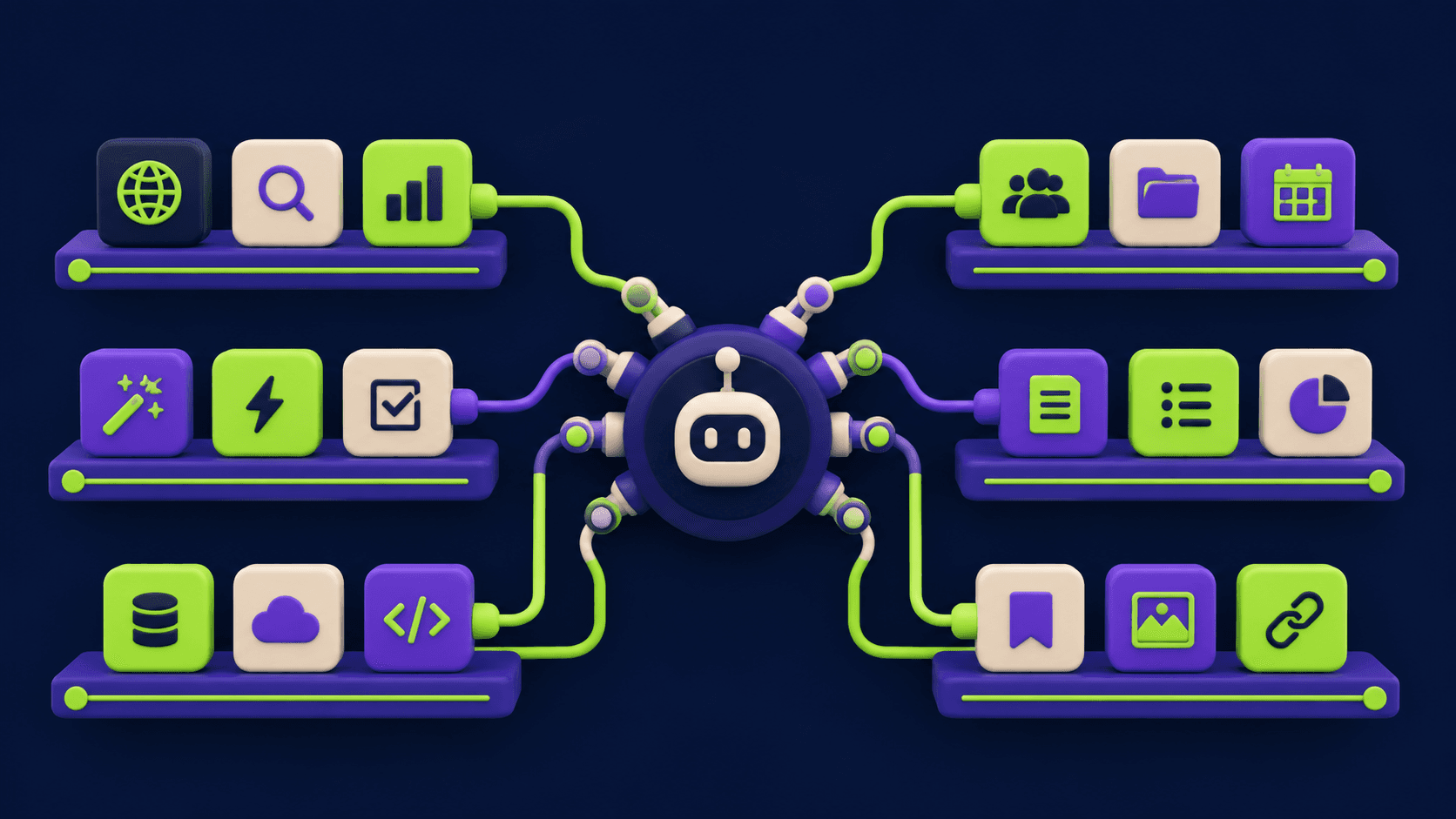
Activepieces is an MIT-licensed workflow automation platform with a visual step builder, 280+ integrations, and a free self-hosted community edition. Paid cloud plans start at $25/month with unlimited task execution across all tiers.
Activepieces is an open-source business automation platform backed by Y Combinator (S22 batch) that lets teams build multi-step automated workflows through a visual flow builder, without writing code. The company was founded in 2022 by Mohammad AbuAboud and Ashraf Samhouri and hit $1.7M ARR in 2024 with an 11-person team. The core product is available under the MIT license, meaning you can self-host it on your own infrastructure at zero cost with no feature restrictions and no task limits.
The platform supports 280+ pre-built integrations called "pieces," covering apps from Google Sheets and Slack to OpenAI, HubSpot, Notion, and Airtable. Sixty percent of these pieces are community-contributed via the TypeScript-based open pieces framework. Activepieces runs on both a self-managed community edition (Docker-based, single server or multi-worker) and a hosted cloud tier. Cloud plans, repriced in July 2025, offer unlimited task executions on paid plans rather than charging per-step or per-operation like competitors. An Embed tier lets SaaS companies bundle the flow builder directly inside their own product dashboard via a JavaScript SDK.
What Activepieces actually is in May 2026
As of the latest stable release (v0.82.1, April 24, 2026), Activepieces is a TypeScript-first automation platform with 22,000 GitHub stars, 3,600 forks, and 100+ contributors. It ships a release approximately every three to four days, logging over 314 versions since launch. The current build includes a rebuilt AI Agents framework introduced in July 2025 that enables AI-driven workflows across 320+ connected tools, with native support for multiple LLM providers including OpenAI, Anthropic, and Google Gemini inside flows.
The flow builder uses a linear, step-by-step vertical layout rather than a node canvas. A trigger (webhook, schedule, app event) sits at the top, and each subsequent step is an action or branch. Conditions, loops, HTTP requests, and delays are all first-class step types alongside app integrations. Human-in-the-loop is built in: flows can pause and present a form or chat interface waiting for user input before continuing. The platform also exposes all pieces as Model Context Protocol (MCP) servers, meaning AI assistants such as Claude Desktop or Cursor can call your automations directly as tools without any additional bridge software.
On November 21, 2024, Activepieces crossed 10,000 GitHub stars, an achievement the team celebrated with a community game and leaderboard. The repo doubled to 20,000+ stars within the following year, reflecting accelerating community adoption. For context, Activepieces went from roughly 10,000 to nearly 22,000 stars in a single year, the fastest growth period the project has seen.
"It's been an amazing ride with such an amazing community, thank you from the very bottom of our hearts for being the most important part of it!" - ashrafsam, Activepieces community announcement, November 21, 2024
Where Activepieces sits versus n8n and Make.com
The three most-compared tools in this space each have a meaningfully different technical design, not just different pricing or branding.
Activepieces vs. n8n: n8n uses a 2D node-canvas where every action, loop, branch, and transformation is a draggable node connected by edges. This gives experts full visual control over complex parallel branching but creates a steeper onboarding curve. Activepieces' linear vertical builder is closer to a checklist, which most non-technical users pick up in minutes but which becomes limiting when you need to visualize data flowing through many parallel branches simultaneously. On raw execution speed, n8n is significantly faster: community benchmarks run on identical 16 vCPU / 32 GB RAM hardware showed n8n processing a single webhook request in 0.5-1 second versus Activepieces' 15 seconds, with the gap widening under concurrent load. This overhead comes from Activepieces' default sandboxing architecture, where each flow run spawns an isolated process with Linux namespaces for security. An unsandboxed mode introduced in 2025 cuts this overhead dramatically (up to 50x faster in trusted environments) but requires explicitly accepting the security tradeoff. n8n's GitHub star count (160,000+) and integration library (500+ nodes) are also substantially larger. n8n's license is the Sustainable Use License (Fair Code), which restricts commercial embedding in SaaS products; Activepieces MIT has zero commercial restrictions.
Activepieces vs. Make.com: Make.com (formerly Integromat) uses a circular "scenario" visual builder where modules connect in loops that visually represent data cycles. Make has a polished, design-forward interface that handles complex multi-path flows well. The fundamental pricing difference: Make charges per "operation," where each step inside a scenario counts individually. A 5-step workflow run 1,000 times costs 5,000 operations against your monthly quota. Activepieces cloud charges per flow execution, not per step, so a 20-step flow costs the same as a 2-step flow. For automation-heavy teams, this can represent a 5-10x cost difference. Make has no self-hosted option whatsoever; it is a closed-source cloud-only product. Make maintains 1,000+ integrations maintained by its internal team, a catalog roughly 4x wider than Activepieces' current 280+ pieces.
"Activepieces is what I wanted n8n to be. It's much more approachable for my non-technical team members while still being powerful." - community user, workflow automation forum, 2025
For users who occasionally reach for IFTTT for simple trigger-action rules, Activepieces covers the same territory and goes considerably further, particularly for self-hosted scenarios where data never leaves your infrastructure. Users who want a head-to-head Zapier comparison should also look at Zapier, which now offers AI agent capabilities in v3 but charges per-task at a rate that scales steeply with volume.
How AI actually works inside Activepieces
Unlike tools that bolt on AI as a "call this API" step, Activepieces has made AI agent construction a first-class workflow type. The July 2025 AI Agents 2.0 update introduced a dedicated agent step that lets you define a goal, assign tools (any connected pieces), set a model, and let the agent loop autonomously until the task is complete. You can, for example, create an agent that monitors a Gmail inbox, classifies inbound messages using a Claude or GPT-4o call, routes urgent ones to a Slack channel, and drafts a reply for your review in a Google Doc, all within a single visual flow requiring no code.
The MCP server integration is particularly notable in early 2026. Every piece in Activepieces exposes itself as an MCP server endpoint compatible with the standard Anthropic introduced in late 2024. This means Claude Desktop, Cursor, Windsurf, and any MCP-compatible AI assistant can call your entire automation library as a set of tools, without any custom bridge or API work. For teams already using AI coding assistants daily, this closes the gap between the AI tool and the workflow automation layer.
Native AI integrations include OpenAI (GPT-4o, GPT-4 mini, Assistants API), Anthropic (Claude Sonnet, Haiku), Google (Gemini), Cohere, and a generic "custom AI provider" step for any OpenAI-compatible endpoint. There is no proprietary AI model inside Activepieces itself; the platform is model-agnostic and passes API calls through to whichever provider you configure.
The friction users keep raising
The recurring complaints cluster into four areas:
Processing latency in default sandboxed mode. The 10-15 second per-flow latency in the default configuration is a real production obstacle for use cases that require near-real-time response. A community thread from April 2024 documents this directly:
"The processing time is just too slow I can't use it in prod.. Where N8N takes 0.5-1s to process a single request, Activepieces needs about 15s." - yukyo, Activepieces Community, April 17, 2024
The unsandboxed mode introduced later in 2024 reduces this significantly, but it is not the default, and the documentation for enabling it in production is sparse.
Integration catalog depth. 280+ pieces is respectable for a platform this young, but niche integrations either don't exist or are incomplete. Several community members have noted that pieces like Xero have actions but no triggers, meaning you can't start a flow on an invoice-paid event. Teams dependent on legacy enterprise systems (Salesforce advanced objects, SAP connectors, HubSpot deal pipeline triggers) will hit gaps that require falling back to generic HTTP request steps.
AppSumo lifetime deal controversy (July 2025). When Activepieces repriced its cloud tiers and retired the Cloud Pro plan in July 2025, hundreds of AppSumo lifetime deal holders found that the new tier mapping gave them fewer features than they had originally purchased. The company closed the community discussion thread without full resolution, which intensified frustration. Dozens of 1-star AppSumo reviews appeared through September 2025. The company's official position was that no accounts were downgraded, but users countered that the new plan structure objectively provided fewer resources than the original Pro entitlement.
Self-hosted maintenance overhead. The community edition is free but requires Docker familiarity, ongoing updates, and infrastructure monitoring. For small teams without a DevOps background, this is a real cost that doesn't show up in the $0 license fee. Documentation for advanced configurations (custom pieces deployment, enterprise SSO, network isolation) is still developing compared to more mature self-hosted tools.
Who Activepieces is for
Start here if: you want Zapier-class automation without per-task billing; you need full data sovereignty and can run Docker on a VPS; you're building a SaaS product and want to offer an embedded automation builder to your users (the Embed tier does this with a JavaScript SDK); you have non-technical teammates who need automation access and find n8n's node canvas intimidating; or your primary concern is cost and you're comfortable with a catalog that covers most common apps but not all niche ones.
Look elsewhere if: you need to process hundreds of webhook events per second with sub-second latency in sandboxed mode; your workflows depend on deep integrations with enterprise systems (Salesforce, SAP, QuickBooks advanced features) where n8n or Zapier have more complete coverage; you require HIPAA or SOC 2 attestations today (Activepieces is still working toward these); or you have zero DevOps capacity and need a no-maintenance hosted solution where Make.com's polished cloud interface and 1,000+ managed integrations may justify the per-operation cost.
The self-hosted community edition is a genuine free tier, not a restricted demo: it has no feature locks, no flow limits, and no task caps. For a bootstrapped team automating internal processes, it is one of the most cost-effective automation options available.
User Reviews
No reviews yet. Be the first to share your experience!
Sign in to write a review.
Featured in collections
Curated lists that include Activepieces.
Related articles
Guides and articles related to Activepieces.

Replace 6 SaaS Subscriptions With 4 n8n AI Agents (2026)

n8n vs Zapier vs Make in 2026: The Honest Migration Math

15 AI Agent n8n Workflows You Can Build This Weekend (2026)
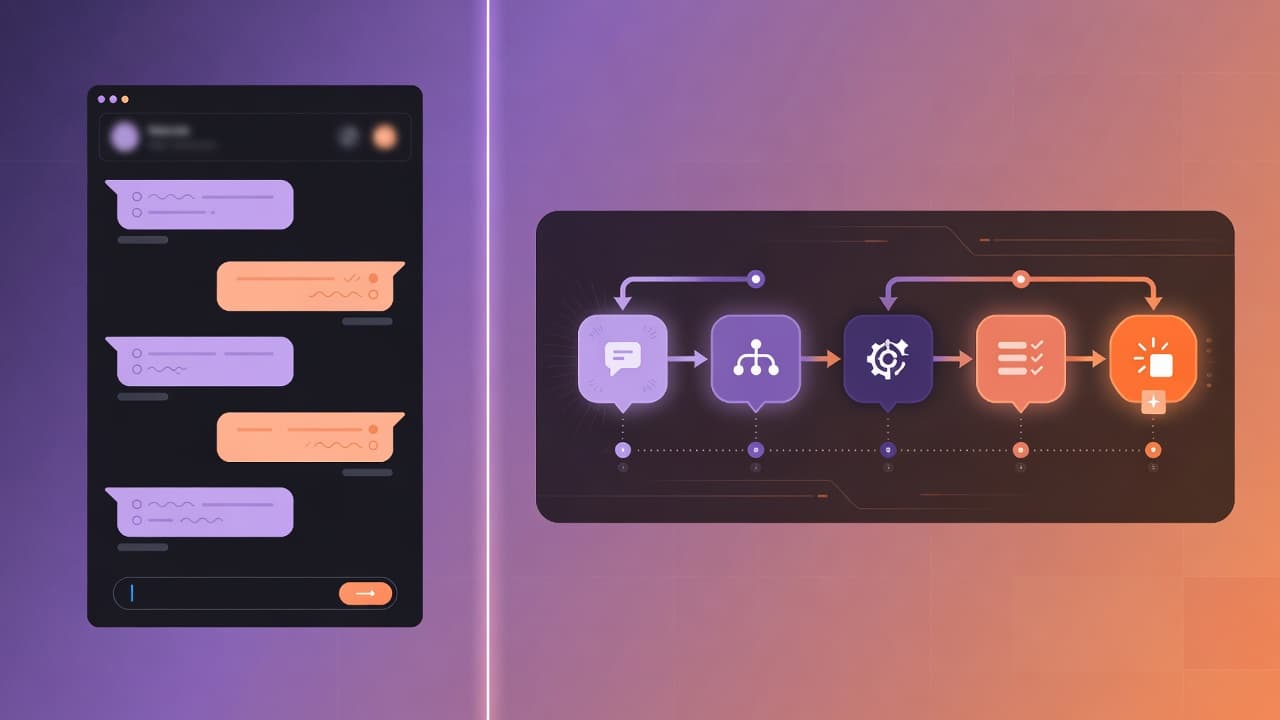
Build n8n Workflows with Claude Code: n8n-MCP Setup Guide (2026)
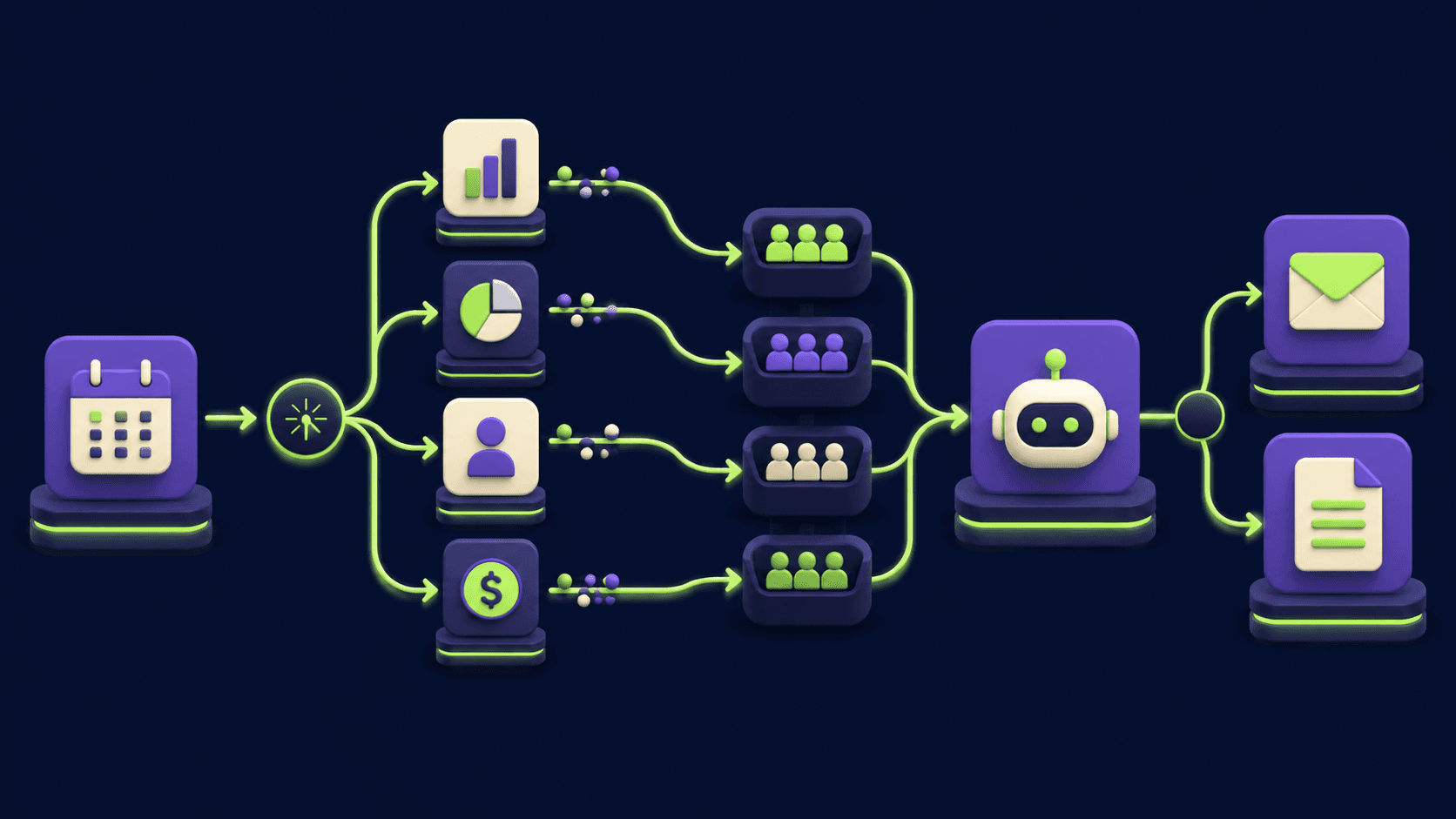
Auto-Build Weekly Client Status Reports From Slack, Asana, GitHub & Stripe (2026)