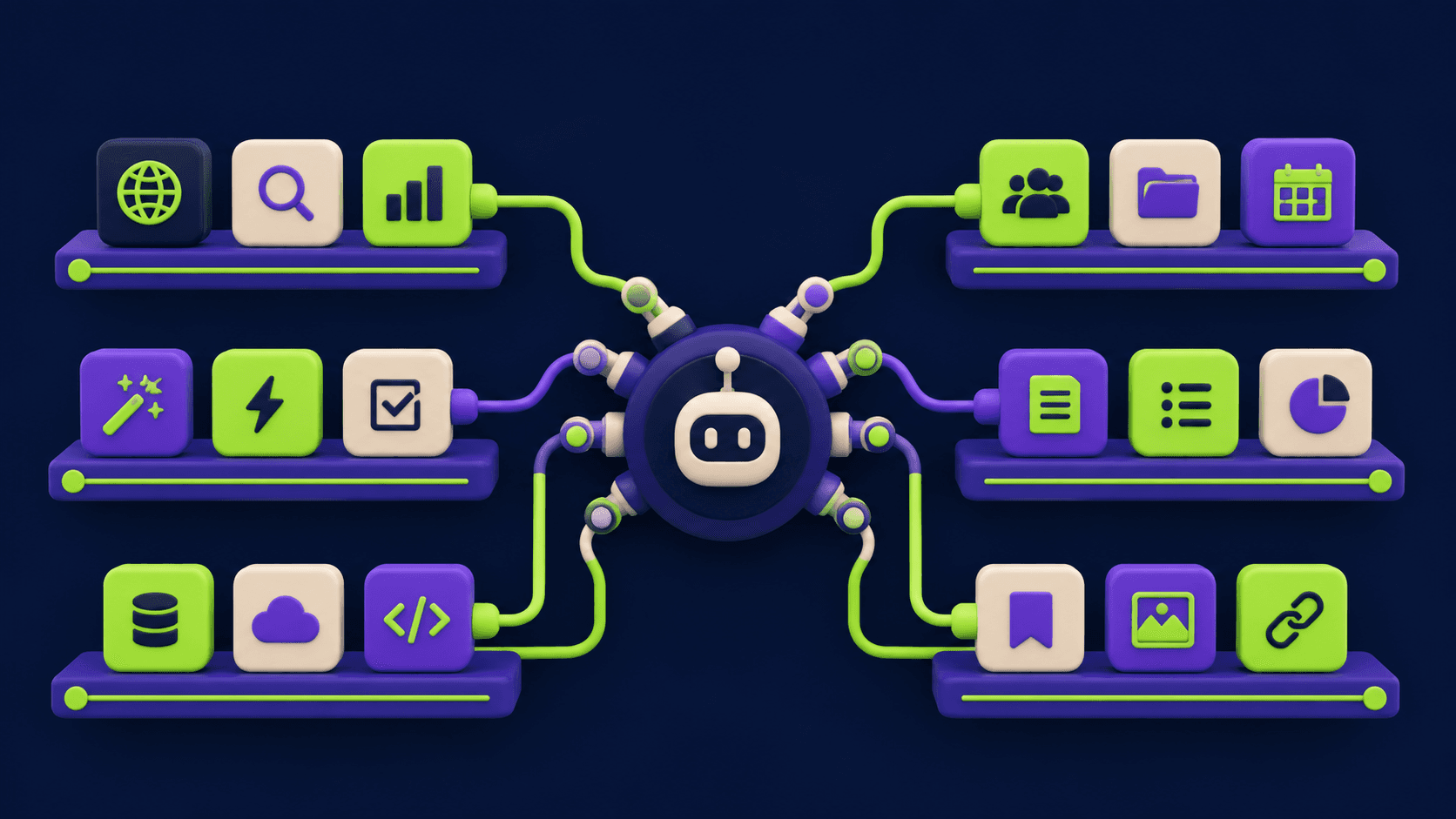
Make.com (formerly Integromat) is a visual workflow automation platform connecting 3,000+ apps through a drag-and-drop canvas builder. It handles complex multi-branch automations and AI agents without code, starting at $9/mo on the Core plan.
Make.com is a visual workflow automation platform built around a drag-and-drop canvas that lets you see your entire automation as a diagram, not a list of steps. Originally launched in 2016 as Integromat by a Czech development team, it was acquired by Celonis (the German process mining company) in 2020 and rebranded to Make.com in February 2022. It now operates as a dedicated business unit within Celonis, with its own product and engineering team. The platform solves a specific problem: connecting cloud apps and automating multi-step, conditional workflows without writing code, while keeping the full data flow visible and debuggable.
Make connects over 3,000 apps and services through pre-built modules, and any service without a native connector can be reached via HTTP request module. The scenario builder uses a credit-based execution model (switched from "operations" to credits in August 2025), where each module action consumes one credit and AI-powered steps consume credits for both the operation and the underlying token usage. Key capabilities include visual branching with routers, iterators and aggregators for data transformation, error-handling paths, and scheduled or webhook-triggered execution. As of February 2026, Make AI Agents are available on the platform, enabling agentic workflows that reason and make decisions in real time alongside deterministic automations.
What Make.com actually does in April 2026
Make's core product is the scenario canvas, an infinite visual workspace where each connected module represents one action in your workflow. Unlike linear automation builders that show steps as a numbered list, Make displays your entire flow as a node graph. You can see exactly where data enters, how it transforms at each step, and which branches execute under which conditions. The visual layout makes debugging practical: clicking any module after a scenario run shows the exact data that passed through it.
The platform shipped Make AI Agents in April 2025 (beta) and followed with a fully redesigned next-generation release on February 11, 2026. The February 2026 release was notable for how it integrated agents into the existing canvas rather than building a separate interface. The Reasoning Panel shows real-time agent decision-making and tool selection inside the scenario view, so you can observe and audit what an AI agent is deciding at each step. In-canvas chat lets you test and refine agent behavior without leaving the workflow builder. Agents handle multi-modal inputs including PDFs, images, and CSV files, and a Library of Agents ships pre-built templates for inventory management, customer triage, research, and reporting.
Maia, Make's AI assistant, builds automation scenarios from natural language descriptions. You describe what you want to automate and Maia generates a starting scenario structure for you to refine. For teams building AI-powered pipelines, native one-click module integrations with OpenAI, Anthropic's Claude, and other LLMs are available on all paid plans. Custom variable storage, full-text execution log search (Pro and above), and shareable scenario templates (Teams and above) round out the collaboration capabilities.
"I did in 2 hours what I imagined would have taken me 1 month. It's crazy easy." - Niccolò F., Cofounder/CTO, Automotive, Capterra, 2025
Where Make.com sits versus Zapier and n8n
The three platforms split across three distinct user profiles, and the mechanical differences between them drive that split.
Make vs. Zapier: Zapier offers 8,000+ pre-built app integrations, roughly 2.6 times Make's catalog of 3,000+. If you need to connect an obscure SaaS tool quickly, Zapier is more likely to have the connector already built. Zapier's interface uses a linear wizard, trigger followed by sequential action steps, which is faster to learn for simple automations. The tradeoff is expressiveness: Zapier's step-based model cannot show parallel branches, loops, or multi-path conditional logic as intuitively as Make's canvas. Zapier's pricing counts every action step in a workflow as a separate task, meaning complex multi-step workflows consume tasks quickly. Make's credit model is more favorable for scenarios with many sequential module executions. Both now offer AI agents (Zapier launched Zapier Agents separately from the main builder; Make integrates agents directly into the scenario canvas with the Reasoning Panel).
Make vs. n8n: n8n uses a fair-code license and can be self-hosted on your own servers, which is the critical mechanical difference for regulated industries. If your data cannot leave your infrastructure, for example in healthcare, finance, or GDPR-constrained environments, n8n self-hosted is the only viable option among the three. n8n's January 2026 version 2.0 release added native LangChain integration, 70+ AI-specific nodes, persistent agent memory across conversations, and self-hosted LLM support. On execution pricing, n8n counts one full workflow run as one execution regardless of how many steps it contains, which makes complex automations dramatically cheaper per run than Make's per-module credit model. The limitation is catalog size: n8n has around 1,000 native integrations, though its HTTP node can technically reach any REST API. The learning curve is also steeper, requiring more comfort with technical concepts like expressions and code nodes for advanced flows.
Make occupies the middle of this spectrum: more expressive and visual than Zapier, more accessible than n8n, with a strong enough feature set for the majority of business automation use cases.
What building on the Make canvas actually looks like
A typical Make scenario build starts with picking a trigger module, a webhook, a scheduled time, or an app event like a new row in Google Sheets. You then add action modules by clicking the plus connector on the canvas and searching the module library. Each module has a configuration panel where you map incoming data fields to the parameters the action needs. Make shows live test data from previous runs inside the mapping interface, so you're working with real values rather than abstract field names.
For conditional logic, you add a Router module, which fans one flow path into multiple branches, each with its own filter conditions. An e-commerce order scenario might route to one branch if the order value is above a threshold (triggering a VIP email via OpenAI module) and another branch for standard orders (adding a row to a shipping tracker sheet). Both branches can rejoin into a final notification module, or run independently. Iterators and Aggregators handle lists: an Iterator unpacks an array into individual items so each item passes through the subsequent modules, while an Aggregator reassembles processed items back into a collection.
Where this gets harder: large scenarios with 40 or 50 modules become difficult to navigate visually. The canvas does not have automatic layout or grouping features, so complex flows can look like a tangle of connection lines. Error messages when a module fails are sometimes cryptic, pointing to a technical API response rather than a plain-English explanation of what went wrong.
"Make currently lacks live chat support, which can be a disadvantage when immediate assistance is needed." - Luis A., Process Manager, Machinery, Capterra, 2025
Users building AI-heavy scenarios should budget credit consumption carefully. AI module steps consume credits for both the operation and the LLM token usage combined, which can deplete a monthly credit allocation faster than expected on a scenario running hundreds of times per day. The November 2025 addition of credit usage history helps track per-scenario consumption across the account.
Operators who invest time learning the platform's routing, iteration, and aggregation logic consistently report significant efficiency gains. After a 90-day test building 40+ automations across client projects, one agency founder reported saving over 12 hours per week, with the Core plan paying for itself in the first week. Tools like Clay are often used alongside Make for data enrichment steps in lead routing scenarios, while Lindy provides an alternative for users who prefer a more conversational agent-first approach.
Who Make.com is built for
Make fits best for operations managers, marketing automation leads, and no-code builders who need to connect multiple apps with conditional logic, error handling, and visual documentation of the flow. The sweet spot is automations with three or more steps, at least one conditional branch, and some need for debugging or team visibility into how data moves through the workflow.
Small agencies building client automations get significant value from the Teams plan's shared scenario templates and team roles, which allow handoff and collaboration without every team member starting from scratch. E-commerce and SaaS businesses running high-volume background processes, order routing, CRM syncing, and content publishing pipelines find that Make's visual builder makes the logic auditable when things go wrong.
The platform pairs naturally with AI-first tools in a broader stack. Businesses using Jotform AI Agents for form-based intake can route responses through Make for downstream processing. Teams using Echowin for AI phone call handling can pipe call outcomes into Make scenarios for CRM updates and follow-up triggers. For teams pairing customer interactions across channels, Make provides the connective tissue between specialized AI tools and the business systems they feed.
What Make.com is not
Make is not the right choice for one-reason: if you need to connect a niche SaaS tool that is not in the 3,000-app catalog and cannot expose a REST API, Zapier's 8,000+ integration catalog is a better starting point. For teams where data sovereignty is non-negotiable, n8n self-hosted is the only credible option among mainstream automation platforms. Make's data lives in Make's cloud infrastructure; there is no self-hosted deployment option.
Make is also not a good fit for users who want simple two-step automations without investing time in the platform. The canvas builder is more powerful than a linear wizard, but that power comes with a learning curve. Understanding when to use a Router versus a Filter, how Iterators interact with Aggregators, and how to handle module errors properly requires a few hours of hands-on building. Users who want results in ten minutes without learning a new mental model will find Zapier's step-by-step wizard faster to get started with.
Finally, live chat support is only available on the Enterprise plan. Free, Core, Pro, and Teams users are limited to email and ticket-based support, which multiple reviewers flagged as a friction point when complex scenarios break in production and the issue needs urgent resolution.
User Reviews
No reviews yet. Be the first to share your experience!
Sign in to write a review.
How Make.com compares
Side-by-side breakdowns against other tools.
Featured in collections
Curated lists that include Make.com.
Related articles
Guides and articles related to Make.com.

n8n vs Zapier vs Make in 2026: The Honest Migration Math

15 AI Agent n8n Workflows You Can Build This Weekend (2026)
Which Workflow Automation Platform Fits Your Business: n8n vs Zapier vs Make

Replace 6 SaaS Subscriptions With 4 n8n AI Agents (2026)

Build and Sell AI Automations as a Service: The Operator Playbook (2026)