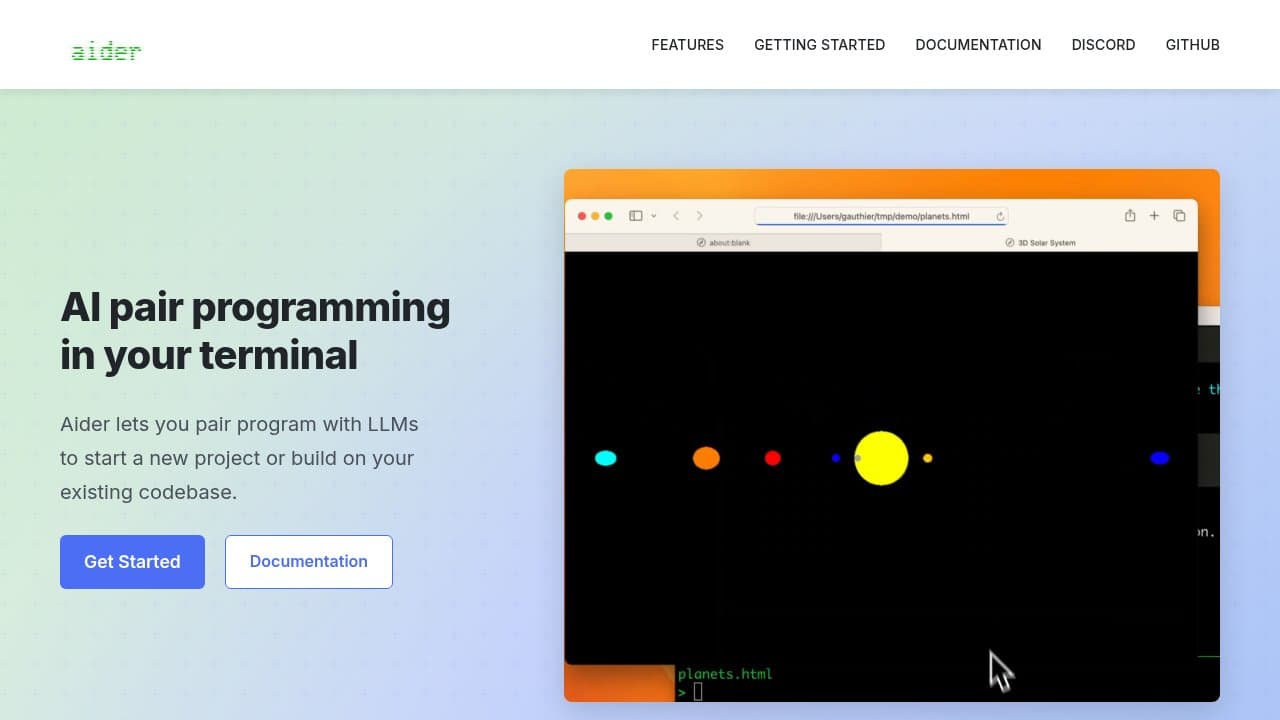

Aider is an open-source, terminal-native AI pair programmer that wires any LLM directly into your local git repository. Every edit is auto-committed with a descriptive message. There is no subscription, no vendor lock-in, and no IDE required.
Aider is an open-source command-line tool that brings AI pair programming into your terminal, working directly against your local git repository. Created by Paul Gauthier and released in 2023 under the Apache 2.0 license, it connects to any LLM you choose, including Claude, GPT-4o, Gemini 2.5 Pro, DeepSeek, and local models running through Ollama. The tool is free to download and run; the only cost is the API tokens you consume from whichever provider you select. With over 44,000 GitHub stars and 6.8 million pip installations as of April 2026, it has become the reference implementation for terminal-first AI coding.
Aider builds a live map of your entire codebase using tree-sitter AST parsing and PageRank-based relevance ranking, giving the LLM accurate context without manually picking files. It operates in four distinct modes: code (default, makes edits), architect (two-model pipeline for complex reasoning tasks), ask (discussion only, no edits), and help (tool documentation). Every accepted edit is auto-committed to git with a descriptive message, making the session history reviewable and reversible without any extra tooling. The tool also runs your linter and test suite after edits and re-prompts the model on failures, closing the iteration loop automatically.
What Aider actually does in April 2026
At its core, Aider is a chat interface that reads your codebase, sends relevant context to a language model, applies the resulting edits to disk, and commits them. That loop is tighter than it sounds. The repo map built from tree-sitter means Aider does not need the entire codebase in the context window. Instead it uses a PageRank graph of symbol references to select the most relevant files and function signatures for each query, staying within a configurable token budget. In practice this means a 100,000-line monorepo can be navigated without hitting context limits on every request.
Architect mode, introduced in September 2024, routes the same task through two models sequentially. The first model, typically a strong reasoning model like o3 or Claude Opus, proposes the approach. A second, cheaper editing model translates that proposal into concrete file changes. Paul Gauthier published benchmarks on X in April 2025 showing that pairing o3 (architect) with GPT-4.1 (editor) reached 83% on the Aider Polyglot benchmark while reducing cost compared to running o3 alone. The two-model split is optional; a single model handles both roles by default.
Watch mode lets Aider integrate with any editor without an extension. You drop AI-comment markers in source files from your regular IDE, Aider detects them, runs the edit, removes the marker, and commits, all without leaving your preferred text environment. This is the primary integration path for developers on Neovim, Emacs, or any editor that does not have a native Aider plugin.
Beyond code, Aider can accept images and web URLs as additional context. Paste a screenshot of a bug, a wireframe, or a documentation page directly into the chat, and the model incorporates that visual information into the edit. Voice-to-code is available through a --voice flag using Whisper under the hood, enabling spoken prompts in environments where typing is impractical.
The Aider Polyglot benchmark, launched December 21, 2024, is worth understanding because it is Aider's primary public contribution to the model evaluation ecosystem. The benchmark tests 225 Exercism coding exercises across C++, Go, Java, JavaScript, Python, and Rust, specifically selecting the 225 problems that fewer than three of seven tested models could solve. The goal was a harder, multilingual successor to Aider's original Python-only benchmark, which had become saturated with top scores above 80%. When the polyglot benchmark launched, OpenAI o1 with high reasoning effort topped it at 61.7%. By April 2026, GPT-5 (high) leads at 88.0%, with DeepSeek models offering competitive scores in the 70-74% range at a fraction of the cost.
The June 2, 2024 SWE-bench milestone established Aider's credibility as a serious coding agent, not just a terminal chatbot. Aider scored 18.9% on the full SWE-bench (108 out of 570 real GitHub issues), setting a new state of the art at the time and surpassing the previous leader, Amazon Q Developer Agent at 13.8%, and Devin's reported 13.9%. The notable detail: Aider achieved this without RAG, vector search, web access, or aggressive agentic scaffolding. It relied on static code analysis, reliable LLM editing, and automatic linting/test-fix loops. That result gave open-source developers a concrete benchmark to cite when arguing that a free CLI could outperform well-funded proprietary agents on real-world repository tasks.
"I have been recovering from surgeries and Aider has allowed me to continue productivity. It's not just a coding tool for me."
-- codeninja, Reddit, 2025
"I am an aider addict. I'm getting so much more work done, but in less time."
-- dandandan, Aider Discord, 2025
Where Aider sits versus Cursor and Cline
The most meaningful comparisons for Aider are Cursor, the dominant closed-source AI IDE, and Cline, the open-source VS Code extension that occupies similar ideological ground. The differences are mechanical, not just aesthetic.
Cursor is a full IDE, a fork of VS Code distributed as a proprietary desktop application. Its AI features ship as a subscription starting at $20/month for the Pro tier, which includes access to frontier models from Anthropic, OpenAI, and Google without separate API keys. Cursor's model roster is curated and controlled by the vendor; you cannot point it at an arbitrary OpenAI-compatible endpoint or a locally hosted Llama model without workarounds. Its git integration is secondary to its editor experience: Cursor shows diffs and supports standard git workflows, but it does not auto-commit AI edits. Every change lands as a pending modification in your working tree, not a structured commit log. For developers who live in a GUI IDE and want a polished, integrated experience with one monthly bill, Cursor is compelling. For developers who work from the terminal, want model freedom, or want their AI-assisted sessions to produce a clean, attributable git history by default, Cursor's architecture works against them.
Cline is open-source (Apache 2.0) and free, like Aider, but lives inside VS Code as a sidebar extension. Its approval workflow is step-by-step: every terminal command and every file edit requires explicit sign-off before execution. This is deliberate and useful for agentic tasks where a model might otherwise run destructive commands without review. Cline added native subagents in version 3.58, enabling parallel execution across separate context windows, and a CLI 2.0 mode for headless CI/CD pipelines. It also integrates natively with AWS Bedrock and GCP Vertex. Where Cline lags behind Aider is in git integration: Cline does not auto-commit. Changes accumulate as unstaged modifications; committing them is your responsibility. Cline is also IDE-bound by default, while Aider is genuinely editor-agnostic and runs comfortably in environments with no graphical interface at all.
The practical difference in daily use: Aider's git-native design means an AI-assisted working session ends with a structured, attributable commit log. You can review exactly what the model changed, revert a specific commit, or cherry-pick edits onto another branch. Cline and Cursor sessions end with a modified working tree that requires manual commit discipline. For solo developers this is minor. For teams doing code review or auditing AI-assisted changes over time, the auto-commit log is substantively useful.
What the daily Aider loop actually looks like
The typical session starts with aider --model sonnet (or whichever model you prefer) in your project directory. Aider indexes the repo map, displays a token count, and opens the chat. You describe what you want changed. The model proposes edits; Aider shows the diff. You confirm, and the edit is applied and committed. You can then run /test to trigger your test suite; if tests fail, Aider re-prompts the model with the error output and iterates.
For complex tasks, the architect workflow changes the shape of the loop. Switch to /mode architect, describe the architecture problem, and let a reasoning-focused model (o3, Claude Opus) propose the solution structure before an editing model handles the implementation. Buddhika Ranaweera, in a month-long evaluation published April 2025, found this pattern consistently outperformed single-model requests for tasks spanning multiple files: "When asked for a feature that needed changes in several files, it knew exactly which files to modify and made all the necessary updates."
Token costs for a full working day using Claude Sonnet 4.6 run roughly $5-$15. Power users report monthly API bills of $200-$500 with frontier models. Switching to DeepSeek, which scores 70-74% on the polyglot benchmark at $0.88-$1.24 per run, reduces daily costs to under a dollar. Local models via Ollama are free.
The most common workflow adaptation: break complex requests into smaller, sequential prompts. Aider handles multi-file edits well when scope is explicit; it becomes unreliable when a single prompt tries to coordinate many interdependent changes simultaneously.
Who Aider is built for
Aider is a strong fit for developers who are already comfortable in the terminal and want to add AI assistance without changing their editor or adopting a proprietary subscription. It rewards users who understand git and want their AI sessions to produce clean history, not a pile of unstaged changes. Teams working on open-source projects or self-hosted infrastructure will find the Apache 2.0 license and the ability to run fully local (no external API calls) particularly relevant.
The model-agnostic design matters most for developers with strong model preferences or cost constraints. Using DeepSeek for bulk refactoring and Claude Opus for architecture planning, switching models within a session, running local Llama for offline work: none of this requires any configuration change beyond the --model flag. No vendor can revoke that capability through a subscription change or a service deprecation.
Aider works well for exploratory coding in unfamiliar frameworks, framework migrations across large file trees, and incremental feature work where reviewing each commit is practical. It also makes a capable documentation generator: point it at legacy code and ask for docstrings or README sections before touching the code itself.
What Aider is not
Aider is not a GUI tool. Installation requires pip, a working Python environment, and API keys set as environment variables. The learning curve is shallow for terminal-native developers and real for everyone else.
It is not autonomous. Aider works interactively: you describe, it edits, you review, you continue. Long unattended runs on complex multi-step tasks produce inconsistent results. joshstrange on Hacker News burned through a $10 budget quickly during early testing; cost discipline through model selection and session scope management is a necessary part of productive Aider use.
Skip Aider if you want a monthly flat fee that includes model access, if you work exclusively in a GUI IDE, or if your tasks require sustained autonomous operation with minimal human-in-the-loop supervision. For those use cases, Cursor (proprietary, subscription) or Cline (open source, VS Code) will fit better.
User Reviews
No reviews yet. Be the first to share your experience!
Sign in to write a review.
Featured in collections
Curated lists that include Aider.
Related articles
Guides and articles related to Aider.
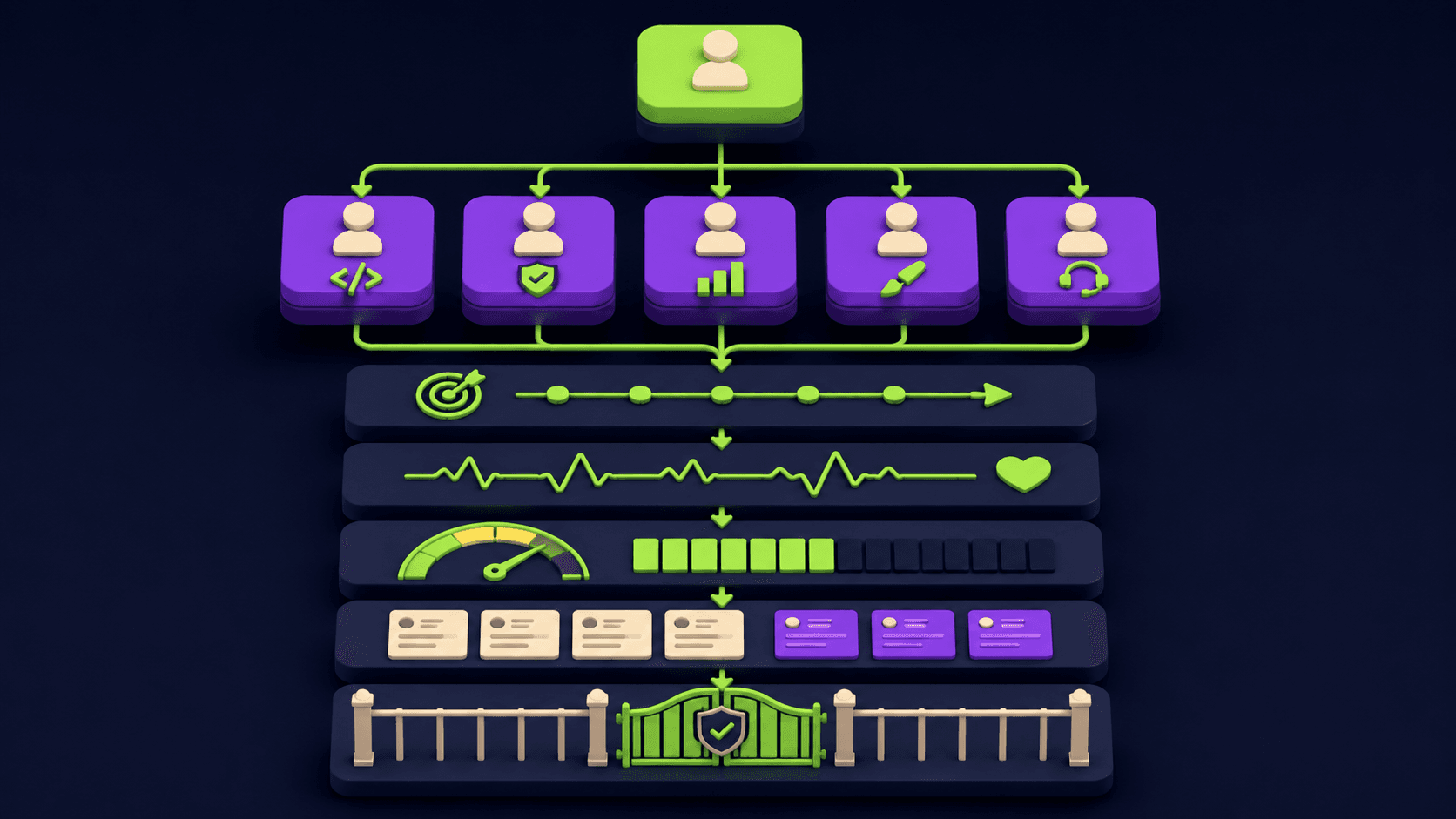
Run a Company With AI Agents: The Open-Source Orchestration Setup (2026)

Claude Code vs Cursor vs Codex vs Devin vs Replit Agent 3: 2026 Scorecard
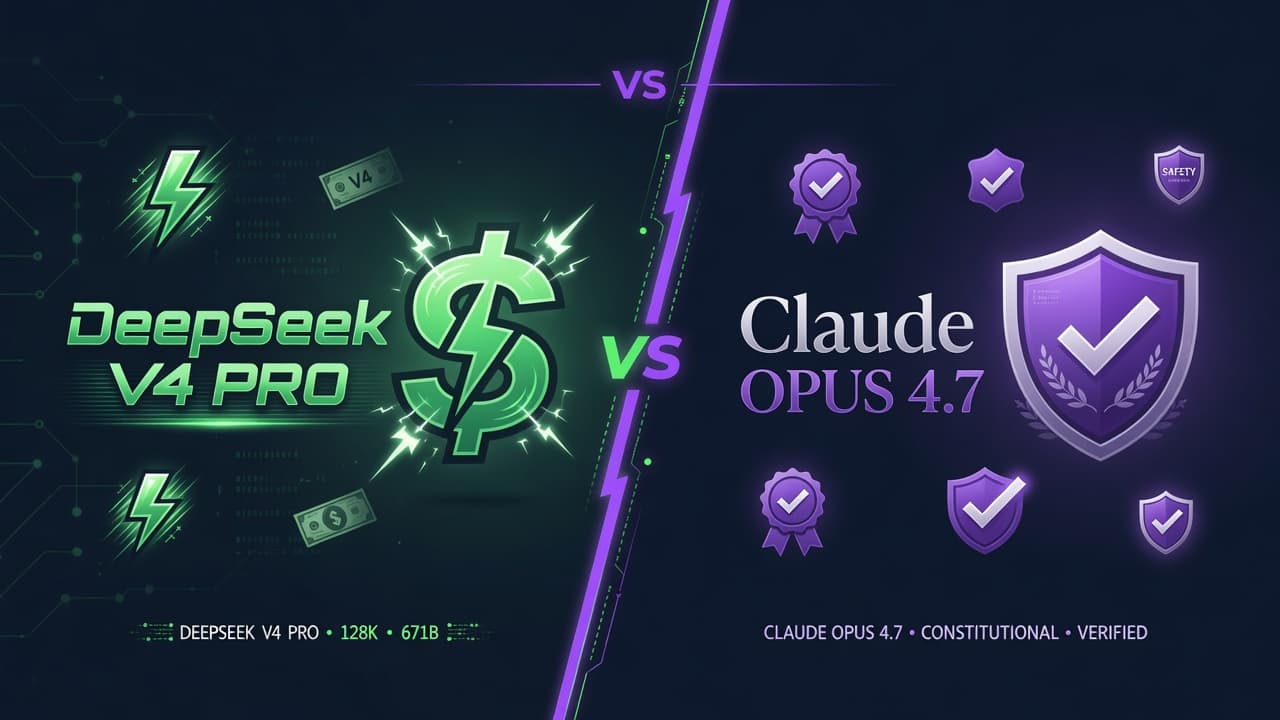
DeepSeek V4 Pro vs Claude Opus 4.7: 5-PR Refactor Test (2026)
Replit Pricing Explained (2026): Core vs Pro and Effort-Based Agent Billing
Run 5 AI Agents in Parallel Without Collisions (2026)