Botpress is an AI-native chatbot and agent builder for developers. Build complex conversational workflows with visual tools, Autonomous Nodes, LLM-powered knowledge bases, and deploy across WhatsApp, Slack, websites, and more.
Botpress is a chatbot and AI agent builder founded in 2017 by Sylvain Perron and Justin Watson in Quebec City, Canada. The platform targets developers and technical teams who need full control over conversational logic, LLM selection, and deployment infrastructure. It has processed over one billion conversations across more than 1.5 million bots built by 300,000 users globally, with enterprise deployments at companies including Kia, Shell, Siemens, and Asus.
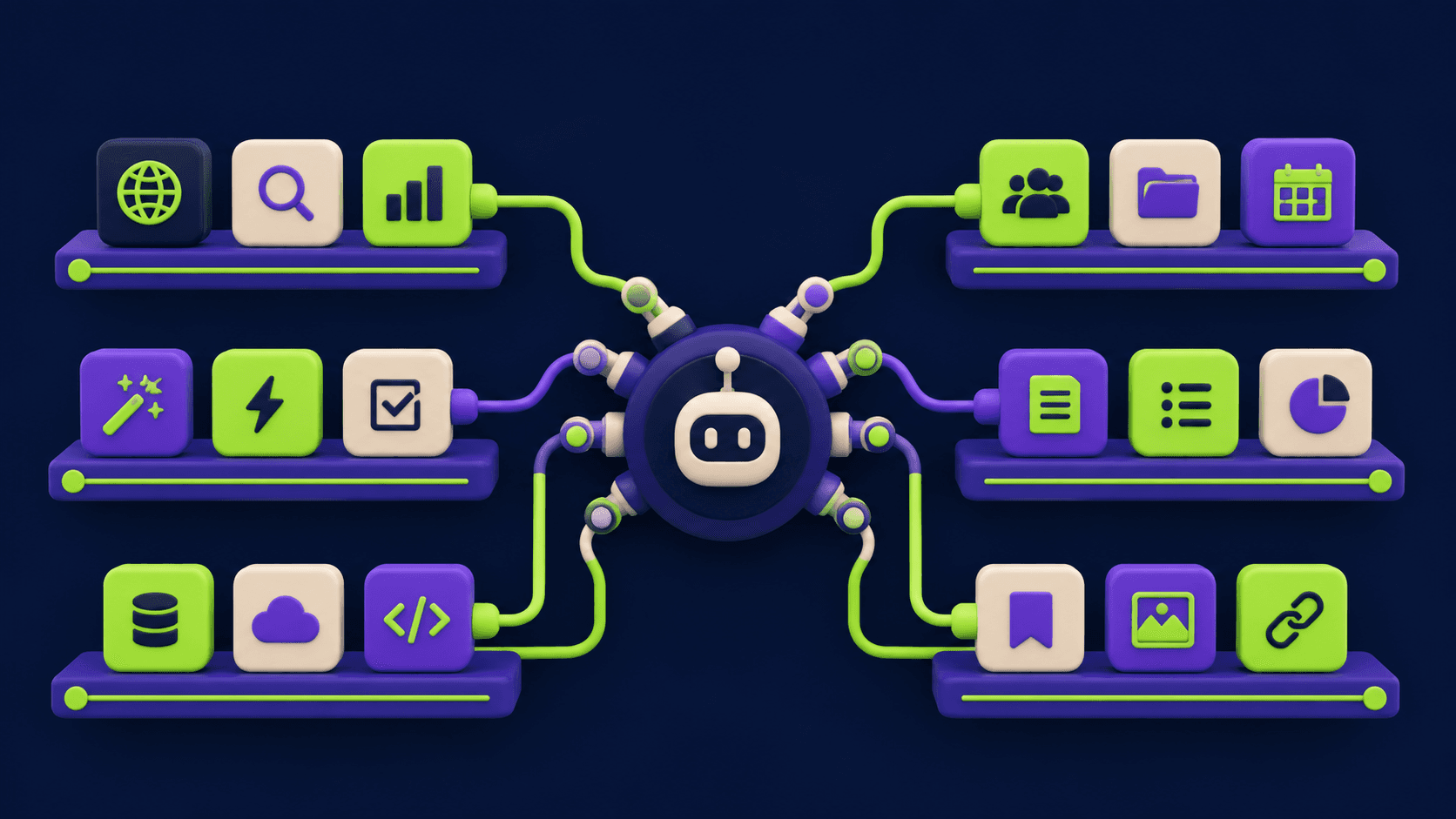
The current platform runs as Botpress Cloud, a visual-first builder centered on Autonomous Nodes, a built-in knowledge base, and connections to 300+ external services. Autonomous Nodes let agents reason through multi-step tasks, query documents, search the web, and trigger workflow transitions without writing custom orchestration code. The builder supports 100+ languages, offers role-based access controls on paid tiers, and integrates natively with Slack, WhatsApp, Telegram, Salesforce, Zendesk, and Zapier. A legacy self-hosted version (v12) remains available on GitHub under AGPL-3.0, though Botpress Cloud is the active development focus.
What Botpress actually does in May 2026
Botpress Cloud is a visual workflow builder layered on top of LLM APIs. You start in the Studio, a drag-and-drop canvas where nodes represent conversation states, decision branches, API calls, and AI reasoning steps. Standard nodes handle fixed logic: collect a form field, call a webhook, send a message to a Slack channel. Autonomous Nodes handle the more interesting cases: given a plain-English instruction (for example, "answer the user's question using the product FAQ and escalate if sentiment is negative"), the node uses the connected LLM to interpret, reason, and act without manual routing code.
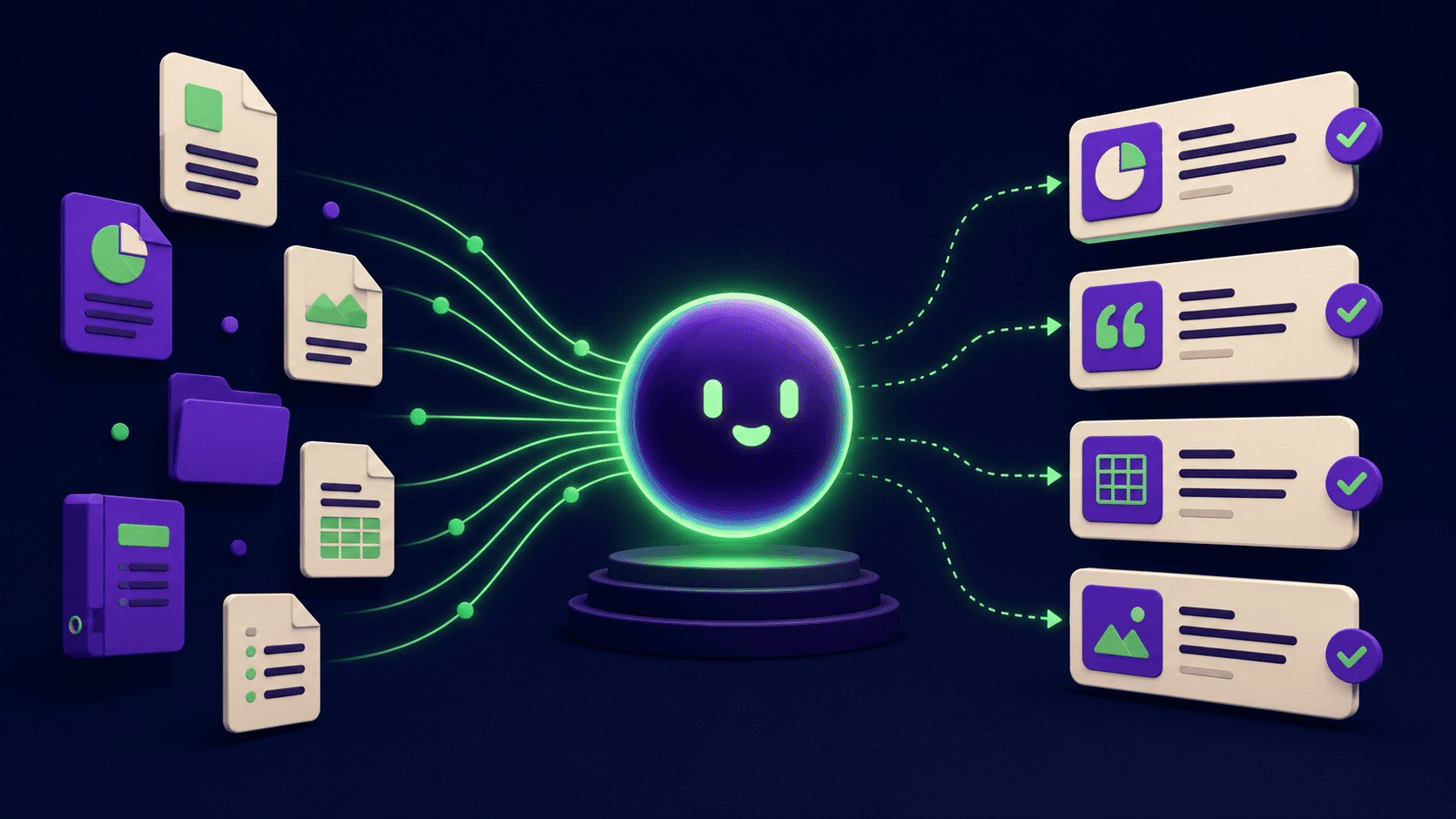
The knowledge base system ingests documents, websites, Notion pages, rich text, and structured tables, then exposes that content to Autonomous Nodes at inference time via retrieval-augmented generation. This means you can build a support bot trained on your own documentation without sending data back to OpenAI's training pipeline. Botpress processes knowledge at your instance level, keeping your content separate.
Deployment spans ten-plus channels from a single build. A bot designed in Studio can publish simultaneously to a web widget, WhatsApp Business, Facebook Messenger, Instagram, Telegram, Slack, and Microsoft Teams. Channel-specific message types (buttons, carousels, quick replies) are handled automatically. The Desktop app (downloadable) mirrors the cloud Studio for offline work and local testing, though it connects to cloud infrastructure for live deployments.
On the developer side, Botpress exposes a REST API and supports JavaScript and TypeScript directly inside action nodes. You can call external APIs, manipulate variables, run conditional chains, and extend the platform through custom integrations. The integration hub provides pre-built connectors for Shopify, HubSpot, Zendesk, GitHub, and Zoom, among others.
Where Botpress sits versus Voiceflow and Chatbase
The three most common comparisons users run: Botpress vs. Voiceflow, Botpress vs. Chatbase, and Botpress vs. open-source alternatives like Dify or AnythingLLM.
Botpress vs. Voiceflow. Voiceflow is built for conversation designers and product managers first, developers second. Its canvas-based interface emphasizes dialogue mapping with separate design, development, and QA handoffs, which suits larger product teams building multi-turn flows across voice channels (Alexa, Google Assistant, telephony IVR). Botpress has no native voice/IVR deployment. Where Botpress wins: full LLM flexibility (you pick the model, Voiceflow restricts options by tier), self-hosting via v12, and a lower price floor at equivalent capability. Voiceflow's Pro tier starts at $50/month with simpler onboarding; Botpress's paid features require more setup investment but give deeper logic control. Voiceflow is proprietary cloud only with no self-hosted path.
Botpress vs. Chatbase. Chatbase is a knowledge-base-to-widget pipeline. Upload a PDF or paste a URL, and it generates a GPT-powered chat widget in under an hour. There is no visual flow builder, no conditional routing, and no model selection beyond OpenAI's GPT stack. Chatbase starts at $19/month (Hobby tier) and trades depth for speed. Botpress is for teams who need the bot to do more than answer FAQ questions: call an API, check CRM data, route based on user input, handle multi-session state, and escalate to a human agent. For that use case, Chatbase simply has no equivalent feature set. For fast deployment of a document-grounded Q&A widget, Chatbase wins on simplicity. For anything involving logic, integrations, or multi-turn reasoning, Botpress is the right level of tool.
Compared to Manychat, which focuses on marketing automation over messaging channels (Instagram, Facebook, SMS), Botpress is a different beast entirely. Manychat excels at drip sequences, broadcast campaigns, and lead capture flows. Botpress has no native marketing broadcast features; it is built for interactive, LLM-driven conversations rather than scheduled push campaigns.
"The integration with GPT is highly impressive and seamlessly incorporated into the tool." - Jean-Francois F., Associe Direction Web, IT Services, Capterra, May 2024
What the workflow reality looks like
Getting a basic bot live takes 2-8 hours for a developer with API experience. The Studio is genuinely well-designed for the first hour: drag a node, connect it to a knowledge base, hit publish to a test webchat. Where complexity accumulates fast is conditional branching. Once you need "if the user says X and their account tier is Y, route to flow Z and call the CRM API," you are writing JavaScript inside action nodes and managing variable scopes across the canvas. This is not beginner territory.
The Autonomous Node approach helps significantly for open-ended interactions. Instead of mapping every possible user intent manually, you write an instruction for the node and the connected LLM interprets intent at runtime. This shifts development effort from exhaustive intent mapping to prompt engineering and knowledge base curation. For teams comfortable with LLM prompting, this feels like a superpower. For teams expecting a no-code experience, the underlying complexity is still present, just abstracted one level up.
Billing has its own learning curve. Every Botpress plan charges two figures: a base plan fee and a separate AI Spend charge for LLM token usage. Botpress passes through underlying provider costs with no markup, which is fair, but it means your monthly bill has a variable component that spikes when users have long, complex conversations. Setting AI Spend caps helps, but teams routinely report budget surprises in the first 60 days of production. The free Pay-as-you-go tier includes a $5 AI credit and 500 messages per month, enough to prototype but not to run a real deployment.
"I dislike that Botpress has a steep learning curve, especially for beginners and non-technical users." - Kamsi O., Research Staff, Religious Institutions, Capterra, February 2024
Community support is a genuine differentiator. Botpress runs weekly office hours, an active Discord server, and a structured Academy with video lessons covering pricing, Studio navigation, knowledge base setup, and autonomous node configuration. Given documentation gaps at the advanced level, the Discord community fills a real void, and the company's responsiveness in that channel is frequently praised.
Who Botpress is built for
Botpress's own community survey (2025) found that 68% of active users identify as software developers or DevOps engineers. That tells you something about what the platform assumes from its users. It is built for teams who can read a REST API response, write a conditional expression, and debug a webhook. Solo developers building AI receptionist services, agencies building custom chatbots for clients, and enterprise tech teams deploying support automation at scale are the natural fit.
Regulated industries (finance, healthcare, government) represent a significant enterprise use case. The v12 self-hosted option under AGPL-3.0 provides full data sovereignty, and teams like those at Fortune 500 banks listed as clients require exactly that capability. For these teams, Botpress's on-premises deployment path is the deciding factor.
The Dify and AnythingLLM comparison matters here: if you want fully open-source, self-hosted agent infrastructure with no vendor cloud dependency, those platforms deserve evaluation. Botpress Cloud is not open source. The v12 codebase is, but it is no longer the active product.
What Botpress is not
Botpress is not a marketing automation tool. It has no broadcast campaign features, no drip sequence builder, and no native audience segmentation for push messaging. If your use case is "send messages to 10,000 Instagram followers on a schedule," Botpress is the wrong tool. That is Manychat's territory.
It is not a quick-launch widget. Teams expecting to be live in 30 minutes will be frustrated. The platform rewards investment: the more time you spend configuring flows, tuning knowledge bases, and connecting integrations, the more capable the resulting bot. Teams that treat it like a drop-in chatbot plugin will hit a wall quickly.
It is not a voice agent platform. If your roadmap includes deploying to phone trees, IVR systems, or smart speakers, Botpress does not have native voice output. You can use the API to connect voice infrastructure yourself, but there is no built-in equivalent of Voiceflow's voice channel support.
It is also not free in any practical sense for production workloads. The Pay-as-you-go tier's 500 messages per month and $5 AI credit covers initial testing only. Real deployments land on Plus ($89/month) at minimum, with AI Spend on top.
User Reviews
No reviews yet. Be the first to share your experience!
Sign in to write a review.
Featured in collections
Curated lists that include Botpress.
Related articles
Guides and articles related to Botpress.

Replace 6 SaaS Subscriptions With 4 n8n AI Agents (2026)
Build an Internal Knowledge Bot (RAG) for Your Company: A No-Nonsense Guide
How to Sell AI Chatbots to Local Businesses ($1K-$5K Retainers, 2026)

15 AI Agent n8n Workflows You Can Build This Weekend (2026)
AI Customer Support Triage That Routes 70% of Tickets Without a Human (2026)