
E2B is open-source cloud infrastructure that gives AI agents a secure, isolated sandbox to execute code. Used by 88% of Fortune 100 companies, it runs Python, JavaScript, and any Linux-compatible language inside Firecracker microVMs with sub-200ms startup.
E2B is open-source infrastructure for running AI-generated code in secure cloud sandboxes. Founded in 2023 by Vasek Mlejnsky and Tomas Valenta, the Czech-American startup solves a specific problem: when an AI agent writes code, something has to actually run that code safely, at scale, without putting the host system or other tenants at risk. E2B provides that execution layer. Each sandbox is an isolated Linux environment powered by Firecracker microVMs, the same hypervisor technology AWS built for Lambda, meaning each execution gets a dedicated lightweight kernel rather than sharing one with neighboring tenants. The company raised a $21M Series A led by Insight Partners in July 2025, bringing total funding to $32M, and reports 88% of Fortune 100 companies using the platform alongside customers including Perplexity, Hugging Face, Manus, and Groq.
The core product is the sandbox: a programmable, ephemeral Linux computer an AI agent can control through Python or TypeScript SDKs. Agents can write and run Python, JavaScript, Ruby, C++, or any Linux-compatible language; install packages via pip, npm, or apt; manage files; open terminals; and run long processes for up to 24 hours per session. E2B also ships a Code Interpreter SDK for streaming rich outputs (charts, tables, data frames) back to calling applications, a Desktop sandbox with VNC for agents that need a graphical interface, and a self-hosting path for teams that want to run the stack on their own cloud. The Apache-2.0 license covers the full SDK and core runtime. As of April 2026, the main repository has 12,000 GitHub stars, 883 forks, and an active weekly release cadence.
What E2B actually does in April 2026
E2B's sandbox is a stateful Linux environment: it persists within a session, so an agent can install a package in step one, write a file in step two, and run code that imports from that package in step three -- without restarting. Sandboxes start in under 200ms in the same AWS region, with a default spec of 2 vCPUs and 0.5GB RAM on the free tier, scaling to 16 vCPUs and 64GB RAM on Pro and Enterprise. Sessions last up to 1 hour on the Hobby tier and 24 hours on Pro, with a 30-day pause capability that suspends billing while preserving sandbox state.
The Code Interpreter SDK extends the base sandbox for data science workflows. It streams execution outputs, including matplotlib charts, pandas DataFrames, and standard stdout/stderr, as typed chunks back to the calling application. Perplexity uses this SDK to render interactive charts inline in search results: when a user asks a data-heavy question, Perplexity's agent writes Python, runs it in an E2B sandbox, and the chart appears in the answer. Denis Yarats, CTO of Perplexity, described the integration: "We had E2B up and running within a week. We are now running millions of E2B Sandboxes each month."
E2B Desktop provides a graphical sandbox with VNC access for agents that need to control a browser or desktop application. Manus, the autonomous research agent that became one of the highest-profile agentic systems of early 2025, relies on this feature. Tao Zhang, co-founder of Manus, explained: "Manus uses 27 different tools, and it needs E2B to have a full virtual computer."
Framework compatibility covers LangChain, LlamaIndex, LangGraph, AutoGen, and any custom agent stack. Model compatibility is intentionally LLM-agnostic: E2B works with OpenAI, Anthropic, Mistral, Llama, Groq, and any model that generates code text. This agnosticism is a deliberate design choice -- the platform is positioning itself as infrastructure, not as a layer that locks teams into a particular model vendor.
Where E2B sits versus Modal and Anthropic Code Execution
Three platforms dominate the AI agent code execution space in 2026, and they differ mechanically in ways that matter for production decisions.
Modal uses gVisor containers for isolation: a virtualization approach that intercepts Linux system calls at the OS level, providing security without the overhead of a full hypervisor. This makes Modal's containers start faster (sub-second P95 cold starts) and cheaper per CPU-second ($0.0000131/s vs E2B's $0.000014/s), but gVisor shares a host kernel between tenants through a syscall filter. E2B's Firecracker microVMs give each sandbox a dedicated kernel, which makes kernel-level exploits harder. Modal's primary market is GPU inference and ML training at scale: it provides H100, H200, and B200 GPU access with per-second billing and, as of July 2025, GPU memory snapshots that drop vLLM cold starts from 45 seconds to under 5 seconds. Modal offers agent sandboxing as a secondary feature. E2B offers no GPU access at all. Developers building agent systems that also need GPU inference typically combine E2B (for code execution) with Modal (for model serving), rather than choosing one over the other.
Anthropic's Code Execution tool is the simplest path for teams already building exclusively on Claude. It provides Python execution as a native API tool, billed through existing Claude token pricing with no separate infrastructure account. The trade-off is hard lock-in: the tool is only available when calling Claude models. It supports Python only (no JavaScript, no terminal), has no persistent filesystem across calls, and does not allow custom package installation beyond a pre-installed scientific stack. For a team running a multi-model stack or wanting to switch models over time, Anthropic's tool creates technical debt. E2B works with any LLM and the sandbox state persists across multiple agent steps within a session. The E2B path requires more integration work and a separate billing relationship, but produces a more portable architecture.
"E2B has revolutionized our agents' capabilities as an advanced alternative to OpenAI's Code Interpreter." -- Kevin J. Scott, CTO/CIO of Groq, E2B homepage, 2025
"E2B allows us to scale-out training runs by launching hundreds of sandboxes in experiments." -- Lewis Tunstall, Research Engineer at Hugging Face, E2B homepage, 2025
What the agent sandbox reality looks like
Getting a basic sandbox running takes roughly 10 minutes. Install the SDK (pip install e2b), create an API key, and the first sandbox is running with three lines of Python. The documentation includes working cookbook examples for Anthropic, OpenAI, and open-source model integrations. Several customers -- Lindy, Manus -- report full integration in under a day. "It took just one hour to integrate E2B end-to-end. Performance is excellent," said Maciej Donajski, CTO of Manus.
The day-to-day experience for agent builders is mostly straightforward for short-lived tasks. A sandbox starts, the agent runs its code, results come back, sandbox closes. The billing is genuinely per-second, so a 3-second code execution costs fractions of a cent. Problems emerge as tasks get longer and more parallel. The sandbox timeout configuration has documented edge cases: GitHub issue #879 (2025) describes a user setting a 24-hour timeout and the sandbox being evicted in five minutes. E2B's documentation flags this as a known pain point, calling the timeout system "the single most confusing concept in E2B." Teams running large parallel agent pipelines report that per-second billing escalates quickly and unpredictably when agents fan out into dozens of concurrent sandboxes or stall mid-execution. There is no built-in cost cap or circuit-breaker on the Hobby or Pro tiers.
Custom templates let teams pre-install dependencies so sandboxes start with a pre-baked environment rather than running pip install from scratch on every execution. This is important for production workloads where a 10-second package install on cold start would be unacceptable. Templates are defined in a Dockerfile-like format and published to E2B's registry.
Who E2B is built for
E2B's sweet spot is teams building production AI agents that need code execution as a standalone, LLM-agnostic infrastructure service. The Fortune 100 adoption reflects a specific enterprise use case: a large company has multiple AI initiatives using different model vendors, and E2B becomes the common execution layer across all of them. Hugging Face uses E2B for reinforcement learning eval pipelines, spinning hundreds of sandboxes in parallel to score model outputs. Perplexity uses it to power the data analysis feature across hundreds of millions of monthly searches. Groq uses it to extend agent capabilities beyond pure language generation.
Independent developers building agent frameworks or agentic products are the other clear audience. The Apache-2.0 license, the active GitHub community (12K stars), and the detailed cookbook examples make E2B accessible without enterprise procurement. The free tier with $100 in one-time credits is enough to prototype and validate a workflow before committing to the $150/month Pro tier.
Teams that need GPU access, long-running persistent environments that survive beyond 24 hours, or who are committed to a single LLM vendor will find other platforms more suitable. The $150/month floor with no intermediate tier between free and Pro creates a pricing cliff that pushes some indie builders toward self-hosting or alternatives.
What E2B is not
E2B is not a general serverless compute platform. There is no GPU access, no model serving, no batch processing at arbitrary scale. Developers who need to run ML inference, fine-tuning, or data pipelines on GPUs should look at Modal or RunPod instead. E2B focuses narrowly on giving agents a place to run code safely, and that narrow focus is both its strength and its boundary.
E2B is not an agent framework. It has no opinion on how agents are structured, how memory is managed, or how tool calls are sequenced. It integrates with LangChain, AutoGen, and custom stacks, but it does not replace them. Teams looking for a complete agent platform should evaluate LangGraph, CrewAI, or Autogen as the orchestration layer, with E2B plugged in as the execution substrate.
E2B is not a long-term persistent development environment. Sessions max out at 24 hours, and there is no built-in mechanism to checkpoint and resume a multi-day task. Teams building products where users return to an ongoing workspace (like a personal coding assistant that remembers a project over weeks) will hit the session length ceiling and need to build state management on top. Daytona and Northflank handle longer-lived workspace patterns better.
Self-hosting requires infrastructure expertise. The open-source code is available, but running Firecracker microVMs on your own hardware or cloud account demands Terraform knowledge, Firecracker configuration experience, and ongoing operational maintenance. The self-hosted path is an option, but it is not turnkey. BYOC and managed on-prem are Enterprise tier only.
User Reviews
No reviews yet. Be the first to share your experience!
Sign in to write a review.
Featured in collections
Curated lists that include E2B.
Related articles
Guides and articles related to E2B.
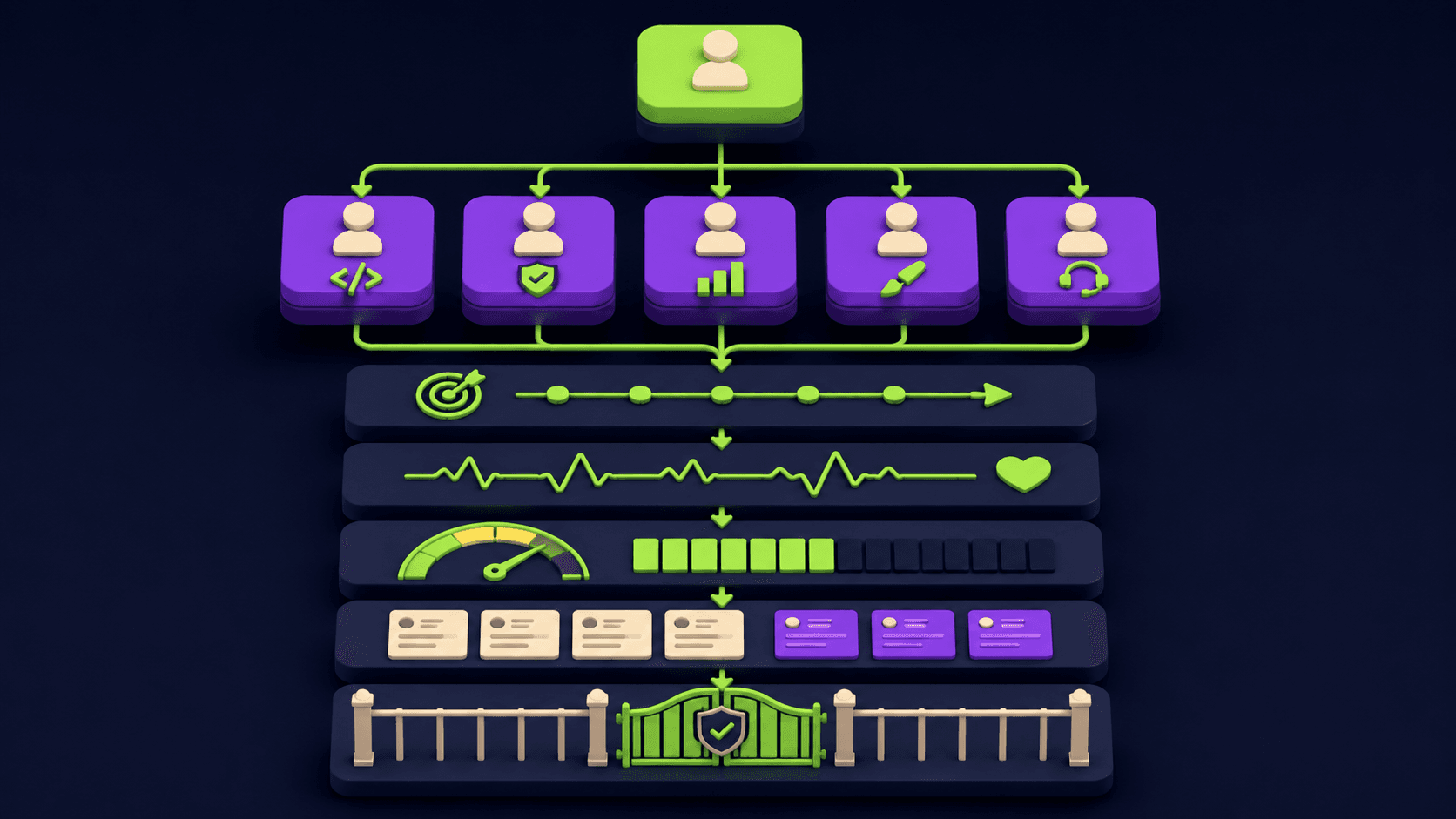
Run a Company With AI Agents: The Open-Source Orchestration Setup (2026)
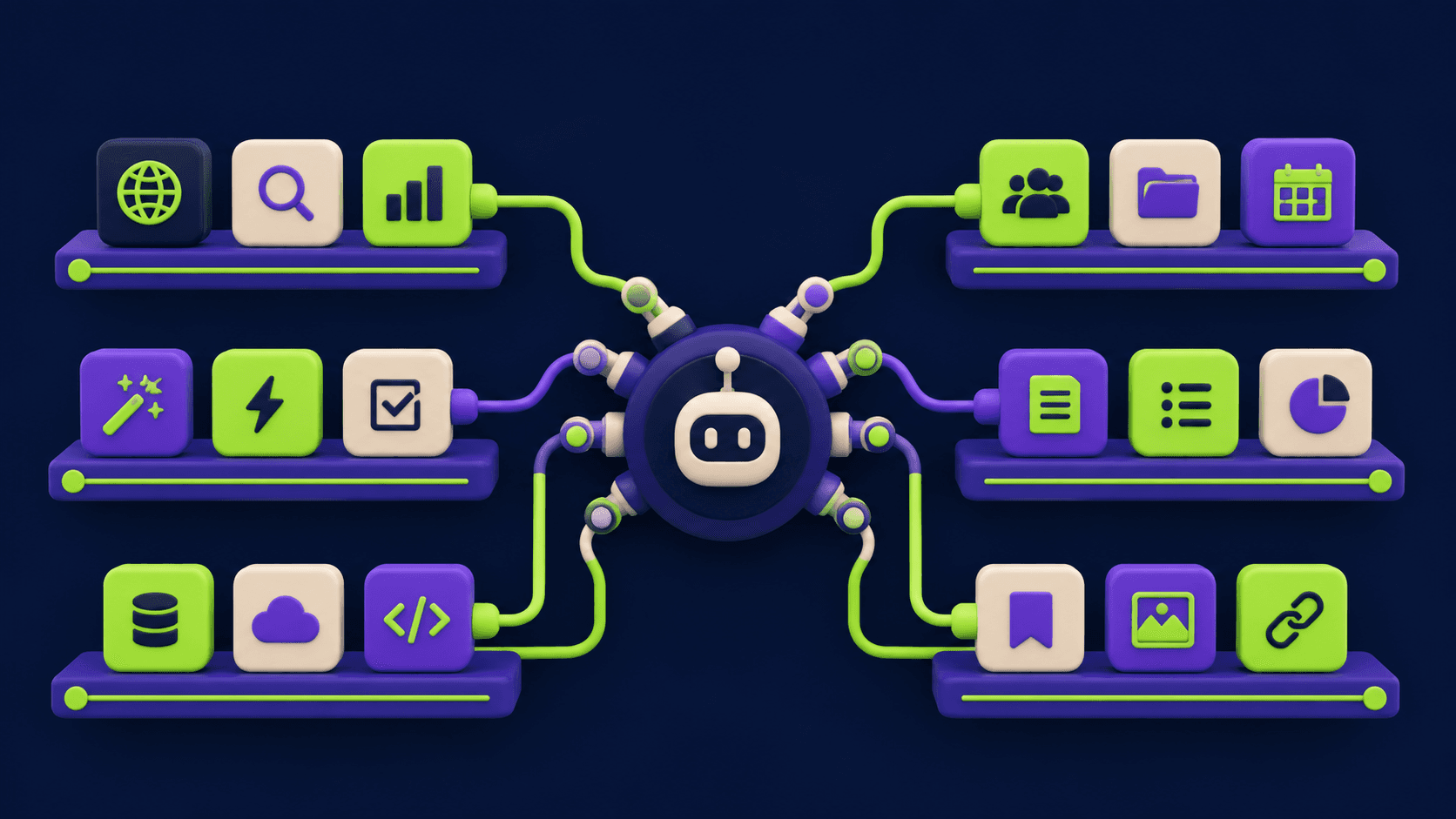
Turn Any AI Agent Into a Superagent: The 12-Integration Stack (2026)
Grok 4.3 API for Agents (May 2026): Pricing, Benchmarks, Migration
Replit Pricing Explained (2026): Core vs Pro and Effort-Based Agent Billing
Claude Code vs Cursor vs Codex vs Devin vs Replit Agent 3: 2026 Scorecard