Haystack is deepset's open-source Python framework for building production-ready RAG pipelines and AI agents. Apache 2.0 licensed, it gives developers explicit control over retrieval, context routing, and generation through composable, YAML-serializable pipeline graphs.
Haystack is an open-source Python framework built by deepset, a Berlin-based AI company, for constructing production-grade retrieval-augmented generation pipelines, AI agents, and multimodal LLM applications. Unlike wrapper libraries that abstract away the retrieval logic, Haystack hands developers a graph-based pipeline system where every component, retrievers, rankers, generators, memory stores, and routing logic, is an explicit node with defined inputs and outputs. The current stable release is v2.28.0, distributed as haystack-ai on PyPI under the Apache 2.0 license. Organizations including NVIDIA, Airbus, Apple, and Netflix have built production systems on it.
The framework's core features include modular pipeline components that serialize to YAML for version control, native support for cyclic graphs enabling agent loops, built-in tracing via OpenTelemetry and Datadog, integrations with over 100 vector databases and LLM providers, and evaluation hooks for tools like Ragas and DeepEval. Pipelines connect to OpenAI, Anthropic, Mistral, Hugging Face, Weaviate, Pinecone, Elasticsearch, and dozens more without vendor lock-in. For teams that need managed infrastructure, deepset offers an Enterprise Platform with visual pipeline design, access controls, and cloud or on-prem deployment options.
What Haystack actually does in May 2026
At its core, Haystack is a pipeline orchestration framework for LLM applications. A pipeline is a directed graph of components. Each component takes typed inputs and returns typed outputs. You wire them together, serialize the resulting graph to YAML, and that file becomes your deployment artifact. This is the key architectural bet deepset made: pipelines should be inspectable, reproducible artifacts, not implicit call chains living only in runtime memory.
Version 2.0, released March 11, 2024 after a December 2023 beta, was a complete framework rewrite. The old 1.x codebase under farm-haystack supported only acyclic graphs, meaning true agent loops with decision branches and retries required external orchestration. Haystack 2.0's cyclic pipeline support changed that: a component can route its output back to an earlier node, enabling self-correction loops, multi-hop retrieval, and agent workflows that iterate until a stopping condition is met.
The component library covers the full RAG stack: document preprocessors and chunkers, sparse retrievers (BM25), dense retrievers (embedding-based), hybrid retrievers combining both, LLM-powered rerankers via the LLMRanker component introduced in v2.26.0, prompt builders with Jinja2 templating, and multiple generator backends for any LLM provider. The Agent component manages tool calls and conversation history, supporting multi-turn interactions where the model decides which tools to call next. For deployment, the Hayhooks integration wraps any pipeline in a REST API without additional code.
Production observability is a first-class concern. The framework ships with structured logging, OpenTelemetry instrumentation, and Datadog tracing integration. Teams can monitor which retrieval steps are underperforming, trace latency through multi-step pipelines, and run automated evaluation suites on every deployment using the built-in evaluation framework hooks.
"Haystack is a very good open-source framework for building LLM applications. The 'explicit rather than implicit' approach means it is much easier to debug, update, and maintain your pipeline.". Martin Heller, InfoWorld, September 2024
Where Haystack sits versus LangChain and LlamaIndex
The three dominant Python frameworks for LLM applications occupy meaningfully different positions, and the mechanical differences matter when choosing one for production.
LangChain is the most popular framework by a wide margin, sitting at roughly 125,000 GitHub stars against Haystack's 25,100. It uses a chain-based composable design (LCEL, LangChain Expression Language) and is primarily agent-first, with hundreds of pre-built integrations for tools, APIs, and data sources. The breadth is its strength: if a provider exists, LangChain likely has an integration. The tradeoff is opacity. Benchmark comparisons have found LangChain consuming roughly 2.40k tokens per RAG query versus Haystack's 1.57k for equivalent tasks, and latency running around 10ms versus Haystack's 5.9ms. LangChain's abstraction layers make initial prototyping fast but debugging complex chains difficult. There is no pipeline-level serialization: your LangChain workflow exists only as Python code. Teams that need explicit, reviewable pipeline definitions tend to find Haystack more maintainable at scale. For hands-on comparison, see the LangChain listing.
LlamaIndex (~40,000 GitHub stars) treats RAG as a native capability. Its query engines, retrieval tools, and data connectors are purpose-built for document ingestion and question-answering workflows. LlamaIndex's event-driven orchestration uses decorated Python functions rather than graph nodes, offering faster iteration during prototyping. It has 300+ integrations via LlamaHub, particularly strong for data connectors, and native Human-in-the-Loop support through event-driven pauses. Monthly downloads run around 5 million versus Haystack's 363k, suggesting it captures a broader audience of less infrastructure-oriented developers. The gap versus Haystack: LlamaIndex workflows have no YAML serialization (they exist only as Python code), and production safeguards like step limits and error handling require more manual implementation. See the LlamaIndex listing for a deeper look.
A useful shorthand: LlamaIndex for RAG-first projects where document ingestion is complex, LangChain for broad agent workflows with many tool integrations, Haystack for production systems where pipeline reproducibility, observability, and explicit architecture matter more than ecosystem breadth.
"Haystack's pipeline-based architecture is visible, structured, and debuggable. LlamaIndex uses code-centric event-driven orchestration, offering flexibility and speed for prototyping but requiring developers to handle more guardrails manually.". ZenML Blog, 2025
Two other tools worth considering in adjacent use cases: RAGFlow offers a no-code visual pipeline builder for teams that want GUI-first RAG without Python, and Dify provides a broader app-building platform that sits above the framework layer entirely. AnythingLLM is another option for teams wanting a managed, self-hosted RAG interface without writing pipelines from scratch.
What the pipeline workflow reality looks like
A typical production Haystack project starts with defining a pipeline in Python, connecting component instances by name, then calling pipeline.to_dict() to export the graph to YAML. That YAML file goes into version control. A colleague can read it, diff it against a previous version, review changes in a PR, and deploy it with confidence that the system is exactly what the YAML describes.
For a document Q&A system, a common pattern is: a preprocessing pipeline that chunks and embeds documents into a vector store on ingest, and a query pipeline that takes a question, retrieves candidate chunks via hybrid search (BM25 plus embeddings), passes them through an LLMRanker to reorder by semantic relevance, then feeds the top-k chunks to a generator with a structured prompt template. The whole chain runs in under 200ms for most queries.
Agent workflows are more complex. The Agent component manages a conversation state and decides which tools to invoke each turn. A research agent might have tools for web search, code execution, and document retrieval. The cyclic graph support means the pipeline can loop: the agent calls a tool, gets results, decides it needs more information, calls another tool, and so on until it has enough context to answer. This required external orchestration in Haystack 1.x; in 2.0 it is built into the pipeline graph itself.
Evaluation is integrated rather than bolted on. deepset provides an evaluation framework that connects to Ragas and DeepEval, letting teams measure retrieval precision, recall, and answer faithfulness automatically. Teams that take evaluation seriously tend to find this valuable; it is one area where Haystack is more opinionated than LangChain, which leaves evaluation largely to the developer.
Who Haystack is built for
Haystack is the right choice for Python-native AI engineers who are building systems they will maintain and evolve over months or years, not demos they will ship and forget. The framework rewards investment: the more complex the pipeline, the more the explicit graph design and YAML serialization pay off.
Enterprise teams with compliance and governance requirements fit well. Pipeline definitions are auditable artifacts. Tracing logs every step. The Enterprise Platform adds access controls and the ability to run on-prem where data cannot leave the organization's infrastructure. deepset's customer list (NVIDIA, Airbus, the European Commission, Netflix) reflects this enterprise focus.
Research teams building advanced retrieval systems benefit from the full component library. Hypothetical Document Embeddings (HyDE), cross-encoder reranking, hybrid BM25-plus-embedding retrieval, self-correction loops: these are all first-class components, not experiments you have to wire together yourself.
What Haystack is not
Haystack is not a quick-start tool. The graph-based pipeline model requires understanding the component interface and pipeline wiring before you write your first query. Developers accustomed to LangChain's chain.invoke() one-liner will find Haystack's explicit design verbose at first. If your goal is a working prototype in an afternoon, LlamaIndex or LangChain will get you there faster.
It is not a multi-language framework. Haystack is Python only. Teams building in JavaScript, TypeScript, Java, or Go must bridge to a Haystack backend via REST (using Hayhooks) or choose a different tool. This is a hard constraint with no workaround at the framework level.
It is not a no-code or visual tool. There is a visual pipeline editor in the Enterprise Platform, but the core framework is code-first. Teams that want drag-and-drop RAG pipeline building should evaluate RAGFlow or Dify instead.
It is not a finished migration story from v1. If your team has existing pipelines in farm-haystack 1.x (end-of-life March 11, 2025), rewriting them to the 2.0 component interface is a significant engineering investment. There is no automated migration path.
Finally, Haystack is not the fastest-moving framework in terms of community momentum. With roughly 25,100 GitHub stars against LangChain's 125,000+, it has a smaller pool of third-party tutorials, blog posts, and Stack Overflow answers. When you hit an unusual edge case, you may find yourself reading source code rather than finding a pre-written answer. deepset's Discord community is active and the GitHub Discussions board is responsive, but the breadth of community knowledge does not match what LangChain offers. That tradeoff is acceptable for teams building production systems with dedicated engineering time; it matters more for solo developers or small teams without runway to investigate issues independently.
User Reviews
No reviews yet. Be the first to share your experience!
Sign in to write a review.
Featured in collections
Curated lists that include Haystack.
Related articles
Guides and articles related to Haystack.
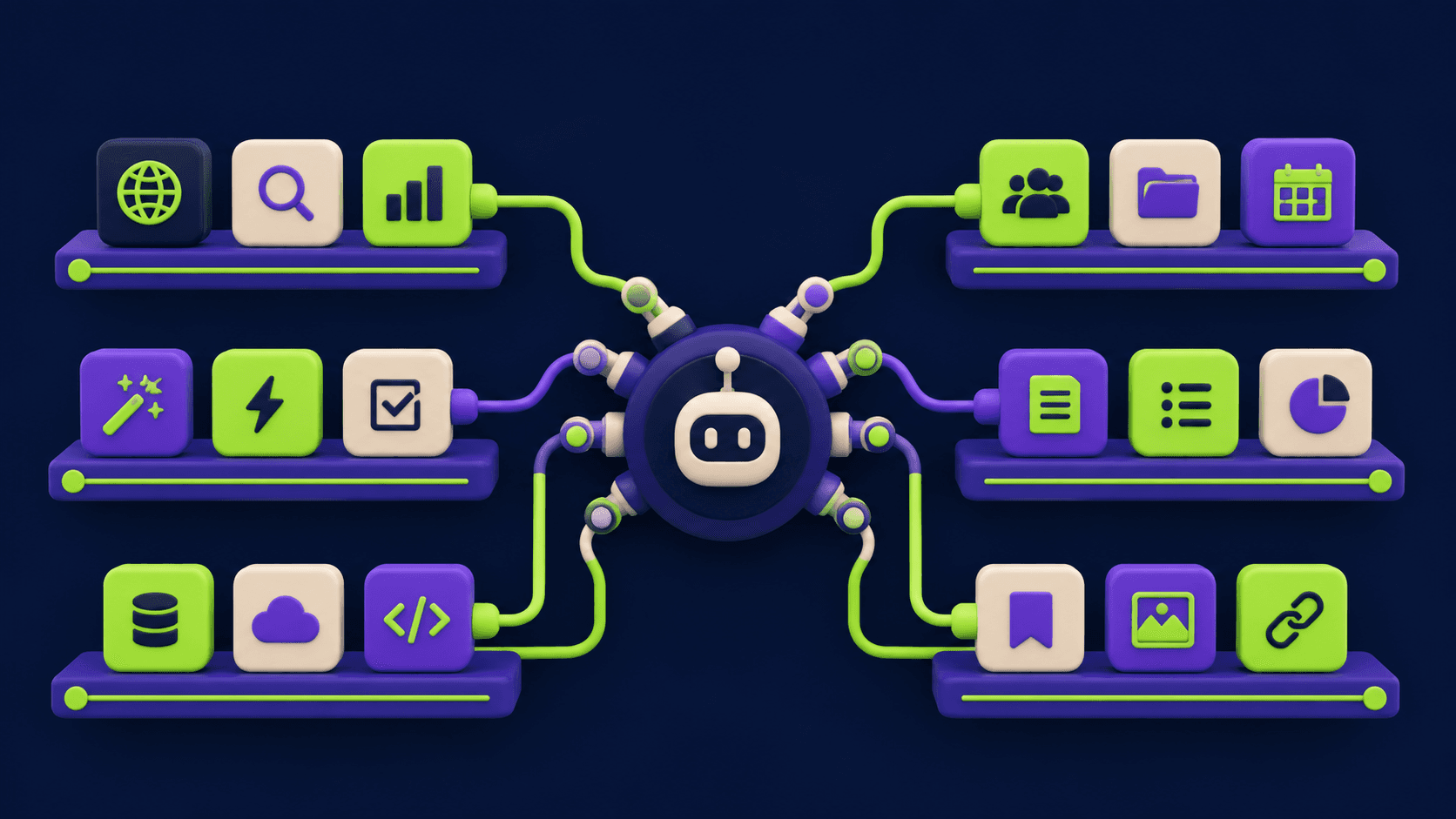
Turn Any AI Agent Into a Superagent: The 12-Integration Stack (2026)
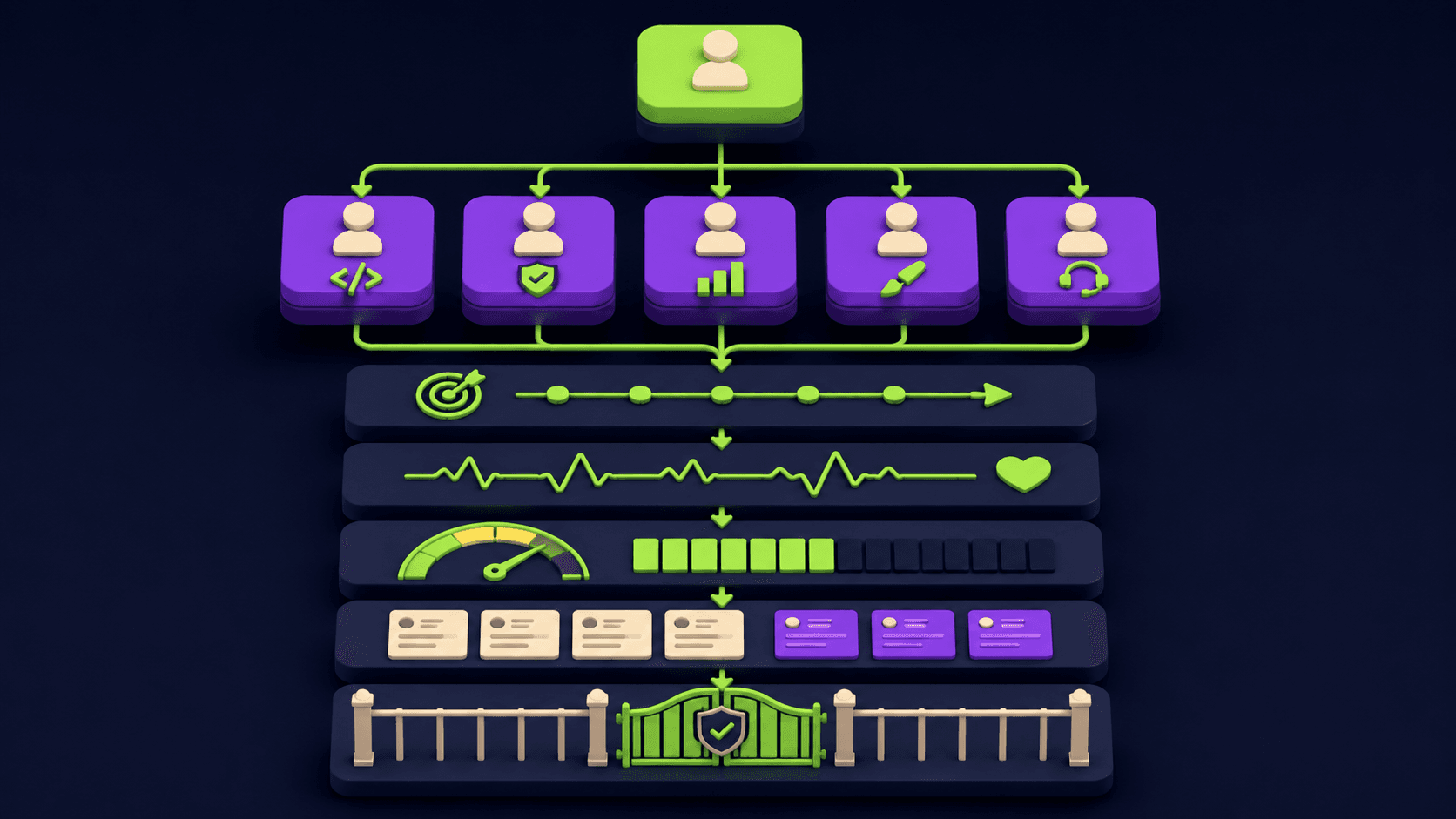
Run a Company With AI Agents: The Open-Source Orchestration Setup (2026)
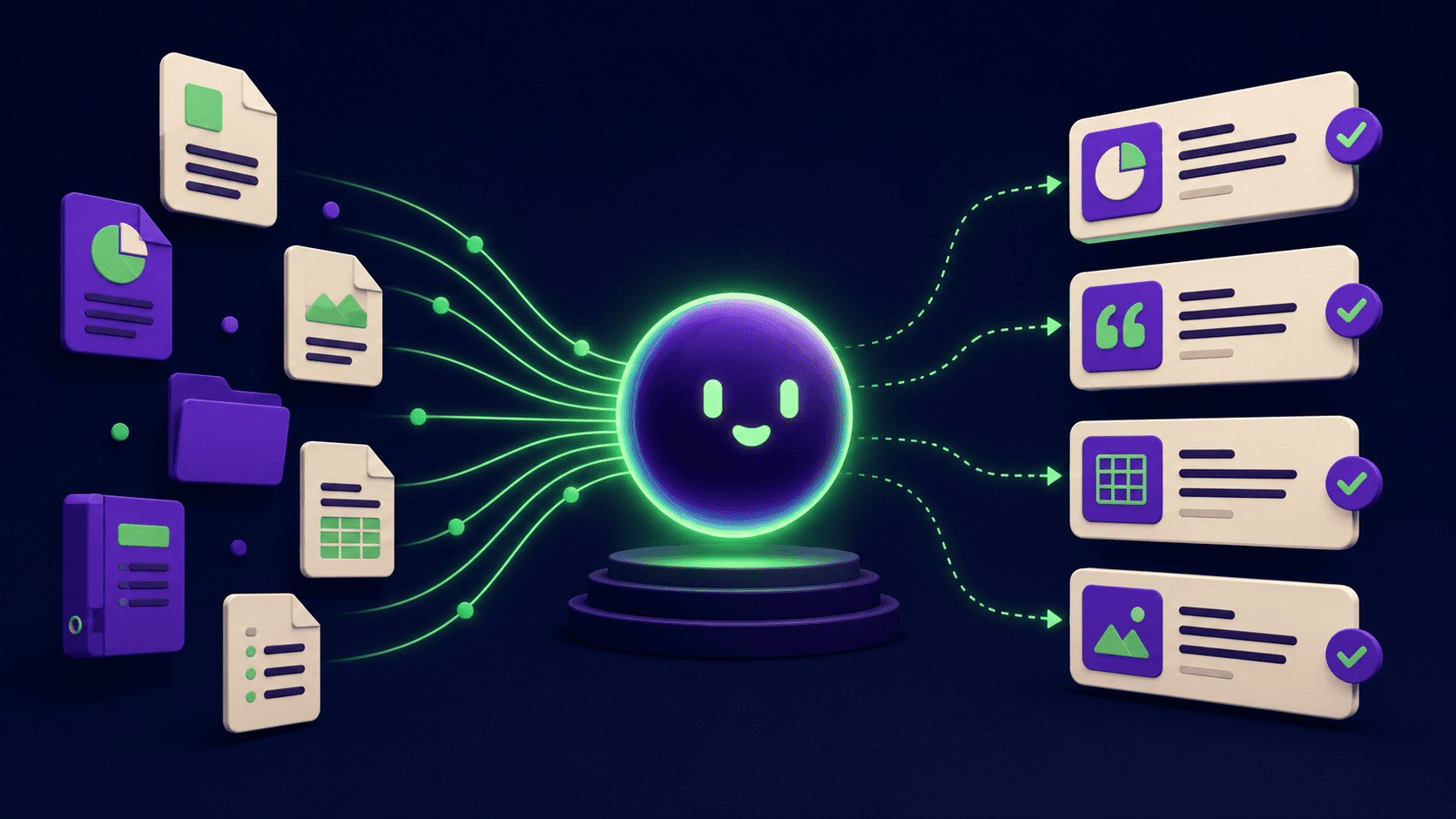
Build an Internal Knowledge Bot (RAG) for Your Company: A No-Nonsense Guide

15 AI Agent n8n Workflows You Can Build This Weekend (2026)
Orchestrator-Workers: The Multi-Agent Pattern That Actually Scales (2026)