
RAGFlow is InfiniFlow's open-source enterprise RAG engine, built around a neural document parser (DeepDoc) that handles complex PDFs, tables, and mixed-layout documents. Self-hostable, Apache 2.0, with 79k+ GitHub stars.
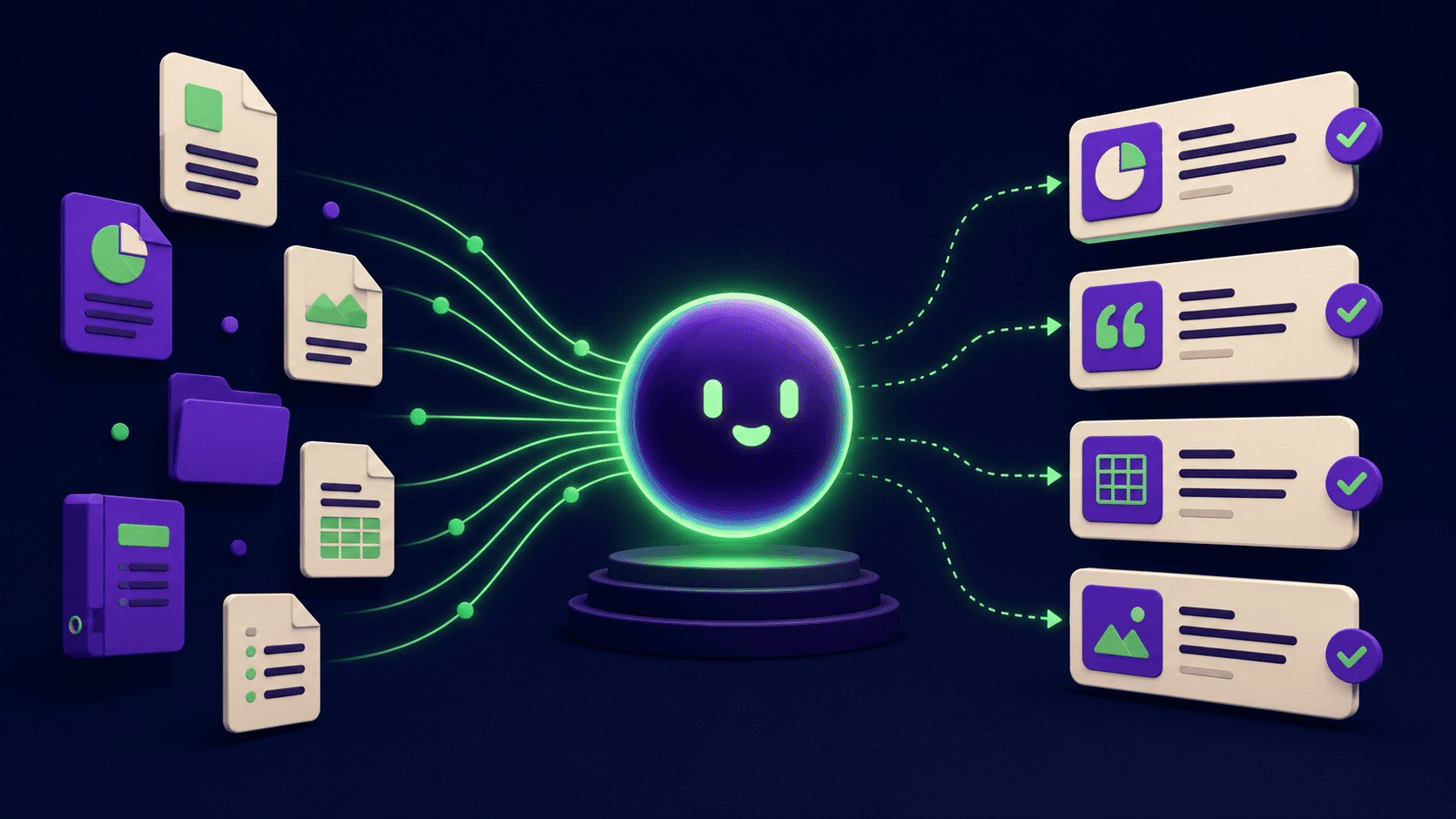
RAGFlow is an open-source, end-to-end Retrieval-Augmented Generation engine built by InfiniFlow, a Chinese AI infrastructure company. It was open-sourced on April 1, 2024, under the Apache 2.0 license, and has grown into one of the most-starred AI infrastructure projects on GitHub, reaching 79.6k stars by April 2026. Unlike framework libraries such as Haystack or LlamaIndex, RAGFlow ships as a complete deployable system: document ingestion pipeline, chunking engine, vector and full-text search, LLM integration, a web UI, and an agent orchestration layer, all in a single Docker deployment. Its defining technical differentiator is DeepDoc, an in-house document parsing subsystem that uses a fine-tuned YOLOv8 layout recognition model, OCR, and table structure recognition to extract accurate structured data from complex enterprise PDFs before RAG ever begins.
The platform supports hybrid search combining dense vector retrieval, BM25 full-text search, and tensor-based reranking, delivered via InfiniFlow's own Infinity database or optional Elasticsearch 9.x. As of v0.25.1 (April 30, 2026), RAGFlow has expanded well beyond its document-RAG origins: it includes an agentic workflow builder with MCP integration, multi-agent pipelines, user-level memory storage, voice I/O, data source connectors to Confluence, Google Drive, Notion, S3, GitHub, Slack, DingTalk, and RSS feeds, and sandboxed code execution within agent flows. It supports major LLMs including GPT-5, DeepSeek v4, Gemini 3 Pro, Claude, and local models via Ollama and Xinference. Features such as cited, traceable answers with source highlighting and a visual chunk-inspection UI address the "garbage in, garbage out" problem that undermines most naive RAG implementations.
What RAGFlow actually does in May 2026
RAGFlow's architecture centers on a three-layer pipeline: ETL, retrieval, and generation. The ETL layer is where RAGFlow differentiates most clearly from simpler stacks. Documents enter the system and pass through DeepDoc: layout analysis identifies whether a given region is a title, paragraph, table, image, or footnote; OCR handles scanned documents; table structure recognition preserves row/column/header relationships that standard PDF parsers collapse into flat text. The result is a semantically rich chunk set that preserves document structure, not just raw strings.
Chunking templates are configurable by document type. RAGFlow ships with pre-built templates for general text, Q&A, academic papers, legal filings, accounting documents, HR manuals, and code, each applying heuristics appropriate to that format. Users can inspect chunks visually in the UI before indexing, making it possible to catch parsing errors before they propagate into retrieval quality. Parent-child chunking (added in v0.23.0) enables coarse-grained retrieval with fine-grained answer generation, reducing the context window pressure that plagues naive chunk-and-retrieve approaches.
On the retrieval side, hybrid search runs vector similarity, BM25 keyword match, and tensor reranking simultaneously, with configurable score weighting. Graph-based retrieval (GraphRAG and RAPTOR integrations) is available for knowledge-graph-style queries. Answers include inline citations pinned to the source document, page, and chunk, reducing hallucination risk and making results auditable.
The agent layer, substantially rebuilt in v0.20.0 (August 2025), supports drag-and-drop workflow construction, webhook triggers, multi-agent coordination, memory across sessions (user-level memory storage added in v0.25.0), and MCP tool integration introduced in 2026. Agentic RAG means agents can decide which knowledge bases to query, when to call external APIs, and how to synthesize multi-source results into a coherent response.
"The layout recognition model is impressive. I tested it on some challenging tables and it outperformed AWS Textract in that scenario. It looks like a YOLOv8 fine-tune." - mpeg, Hacker News, April 2024
Where RAGFlow sits versus Haystack and Dify
Haystack by deepset is a Python framework for building RAG pipelines in code. It provides components: Retrievers, Generators, Readers. Developers compose these components into pipelines using Python, giving them architectural control that RAGFlow's UI-first approach does not match. Haystack does not ship with a document parsing neural model; teams bring their own parsers (PyMuPDF, unstructured, etc.). Haystack excels in regulated industries (The Economist, Oxford University Press, and several government agencies use it in production) where code-level auditability and custom pipeline logic are non-negotiable. RAGFlow's advantage over Haystack is out-of-box completeness: no pipeline assembly required, DeepDoc handles complex layouts automatically, and a full UI ships with the product. Haystack's advantage is composability and the ability to integrate deeply with existing software stacks.
Dify is a broader AI application platform. RAG is one module within Dify, not its core identity. Dify's document handling uses standard chunking strategies without a dedicated layout-recognition neural model, which works well for clean text documents but degrades for PDFs with complex table structures, mixed columns, or embedded images. Dify's user base is product teams who want to build LLM-powered apps quickly: chatbots, workflow automations, and AI applications. RAGFlow's user base is teams whose primary problem is reliably extracting information from messy enterprise documents. The two tools can be complementary: RAGFlow as the document knowledge layer, Dify as the application layer on top. Quivr occupies a simpler self-hosted position that trades enterprise document fidelity for deployment simplicity.
Compared to AnythingLLM, which targets individual users and small teams with a thin wrapper over standard chunking, RAGFlow is a different tier of product. AnythingLLM is a personal productivity tool. RAGFlow is infrastructure for organizations with thousands of documents and requirements around source citation, access control, and retrieval accuracy at scale.
What the self-hosted reality looks like
RAGFlow runs via Docker Compose. The minimum requirement is a CPU with 4+ cores and 16GB RAM, though the FAQ itself notes that 16GB "may be tight if sharing hardware with other services." Real-world deployments regularly require 32GB. The Docker image decompresses from its download size to approximately 7GB on disk. The stack runs at minimum two databases (Elasticsearch or Infinity, plus Redis and MinIO), a document parsing worker, and the main application, making it one of the heavier self-hosted AI deployments in the open-source RAG category.
Performance during document ingestion is deliberately slower than simpler chunkers. The FAQ acknowledges this directly: "Document parsing takes longer than some competitors like LangChain because RAGFlow implements painstaking effort into document pre-processing tasks like layout analysis, table structure recognition, and OCR using vision models." For use cases where document quality matters more than ingestion speed, this tradeoff is worth it. For bulk-loading clean text documents quickly, the overhead is harder to justify.
"Mixing multiple PDF parsers with no clear default is a red flag. pypdf2 is not well-suited for complex layouts." - mpeg, Hacker News, April 2024
The agent layer introduced a significant breaking change at v0.20.0 in August 2025: all Agents from earlier versions required a complete rebuild after upgrading. Teams that had configured production agents had to redo that work. InfiniFlow documented the change clearly, but it reflects an ongoing tension between active development pace and production stability expectations.
The frustrations RAGFlow users keep hitting
Memory usage during document parsing is the most-reported infrastructure problem. GitHub Issue #11822 (filed 2025) describes memory exhaustion even with 62GB of RAM when parsing a 5MB PDF. A related issue (#8490) shows a 16-core, 128GB RAM server freezing when parsing four files simultaneously. The root cause is a memory leak in PyPDF during DeepDoc processing, which InfiniFlow acknowledged and tracked but had not fully resolved as of v0.25.1. For teams with constrained infrastructure, this is a real blocker.
Multilingual document handling has edge cases, particularly for languages with special characters. Users working with German-language documents noted that umlauts can drop during parsing, and that auto-generated questions default to English even when the source documents are in another language. These are solvable workarounds, but they require engineering effort that the product's stated multi-language support does not fully deliver out of the box.
The Docker documentation gap between development and production image configurations caused persistent confusion among new users as recently as late 2024. A GitHub Issue catalogued this alongside dark-mode non-functionality, Infinity integration difficulties on Linux x64, and a chunk edit window retrieval bug. The project's rapid release cadence (roughly biweekly releases) means bugs surface and get fixed quickly, but also that any given release can introduce new edge cases.
Who RAGFlow is built for
RAGFlow is the right choice for enterprise teams with messy, complex document corpora. Legal firms ingesting contract PDFs with clause tables, financial analysts querying earnings reports, manufacturing companies building maintenance manuals into a knowledge base, and IT teams building internal helpdesks over Confluence and S3 are the natural fit. If your documents are clean Markdown files or simple PDFs with no tables, RAGFlow's DeepDoc pipeline is overkill. Use a lighter stack.
It is built for organizations with on-premises or private cloud requirements. The Apache 2.0 license permits commercial use and modification without restriction, and the full self-hosted deployment means no data leaves your infrastructure. For regulated industries where data residency is a compliance requirement, this matters more than ease of setup.
Skip RAGFlow when your infrastructure budget for a single tool is below 32GB RAM, when your team needs a Python library they can compose into an existing codebase (reach for Haystack or LlamaIndex), or when you are building a simple chatbot over a small document set and do not need enterprise-grade parsing. Skip it also if your team cannot tolerate occasional breaking changes between versions, or if you need a vendor-supported SaaS with defined pricing and SLAs.
RAGFlow is genuinely well-suited to the problem it was designed for: making RAG reliable when document quality is the hard part. The 79.6k GitHub stars and GitHub's 2025 Octoverse recognition as the fastest-growing AI infrastructure project by contributor engagement reflect real traction with the developer and enterprise communities who have hit the limits of simpler RAG stacks. Getting it running and keeping it stable requires engineering investment, but for teams where document accuracy is the difference between a useful AI product and an unreliable one, that investment pays off.
User Reviews
No reviews yet. Be the first to share your experience!
Sign in to write a review.
Featured in collections
Curated lists that include RAGFlow.
Related articles
Guides and articles related to RAGFlow.
Build an Internal Knowledge Bot (RAG) for Your Company: A No-Nonsense Guide
RFP and Proposal Auto-Fill: The Agent That Handles 80% of the Repeating Questions (2026)
Turn Any AI Agent Into a Superagent: The 12-Integration Stack (2026)
Orchestrator-Workers: The Multi-Agent Pattern That Actually Scales (2026)

15 AI Agent n8n Workflows You Can Build This Weekend (2026)