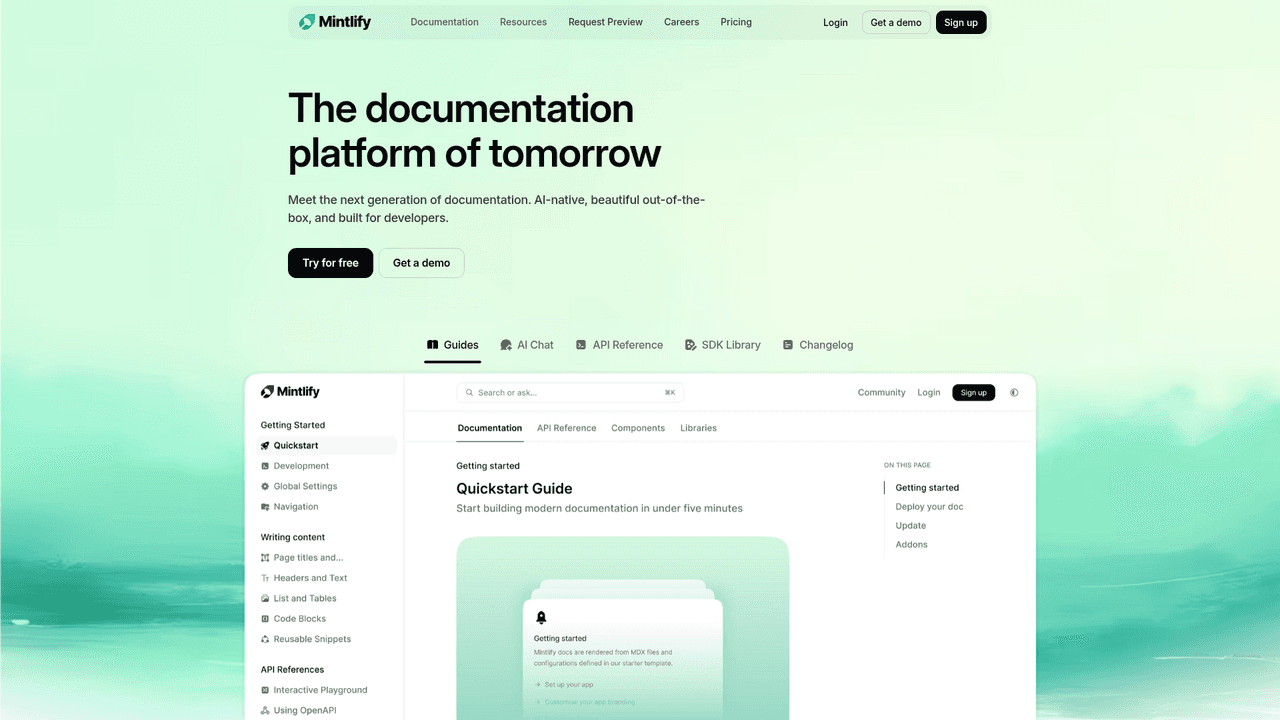
Mintlify is the documentation platform built for developer-facing products. Its AI Agent writes docs from code, PRs, and Slack threads automatically, while an in-docs AI Assistant handles 1M+ monthly developer queries for companies like Anthropic, Cursor, and Perplexity.
Mintlify is a developer documentation platform built by former Y Combinator W22 founders Han Wang and Hahnbee Lee, designed to solve the perennial problem of documentation that falls out of date the moment it ships. Rather than treating docs as a static publishing task, Mintlify treats them as a live layer of your product, continuously connected to your codebase. As of 2026, the platform serves 10,000+ companies including Anthropic, Cursor, Perplexity, Coinbase, Vercel, HubSpot, and Zapier, reaching more than 20 million developers annually and handling over 1 million AI-powered documentation queries every month.
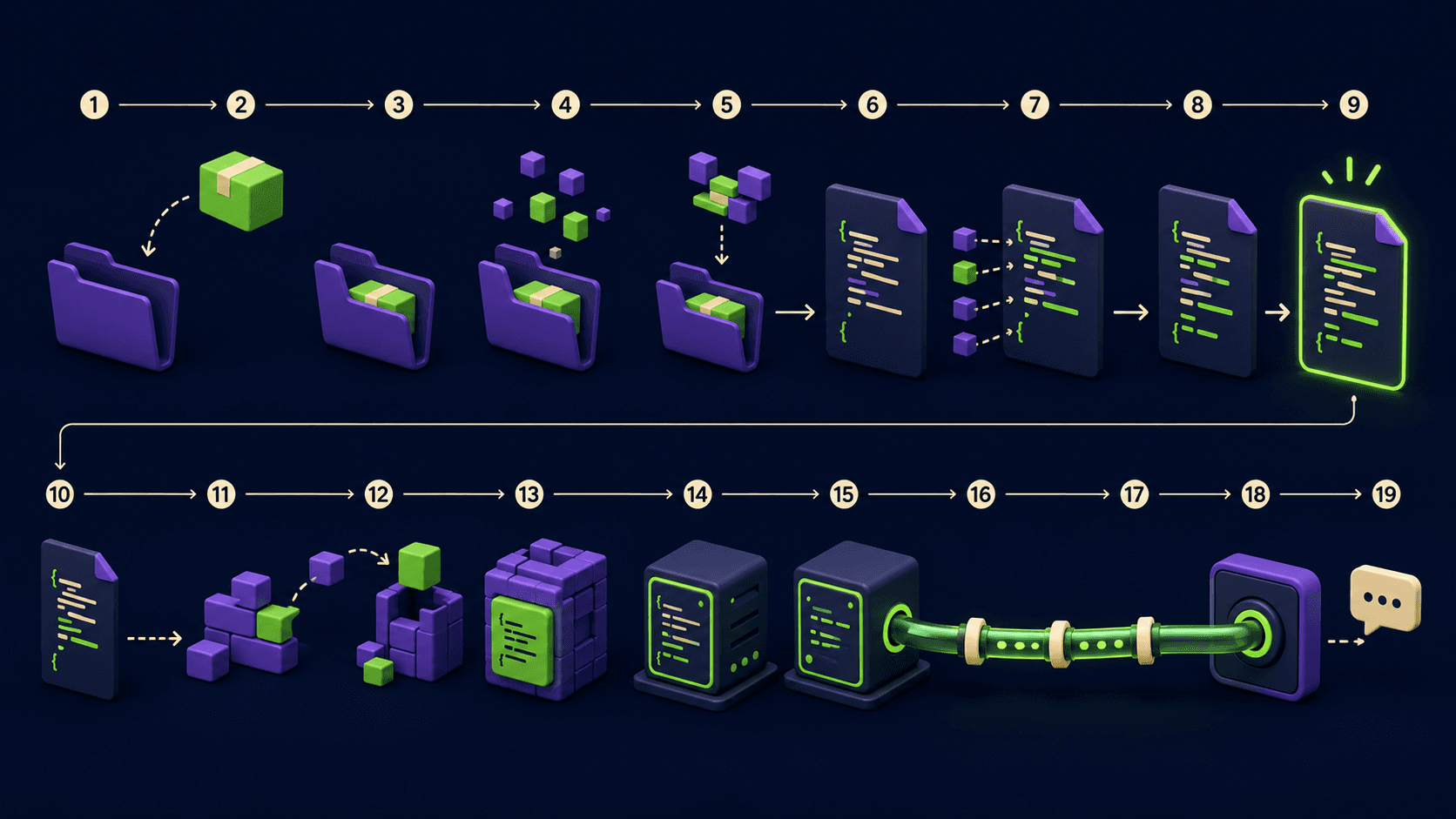
The core product is a hosted documentation service built on MDX (Markdown with embedded React components) and Git-based deployment, meaning your docs live alongside your code and deploy automatically on commit. Key capabilities include the Mintlify Agent (launched September 2025), which monitors your GitHub repositories and proposes documentation updates whenever you ship a change; an AI Assistant embedded inside every published doc site that gives developers conversational answers; an automatically generated API Playground built from OpenAPI 3.0+ specs; built-in support for llms.txt and the Model Context Protocol so your docs surface inside AI coding tools like Cursor and GitHub Copilot; and analytics tracking page-level health, search queries, and AI conversation patterns. The platform is SOC 2 Type II certified and raised an $18M Series A led by Andreessen Horowitz in September 2024.
What Mintlify actually does in May 2026
Mintlify's architecture centers on a docs-as-code philosophy. You author content in MDX files, push to a connected GitHub or GitLab repository, and Mintlify builds and hosts the documentation site on its infrastructure. Unlike CMS-style platforms, there is no separate database of content separate from your code repository, which makes docs versioning identical to code versioning.
The Mintlify Agent, released September 29, 2025, is the platform's biggest differentiator heading into 2026. Give it context, a GitHub PR, a Slack thread, or a link to a changelog, and it drafts new documentation pages, updates existing references, generates changelogs from sets of pull requests, and converts support conversations into self-serve articles. The agent understands your documentation's navigation structure, your Mintlify schema, and the code itself, so it places new content correctly rather than dumping everything into a single page. Teams configure the agent through Slack or directly via API, with additional integration points in development.
The AI Assistant embedded in published doc sites works as a conversational layer over your existing content. Developers ask questions in natural language; the assistant retrieves from your docs using RAG (Mintlify acquired search startup Trieve in 2025 to strengthen this layer) and generates grounded answers. For Anthropic's documentation properties, this assistant reaches 2 million monthly active developers before they ever file a support ticket.
The API Playground is fully rebuilt as of 2025. It auto-generates from your OpenAPI 3.0+ specification, supports authentication methods including API keys, Bearer tokens, and basic auth, and lets developers try live API calls directly inside your documentation. Teams using Firecrawl or similar scraping APIs typically point developers to the Mintlify-hosted playground as the canonical reference rather than Postman or standalone API explorers.
Mintlify co-pioneered the llms.txt standard for AI-readable documentation discovery in 2025. This means documentation published on Mintlify surfaces in LLM tool contexts, including when developers use v0, Codeium, or other AI coding assistants that need to consult library docs at generation time.
"It was really impressive to see how fast we could ship our docs with Mintlify." - Brian Krausz, Anthropic, via Ferndesk review, 2026
Where Mintlify sits versus GitBook and ReadMe
These three platforms dominate developer documentation in 2026, but they solve meaningfully different problems with different architectures.
GitBook uses a Notion-like block editor with a web dashboard at its center. It is genuinely more accessible to non-technical contributors who cannot write Markdown or operate a Git workflow. However, GitBook's rendering engine struggles with complex multi-spec OpenAPI definitions, its AI features require higher-tier plans, and its pricing model has become punishing for multilingual teams: because custom domains and localized sites each require separate paid "Site Plans" at $65/month, a documentation team managing docs in five languages pays $325/month in site fees before counting user seats. GitBook is the better choice for internal wikis and knowledge bases where marketing, product, and engineering all contribute. It is weaker when the primary deliverable is a public developer reference that needs to stay synchronized with an API.
ReadMe.io is the platform that pioneered the interactive API explorer. Its "Owlbert" playground generates code samples in 20+ languages, supports staging environments, and provides API analytics that show exactly which endpoints developers are hitting. For API-product companies whose documentation is itself a product experience for developer onboarding, ReadMe's interactive layer is still best-in-class. The limitation is workflow friction: ReadMe is a CMS with a web dashboard. Developers who prefer writing in their code editor, committing markdown to Git, and having docs update on push find ReadMe actively uncomfortable. Its advanced features including role-based access control, custom JavaScript, and activity logs are locked behind Enterprise at $3,000+/month. ReadMe's Startup tier starts at $99/month, which positions it cheaper than Mintlify's Pro tier, but with less AI automation and no docs-as-code workflow.
Mintlify's mechanical advantages over both: MDX-native authoring with full React component support; Git-as-source-of-truth for versioning; the Mintlify Agent for continuous automated updates (neither competitor offers a comparable autonomous writing agent as of 2026); and llms.txt/MCP integration that makes docs natively readable by AI tooling. Its mechanical disadvantages: limited built-in collaboration features (no inline comments, no suggestion review queue), less polished interactive API analytics than ReadMe, and a pricing gap that leaves small teams without a mid-tier option.
"Mintlify allows us to have beautiful and clear documentation, managed in markdown." - Mark Phelps, Founder of Flipt Cloud, Product Hunt, 2024
What the docs-as-code workflow reality looks like
On day one, you initialize a Mintlify project, connect your GitHub repo, and point a custom domain at Mintlify's CDN. Content lives in MDX files, navigation is declared in a mint.json configuration file, and every push to your main branch triggers a deployment in seconds. Engineers who already live in VS Code find this immediately comfortable; no context-switching to a separate web interface.
The API Playground setup requires an OpenAPI specification file, which most API teams already maintain. Drop your YAML or JSON spec into the repo, reference it in mint.json, and Mintlify generates the full interactive reference including request builder, authentication UI, and code sample tabs. When the spec updates, the playground updates on next deploy.
Incorporating the Mintlify Agent into a real team workflow takes more planning. The agent is configured in Slack, so someone needs to map which GitHub repo branches trigger which documentation spaces. Once wired up, the agent proposes documentation updates as pull requests or direct edits for review. Teams report that the agent handles changelog generation and reference updates well, but still requires human review for conceptual guides and tutorials where narrative voice matters. The agent also converts support ticket threads into self-serve articles, which teams using Slack-based support find genuinely valuable.
Analytics in the current product show page-level views, average time on page, search queries that returned no results (a documentation health signal), and AI Assistant conversation topics. The no-results searches are the most actionable: they reveal gaps in your documentation before users file support tickets. Multiple reviewers note the analytics are improving but not yet at the depth needed to fully replace dedicated product analytics for documentation health monitoring.
Who Mintlify is built for
Mintlify is the documentation platform for developer-first companies where documentation quality is a direct product metric. If your users are engineers integrating an API, deploying an SDK, or configuring a developer platform, and your engineering team already uses Git for everything, Mintlify's workflow is the least-friction path to documentation that stays current.
It fits especially well for: API-first startups that launched on Mintlify early (over 20% of the most recent Y Combinator batch used it as of 2024); companies where developer experience is a customer success function; teams that have outgrown Confluence or Notion for external-facing developer docs; and organizations that need their documentation to surface in AI coding tools because their customers use LLM-assisted development.
The platform is also increasingly viable for enterprises with complex compliance requirements. SOC 2 Type II certification, enterprise security reviews included in the Enterprise plan, and dedicated customer success make it defensible in security reviews. Coinbase, PayPal, and AT&T are on the platform as of 2025.
What Mintlify is not
Mintlify is not a help center platform. It lacks the customer-facing help widget, ticket deflection analytics, and integration with support queue tools that products like Intercom or Zendesk-adjacent help centers provide. Teams building customer support self-service should evaluate purpose-built help desk tools alongside Mintlify.
It is not accessible to non-technical contributors without training. If your documentation process involves marketing writers, customer success managers, or product managers who are not comfortable with Git and Markdown, Mintlify will create friction. GitBook or Notion remain better fits for mixed-technical teams.
It is not the right call for bootstrap or early-stage teams operating under $5K/month in burn where $250-300/month for docs is a non-trivial line item. Docusaurus (open source, self-hosted) or the Hobby tier of Mintlify itself cover the needs of teams with one documentation contributor until revenue supports the Pro plan.
It is not the best choice if your primary documentation goal is an interactive API product experience with deep API analytics. ReadMe's interactive explorer and usage-level API analytics remain more mature for companies whose documentation is the primary developer acquisition channel.
User Reviews
No reviews yet. Be the first to share your experience!
Sign in to write a review.
Related articles
Guides and articles related to Mintlify.

Replit Pricing Explained (2026): Core vs Pro and Effort-Based Agent Billing

Turn Any AI Agent Into a Superagent: The 12-Integration Stack (2026)

Build an Internal Knowledge Bot (RAG) for Your Company: A No-Nonsense Guide
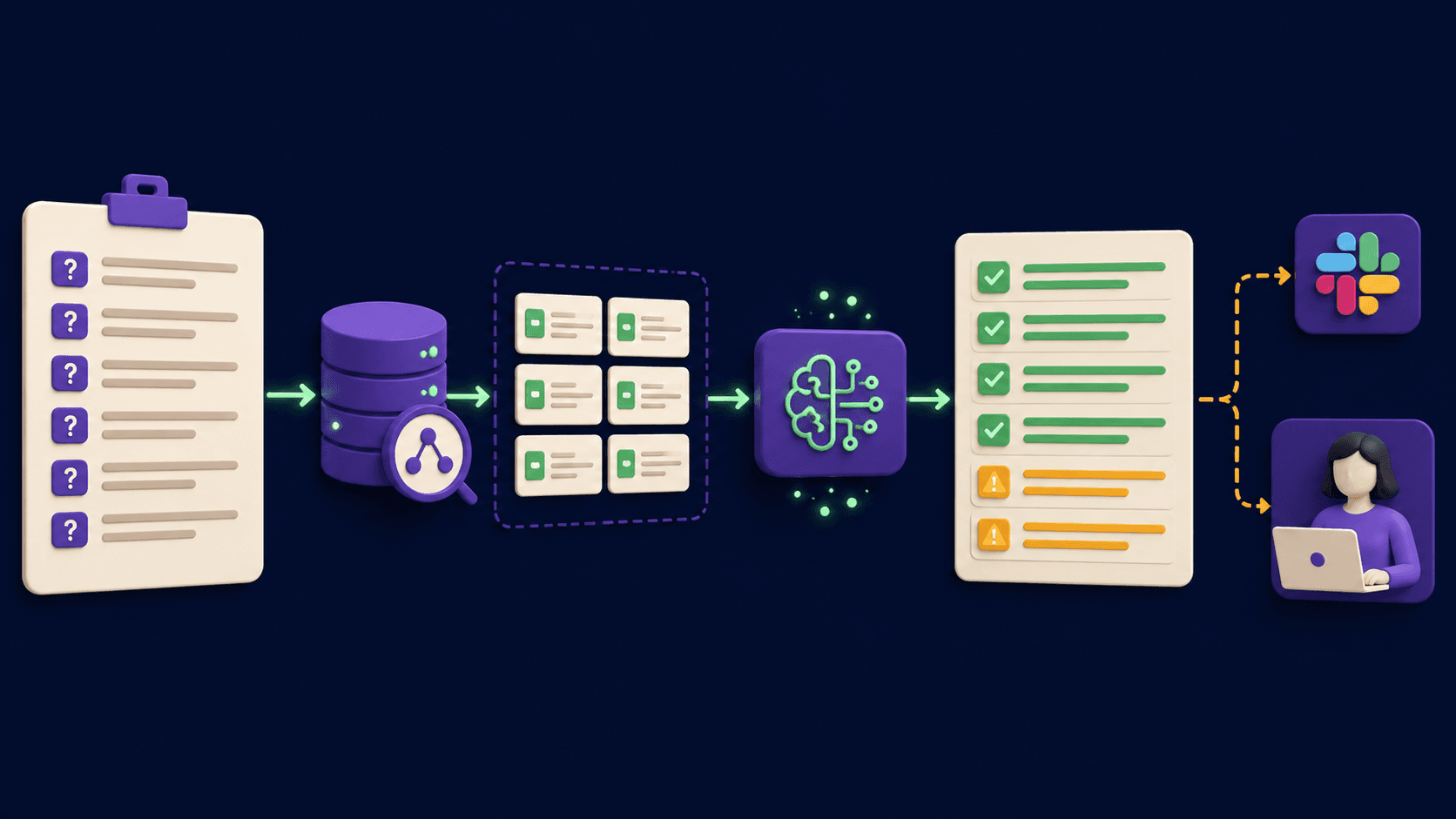
RFP and Proposal Auto-Fill: The Agent That Handles 80% of the Repeating Questions (2026)
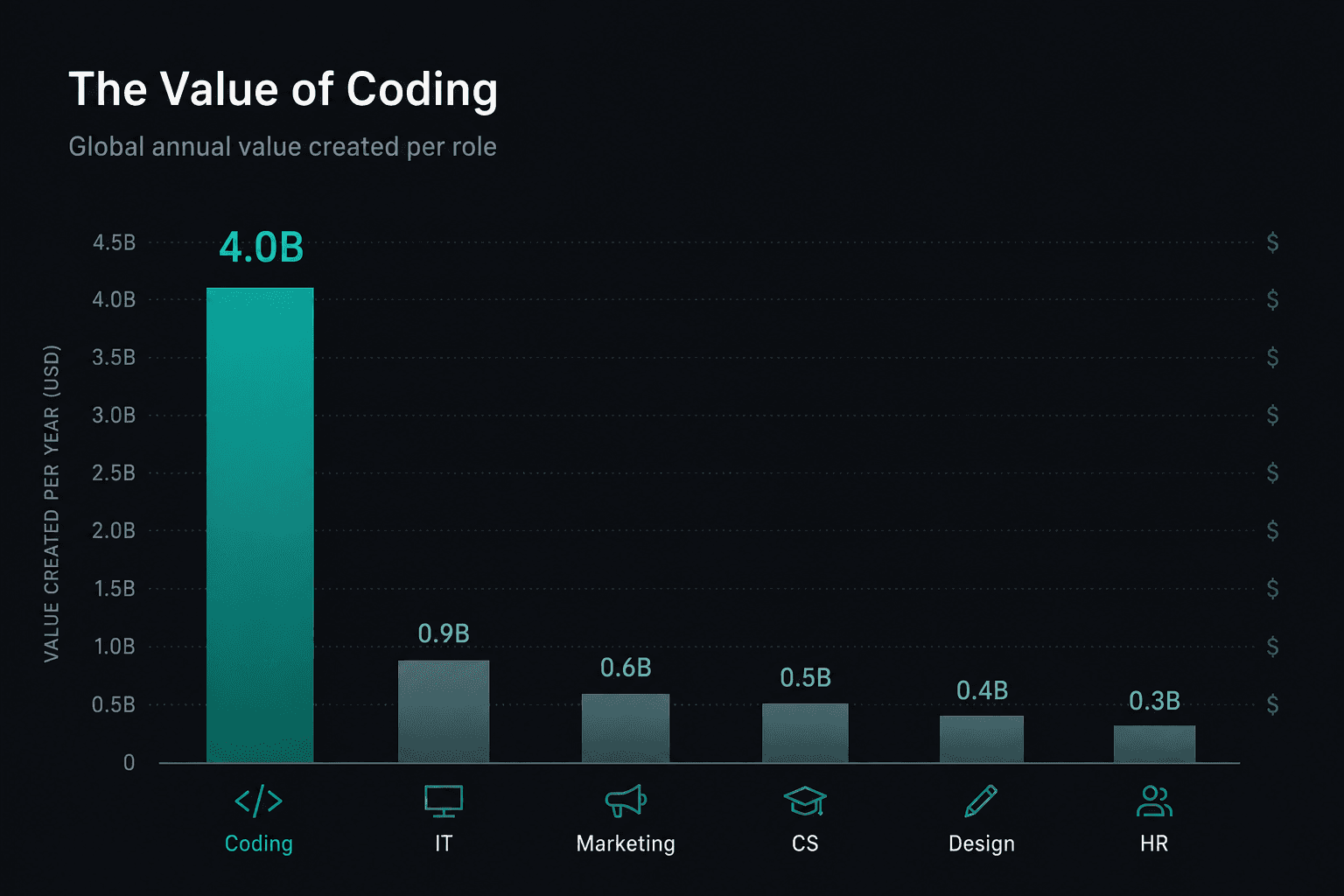
Coding Ate Enterprise AI (2026): The $4B Use Case, Anthropic’s Share, and Seat vs API Math