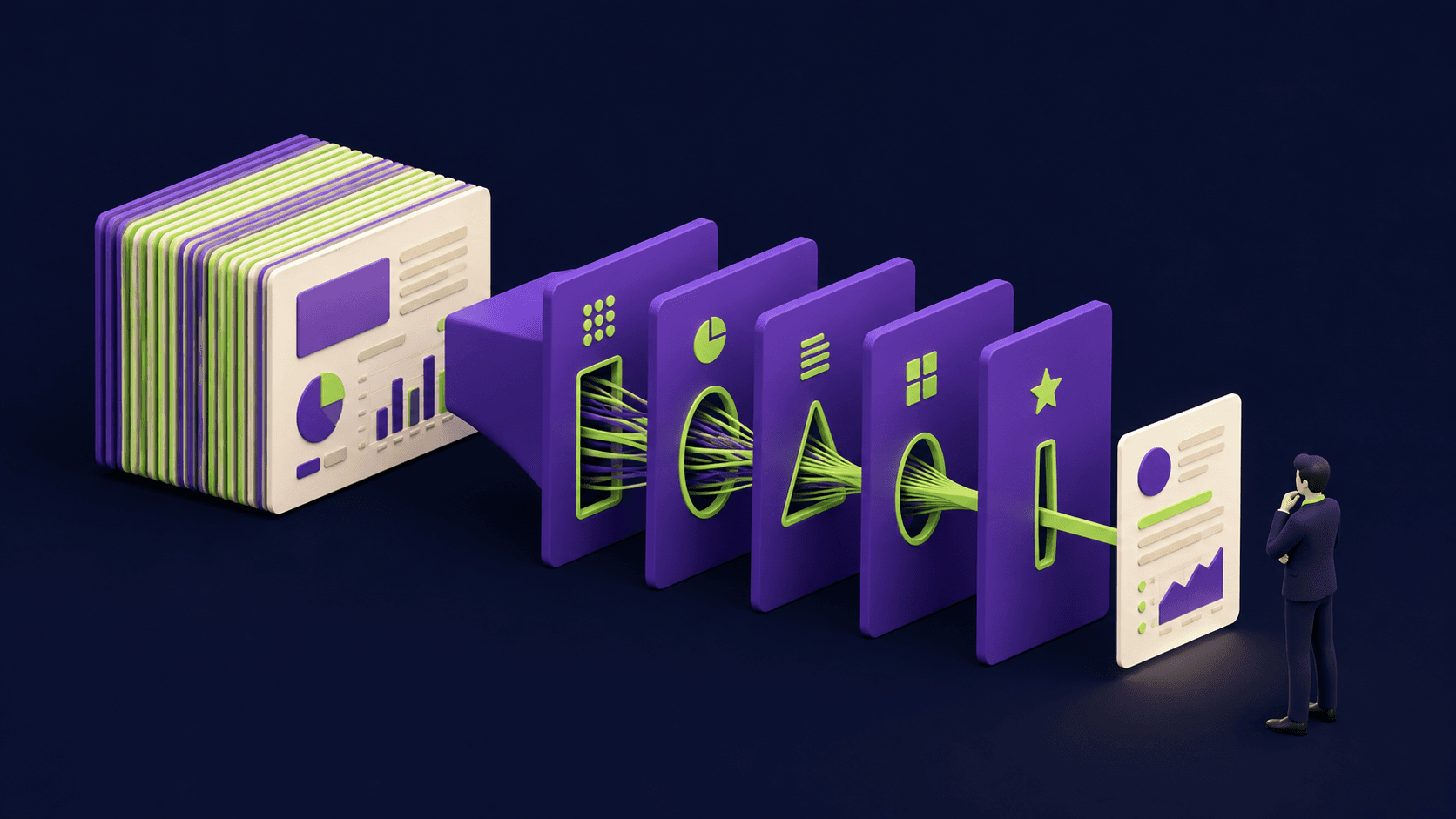
Skywork is an AI workspace platform from Singapore-based Kunlun Tech that uses specialized Super Agents to produce cited documents, presentations, spreadsheets, podcasts, and websites from a single prompt. Freemium with a $19.99/month Pro plan.
Skywork (skywork.ai) is an AI office workspace developed by SKYWORK AI PTE. LTD., a Singapore-based company backed by Kunlun Tech. It launched globally on May 22, 2025, positioning itself as the world's first AI office suite powered by DeepResearch technology. The core problem it solves is context-switching: instead of bouncing between a research tool, a slide builder, a spreadsheet app, and a document editor, Skywork routes a single prompt through specialized agents that each produce a finished, professional-grade output in their respective format. The platform has grown to serve nearly 100 million users since its May 2025 launch, and in February 2026 it released a Windows desktop client (Skywork Desktop) that processes files locally without cloud uploads.
The platform runs six Super Agents: Documents (long-form research reports with APA/MLA citations), Slides (PPTX decks with layouts and data visualization), Sheets (multi-tab workbooks with correlation analysis), Websites (full-stack HTML deployable pages), Podcasts (two-speaker audio scripts from any source material), and a General agent for multimedia tasks. Skywork's DeepResearch engine scans between 65 and 600 external webpages per task and pulls from 400-plus professional databases, embedding verifiable source citations directly in the output. On the GAIA benchmark, the platform scored 82.42% as of May 2025, a figure it claims puts it above OpenAI Deep Research and Manus. Separately, Skywork publishes open-source research models under the SkyworkAI GitHub organization, including the Skywork-OR1 reasoning series and Skywork-R1V multimodal series.
What Skywork actually is in June 2026
Skywork is not a chatbot that happens to produce slides. Each Super Agent is a purpose-built pipeline that runs its own research phase, drafts in the format's conventions, and delivers an editable, exportable file. The Documents agent manages citation styles (APA, MLA) and handles literature reviews up to tens of thousands of words. The Slides agent applies layout logic for data-heavy decks and supports per-slide regeneration so you can fix one bad page without redoing the whole presentation. The Sheets agent builds multi-tab Excel workbooks, runs basic correlation analysis, and generates embedded charts.
The platform introduced a Personal Knowledge Base feature that lets users upload proprietary documents, which the agents then treat as priority sources when generating outputs. Skywork Desktop (February 2026) extended this with local file processing: the Windows client reads files directly from the machine, summarizes and organizes them, and generates outputs without any file leaving the device. The desktop client integrates Claude Opus 4.5, Claude Sonnet 4.5, and Gemini 3 Pro as backend models with an auto-selection mode that picks the right model per task type.
On the open-source side, SkyworkAI released Skywork-OR1 (Open Reasoner 1) in April 2025, including 7B and 32B parameter variants focused on math and code reasoning. The Skywork-R1V multimodal series followed with R1V3-38B achieving 76.0% on MMMU in July 2025. These models are available on GitHub and Hugging Face under permissive licenses and are architecturally separate from the commercial platform, though they share the same research brand.
Where Skywork sits versus Gamma and Manus/Genspark
The most common direct comparison is Skywork versus Gamma. Gamma is a slides-first tool: it generates visually polished presentations from a text prompt or pasted outline in minutes, drawing on internal knowledge with no external web research. Gamma's templates are aesthetically stronger and its creation speed is faster for visual-first decks. The mechanical difference is that Gamma relies entirely on its training knowledge without live source-tracing, while Skywork's Slides agent performs a DeepResearch pass before building the deck and embeds citations for every data claim. For an investor pitch based on current market statistics, that distinction matters. For a company all-hands presentation or a course intro, Gamma's speed and design quality win.
Manus and Genspark are general-purpose AI agents that can produce presentations among dozens of other task types. Manus uses a multi-step agentic loop across browser, terminal, and file operations; it handles a broader range of tasks but is less specialized per format. Genspark ($24.99-$249.99/month) uses proprietary closed-source pipelines and delivers structured, crisp text outputs that testers consistently praise for precision but find weaker on visual quality. One YouTube reviewer (BitBiasedAI, 2025) summarized the tradeoff: "Skywork wins in visuals and open source flexibility. Genspark wins on structured, crisp outputs." Skywork is also reportedly about 50% cheaper than Manus and Genspark's comparable paid tiers.
The platform that serves the narrowest overlap is NotebookLM. Google's notebook tool specializes in Q&A over uploaded sources and converts them into audio discussions, but it does not generate slides, sheets, or websites. If your workflow is document-to-podcast and nothing more, NotebookLM is free and purpose-built. If you need multi-format output from a research prompt, Skywork covers the broader surface area.
"Skywork is well suited for business reports or academic presentations." - Kevin Stratvert, YouTube reviewer, 2025, comparing Skywork directly to Gamma for research-heavy content
"Skywork created four client-facing assets in just minutes." - Daniel Davidson, YouTube, 2025, describing a session where he produced a document, slides, data table, and podcast script from one project brief
How the Super Agents actually work
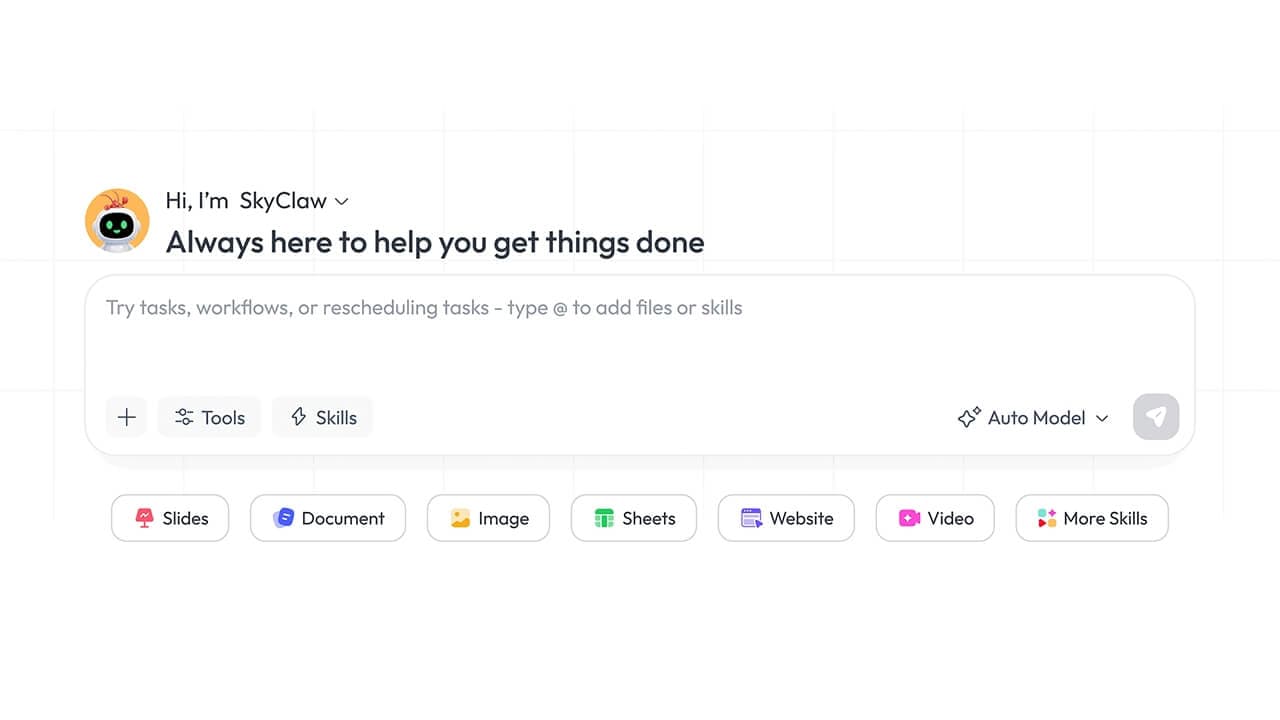
The workflow starts with an agent selection: you pick Documents, Slides, Sheets, Web, Podcast, or General from the workspace dashboard, then type or paste a prompt. Before processing begins, Skywork presents a credit cost estimate so you can decide whether to proceed. The agent then runs a DeepResearch pass, which typically takes longer than a standard LLM response but produces a source inventory that appears in the output. For complex queries, the interface presents clarification checkpoints where the agent asks follow-up questions before committing to a full generation.
Users can upload documents to the Personal Knowledge Base before starting a task. The agent treats uploaded files as priority sources, mixing them with its external research. Outputs are editable after delivery: slides support per-element click-to-edit, document text can be revised in-line, and sheets can be manipulated like a standard spreadsheet. Finished assets export as PDF, PPTX, HTML, or DOCX depending on agent type. The Podcast agent produces a two-speaker script with realistic pacing, which several reviewers described as producing audio that sounds like a genuine discussion rather than a narrated summary.
For developers, Skywork's agent framework is open-sourced on GitHub, built on OpenAgents with MCP (Model Context Protocol) support. This means the underlying agent orchestration can be customized, extended, or self-hosted independently of the commercial platform.
Friction and reliability concerns users keep raising
The most consistent complaint across reviews is slide text overload: generated presentations contain paragraph-length text blocks on slides instead of bullet-point summaries. The agents produce research-grade prose and then insert it directly into slide layouts without applying the minimalism conventions human designers use. For internal reports this is acceptable; for client-facing presentations it typically requires manual editing.
Credit depletion on failed tasks is a more serious issue. Multiple users reported on Trustpilot that credits were consumed during presentation generation that produced nothing. The platform burns credits even when a task errors out mid-run. Given that credits are the limited resource on the free tier and have a weekly expiry, a single failed task can eliminate a significant share of a user's weekly allocation.
Customer support reliability was flagged repeatedly in 2025 H2 reviews. Trustpilot reports included complaints of no welcome email after payment, no login credentials delivered, and no response from support after multiple contact attempts. Whether this reflects growing pains from rapid user growth or a systemic support gap is unclear from available data, but the pattern was consistent enough across independent reviewers to warrant mention.
Spelling and proofreading quality in generated outputs varies by task type. Multiple App Store reviewers noted occasional spelling errors in documents and slides, which is a meaningful quality gap for professional deliverables. The platform does not appear to run a final proofread pass before delivery.
Mobile app feature parity lags behind the web version. The iOS and Android experience is more limited, and several users found the in-app purchase pricing structure on mobile frustrating compared to the web subscription model. Skywork Desktop (February 2026) improved the non-browser experience significantly for Windows users, but Mac and Linux remain web-only.
Who Skywork is for
Skywork fits best when your deliverable is research-grounded and the audience will ask where the data came from. Financial analysts building market reports, consultants producing client-facing analyses, and academics writing literature reviews are the natural fit. The citation workflow is the differentiator: every factual claim traces to a source the agent surfaced during its research pass, which makes the output auditable in a way that generic LLM outputs are not.
Marketing teams producing multi-format campaign packages get real value from the single-session workflow. A prompt describing a target product can yield a briefing document, a slide deck, a competitor comparison sheet, and a podcast episode summary without switching tools or reformatting content between platforms.
Skip Skywork when your primary need is visual storytelling speed. For pitch decks, brand presentations, and aesthetically-driven content, Gamma produces polished slides faster with less friction. Skip it for creative writing and narrative content, where the research-first architecture produces prose that is structured and factual but emotionally flat. Skip it if you need guaranteed brand consistency in generated visuals: the platform does not reliably honor uploaded brand assets across an entire deck. And skip it if vague prompting is your style - Skywork's quality ceiling depends heavily on how structured your input prompt is.
User Reviews
No reviews yet. Be the first to share your experience!
Sign in to write a review.
Featured in collections
Curated lists that include Skywork.
Related articles
Guides and articles related to Skywork.
Turn Any AI Agent Into a Superagent: The 12-Integration Stack (2026)
Install Claude for Excel, Word, PowerPoint & Outlook (May 2026)

Perplexity AI Tutorial: Maximize Your Research Workflows
Google vs OpenAI vs Anthropic Agents: The May 2026 Platform Showdown
Run a Company With AI Agents: The Open-Source Orchestration Setup (2026)