
NotebookLM grounds every answer in documents you upload, no hallucinations from outside your sources, and every response links to an exact passage. Audio Overviews generate podcast-style discussions from your files. Genuinely novel; also genuinely limited by isolated notebooks and a hard source cap.
We fed NotebookLM 18 PDFs on LLM evaluation benchmarks and asked for a structured briefing on where current methodology is most contested. It returned a six-section document identifying three specific methodological disputes by name, with exact passage citations from four different papers for each. When we asked, "What do researchers outside these sources think?", it correctly declined: it only answers from what you upload. The Audio Overview of the same notebook ran eleven minutes, handled the technical vocabulary better than expected, then compressed the final three papers into vague summary language that lost several specific findings. That tension, precise when it works, revealing about its limits when it doesn't, is the honest shape of NotebookLM in April 2026.
The tool started in mid-2022 inside Google Labs as Project Tailwind, launched publicly as NotebookLM in July 2023, and was removed from experimental status in October 2024. It was upgraded to run on Gemini 3.5 and Antigravity (Google blog, 8 Jun 2026; rename post updated 16 Jul 2026), with Gemini 3.1 Pro available on NotebookLM for Pro and Ultra users (Gemini 3.1 Pro blog, 19 Feb 2026). Multimodal understanding of charts and figures in PDFs continues. On April 9, 2026, Google integrated it directly into the Gemini app via a "Notebooks" feature. What has never changed: every answer cites the exact passage it drew from, and it will not answer from knowledge outside your uploaded files.
NotebookLM at a glance. April 2026
NotebookLM accepts PDFs, Google Docs, Google Slides, plain text, Markdown, audio files (MP3, WAV, M4A), YouTube links (auto-transcript ingestion), and pasted text up to 900,000 characters, each source up to 200MB and 500,000 words. Hard caps (Gemini Notebook Help Upgrade table): Standard free 100 notebooks / 50 sources; Google AI Plus 200 / 100; Google AI Pro 500 / 300; Ultra (20 TB plan) 500 / 500; Ultra (30 TB plan) 500 / 600. Per source: 500,000 words or 200MB. Paid entry for Google AI Plus starts at $7.99/mo US; Ultra consumer plans use $100/mo and $200/mo variants. Supported sources include Google Sheets (100k-token limit), images, Microsoft Word/PPTX/CSV, PDF, Docs/Slides, YouTube, audio, web URLs, ePub, and Play Books.
Output modes in April 2026: cited Q&A chat, Audio Overview (Deep Dive, The Brief, The Critique, The Debate), Interactive Audio Overview (English-only), Video Overview (Plus and above), Mind Maps, Study Guide, Briefing Document, FAQ, Data Tables exportable to Google Sheets, and Infographic generation. Deep Research runs 10 sessions per month on the free tier and 20 per day on Plus. Audio Overviews are available in 80+ languages; Interactive mode is English-only.
What NotebookLM is actually good at
Closed-corpus research where citation fidelity matters. The strictness that frustrates general users is the feature that earns trust in legal, compliance, and academic contexts. An Attorney at Work analysis described the tool as earning "its salary by cutting through the paper fog" in litigation: it pulls pleadings, discovery, and correspondence into a single view, pins facts to exact passage locations, and builds chronologies from scattered documents. Every claim links to a source sentence, not a hedged AI summary, a cited extraction.
Audio Overview as a genuine format innovation. No other tool in this category generates podcast-style discussions from your uploaded files. The two AI hosts use natural filler words, interrupt each other, and handle technical vocabulary better than expected at orientation level. The hosts mispronounce discipline-specific terms and thin out coverage toward the end of large notebooks, but the format is genuinely novel, not a gimmick.
Structured output from dense material. One-click generation of Study Guides, FAQs, Briefing Documents, and timelines extracts structure without prompt engineering. We uploaded 14 sets of lecture slides, approximately 600 total, and asked for a study guide covering week 8 onward. It produced a structured guide citing specific slides and flagged three areas where the instructor's slides were internally ambiguous. The Audio Overview of the same material ran the full 15-minute "Longer" option and covered weeks 8–14 proportionally.
YouTube and Google Drive as direct source inputs. Paste a YouTube link and NotebookLM ingests the transcript, useful for conference talks, lectures, and interviews. Google Docs and Slides load from Drive without download-and-reupload. Changes to the source Doc after import require a manual refresh, but for material already in the Google ecosystem, the friction is low.
"I fed it the Spanish civil code and the podcast it generated was engaging and accurate. I expected it to fall apart on legal material. It didn't.". Hacker News commenter on the Audio Overview thread, 2024
Where NotebookLM breaks, the failure modes users keep hitting
Audio Overview accuracy degrades on deep notebooks. Above roughly 20–25 sources, later-added sources receive less coverage or none, the hosts become increasingly vague rather than signaling the gap. Google's own documentation warns: "Audio Overviews, including voices, are AI-generated and may contain inaccuracies or audio glitches." A documented case from a conference proceedings blog found a five-minute Overview that misrepresented content, introduced contradictory information, and fabricated topics absent from the source. For anything precision-dependent, the Briefing Document and Q&A chat are more reliable.
No cross-notebook search or memory. Every notebook is an isolated universe. Users who build 50+ notebooks cannot search across them, identify which contains a specific topic, or surface connections between projects, the structural gap that most clearly separates NotebookLM from a genuine knowledge base.
"I have 59 notebooks. but the friction makes it frustrating. You can't search across them. You don't remember what's in each one.". User quote captured in XDA Developers analysis of NotebookLM limitations, 2025
No export infrastructure. Chat outputs cannot be exported as Markdown, HTML, or PDF with active citations. Study Guides and Briefings copy as plain text only. Citations do not transfer as hyperlinks when pasted elsewhere. Audio files can be downloaded; structured chat output cannot. For researchers moving findings into Notion, Obsidian, or a paper, this is a hard stop.
"It only answers from sources" cuts both ways. The source-bounded model prevents hallucination but prevents contextualization equally. Ask NotebookLM how a document compares to the field's general understanding, it cannot answer. Ask it to fill background you didn't upload, it declines. In a 200-page 10-K test, NotebookLM identified 14 risk factors with exact passage citations and full accuracy, but correctly refused to flag new disclosures not present in the prior year's 10-K (not uploaded). Technically correct; shifts research overhead back to the analyst.
Sharing is structurally limited. Collaborators get view/edit access but no comments, no version history, no role-based permissions. Workspace enterprise accounts cannot share notebooks publicly; notebooks drawing from Gemini Enterprise sources cannot be shared at all. Cross-domain sharing frequently fails silently. Deleted notebooks are permanently gone, no trash, no recovery. A February 2026 service disruption (outages February 4 and February 13) caused user-reported data loss with no recovery path. For teams, NotebookLM is effectively a single-user tool with optional co-editing.
NotebookLM vs. Claude Projects vs. ChatGPT Projects
Claude Projects (Anthropic, $20/month) is the closest mechanical parallel. Both allow uploading a document corpus and running Q&A against it. The critical difference: Claude Projects supplements sources with training knowledge, if your documents don't cover a question, Claude answers from general knowledge and says so. NotebookLM declines entirely. On corpus size, NotebookLM wins: 500,000 words per source with up to 300 sources on Plus, versus Claude's 200K token context window per session. Claude handles unstructured notes better and generates code and data visualizations; NotebookLM generates Audio and Video Overviews that Claude cannot. XDA Developers ran a head-to-head and concluded Claude is stronger on unorganized notes; NotebookLM is stronger when sources are clean and citation provenance matters.
ChatGPT with Projects (OpenAI, $20/month Plus) allows document uploads with persistent memory at the same price. Unlike NotebookLM's hard citation model, ChatGPT answers from both document and training data without always distinguishing which, more flexible, weaker citation discipline. ChatGPT Projects still win on some spreadsheet workflows, but Gemini Notebook lists Google Sheets (100k-token limit), PowerPoint (.pptx), CSV, and image file types among supported sources on web. ChatGPT generates no Audio Overviews. For iterative analysis and tasks beyond the source corpus, ChatGPT Projects is more capable. The practical decision often comes down to file types: Excel or PowerPoint corpus favors ChatGPT; strict citation traceability favors NotebookLM.
Is the paid tier worth it?
The free tier's 50-source limit is the most frequently cited complaint across r/notebooklm. A literature review across even a medium-sized academic field exceeds 50 papers quickly. Google AI Pro’s 300 sources per notebook removes this ceiling; Google AI Plus is the lower paid rung at $7.99/mo US with 100 sources / 200 notebooks., a meaningful jump for a tool that was free with no source limit in its first months. The additional value at Plus beyond source count: 20 Audio Overviews per day (versus 3 free), 500 chat queries per day (versus 50), 20 Deep Research sessions per day (versus 10 per month), and Video Overviews. Students in the US (18+) receive a 50% discount bringing Plus to $9.99/month for 12 months.
Workspace users should check their plan before paying: as of February 5, 2025, NotebookLM is a Google Workspace core service. Business Standard/Plus and Enterprise Standard/Plus plans include Plus tier capabilities at no additional charge. Business Starter and Frontline plans receive the free equivalent. Education customers received core service designation in April 2025.
For individuals: if your projects regularly exceed 50 documents and you use briefing, study guide, and Q&A functions heavily, Plus earns its cost. The free tier is more capable than it looks, 50 sources, 50 queries per day, and 3 Audio Overviews daily covers most non-intensive workflows. Google AI Ultra is the top consumer rung ($100/mo and $200/mo plan variants on Google One; Upgrade Help lists 500 or 600 sources per notebook).
Best use cases (and when to skip it)
Use NotebookLM when: your research involves a defined document set where citation fidelity matters (legal, compliance, academic, financial); you want Audio Overviews for orientation before meetings or exams; you are processing PDFs or Google Docs and want structured output without heavy prompt engineering; or your organization is on Google Workspace and Plus is already included in your plan.
Skip it when: your corpus includes Excel, PowerPoint, or standalone images. ChatGPT Projects handles those; you need cross-notebook search or long-term knowledge accumulation, no architecture exists for this; you want answers that draw on general knowledge plus your documents. Claude Projects handles that hybrid mode; or you need team collaboration with comments and version history. NotebookLM's sharing model is single-user in practice. And it is the wrong tool if you need portably exported, citation-linked output, what you build in NotebookLM largely stays in NotebookLM.
Getting started with NotebookLM
The fastest meaningful test: create a notebook, upload three to five PDFs or Google Docs, and run the Briefing Document one-click output. If the citations trace correctly to the right passages, you have a real signal for whether the tool fits your workflow. Then generate an Audio Overview of the same notebook, if the hosts handle your material accurately in the first four minutes, the orientation-level use case is genuine.
For the source limit: structure notebooks around discrete research questions rather than entire projects. A notebook per chapter of a literature review, or per matter in a legal practice, avoids the 50-source ceiling and produces more focused outputs. With 100 free notebooks available, working across multiple targeted notebooks is a legitimate strategy. Last tested: April 2026.
User Reviews
No reviews yet. Be the first to share your experience!
Sign in to write a review.
Related articles
Guides and articles related to NotebookLM.
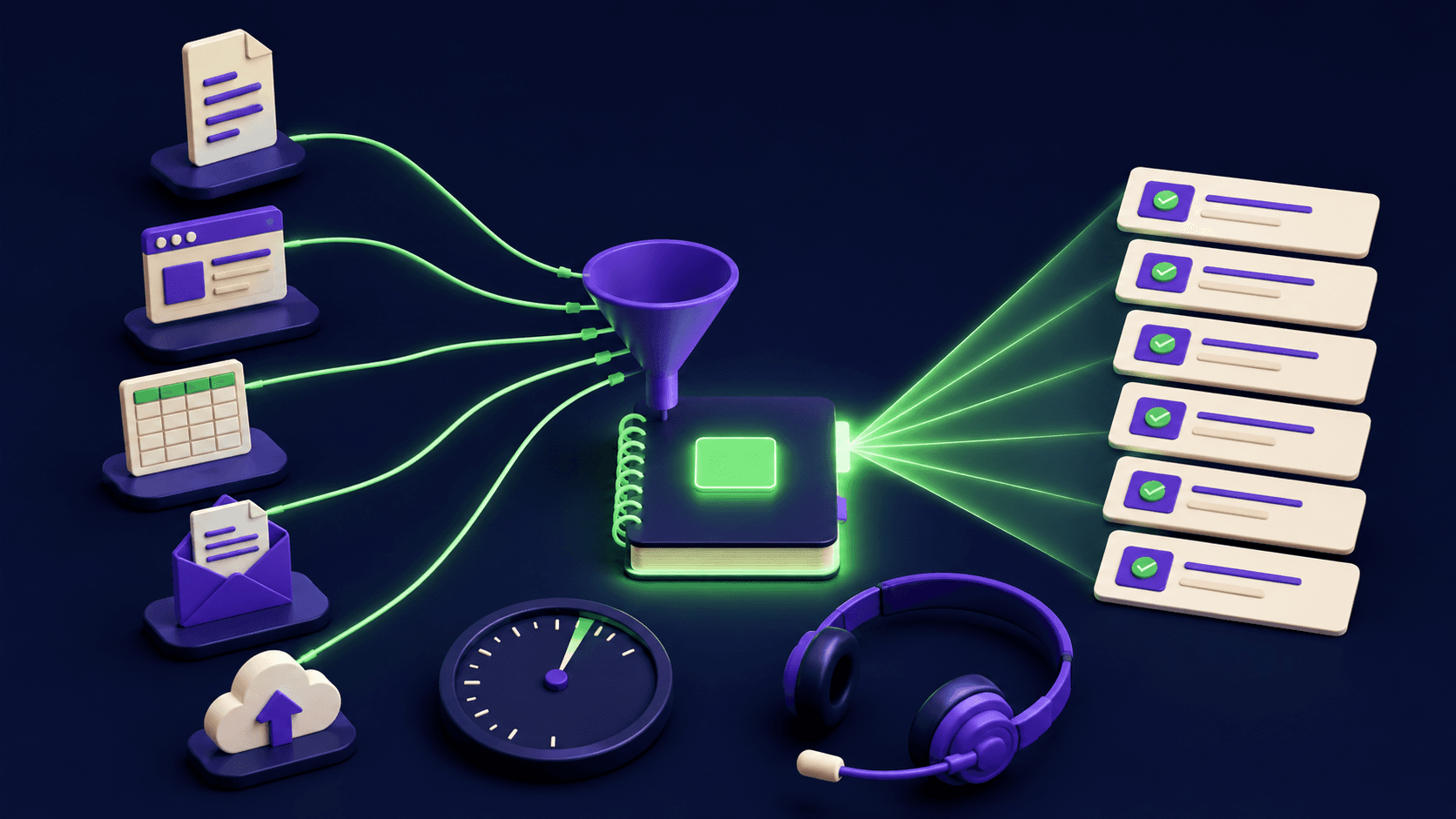
NotebookLM Sales Call Prep: 5 Sources, 6 Questions, 60 Seconds (2026)

The Personal AI Productivity Stack (2026): One Tool Per Job, Nothing Extra
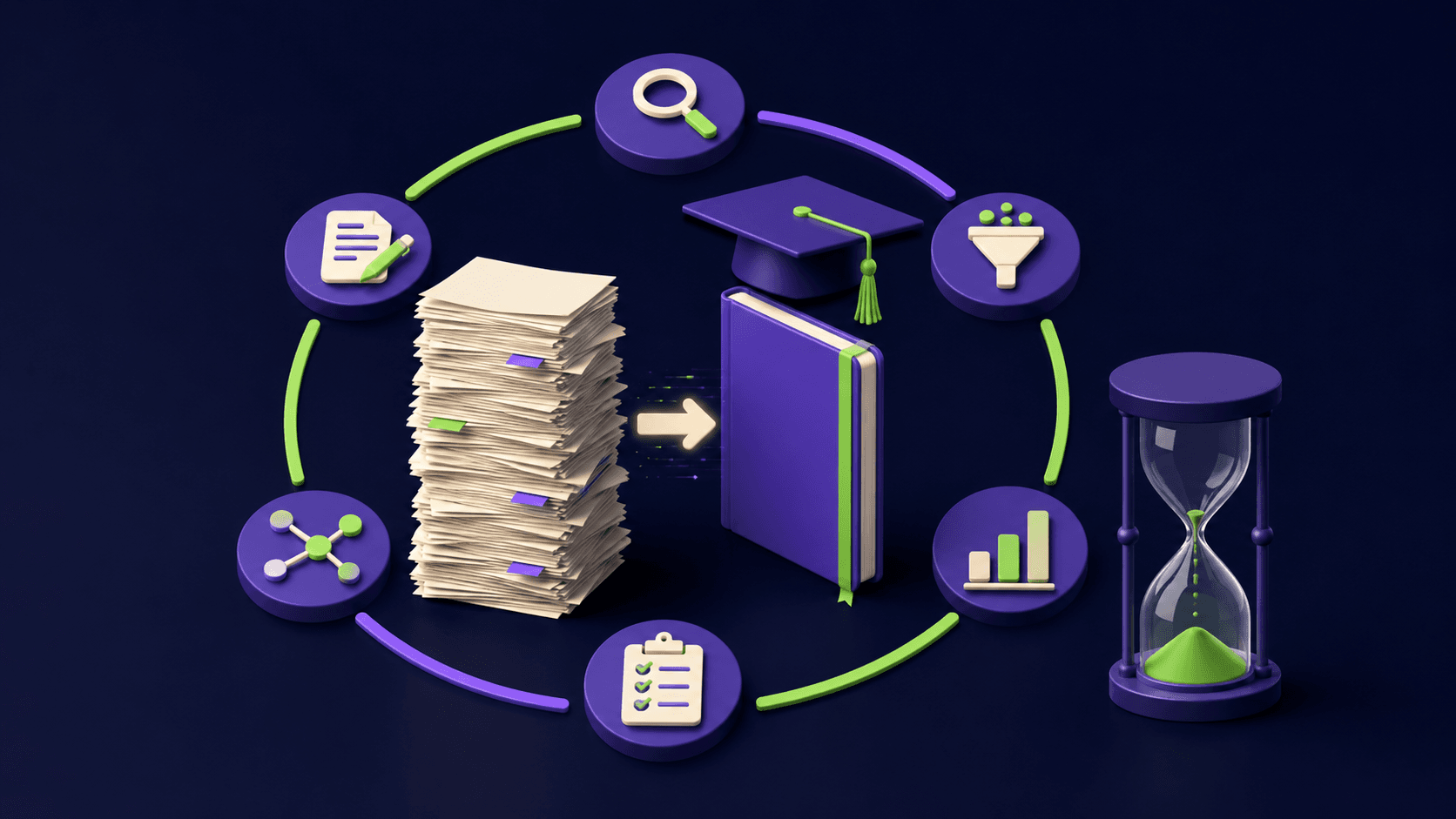
Gemini Deep Research for a Thesis Literature Review in One Day (2026)

Perplexity AI Tutorial: Maximize Your Research Workflows

Google Vision AI Explained (2026): Pricing Per 1,000 Units, Free Tier, and Alternatives