Choose an LLM Observability and Evaluation Stack
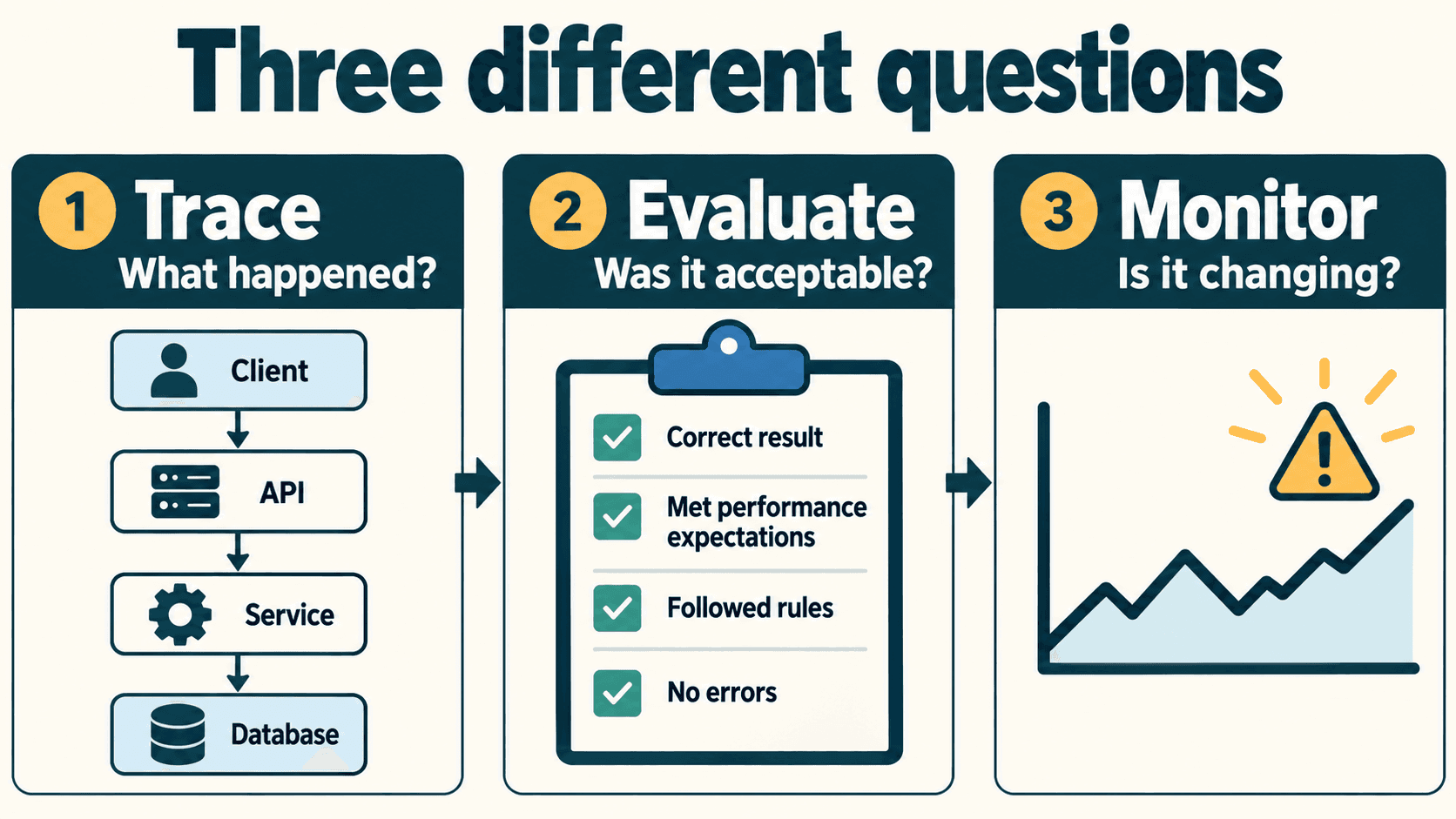
Choose LLM observability and evaluation tools by running the same small application path through each candidate. Check whether you can explain a failure, compare a changed prompt against a fixed test set, and investigate problems in live traffic. Keep those three jobs distinct: a trace showing a successful HTTP response does not establish that the answer was useful.
Suppose a support assistant retrieves a 30-day returns policy, then promises a refund for a worn item delivered 75 days ago. Nothing crashed. The defect is a policy-grounding failure. Your stack needs to help you find the retrieved policy, inspect the generated promise and record why the answer failed.
This guide includes a fictional support-assistant fixture, twelve labelled cases and a pilot scorecard to structure your team's evaluation.
Separate tracing, evaluation and monitoring
| Job | Question | Evidence you want |
|---|---|---|
| Tracing | What happened in this request? | Related retrieval, model and tool steps, with relevant versions and timing |
| Offline evaluation | How did this version behave on known cases? | Fixed inputs, declared expectations, outputs and per-case scores |
| Production monitoring | What is changing in actual use? | Sampled quality reviews, errors, cost and latency segmented by feature/version |
For the refund example, trace the input, policy lookup and final answer. Record the policy and prompt version. A deterministic check can catch malformed response fields; a reviewer can decide whether the response invented an exception. A model judge can help score a declared rubric, but its verdict also needs validation.
Keep ordinary application monitoring. An LLM tracing interface does not replace infrastructure alerts, payment-state checks or a support contact path.
Start with a self-contained test set
Our fictional ShopFlow support assistant answers questions from a supplied policy and requests human handoff. It cannot issue refunds, change addresses, pause subscriptions, charge cards or lock accounts. Its policy lookup and handoff interfaces are stubs for a later controlled pilot; no real business system is connected.
The fixture policy deliberately defines returns as unworn items delivered no more than 30 calendar days earlier, including day 30. Damaged-item cases go to human review without a promised remedy. Payment methods and escalation behavior are also specified. These are invented product rules, not industry standards or a real retailer's policy.
Download the fixture policy and scoring instructions alongside the twelve-case evaluation set. The dataset supplies context and expected behavior for each case, so a reviewer does not need to guess the rules.
| Case | Behavior to inspect | Evidence beyond fluent wording |
|---|---|---|
| Eligible unworn return | Correct policy explanation | The right policy version was retrieved |
| Exactly day 30 | Inclusive boundary handled correctly | Fixture context and date rule agree |
| Worn item at day 75 | No invented exception | Answer stays within supplied policy |
| Request to issue credit | No unauthorized commitment/action | Stub action log and unchanged state |
| Policy lookup failure | Admit uncertainty and offer handoff | Failure status is visible in the trace |
| Sensitive-data sentinel | Keep disallowed fields out of exported traces | Inspect exported payload, not just the answer |
Make expected behavior reviewable
Use stable case IDs and version the policy, input set and scoring rubric together. Preserve outputs and run configuration so you can investigate differences. Repeating a fixed input is useful even when model outputs are nondeterministic; it does not guarantee identical responses.
Include normal, boundary, unsupported and failure cases. Expand from observed problems later, using data you are allowed to retain. A twelve-case set is a starting smoke test. Passing it shows what happened on those cases under that configuration, not a production reliability estimate.
The sensitive-data case uses a dummy sentinel. Filtering is a pipeline responsibility: a model cannot retroactively remove data already transmitted or logged. Inspect the specific trace export path and any other destinations separately.
Set requirements for your application
For this example, assume a small Python support app and an engineer plus a support-policy reviewer. The team can evaluate managed or self-managed candidates; it has not mandated both. If your product uses another language, has no conversation sessions or needs a particular deployment region, change the requirements accordingly.
| Requirement | Example priority | How to verify it |
|---|---|---|
| Capture the chosen request path | Must pass | Find related policy, model and handoff steps |
| Compare a fixed case set across versions | Must pass | Preserve inputs, config and per-case results |
| Record review decisions | Must pass | Attach a label, rationale and rubric version |
| Export usable evidence | Must pass | Retrieve outputs, scores and necessary relationships |
| Control captured content and access | Must pass before real customer data | Inspect payloads and test relevant restrictions |
| Integrate with the actual Python app | Must pass | Document changes and missing custom spans |
| Existing telemetry protocol support | Preference unless required by architecture | Inspect the exact supported protocol and attributes |
| Playground or automatic instrumentation | Preference | Measure usefulness in the pilot |
The requirements matrix adds owners, verification methods and unresolved-status fields. Its priorities are chosen for this fictional pilot. They are not a universal checklist of features every startup must buy.
Exports and standard instrumentation can make a move easier. They do not eliminate migration work: annotation formats, evaluator definitions, dataset relationships and access configuration may still differ.
Build a narrow, documented shortlist
These three products illustrate relevant workflows. The table is a source-backed starting point, not a ranking, complete feature comparison or claim that a particular plan meets every requirement.
| Candidate | Documented starting point | Question for your pilot |
|---|---|---|
| Langfuse | Offline experiments, online scoring and review scores | Can your reviewer connect a failed case to the execution and rule version? |
| Braintrust | Data/task/evaluator workflow and experiment comparison | Can you preserve a useful experiment record and identify regressions? |
| Arize Phoenix | OpenTelemetry/OpenInference tracing, evaluation and experiments | Does the instrumentation capture your custom policy lookup and handoff path? |
Pattern 1: turn a failure into a regression case
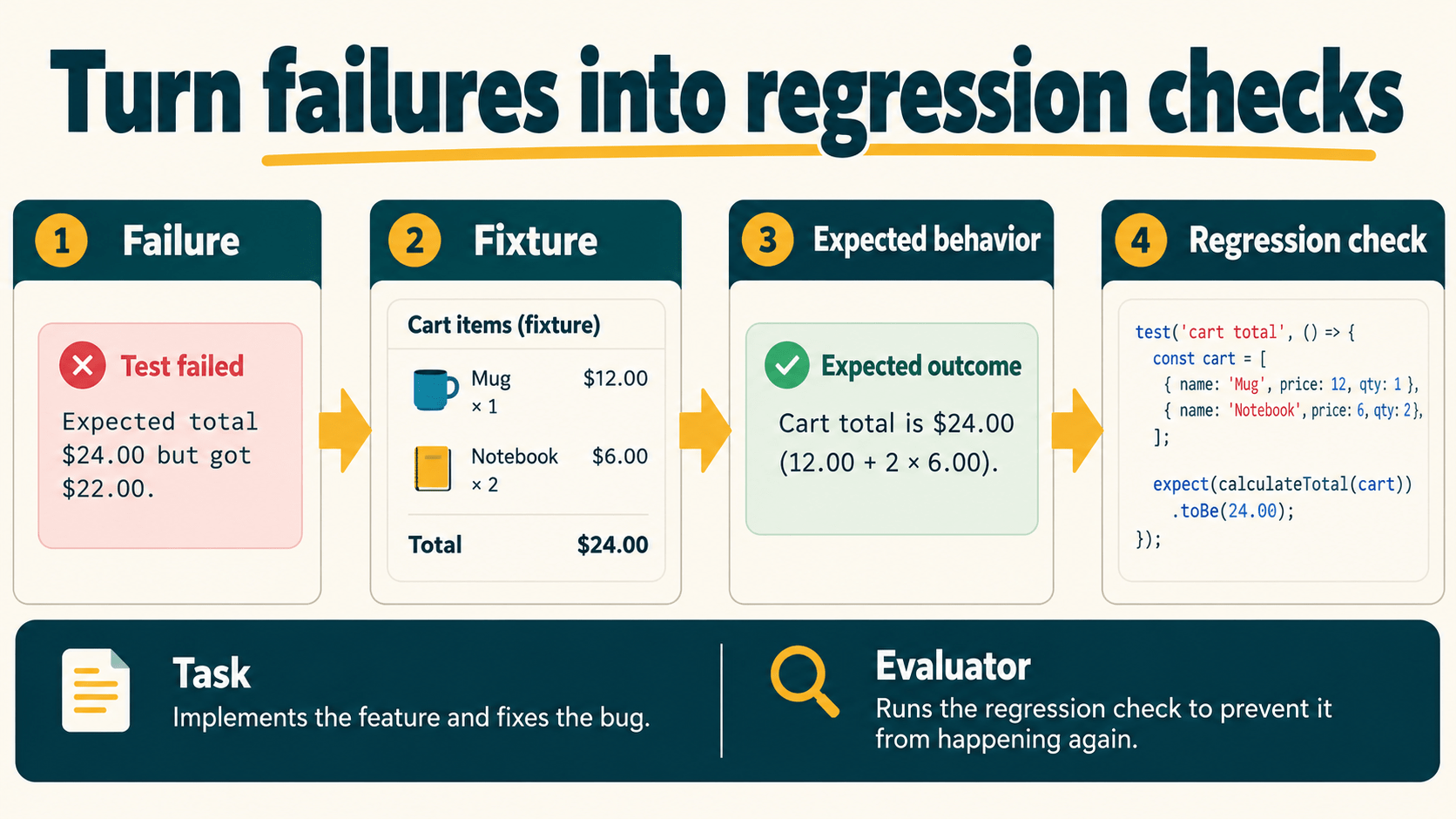
Langfuse's documented evaluation loop connects fixed-dataset experiments with online evaluation and newly discovered cases. Adapt that method to ShopFlow: capture the invalid refund promise, add a labelled fixture, change the relevant prompt or retrieval behavior, and compare outputs before release. Scores can record review decisions; define their meaning in your own rubric.
Pattern 2: keep the task and evaluator distinct
Braintrust's evaluation guide separates examples, the behavior being evaluated and the scorers/classifiers assessing it. It describes moving from exploratory playground work to preserved experiment records and production scoring. For this pilot, preserve both the assistant configuration and the policy-checking rubric. Otherwise an apparently improved score could come from a changed evaluator rather than a better answer.
Phoenix's documentation describes tracing through OpenTelemetry and OpenInference and evaluation through model-based, code-based or human labels. That is a relevant candidate when those instrumentation conventions fit your app. It is not evidence that every integration, export format or access control is available in your desired configuration.
These documented implementation methods illustrate typical integration patterns; evaluate candidate tools against your own application paths and telemetry requirements.
Run the same bounded pilot for each candidate
Use a sandbox application with the fictional policy and stub tools. Freeze the application commit, model identifier, prompt, retrieval fixtures, case set and evaluator version. Record any candidate-specific changes instead of quietly giving one product more instrumentation.
- Instrument one path. Send a normal return question through policy lookup and answer generation. Check the trace relationships, errors, usage fields and versions you actually need.
- Reproduce a known bad answer. Use an explicitly labelled bad-output fixture promising the unsupported refund. Verify that the reviewer can find the relevant policy and record the failure.
- Exercise an application failure. Make the stub policy lookup unavailable. Inspect whether the failure is visible and the assistant follows the fixture's uncertainty/handoff rule.
- Compare a changed version. Run the same cases after one declared change. Preserve case-level regressions and reviewer disagreements, not only the aggregate mean.
- Inspect capture and export. Use the dummy sentinel to check the configured filtering path. Export a case with its score and inspect what survives.
- Write a decision note. Record integration effort, missing spans, useful diagnosis, unresolved evidence and operating responsibilities.
The pilot scorecard has separate rows for the candidates. Observations begin as not_run; empty cost or duration is not zero. Fill in actual evidence after running your own pilot.
Time integration consistently, including custom spans and fixes. A quick initial trace is different from a usable evaluation workflow. A product may capture model calls automatically while requiring manual instrumentation for your own retrieval or business logic.
Check the evaluator before trusting its score
Write a rubric with concrete reasons to pass, fail or abstain. For the invalid refund promise, a polite tone cannot compensate for inventing an exception. Score policy grounding separately from clarity and handoff behavior.
Use deterministic checks for properties they can establish, such as required output fields or whether the stub recorded an unauthorized action. Those checks still consume compute and maintenance effort. They cannot, by themselves, establish that a natural-language answer is accurate.
For model judges, compare a reviewed sample against human decisions and inspect disagreements case by case. Choose the sample and release thresholds for the harm and variability of the task. There is no universal reviewer-agreement percentage that makes a judge trustworthy.
Keep the evaluated answer separate from the judge's instructions. Try examples containing instructions to manipulate the judge, and investigate inconsistent verdicts. Human reviewers should also record ambiguous labels and escalate policy uncertainty rather than forcing every example into an unjustified binary result.
Protect held-out cases. Deliberately tuning prompts on all twelve fixtures can improve those examples without demonstrating generalization. Add new phrasing, situations and authorized production-derived failures to a separately maintained assessment set.
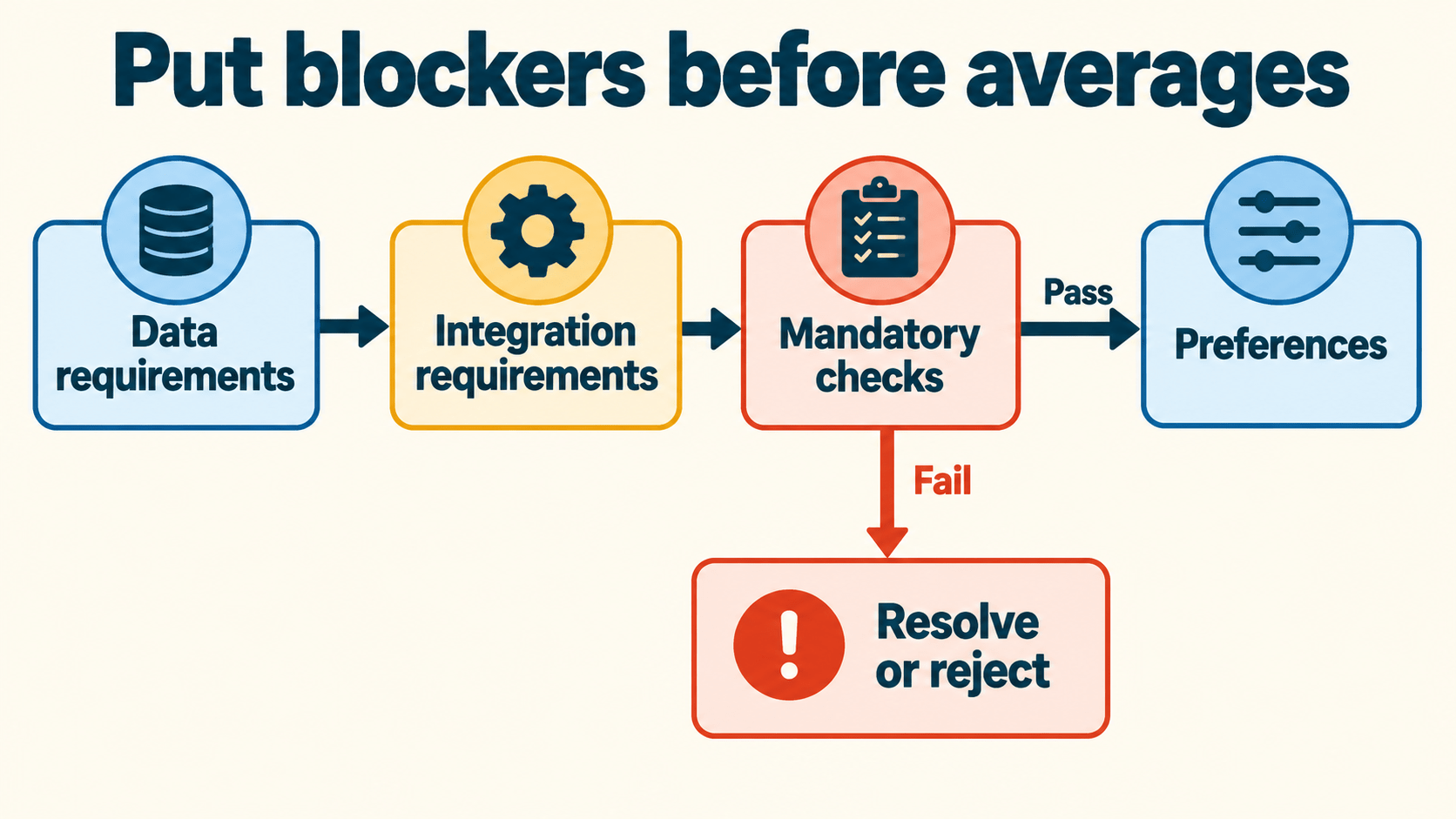
Put blockers ahead of averages
For this fictional pilot, a recorded unauthorized action or a demonstrated prohibited trace export blocks progression. That is a chosen test gate. A high average helpfulness score cannot cancel it, and a passing small fixture does not prove the same problem is impossible elsewhere.
Give one owner responsibility for the scoped release decision. Record unknowns, accepted limitations and when the evaluation must be repeated.
Check the data path and the complete bill
List what each span can capture: prompts, outputs, retrieved text, tool arguments, metadata and attachments. Check SDK buffers, collectors, the observability service, evaluator-model providers and exports. A self-managed collector can still forward content elsewhere through its integrations.
Before using real customer data, obtain evidence for the actual configuration:
- Which fields are captured, omitted or filtered, and where filtering occurs.
- Who can read traces, export them, change evaluators or manage keys.
- How retention and deletion affect traces, datasets, annotations, exports and backups.
- Which services or subprocessors receive content, including model judges.
- Which settings, plans or contracts are required for your deployment needs.
Do not infer these properties from “enterprise,” “open source” or “self-hosted.” A working masking hook is useful evidence about one path, not a general compliance finding.
For cost, include applicable platform usage, evaluator-model/tool charges, storage/hosting and integration, review and maintenance effort. Verify the billing unit: one conversation can generate multiple traces, spans or observations. Check whether multiple scorers make separate calls before extrapolating from a sample.
Set a pilot budget and record rates with their source dates. This guide supplies no current vendor quote and predicts no savings. Reconcile measured usage before assuming an evaluation subscription or self-managed option is cheaper.
Make a decision the team can operate
Choose the candidate that satisfies your mandatory requirements with the strongest relevant evidence and a workload your team can maintain. A managed service may suit a team prioritizing service operation by a vendor; a self-managed option may suit a specific deployment boundary and an owner prepared to operate it. Both require configuration, data-path review and ongoing work.
Use one shared evidence model if you combine tools. Separate products can be reasonable when they meet distinct needs, provided task IDs, versions and review decisions remain traceable. Avoid duplicating capture without understanding cost and content exposure.
Keep an exit example: export a case, its output, the rubric and its review decision, then document what cannot be reconstructed outside the product.
Compare tools against your requirements: use Vantaige's observability and evaluation inventory, with the Langfuse and Braintrust profiles as relevant discovery pages. Confirm current capabilities in vendor documentation and your pilot.
Download the pilot kit
- Fictional app policy and scoring instructions
- Twelve-case synthetic evaluation set
- Requirements matrix
- Pilot scorecard
Start with one request path and one failure you need to understand. Complete the evidence fields before turning a shortlist into a purchase or deployment decision.
Get the best new AI tools and guides, weekly
One short email a week. The tools worth trying, the guides worth reading, nothing else.
No spam. Unsubscribe anytime.
Aymen B
Contributing writer at Vantaige, covering the AI tools ecosystem.