AI User Testing in 2026: The Tools That Test Your Product While You Sleep
AI User Testing in 2026: The Tools That Test Your Product While You Sleep
"AI user testing" means two different things in 2026, and most roundups conflate them. One branch uses AI to run and analyze research with real humans: recruiting, moderating, and summarizing usability sessions. The other branch replaces scripted QA: AI agents that click through your product like a user and report what broke. This guide covers both, names the tools that lead each branch, and gives you a decision table for which kind of testing your team actually needs.
TL;DR
AI user testing splits into research-with-humans and agent-driven QA
AI moderation and analysis cut research turnaround from weeks to days
Agent-based tools like Momentic maintain E2E tests with prompts
Neither branch replaces watching five real users struggle
Decision table below maps tool type to team need
What is AI user testing?
AI user testing is the use of AI to run, scale, or analyze product testing that previously required manual effort: moderating research sessions with participants, summarizing hours of recordings into themes, or executing user-like journeys through an app to catch breakage before customers do.
The split that matters: research testing answers "do humans understand and want this," and AI accelerates the logistics around real participants. Agentic QA testing answers "does the product still work end to end," and AI replaces brittle scripted tests with goal-driven agents. Buying the wrong branch is the most common mistake teams make with this query, because both market themselves under the same phrase.
How does AI change research with real users?
AI compresses the expensive parts around the human session: drafting unmoderated test plans, asking adaptive follow-up questions mid-session, transcribing everything, and clustering hundreds of clips into themes with citations back to the moments. What took a researcher a week of tagging now lands the same day.
Platform leaders have rebuilt around this. UserTesting ships AI-driven insight summaries, sentiment analysis, and friction detection across its participant network; the AI watches every session so researchers triage instead of scrubbing video. The honest limit: AI summarization inherits the panel's biases and flattens outlier moments, and the five most instructive seconds of a study are often an outlier. Use the AI to find candidate moments, then watch them yourself.
What is agentic QA testing, and why is it growing so fast?
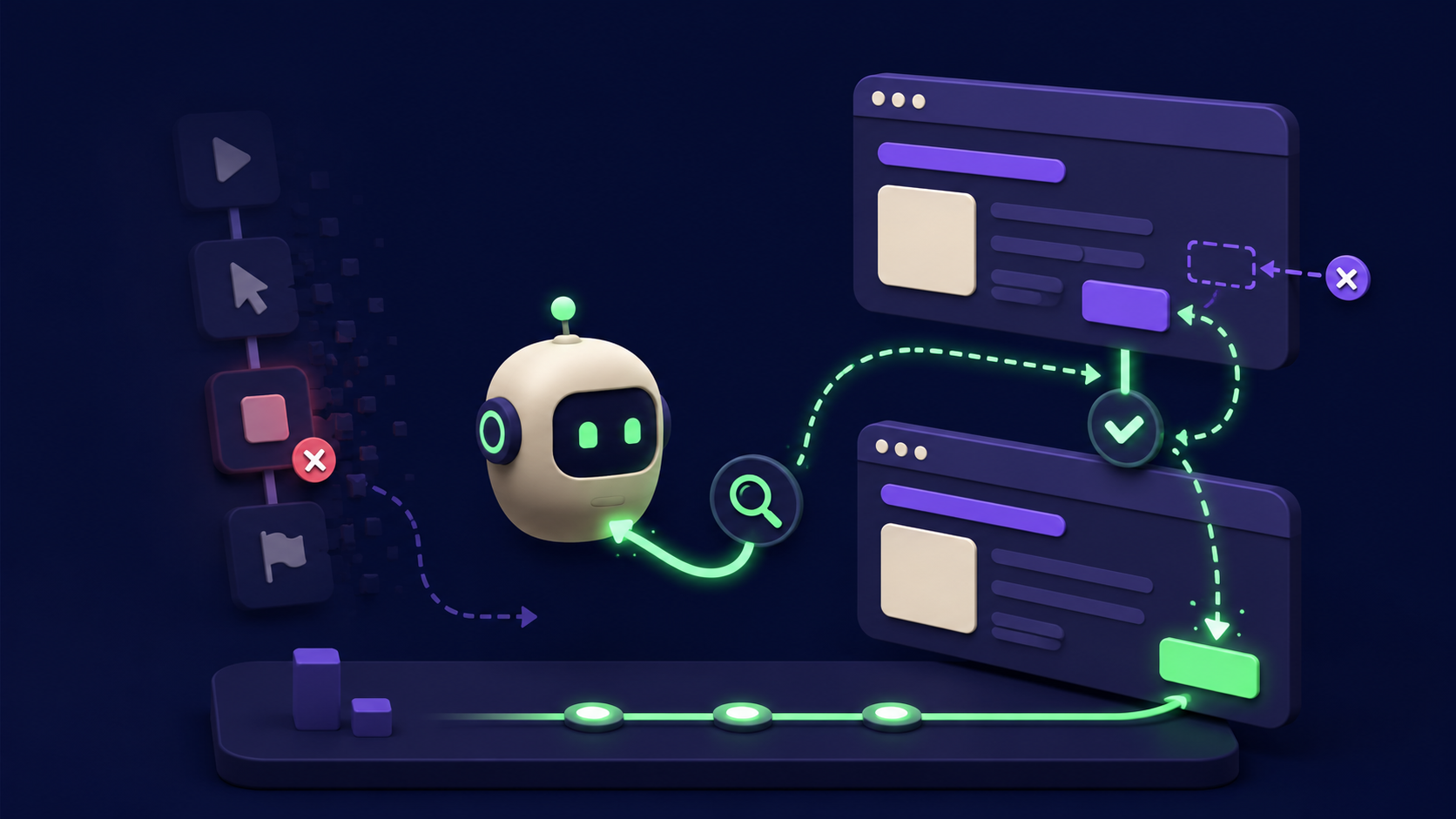
Agentic QA testing uses an AI agent that operates your product from the UI, pursuing goals ("sign up, add a payment method, cancel") rather than following pixel-perfect scripts. When the UI changes, the agent adapts the way a human would, which kills the test-maintenance burden that makes teams abandon traditional E2E suites.
Momentic is the visible leader in this branch: tests written in plain English, run against staging or production, with AI handling selector drift and flow changes. The same capability wave powering computer-use agents (the kind we covered in the Claude Fable 5 launch analysis) is what made this category reliable enough for CI pipelines.
Which AI user testing tools should be on your shortlist?
Tool | Branch | What the AI does | Pricing model |
|---|---|---|---|
Research | Session summaries, sentiment, friction detection across a participant network | Enterprise subscription, custom quote | |
Agentic QA | Plain-English E2E tests that self-heal as the UI changes | SaaS tiers by test volume | |
Maze | Research | AI-moderated unmoderated studies, automated reports on prototypes | Per-seat SaaS tiers |
Loop11 | Research | AI insights over task-based website testing | Mid-market SaaS tiers |
Adjacent: human-performance | AI feedback on demos and user-facing communication | Free tier + paid plans | |
Adjacent: structured interviews | AI-analyzed structured video responses at scale | Enterprise, custom quote |
Maze and Loop11 are listed unlinked because the comparison is incomplete without them; the linked tools are tracked in the Vantaige directory with current pricing.
How do you choose between the two branches?
Use the failure you are most afraid of. If your fear is "we built the wrong thing," you need the research branch: real participants, AI-accelerated synthesis, run before and during design. If your fear is "the checkout broke at 2 a.m.," you need the agentic QA branch wired into CI. Mature teams run both, but if budget forces one first: pre-product-market-fit teams get more from research; post-PMF teams bleeding from regressions get more from agentic QA.
A practical sequencing rule: every agentic QA suite should encode the top journeys your research already proved users take. Research findings become the QA agent's test goals, which keeps both branches honest.
What are the limits nobody puts in the marketing?
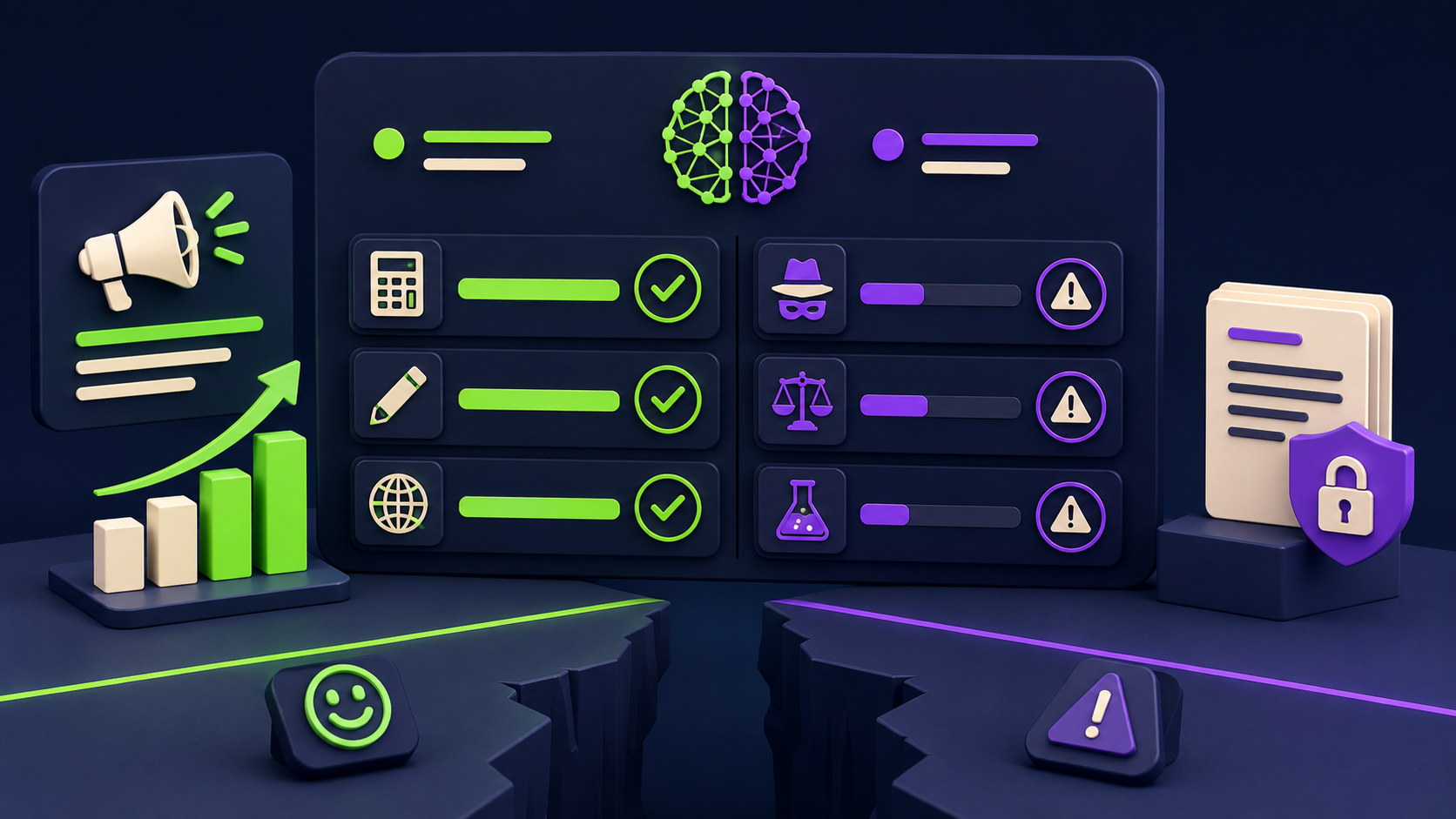
Three, consistently. AI research summaries average away the weird sessions, and weird sessions carry the insight density; spot-check raw recordings. Agentic QA tests are non-deterministic by nature: a test that adapts can also adapt past a real bug, so pin critical assertions (amounts, confirmation states) as hard checks the agent cannot reinterpret. And neither branch fixes a bad question: AI cannot rescue a study testing the wrong task or an E2E suite asserting the wrong outcome. The thinking stays human.
FAQ
Can AI replace user testing with real people?
No. AI accelerates recruiting, moderation, and synthesis around real participants, and synthetic-user simulations remain unreliable proxies for human confusion and desire. The expensive insight still comes from watching actual users; AI just removes the logistics tax.
What is the difference between AI user testing and AI QA testing?
Research testing studies humans using your product to answer desirability and usability questions. QA testing verifies the product works by having an AI agent execute journeys. Same phrase in marketing, different budgets, different buyers.
How much does AI user testing cost?
Research platforms with participant networks are enterprise-priced custom quotes. Prototype-testing tools run per-seat SaaS tiers. Agentic QA tools price by test volume. Always check current pricing pages; this category reprices often.
Is agentic QA reliable enough for CI?
Yes for journey coverage, with hard assertions pinned on critical values. Teams run agentic suites on every deploy and keep a small deterministic suite for money paths. The combination beats either alone.
What should a small team start with?
Five moderated sessions with real users on your core task, then one agentic QA suite covering signup and payment. That pair catches the wrong-thing risk and the broke-thing risk for the least money.
Compare these tools side by side
Vantaige tracks 540+ AI tools with pricing, use cases, and alternatives. Browse the directory and create a free account to save tools to a shortlist and compare testing platforms before you commit.
Related from Vantaige
References
UserTesting, AI capabilities overview. usertesting.com
Momentic, product documentation. momentic.ai
Maze, AI-moderated research features. maze.co
Loop11, AI insights documentation. loop11.com
Nielsen Norman Group, research on AI in UX research workflows. nngroup.com
Get the best new AI tools and guides, weekly
One short email a week. The tools worth trying, the guides worth reading, nothing else.
No spam. Unsubscribe anytime.
Aymen B
Contributing writer at Vantaige, covering the AI tools ecosystem.
Similar articles
AI Agents for Business: What They Actually Are and 12 Things You Can Automate Today

The Personal AI Productivity Stack (2026): One Tool Per Job, Nothing Extra