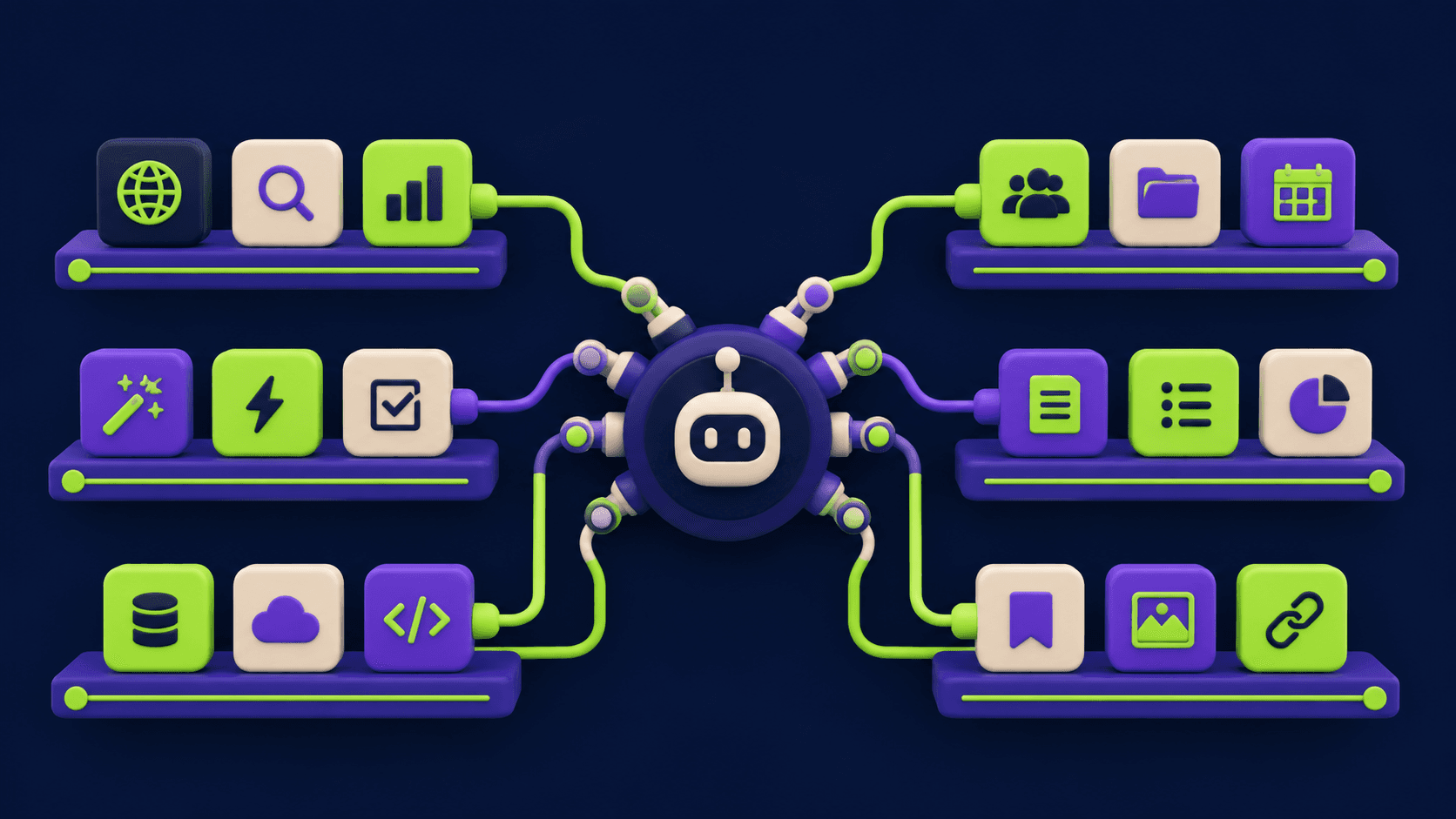
Genkit is Google's open-source AI framework for TypeScript, Go, and Python developers. It provides typed flows, RAG, tool calling, and multi-agent support with a standout local Developer UI for iterating prompts and debugging traces. Free under Apache 2.0.
Genkit is an open-source AI application framework built and maintained by Google's Firebase team. Released in preview at Google I/O in May 2024 and reaching stable 1.0 in February 2025 for Node.js and September 2025 for Go, it gives developers a single, consistent API for building AI-powered features: text generation, image generation, multi-turn chat, tool calling, retrieval-augmented generation (RAG), and multi-agent workflows. It is licensed under Apache 2.0, costs nothing to use, and deploys to Firebase, Cloud Run, or any Node.js, Go, or Python environment.
The framework's core abstractions are flows (typed, observable units of AI logic), prompts (versioned Handlebars templates with schema validation), retrievers (RAG connectors for vector search), and evaluators (test harnesses for measuring output quality). It supports a wide range of model providers including Google Gemini, Vertex AI, OpenAI, Anthropic, xAI Grok, DeepSeek, and Ollama for local inference. Its local Developer UI, an interactive browser-based interface for running flows, inspecting traces, and iterating prompts, has become the framework's most-praised feature among developers who have evaluated multiple alternatives.
What Genkit actually does in May 2026
Genkit's architecture centers on the concept of a "flow": a TypeScript, Go, or Python function that wraps AI logic with strong input/output typing, streaming support, and automatic instrumentation. Every flow call generates a trace that records each step's inputs, outputs, latency, token usage, and cost estimate. These traces are viewable in the local Developer UI during development and in Firebase Console dashboards in production.
The framework provides built-in abstractions for four common AI patterns. For generation tasks, a unified generate() API handles text, images, and multimodal responses across any supported provider. For conversational features, a Chat API manages multi-turn session state. For knowledge retrieval, Genkit's retriever interface connects to vector databases including Firestore, Pinecone, and pgvector. For agentic behavior, tool calling lets flows invoke external functions, and multi-agent coordination (still in beta as of mid-2026) lets flows delegate to specialized sub-agents.
The Go SDK reached 1.0 GA on September 10, 2025, with a formal compatibility promise: programs written against Genkit 1.x will compile and run correctly through all future 1.x releases. The TypeScript SDK graduated to 1.0 on February 12, 2025. Python hit v1.0 in early 2026 with a complete async-first rewrite. Dart support is in preview for Flutter developers. As of April 2026, the Go SDK is at version 1.7.0.
The Google AI Studio connection is worth noting: Genkit uses the same underlying Gemini model APIs as AI Studio, but wraps them in production-grade scaffolding. The September 2025 release also introduced genkit init:ai-tools, a command that automatically configures Genkit's MCP server to work with Firebase Studio, Claude Code, Gemini CLI, and Cursor. This lets AI coding assistants query flow definitions, run flows, and fetch execution traces directly from their context windows.
Where Genkit sits versus LangChain and Vercel AI SDK
LangChain is the dominant comparison point. The Python library has 90,000+ GitHub stars to Genkit's 5,900. LangChain's npm package receives roughly 1.6 million downloads per week; Genkit's Firebase plugin sees about 218,000. The ecosystem difference is real: LangChain has 200+ integrations, a commercial observability platform (LangSmith), and a graph orchestration layer in LangGraph. Mechanically, LangChain uses an OOP message-array pattern where you compose SystemMessage and HumanMessage objects; Genkit uses typed flows with Zod schema validation baked in. LangChain's JavaScript bundle is 101.2 kB gzipped and blocks edge runtime deployment; Genkit is lighter. For Python teams outside the Google Cloud ecosystem, LangChain's community advantage is decisive. For TypeScript teams who want flows and agents without the OOP verbosity, Genkit competes well.
The Vercel AI SDK targets a different niche: React and Next.js developers building streaming UIs. It is a lower-level library: it gives you generation primitives and provider abstraction, but no flow or pipeline concept, no built-in tracing, and no Developer UI. Vercel AI SDK has native React Server Components integration and edge runtime support that Genkit does not provide. In the words of one April 2026 framework comparison: "Compared to Genkit, the Vercel AI SDK operates at a lower level of abstraction." The two tools solve adjacent but distinct problems. Teams building Next.js chat interfaces typically prefer Vercel AI SDK for its streaming-first design. Teams building server-side AI features with complex logic, evaluation, and observability needs lean toward Genkit.
For teams interested in graph-based agent orchestration, LangGraph and DSPy cover ground that Genkit's multi-agent support (still beta) does not yet match. Genkit is a generalist framework; it does not specialize in autonomous agent loops the way those tools do.
"The Genkit Developer UI is, frankly, the killer feature. No other framework in this comparison comes close.". Xavier Portilla Edo, xavidop.me, April 2026
What the development loop actually looks like
You start by defining a flow. In TypeScript that means calling ai.defineFlow() with input and output schemas using Zod, then writing the function body that calls ai.generate() with a model, prompt, and optional tool list. Running genkit start spins up the local Developer UI at localhost:4000. From there you can run the flow, inspect each step's trace, adjust prompt text, and re-run without restarting the server. This iteration loop (change prompt, run, inspect trace, repeat) is the primary workflow that distinguishes Genkit from frameworks that lack a built-in UI.
For RAG use cases, you define a retriever that wraps a vector search (Firestore vector, Pinecone, pgvector) and chain it into your flow. The evaluator API lets you define a test dataset and run it against multiple prompt variants, comparing output quality scores. For production deployment, Genkit flows are standard Firebase Cloud Functions or Cloud Run handlers; the monitoring integration reports latency, token usage, and failure rates to the Firebase Console.
Go developers get the same Developer UI through a standalone CLI binary. The type safety story in Go is particularly strong: flow inputs and outputs are Go structs with JSON schema validation, catching schema mismatches at flow invocation rather than at model response time.
Who Genkit is built for
Genkit fits best in three scenarios. First, Firebase developers adding AI features to existing apps: the Firestore integration, Cloud Functions deployment path, and Firebase Console monitoring make the stack coherent without additional tooling. Second, TypeScript teams that want more than a generation library but less than a full agent platform: Genkit's three abstraction levels (raw generation, typed flows, multi-agent coordination) cover most production AI feature requirements. Third, Go backend teams, where Genkit is the only mature, Google-backed AI framework with Go 1.0 stability and a compatibility promise.
The framework also suits teams that need model portability. Switching from Gemini to OpenAI to a self-hosted Ollama model requires changing one configuration line, not rewriting application logic. The plugin architecture standardizes provider behavior so that structured output, tool calling, and streaming work the same way regardless of which model is in use.
What Genkit is not
Genkit is not the right choice for React/Next.js streaming interfaces. The Vercel AI SDK's native RSC (React Server Components) integration, edge runtime support, and streaming hooks are purpose-built for that use case in a way Genkit cannot match.
It is not a LangChain replacement for Python-heavy teams outside Google Cloud. With a Python community that is still catching up from its alpha period, and with LangChain's 90,000+ star ecosystem already solved for Python RAG and agent patterns, Python developers not building for Firebase or Vertex AI will find LangChain's community resources considerably richer.
Genkit does not provide opinionated multi-agent graph orchestration on the level of LangGraph. Its multi-agent support is in beta and relies on Genkit's own flow delegation model rather than an explicit graph with cycles, conditional branching, and human-in-the-loop checkpointing.
Finally, the Anthropic adapter (Claude models) is a community-maintained third-party plugin, not an official Google integration. This creates a real lag risk: when Anthropic ships a new model version, support in Genkit may trail by weeks or months. Teams that use Claude as their primary model should factor this in.
"Genkit doesn't feel fully provider-agnostic, the Claude adapter is third-party and lags behind.". Konstantin Komelin, komelin.com, 2025
Where Genkit earns its place is the middle ground: production TypeScript and Go apps that need structured, observable AI logic without the weight of LangChain's OOP abstractions or the cost of building observability from scratch. The Apache 2.0 license, the Developer UI, and the Firebase ecosystem fit make it a strong option for teams already in Google's orbit or looking for an AI framework that ships with tracing included.
User Reviews
No reviews yet. Be the first to share your experience!
Sign in to write a review.
Featured in collections
Curated lists that include Genkit.
Related articles
Guides and articles related to Genkit.
Google vs OpenAI vs Anthropic Agents: The May 2026 Platform Showdown
Grok 4.3 API for Agents (May 2026): Pricing, Benchmarks, Migration
Google Vision AI Explained (2026): Pricing Per 1,000 Units, Free Tier, and Alternatives
Ship Your First MCP Server in 20 Minutes (2026)
Run a Company With AI Agents: The Open-Source Orchestration Setup (2026)